Patrick West

Patrick West is a columnist for Spiked and author of Get Over Yourself: Nietzsche For Our Times (Societas, 2017)

The problem with the word ‘problematic’

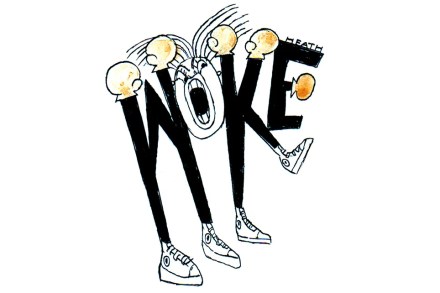
There have been groans of derision following the proclamation by the Archbishop of York, Stephen Cotterell, that the opening lines to the Lord’s Prayer – ‘Our Father’ – might be ‘problematic’, owing to their ‘patriarchal’ connotations. Yet the cries of mockery and exasperation on social media, though justified, have also been mostly predictable. After all, trendy Anglican clerics have been with us for decades, forever providing us with a source of mirth and vexation. The Church of England has form here. What is novel is the Archbishop’s deployment of the word ‘problematic’. In this, he reveals that he really is with the zeitgeist, and really is down with the kids. For ‘problematic’ is one of the most favoured words by those who follow the church of woke.

Trans ideology and the triumph of feelings over fact

Most people who have been following the controversy over Kathleen Stock’s speech at the Oxford Union, and who have been observing this debate that combines transgender rights, the rights of women and free speech, might be tempted to conclude that the dispute has its origins in a sole ideology. That is, the transgender ideology which believes that one’s gender and one’s sex can be altered to accord to one’s authentic, inner self. This is true. It is all about an ideology. But trans ideology isn’t the ultimate issue here. It’s the ideology of ‘feeling’ that’s at the root of the debate we’ve been having – both of the trans phenomenon and the way we all talk about it.

Let’s stop pretending the culture wars aren’t real

Are the culture wars real? Some assume that they're an imaginary affair, or, at best, a distraction from the real, pressing bread-and-butter concerns of today. As Matthew Syed put it in the Sunday Times yesterday: ‘The culture wars...may be seen not as genuine debates but as a form of Freudian displacement. The woke and anti-woke need each other to engage in piffling spats as a diversion from realities they both find too psychologically threatening to confront.’ We are familiar with this line of thinking, both from left and right. The culture wars about race and gender are irrelevant and ‘piffling’, so some say. It’s all fuss and nonsense.

Tale of the tape: how cassettes made a comeback

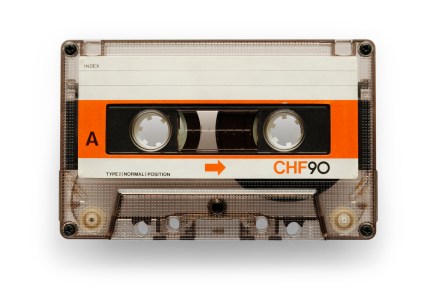
Move over vinyl: the cassette tape is back. According to the British Phonographic Industry, sales of this retro piece of technology last year came close to a two-decade peak. Having been the top-selling format for albums in the UK from 1985 to 1992 and then seemingly disappearing (selling only 4,000 units in 2012), last year saw more than 195,000 cassette tapes shifted. HMV, which recently announced that it will reopen its flagship store on Oxford Street after a four-year closure, plans to bring out cassettes for ‘specific new releases’ and has credited its return to profit with a growing interest in ‘collectable’ music from an analogue era.

Can under-25s be trusted?

The government’s proposal to overhaul and tighten betting laws, ostensibly to target problem gamblers, has understandably raised concerns about government interference and nanny-state overreach. Yet viewed from a wider perspective, we should welcome these initiatives and for the precedent they could set: they could be the final recognition that young adults do not reach maturity until the age of 25.  As part of its gambling curbs the government will place ‘enhanced’ checks on the finances of under-25s, amid concerns that they’re less able to ‘regulate’ their impulses and make rational decisions. For example, the under-25s will have stakes limited to a maximum of between £2 and £4 for online slot machines.

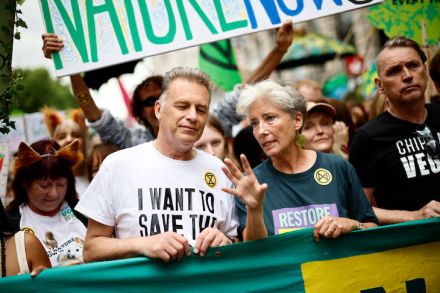
A split within the radical green movement was inevitable

Ever since Monty Python created their internecine, bickering and ridiculous groups of freedom fighters – the People’s Front of Judea and the Judean People’s Front – for their 1979 film The Life of Brian, it’s always been easy and tempting to mock and deride the fissiparous nature of ideologues and tin-pot revolutionaries. Those who believe in the purity of a cause tend to have a semi-religious mindset – and consequently one semi-divorced from reality – which brooks no heresy from orthodoxy. Thus extreme, quasi-cult movements are always prone to split into factions.

The BBC is axing its panel shows. It only has itself to blame

The veteran BBC show Have I Got News for You is ‘due to become BBC television’s only satirical comedy show’. This is the likely result of The Ranganation – also a panel show which dissects the week’s news – reportedly being cancelled. Satire at the BBC has been vanishing alarmingly quickly. Only last week the corporation announced the end of Frankie Boyle’s New World Order, amid dwindling viewership. Mock the Week was cancelled last year, while The Mash Report was put to bed in 2021 (to be revived as Late Night Mash on Dave, only to suffer the double indignity of being cancelled again earlier this month).

What the PayPal saga tells us about free speech

The veteran comedian Jack Dee has been applauded and condemned for announcing that he is cancelling his PayPal account. As he tweeted yesterday: 'Big Tech companies that feel they can bully people for questioning mainstream groupthink don’t deserve anyone’s business.' PayPal has been in the news for cancelling the account of the Free Speech Union, who it says violated its 'Acceptable Use Policy', although it has not explained on what exact charge. The Free Speech Union has in recent years defended those who have been censured, or lost their job, for expressing unfashionable opinions, whether they be on lockdown or the trans issue, so it could be on many contentious topic. The union's founder, Toby Young, has been politely bemused.

Michael Palin isn’t a ‘national treasure’

It's a well-known fact that Michael Palin is a 'national treasure'. Or so you are told just about every single time the travel presenter and writer appears on television or features in a newspaper interview. So it was with grim inevitably that a few days before the first instalment of his latest expedition, Michael Palin: Into Iraq, aired on Channel 5 on Tuesday, the Daily Telegraph and the Sunday Times both felt it imperative to describe him with this phrase. Never mind that he's no doubt utterly sick of this lazy cliché – objectively, it's a misleading misnomer.

Don’t grass on your neighbour if they break the hosepipe ban

There's nothing worse than a grass. Or so goes the wisdom expressed in soap operas like EastEnders. Of course, there are worse things than being a grass, but such an overstatement does reflect a common taboo found in many cultures: no one likes a snitch, telltale, narc, informer or sneak. Which is why the news that South East Water is asking its customers in Kent and Sussex to get in touch if they notice a neighbour ignoring a forthcoming hosepipe ban is unlikely to win it many plaudits. The supplier has placed a contact link on its website for people to report on miscreants they see flouting the instructions, inviting people to grass up neighbours they see watering the grass. What a charmless, alienating idea.

Mock the Week deserved to be cancelled

After seventeen years and more than 200 episodes, the cackling and sniggering is finally over for the panel show Mock the Week. As the BBC announced yesterday: ‘The next series of Mock the Week will be the last, we are really proud of the show but after 21 series we have taken the difficult decision in order to create room for new shows.’ What could be behind this decision? Its veteran presenter, Dara Ó Briain, sought to apportion some logic to the matter. ‘The storylines were getting crazier and crazier – global pandemics, divorce from Europe, novelty short-term prime ministers,' he said. 'It couldn’t go on. We just couldn’t be more silly than the news was already.

The BBC’s gender equality project has come unstuck

The BBC's 50:50 project is designed to empower women. One of its targets is to ensure that half of the contributors are female. But while this aim might have been questionable from the outset – is this really something the BBC should be focusing on? – its mission has been undermined: the BBC has admitted it does 'not monitor whether a contributor's gender differs from their sex registers at birth'.  In effect, trans women, who were born as male, will be counted as women. 'The BBC has now 'disappeared' women as a sex class and instead monitors 'gender identity',' fumed one senior BBC insider, one of many Corporation staff who have protested about the change.

A cultural boycott of Russia plays into Putin’s hands

Has the cultural boycott of Russia gone too far? Events at an Italian university this week, where writer Paolo Nori claimed that a course on Dostoevsky was suspended following Russia's invasion of Ukraine, suggests so.  'Dear professor, the vice rector for didactics has informed me of a decision taken...to postpone the course on Dostoevsky,' an email said, according to Nori's video. 'This is to avoid any controversy, especially internally, during a time of strong tensions.' The college later backtracked, allowing Nori – author of 'It still bleeds. The Incredible Life of Foyodor Dostoevsky' – to continue teaching about the Russian author at the Bicocca University of Milan. But Nori was understandably upset.

The war in Ukraine is not about you

In times of war and strife it’s only natural to feel anxious and worried. It’s a normal, primal reaction. What’s not normal, however, is to conspicuously advertise that fact, and to use a calamity to let the world know what a deeply concerned and conspicuously compassionate person you are. Not for the first time in living memory a serious global issue has been reduced to the self, refracted through the prism of me. This week the war in Ukraine has provided a pretext for celebrities, social media users and newspaper columnists to talk about how they feel and how scared they are.

Teach kids to code? They’re better off learning languages

A leading artificial intelligence professor has said that children should learn to write software. According to professor Michael Bronstein of Oxford University, this would make children more logical. 'I think coding is an extension of language – it's a way of disciplining your mind for formal, logical thinking.' Indeed it is. But so is learning an actual human language a way of disciplining your mind, of making it more logical. A better idea would be to resume teaching other human languages up to GCSE level. Not only do second languages improve powers of logic, they also teach you to deal with nuance and irrationality. Languages are full of idiosyncrasies and illogicalities – common irregular verbs being the most obvious.

James Treadwell and the true meaning of ‘cancel culture’

There's an inherent contradiction at the heart of liberal thinking that perpetually raises its head. It's one which has become ever-more pronounced in our age of ultra-progressive politics: the tension between equality and liberty. Many progressives think you can have both. Alas not. You can only have either, or a greater emphasis upon one at the expense of the other. This contradiction has once more been made evident today amidst reports of a lecturer who says he is the latest victim of 'cancel culture'. James Treadwell, a professor of criminology at Staffordshire University, says that he is 'being investigated for transphobia' after his employer received 'formal and official' complaints about his gender-critical views on Twitter.

When will firms like Ben & Jerry’s stop lecturing us?

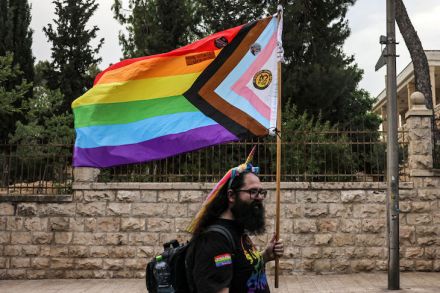
Is anyone else fed up of corporate virtue-signalling? From banks boasting of their commitment to diversity and equality, to train companies changing their liveries to the rainbow flag, or supermarket chains proclaiming they are fighting racism, enough is enough. Thankfully, the moneymen who matter to big businesses – and whom they might actually listen to – are now finally speaking out. Fund manager Terry Smith and leading shareholder in Unilever – owner of the notoriously woke ice cream firm Ben & Jerry's – has attacked the company for its underperformance, pointing a finger at its obsession with political posturing.

Edward Colston and the problem with the ‘right side of history’

There has been much anger after the Colston statue verdict this week, in which a jury cleared four protesters of criminal damage over the toppling of the monument in Bristol. It is an affront to many that vandalism can be exonerated on the grounds of supposedly righting the wrongs of the past, owing to Edward Colston’s role in the slave trade. Yet the most egregious aspect of the case was the plea, on the behalf of the defence, that the jury ‘be on the right side of history’ in reaching their decision. This ingratiating phrase has become popular among progressives in recent years. It’s not just annoying and absurd because of its pretentions to clairvoyance from those who utter it, from those who seemingly derive their morality from what it says on the calendar.

It’s too late to save comedy from ‘cancel culture’

Will comedy become the latest victim of 'cancel culture'? Dame Maureen Lipman fears as much.  'Cancel culture, this cancelling, this punishment, it's everywhere,' she told the BBC yesterday. She says that the world of comedy is in danger of being 'wiped out' because comedians are scared that audiences will take offence, and that they self-censor their material as a precaution. 'It’s in the balance, whether we’re ever going to be funny again,' she said. It would be an ironic tragedy if this were true, because in no other field of entertainment as comedy has 'cancel culture' been at its most insidious, relentless and blatant. Lipman's warning is therefore unfounded, superficially at least.

The BBC is right to ditch the ‘Bame’ label

Broadcasters in the UK have declared they will no longer use the acronym BAME to refer to black, Asian and minority ethnic people. Following a report by the Sir Lenny Henry Centre for Media Diversity, the BBC, ITV, Channel 4 and Channel 5 have committed themselves to avoiding this catch-all term 'wherever possible', in favour of more specific terms to describe ethnicity. This is good news.  Last year a task force set up by UK Music, which represents the commercial interests of the sector, called the term 'outdated and offensive'; this latest report concluded that it could cause 'serious insult'. Quite so. The categorical term 'BAME' might as well have been called 'Miscellaneous', in crudely lumping together all non-white people.