Patrick West

Patrick West is a columnist for Spiked and author of Get Over Yourself: Nietzsche For Our Times (Societas, 2017)

Vegans, your soya milk is killing the planet

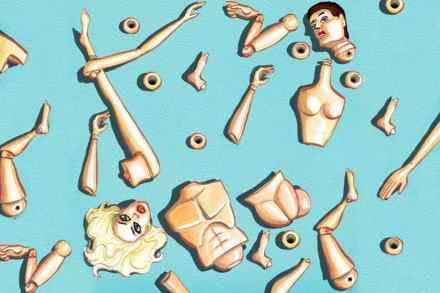
In the popular imagination, veganism and environmentalism go hand-in-hand. Both are championed – often in one voice – by ultra-progressive types who protest that we should live more ethically and responsibly in order to save the planet. Both types argue that eating less methane-emitting cattle and consuming more agriculturally-efficient crops is the first step we can all make as individuals into halting climate change. A report published by the UK Sustainable Food Trust not only implicitly challenges the assumption that veganism and environmentalism work in symbiosis, it tacitly suggests that the two movements may be in actual conflict with each other.

Boris’s misguided war on obesity

Boris Johnson has declared the government's latest war on obesity. It's a continuation of the war on 'junk food'. It's a timely move, as in lockdown we've all been snacking and munching straight from the fridge, during the most ghastly yet boring year in known living memory. Most of us have got fatter as a consequence. Predictably, we are once more now reprimanded for eating 'junk food'. Yet it's also an occasion to remind ourselves that there is no such thing as 'junk food'. There's only 'junk diet'. The idea of 'junk food' has been around for a couple of decades now as the proliferation of fast food outlets has expanded exponentially, with those ghastly names such as 'McDonald's' and 'Burger King', offering cheap food for the terrible proletariat.

The rise of Britain’s new class system

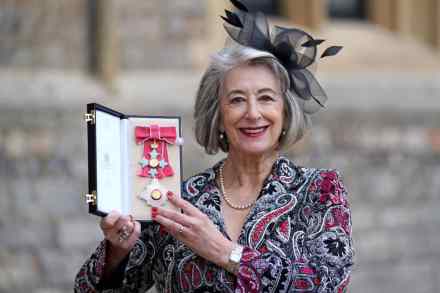
Television chef Prue Leith believes that snobbery is still rife in Britain, and that it's keeping working-class people in their place. Speaking to the Radio Times this week, Leith described Britain as 'the most unbelievably class-ridden country'. She is right, but not for old-fashioned reasons we associate with that Frost Report sketch with John Cleese and the Two Ronnies. Snobbery no longer emanates from the landed gentry or the social-climbing bourgeoise. The most overt snobbery today can be found coming from some on the liberal-left and that minority of Remainers who like to deride 'gammons'.

British theatre needs to re-examine its politics

Dame Helen Mirren has called for a 'huge investment' in the arts, warning that the UK's theatres are only weeks from collapse. The theatre, she said on the Today programme, is central to the 'identity of our nation' and 'embedded in what it means to be British.' With live performances banned since lockdown, most people will share her concern about the future of Britain's theatres. But the implication that theatre is intrinsic to the national character doesn't ring true today. The only genres of live acting that have widespread popular appeal in Britain are musicals and pantomime. Otherwise, theatre is a decidedly middle-class affair these days, and a left-wing one to boot (with rare exceptions such as the playwright Tom Stoppard).

Holland Park must not fall

The latest victim in this summer's mania could be the name of one of London's best-known and wealthiest areas: Holland Park, in the west of the capital. A monument in the park itself, of the 19th-century politician Henry Vassall-Fox, the third Baron Holland, was splattered with red paint on Wednesday. After, the Royal Borough of Kensington and Chelsea suggested that the park, underground station and entire district could end up being renamed. The park and neighbourhood was named after Henry Fox, the first Baron Holland. His descendent, the third Baron, technically owned slaves and dozens of plantations in Jamaica through his wife's estate. Hence this weeks' desecration, with a cardboard sign left perched in the bronze statue's arms reading 'I owned 401 slaves.

Harry Potter’s dwindling popularity is a great shame

Teenagers are no longer reading Harry Potter books in their legions, it emerged this week, as J.K. Rowling’s series dropped out of the top ten favourite books for secondary school pupils. Instead, teens are reading books aimed at primary school children. This is disquieting news. Of all the books teenagers can access, they should be reading the Harry Potter books. They're not perfect, of course. For one, the storylines are derivate: orphan raised by aunt and uncle encounters a bearded old man, goes on an epic journey with his buddies, undergoes tasks and magic training, and defeats ogres before encountering the dark lord in his lair. Our hero emerges victorious! Star Wars anyone? Lord of the Rings?

Why are BBC dramas so obsessed with rewriting history?

If there was a Bafta award for Most Woke Television Drama, a BBC production would win every year hands down. Consider some of 2020’s highlights alone: Noughts and Crosses, set in an alternate world where the ruling class is black and in which white people are the victims of racism; My Name is Leon, about a mixed-race boy growing up in care; and A Suitable Boy, a drama about arranged marriages with an entirely Indian cast. And of course, there’s always the female lead in Doctor Who, a series that now features storylines about civil rights, the environment and even allusions to Brexit. That’s fine really, and nothing new by the BBC’s dependably grating track record.

What Ireland can teach Brexiteers about ‘taking back control’

The Brexit party and Conservatives have more in common than they might like to admit. Yet their similarities haven't stopped the bickering, as Claire Fox argues on Coffee House this morning. On the one hand, we have a party which believes it more important to have some form of exit deal from the European Union. On the other, we have those who believe the UK should pursue total secession. The internecine warfare between soft and hard Brexiteers has been rehearsed many times, as immortalised in Monty Python’s Life of Brian with the feuding between the People’s Front of Judea and the Judean People’s Front. And the current clamour over which kind of Brexit we want brings back historical parallels to an area still contested in this matter: Ireland.

Don’t mourn the end of the Apostrophe Protection Society

To the undoubted dismay of pedants worldwide, it seems the war against the misplaced, omitted or unwanted apostrophe has been lost. The Apostrophe Protection Society, founded in 2001 to campaign for the proper use of the punctuation mark, is no more. Its founder, John Richards, 96, declared at the weekend that he was ending his crusade. Or, rather, surrendering. 'With regret I have to announce that after some 18 years, I have decided to close the Apostrophe Protection Society,' he declared on his website. 'We, and our many supporters worldwide, have done our best but the ignorance and laziness present in modern times have won!

What happened to all the ‘vote Tory’ signs?

General election time in Britain invariably means one thing: lots of Labour, Green and Lib Dem posters displayed outside people's houses and in front windows but hardly any Conservative ones. In my 11 years living and travelling around Kent, I haven't seen a single one. The last time I saw one was in the Holland Park area of West London in the early 1990s. If you live in a city centre, they are a rare species indeed. So where are the 'vote Tory' placards? Their absence has been the norm for decades now, especially since the Thatcherite 1980s. This was when Rik Mayall's character in the comedy The Young Ones popularised the notion that Tories were 'capitalist scum' or 'fascists' (even though the character was an imbecile, and actually a send-up of student radicals).

Kent’s HS1 shows how HS2 could benefit the North

One of the main concerns about HS2, apart from its vast cost and disruptive effect on the countryside, is that in shortening distances between London and the North, it might lead to the capital further draining talent and money from other regions. Not so, says an official HS2 review leaked to the Times this week. The draft report by Doug Oakervee, a former HS2 chairman, says that 'some of the greatest changes to connectivity are the non-London connections' north of Birmingham, and concludes that cities in the North and Midlands are more likely to benefit from the project than London. He’s right – and Kent’s HS1 shows why. The line from St Pancras to Ebbsfleet in Kent faced similar objections in the 1990s, before it was fully completed in 2007.

The RSC should ignore the climate change mob and stick with BP

It is often said that Western culture worships youth. Yet this cult of youth worship has started to mutate into something a bit weirder, as it increasingly seems that ours is a society that now worships children. This year, for instance, has seen the rise to global ascendency of the 16-year-old Swede, Greta Thunberg. She has become the child-saint icon of the environmental movement, whose apocalyptic scorn is fawned over by liberal politicians and woke-conscious big business. Her teenage acolytes bunk school, with the blessing of their teachers, to raise awareness as to the plight of climate change. Elsewhere, we are told that it is imperative to hold a second Brexit referendum 'for the sake of the children' (and even, to make the point clearer, 'our children's children').

Small but perfectly formed: The Romney and Hythe Railway

‘The smallest public railway in the world.’ So proclaims a faded poster at New Romney Station, the midpoint of the 15in gauge Romney, Hythe and Dymchurch Railway which runs almost 14 miles along the south-western Kent coast from Hythe to Dungeness. Well, almost. The railway was indeed the world’s smallest public railway by gauge from 1927 until 1978, the year it lost the honour to the 12¼in gauge Réseau Guerlédan in France. The RM&DR regained the accolade the following year when the French line closed, only to lose it again in 1982 with the opening of the 10¼in gauge Wells and Walsingham Light Railway in Norfolk.

Nigel Farage is not ‘far right’

It is now fashionable to describe Nigel Farage as an 'extremist', 'far right' or 'fascist' politician. Last month, Dame Margaret Beckett denounced his 'brand of extreme right-wing politics'; this week, Armando Iannucci tweeted: 'Any vote for Farage on Thursday won’t be seen by him as a protest but as support for his brand of far-right UK politics.' And on Monday, the author and journalist Ben Goldacre described the Brexit Party leader as a 'far right ideologue who wants to abolish the NHS.' So what prompts otherwise intelligent people like Iannucci and Goldacre to describe Farage as 'far right'? And is that description really fair? A quick glance at Farage's politics suggests it isn't. Farage has spoken out against interventionist wars abroad.

Underground ghost stations

If you’ve ever travelled on London’s Piccadilly Line, you may have noticed that on the stretch between Green Park and South Kensington, the north-facing tunnel twice changes to a peculiar dark grey rather than the familiar charcoal black. I always used to look out for these grey bricks when I took the Tube back home to Hammersmith. This is because I was obsessed with disused, or ‘ghost’ stations, and on this stretch were two of the most distinguished: Down Street and Brompton Road, both of which were closed in the 1930s. Down Street is of particular interest, having served in the following decade as a bunker for Winston Churchill during the war. As a station, it had hardly been used after opening in 1907.

The EU’s damning silence on the gilet jaunes protests

On Saturday, there was another wave of Yellow Vest protests in France. The focus was not the price of diesel, the carbon tax, the cost of living or President Macron, as has been the norm, but police brutality and their use of rubber bullets. Thousands took to the streets of Paris and elsewhere instead in a 'march of the injured', calling for a ban on police weapons that shoot 40mm rubber projectiles (the interior minister, Christophe Castaner, has acknowledged that the weapon, used more than 9,000 times since the beginning of the protests, could cause injuries.) An estimated 10,000 turned out at the Place de la Republique, where they were met with police tear-gas and water cannons. Clashes ensued between police and protesters.

There’s nothing ‘elitist’ about kids following in their parents’ footsteps

Children of doctors are 24 times more likely than their peers to become doctors. Children of lawyers are 17 times more likely to go into law, and children of those in film or television are 12 times more likely to enter these fields. The same pattern is repeated in architecture and in the performing arts. These are the revelations announced in a new book, 'The Class Ceiling: Why it Pays to be Privileged', by Sam Friedman, a professor at the London School of Economics, and Daniel Laurison. The book sets out to explore the "helping hands" that allow the well-connected middle-classes to retain their domination in elite professions. Dr Friedman calls some of these figures "staggering". But are they really? Historically, they are nothing of the sort.

Watling Street

All roads lead to Rome, the saying goes. Well, all roads except for the Roman road of Watling Street, which at one end takes you to Dover (Dubris) and at the other Wroxeter (Viroconium) in Shropshire. I was always only vaguely aware of this thoroughfare but the name began, in recent years, to nag on my weekly visits to Canterbury (Durovernum Cantiacorum). When approaching the city centre from the station, I would see a street sign bearing the name on the side of a branch of Boots. It took some time to dawn on me that this was the very same Watling Street I had been told about in school history classes. The street sign in Canterbury isn’t unique, though: ‘Watling Street, EC4’ is affixed to a wall a few minutes’ walk from London Bridge station.

Banksy’s Brexit mural has helped halt Dover’s decline

When people come to Dover, it’s usually to pass through. The magnificent castle on the cliffs may be a tourist attraction in its own right, but for the most part, Dover has been a place people go through on their way to or back from the Continent. It’s never been much of a seaside destination. The rise of cheap flights, the end of duty-free and the advent of the Channel Tunnel diminished its status as a port, and the 2008 crash hit it hard. The number of vagrants, street drinkers and empty shop premises in the centre bear witness to a town that has seen better times. Yet things are looking up. Back in May, to the surprise of Doverians and the world’s media, a new Banksy mural was unveiled on the side of an old amusement arcade in York Street.

Dover

When people come to Dover, it’s usually to pass through. The magnificent castle on the cliffs may be a tourist attraction in its own right, but for the most part, Dover has been a place people go through on their way to or back from the Continent. It’s never been much of a seaside destination. The rise of cheap flights, the end of duty-free and the advent of the Channel Tunnel diminished its status as a port, and the 2008 crash hit it hard. The number of vagrants, street drinkers and empty shop premises in the centre bear witness to a town that has seen better times. Yet things are looking up. Back in May, to the surprise of Doverians and the world’s media, a new Banksy mural was unveiled on the side of an old amusement arcade in York Street.