Patrick West

Patrick West is a columnist for Spiked and author of Get Over Yourself: Nietzsche For Our Times (Societas, 2017)

Sticking up a ‘Vote Labour’ placard is an exercise in virtue signalling

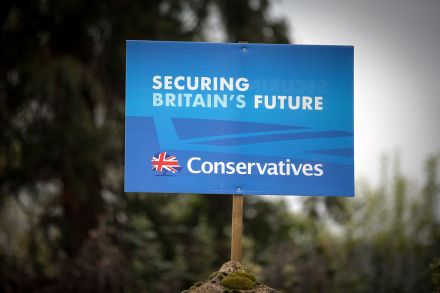
To judge by the number of Labour placards outside people's houses at the moment, you'd be forgiven for thinking the party is heading for a romping victory. Sure, you will see some 'Vote Conservative' placards dotted about here and there. But for the most part, putting up political posters is now predominately a left-wing pastime. This is certainly the case in the urban heartlands of England's three big cities, London, Birmingham and Manchester, where the rare Conservative posters that have made an appearance are often defaced or torn down. Perhaps surprisingly, 'Vote Labour' posters are most conspicuous in the wealthier parts of our cities.

The mystery of Kent’s disappearing Polish shops

Outside of London, the area in Britain that has seen the greatest settlement of eastern Europeans since 2004 has been Kent, for obvious geographical reasons. And to cater for their needs and provide creature comforts, a multitude of shops sprang up in the years that ensued. But a strange thing has started to happen here in east Kent: all the Polish and Baltic shops are starting to close down. This struck me during a visit to Canterbury last week, when I noticed that the premises of the 'East European Food' store in Burgate Lane has now been vacated and lays empty. This represents a trend.

Flanders

Usually, one of the first indications that you’ve entered a bilingual country is that the road signs are in two languages. At least this is the case in Ireland or Wales — but not in Belgium. In Flanders, the signs are written in Dutch. In Wallonia, they are all in French. French is spoken in Flanders, by the small local Francophone community, but more notably by the huge number of French people who descend on Brugge for the Christmas sales. The French registration plates and the gaggle of overly loud wanderers with cameras are giveaways, but don’t even think about trying French here yourself. It’s considered rude if it’s not your native language. You could, however, always make a stab at Dutch.

The nightmare of ‘pre-crime’ is already with us

Those who express concern about the onset of a dystopian surveillance society in Britain, in which the boundary between public and private is being erased, and in which the state malignly uses new methods of monitoring, usually invoke the spectre of Nineteen Eighty-Four. ‘Orwellian’ is the customary adjective denoting the kind of cruel, maladjusted authoritarian state that spies on us, that knows everything about us — one, it is feared, that will soon be upon us. Such allusions have some credibility, as Britain has in some respects been transformed into that which George Orwell feared it might: we have detention without trial, armed police and the widespread use of CCTV cameras.