Patrick West

Patrick West is a columnist for Spiked and author of Get Over Yourself: Nietzsche For Our Times (Societas, 2017)

Do Eskimos really have a hundred different words for snow?

Do the Eskimos have many more words for ‘snow’ than the rest of us, and does this question matter? As we approach the full blast of winter, now would seem a good time to lay this old chestnut to bed for good. The person we have to thank for setting this debate in motion is one of the founding fathers of social anthropology, the German-American Franz Boas (1858-1942). In his landmark work The Mind of Primitive Man (1911), Boas mentioned in passing that ‘in Eskimo’, we find: One word expressing 'snow on the ground'; another one, 'falling snow'; a third one, 'drifting snow'; a fourth one, 'a snowdrift'. All quite unremarkable, one would presume.

The problem with Labour’s ‘anti-Muslim hostility’ definition

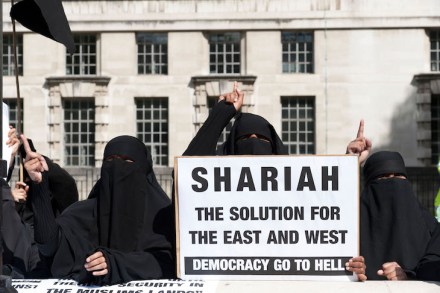
Some might say that trying to define ‘Islamophobia’ is a foolish enterprise, given that words these days are so wantonly manipulated. Yet this hasn’t stopped Labour from trying. In 2018, the All Party Parliamentary Group on British Muslims called for the following definition to be adopted by the government: ‘Islamophobia is rooted in racism and is a type of racism that targets expressions of Muslimness or perceived Muslimness’. Now it has been reported that ministers are finalising a new wording which defines it more simply as ‘anti-Muslim hostility’.

The Bondi Beach attack shows diversity is not our strength

In the wake of a tragedy it is only fitting that public figures issue words of condolence. But there’s a vast difference between making a statement that conveys condemnation and anger, sentiments that most ordinary people have felt after the attack on Bondi Beach yesterday, and proffering bland, evasive platitudes that ignore the grave problems that face us – in this case, anti-Semitism and Islamist terror. With every attack carried out by individuals beholden to an extreme interpretation of Islam, responses of the latter kind arrive with grim predictability. The reaction to the Sydney atrocity has proved no exception.

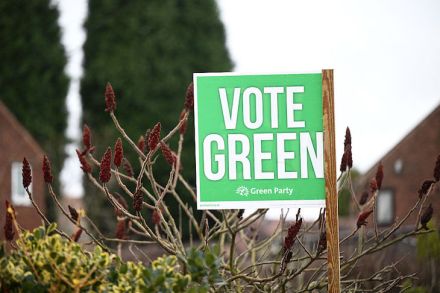
What Zack Polanski gets wrong about immigration

One of the most common arguments made by those with a liberal approach to immigration and asylum, and one you will hear repeated at length on Question Time, is that people who come to these shores ‘are human beings, just like us.’ This mantra epitomises a certain kind of bland, shallow humanism, one which seems to think that platitudes and nobility of heart will suffice when it comes to important and consequential matters. The problem with Polanski is that he is doubly blind. He’s not only an air-headed humanist but a third-rate Marxist Zack Polanski is the embodiment of this simple-minded worldview, one which owes as much to Lennon as it does to Lenin. Imagine there’s no borders? That’s what much of his beatific politics boils down to.

Gen Z can’t cope with the real world

Everyone recognises that teenagers today are unduly anxious. Many people attribute this to a rise in smartphone use. Some even blame an education system that places too much pressure on young people. Yet the acute dysfunction of adolescents and young adults these days could have a more simple, and more serious, explanation: they don’t spend enough time outdoors mixing with other human beings. The more you shy away from human contact, the more shy you become of humanity A study commissioned by an online school, Minerva Virtual Academy, to explore the emotional, social and physical factors that make school attendance so troubling for some today, has found that half of secondary school pupils have avoided school in the past year because of anxiety.

Pantone’s ‘colour of the year’ isn’t racist

For those of you dreaming of a white Christmas, here’s some advice: keep your thoughts to yourselves. Or at least select carefully who you share such sentiments with. That’s because there are some people today who even find the concept ‘white’ offensive and unacceptable. For those of you dreaming of a white Christmas, here’s some advice: keep your thoughts to yourselves Pantone has nominated a shade of white – ‘Cloud Dancer’ – as its 2026 ‘Colour of the Year’, describing it as ‘a symbol of calming influence in a frenetic society’. That alone would seem unremarkable, seeming to be just one of those harmless and inane corporate publicity ruses that emerge this time of year. But no. It’s caused outrage. Of course it has.

Should this academic have been banned from campus for using the ‘n-word’?

Is it ever acceptable to say the ‘n-word’? As you will have immediately inferred by that sentence, it’s rare to see it even spelt out in full today. It’s perhaps the only word in the English language you will never see written without asterisks in a newspaper or magazine. It is, to use that phrase once beloved of the Guardian, ‘the last taboo’. ‘Words have context, and the word “bitch” can have a positive meaning if you look at the Oxford English Dictionary,’ it was reported that Pormann told the meeting Peter Pormann, a professor at Manchester University, was this week reminded the hard way of its undiminished power, when he was banned from campus and described as a ‘potential risk to colleagues’ for having allegedly used the word in a disciplinary meeting.

We don’t need white saviours to rescue us from St George’s flags

Trends in society always come and go, but one that shows no signs of abating is the propensity among many to take offence at words or symbols. Just because that derisive word of the last decade, ‘snowflake’, has fallen out of fashion, it doesn’t mean that these hypersensitive souls have disappeared. Being compassionate in a patronising fashion from afar is mandatory behaviour for white liberals and our aloof, elite classes Emily Spurrell, chairwoman of the Association of Police and Crime Commissioners, is a case in point. Spurrell hit out at the surge in St George’s and Union Jack flags being hung on lamp posts, motorway bridges and street signs across England.

Stop saying ‘Our BBC’

One of the most grating and nauseating verbal constructions of our times – ‘Our NHS’ – has with grim inevitability began to evolve and expand. It was only a matter of time before someone or some organisation deemed it necessary to affix that possessive determiner to another state-run organisation, and you hardly need to guess which one. ‘A GB News presenter has said the BBC should hand “several million pounds” of licence-fee payers money to Donald Trump. We must defend our BBC from those who want to destroy it.’ So ran a post on Friday on from the official X account of the Liberal Democrats.

Why can’t the BBC just say sorry?

A famous pop star once sang that sorry seemed to be the hardest word. Almost fifty years after Elton John uttered those sentiments, nothing has changed. Saying sorry for your own errors or moral transgressions remains for many individuals and organisations an almost impossible task. Saying sorry for your own errors or moral transgressions remains for many individuals and organisations an almost impossible task The BBC’s reputed apology to Donald Trump, for having spliced a speech of his from January 2021, is an instructive example of how and why people will dodge this substantial and consequential word. ‘While the BBC sincerely regrets the manner in which the video clip was edited, we strongly disagree there is a basis for a defamation claim,’ it says.

Learning French taught me to love English

One of the greatest dangers posed by the government’s curriculum review is that it will result in children abandoning more demanding subjects such as history, geography and languages at GCSE. This is the fear voiced by a number of educationists, including Baroness Spielman, the former chief of inspector at Ofsted, who said that scrapping the English Baccalaureate would be a ‘death blow to secondary languages teaching.’ Learning to read, write and speak a foreign language is not only a ‘skill’. It’s about learning how to think differently and think better This, alas, merely reflects a longer-term malaise: teaching the adults of tomorrow how to speak – and think – in a second language.

We should not need a court’s permission to criticise Islam

Those who believe in free speech, and those who are particularly concerned by plans to have ‘Islamophobia’ codified, ought to be delighted. A judge has ruled that criticising Islam, or viewing the faith as problematic, is a protected belief under equalities law. As reported in The Sunday Telegraph this morning, an employment tribunal judge has found that Patrick Lee, 61, who was found guilty of misconduct last April by the Institute and Faculty of Actuaries over posts on X - including one calling the Prophet Mohammed a ‘monster’ – was merely ‘critical of certain Islamic doctrines and practices, and not to individual followers of Islam or to the Islamic faith/religion at large.’  Mr Lee has now won legal protection for his beliefs.

Why football fans stopped watching Match of the Day

That hoary aphorism ‘be careful what you wish for’ may be a hackneyed one, but there’s nothing football pundits like more than a sagacious cliche. I dare say Gary Lineker used it on more than one occasion during his long tenure as Match of the Day presenter. And many people were glad and relieved when the lavishly-remunerated pundit was forced to relinquish that role in May, following a stream of unwise political interventions on social media. But, as the saying goes, they may now regret that their wish came true. The new direction taken by Match of the Day represents the thin end of the wedge The new incarnation of BBC's flagship football programme, presented by Mark Chapman, Gabby Logan and Kelly Cates, has not proved popular.

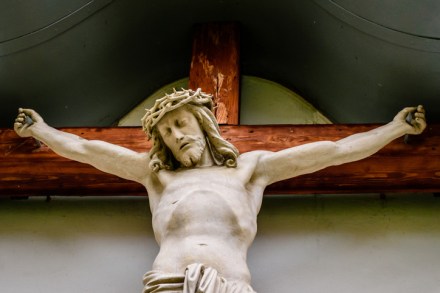
I visited Canterbury Cathedral’s graffiti. Here’s the worst thing about it

The first, and the lasting, impression one gets from Canterbury Cathedral’s new graffiti-style art instillation is just how reasonable and normal are the questions it quite literally poses. That’s some feat for an exhibition that purports to be ‘thought-provoking’ and ‘dynamic’ while simultaneously attracting such derision – even provoking the ire of the US vice president, J.D. Vance. Echoing the feelings of many people in this country, he asked why the cathedral's curators had to make a ‘beautiful historical building really ugly’.

The tyranny of ‘kindness’

The vice-chancellor of Oxford University, Professor Irene Tracey, has been giving some gloriously counterintuitive advice recently on how to safeguard free speech in academia. On Tuesday, she claimed that teaching the ethos of equity, diversity and inclusion (EDI) ‘goes hand in hand with our commitment to academic freedom and free speech.’ Yet diversity training always has the opposite effect.

The problem with Lenny Henry’s demand for reparations

The desire to seek restitution from those who have harmed or wronged us is normal. Our instinct for justice is inbuilt. Yet, in recent decades, there has emerged in the West a perverse distortion of this impulse: the demand for financial compensation from people who have done no wrong, made by people who have not been wronged. Long-established campaigns calling on Britain to pay reparations for slavery are founded on this strange premise, and the latest figure to join their ranks is Sir Lenny Henry. The comedian and actor makes his case in a new book, The Big Payback, co-authored with Marcus Ryder, a television executive and charity boss. He argues for the UK to hand over £18 trillion in compensatory payments.

Judges are finally rediscovering their common sense

Believe it or not, some judges in this country are starting to show signs of having a connection with reality and in possession of an outlook based on common sense. It’s hard to credit it, given the roll call this year of judges delivering over-lenient verdicts in regard to asylum seekers wanting to remain in Britain – often on highly dubious and sometimes ludicrous grounds. But it’s really happening. Change is afoot. Believe it or not, some judges in this country are starting to show signs of having a connection with reality This has become apparent not in the High Court or immigrant tribunals, the places where those notorious judgements are handed down, but in the less illustrious sector of employment tribunals.

The Bar Council’s black internship scheme is racist

Human beings fundamentally hate blatant displays of unfairness. That’s why most people abhor those who jump or barge into queues, or politicians who preach one rule for the public and practice another for themselves. Even plans by Reform UK to reverse previously established terms of indefinite leave to remain, which could affect those who have already settled under them, smacks of duplicity. The wider general public is coming to the see the corrosive consequences of diversity schemes This is also why well-meaning schemes to artificially advance ethnic minorities in the workplace have always generated resentment among those they unjustly discriminate against.

No, Keir Starmer: Reform’s migrant plans aren’t racist

Keir Starmer’s behaviour, demeanour and language has taken a rapid and strange turn of recent. Unable to do anything meaningful about this country’s economic woes or the chronic immigration crisis, the Prime Minister now resorts to words in preference to actions. He relies increasingly on alarmist rhetoric and hollow gestures in order to make us believe that he is a competent and purposeful leader. It’s the customary response of low-intelligence fringe-leftists The decision to officially recognise Palestine, a country with no borders, no capital city and no meaningful government, was merely one indication of this lurch.

How ID cards destroy freedom

Those who make the case in favour of national ID cards invariably do so on pragmatic grounds. As they have reminded us in recent days following Keir Starmer's announcement of the rollout of digital ID, these would make life more simple, more convenient, secure easier access to public services, reduce fraud, criminal activity and even stem the tide of illegal immigration to this country. Those who repeat the canard of ‘nothing to hide, nothing to fear’ should ask themselves the underlying belief they are really articulating Who could possibly object to such reasonable-sounding arguments? National ID cards would be ‘for own good’ they continue, or more ominously: ‘if you’ve nothing to hide you’ve nothing to fear.