Patrick West

Patrick West is a columnist for Spiked and author of Get Over Yourself: Nietzsche For Our Times (Societas, 2017)

Why the Civil Service are revolting – again

Many people who work in the Civil Service are revolting. Quite literally in the verbal meaning of the word, and, as many have long argued, very decidedly when understood as an adjective. Civil Servants have been in revolt this week at the Ministry of Housing, Communities and Local Government, which currently wants to ensure that only biological women can use female toilets and changing rooms, to comply with last April’s Supreme Court ruling which decreed that ‘man’ or ‘woman’ in the Equality Act should refer to biological sex.
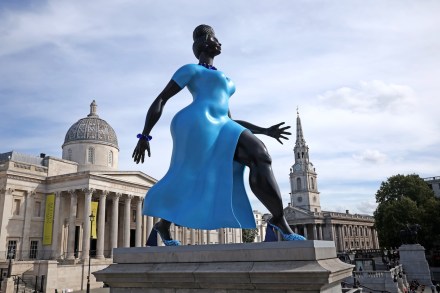
My issue with Trafalgar Square’s ‘Lady in Blue’

Ever since the fourth plinth in Trafalgar Square became the location in 1999 for a succession of temporary artworks, many of which have conveyed a progressive political message, it’s been the source of controversy and outrage. Among its most infamous installations have been a marble torso-bust of an artist born with no arms and shortened legs, and a memorial which consisted of plaster casts of 726 trans, non-binary and gender-nonconforming people. In the wake of that work comes Lady in Blue, the creation of the black American artist Tschabalala Self. The ten-feet tall bronze statue presents onlookers with a representation of a curvaceous, exaggeratedly muscular black woman in a capacious sky-blue dress bowling along confidently.

The paradox of Ealing Broadway’s ‘Calm Space’

When it emerged a fortnight ago that Transport for London (TfL) had unveiled a ‘Calm Space’ at one of its stations, a trial installation at Ealing Broadway on the western fringe of the capital, as part of its ‘future neuroinclusive design initiatives’, much of the reaction on social media was predictably, and one might say justifiably, dismissive. One user on X encapsulated a common sentiment: ‘What would provide a calmer travel environment would be clean, punctual mass transit filled with people who understood the concept of public and private spaces, and some limited policing of anti-social, fare-dodging, drug-using, and sometimes mentally deranged fellow passengers.

What The Uprising gets wrong about the Peasants’ Revolt

Hollywood has a nasty habit of distorting history and telling falsehoods about the past in order to pander to the cultural prejudices and political leanings of its target audience. Few cinemagoers will forget the egregious exaggerations and untruths presented to them in Braveheart (1997) and The Patriot (2000), both of which wantonly perverted chapters in history for their own cynical ends. Garfield said he hoped the movie would leave billionaires 'scared shitless' With this in mind, one can hardly expect a forthcoming movie depicting the Peasants’ Revolt of 1381, The Uprising, to be any better.

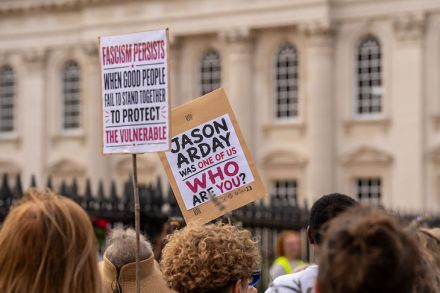
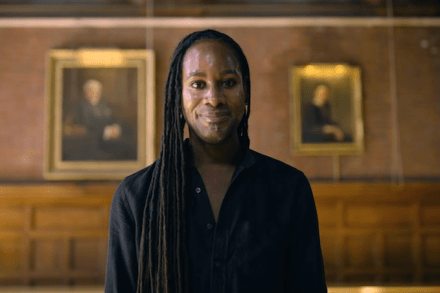
The lesson Cambridge should – but won’t – learn from Jason Arday

With the Jason Arday episode set to become one of the most important and symbolic stories of the year, and his death one of its foremost tragedies, it is appropriate and timely that there should be an investigation into the whole sorry affair. As Cambridge University announced on Friday, it will launch a two-part investigation into whether it could have done more to support the professor, who was found dead at an address in south London on 14 August, a week after he resigned as professor of sociology of education at the university.

Why the ‘Be Kind’ brigade are so horrible

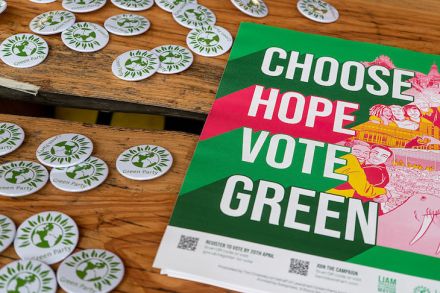
The Green Party came to prominence earlier this year by forever promising ‘hope not hate’. Indeed, that dreamy yearning played a key part in securing an unprecedented mandate in the May local elections, when a callow cohort of progressive twenty-somethings, wooed by these nice-sounding words, helped to put the Greens into power in many inner-city councils. This is the same demographic who are also receptive to similar utopian platitudes about abolishing borders, housing immigrants, and free bus travel, free university education and free childcare. Free everything, if possible, courtesy of ‘the billionaires’, who in the Green Party’s ethereal vision will obligingly pay for it all.

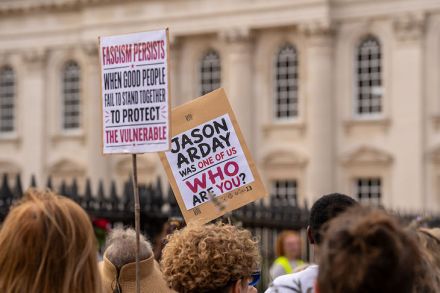
Jason Arday wasn’t the victim of a ‘racist witch hunt’

For decades, voices on the liberal and progressive left have invariably rolled out the terror-inducing accusation of ‘racism’ in order to get their way and silence opponents. It’s thus unsurprising to see, in the wake of Jason Arday’s death, that they're still resorting to this cynical tactic, and in this case, to absolve themselves of responsibility for having exploited this vulnerable man in the first place. To call it a ‘witch hunt’ is predictable and unfounded hyperbole In response to Arday’s death, Jo Grady, general secretary of the University and College Union, said the ‘level of harassment he suffered and the racism he was subjected to has been sickening’.

Sociology is about much more than fools like Jason Arday

One of the unfortunate consequences of the Jason Arday debacle is that it has thrown the entire discipline of sociology into disrepute. In the minds of many, his shoddy scholarship, lazy methods and recourse to obfuscating jargon are not an aberration, but reflect the dubious standing of a social science which has always had unjust pretensions to an actual science. Sociology is not alone in having succumbed to gobbledygook and hard-left propagandising There’s been a chorus this week of those repeating this familiar accusation on social media. ‘I have yet to be convinced that sociology is an academic discipline at all never mind that it is important. It seems to be just a vehicle for advancing left-wing policies with a veneer of academic respectability.

Jason Arday at Cambridge (Credit: YouTube)

Do liberal Londoners know how much they are detested?

For decades now Trevor Phillips has been one of the most astute and unusually self-aware members of the liberal establishment, becoming in recent years one of its sternest critics. That trajectory began with his call in 2004, when he was chairman for the Commission for Racial Equality, for the term ‘multiculturalism’ to be scrapped for being divisive. His columns in the Times these days can be unsparing in their dissection of the shortcomings and failures of left-liberal ideology. Conservatives, old-school liberals and Red Wall Labour voters have either known of this anti-metropolitan sentiment or felt it themselves Phillips’ perceptiveness owes a great deal to the fact that he speaks as a veteran semi-insider.

The tragedy of Live at the Apollo

One of the lamentable side effects of the ultra-progressive wave that swept the western world in the mid-2010s was that it caused so many people to have a humour bypass. Quite literally, as Alan Partridge used to say. This wouldn’t matter so much in the ordinary scheme of things, but this failure occurred in the one place where it ought to have been of primary importance: the television comedy industry. It’s not just the uniformity and relentlessness of this progressive politicking on television comedy that rankles. It’s the associated lack of actual laughter Ever since those who produce TV comedy shows decided it was not only their remit to make an audience laugh, but to also lecture them, the levels of humour have inevitably declined in tandem.

Is Elon Musk wrong about Britain and civil war?

Do you think that Britain is heading towards civil war? If you spend too much time in certain nooks on social media, you are most likely to answer resolutely in the affirmative. Yet this common refrain is not only heard from outlandish elements on the alt-right. It is a worry voiced by many mainstream conservatives who fear the recent, palpable growth of inter-ethnic tensions and mistrust in this country – and wonder where it will all end. It's a view shared by Elon Musk, who in 2024, responding to a Tommy Robinson video on X depicting scenes of urban unrest in the UK, simply replied: ‘Civil war is inevitable’.

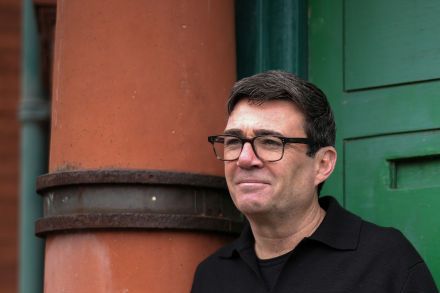
Andy Burnham is much more nostalgic than Nigel Farage

The strange thing about our new Prime Minister Andy Burnham’s professed wish to return to the 1970s, to a prelapsarian age before Margaret Thatcher, is that this kind of wistful, hopeless desire to turn the clock back has always been an accusation levelled at Reform UK and its supporters. How many times over the years have we heard voices on the left sneer at Nigel Farage and his acolytes, deride his and their delusional, insular, xenophobic, borderline racist yearning for ‘the Britain of the 1950s’? Yet few liberal-left figures today seem concerned that the new leader of the Labour party and this country unashamedly pines for The Good Old Days.

The surprising truth about men and multitasking

One of the most popular and common beliefs of our times is that women are better than men at performing many tasks at once. The notion that females have a unique gift for ‘multitasking’ has been constantly invoked by women in recent years, proof of their superior cognitive skills and innate, more holistic wisdom. It shows, literally, that they are not so narrow-minded. Likewise, this conceit has been deployed by many a lazy husband as an excuse not to pull his weight around the house: ‘You can’t expect me to look after the children and do the washing. We men are just not hard-wired that way.

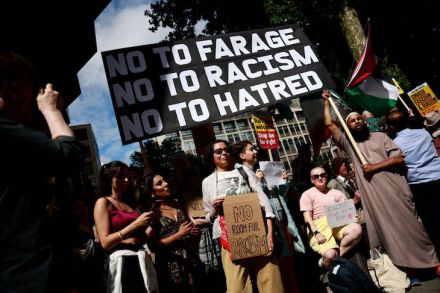
Tone policing Nigel Farage will only backfire

There will always be a certain class of people who sigh that Nigel Farage only reaps what he sows. Ever since milkshakes starting being tossed at a man they regard as an incendiary rabble-rouser, they have argued that it’s his fault for having raised the volume and coarsened the tone of political discourse in this country in the first place. In other circumstances this would be called ‘victim-blaming’: he shouldn’t have behaved so provocatively. He was asking for it.

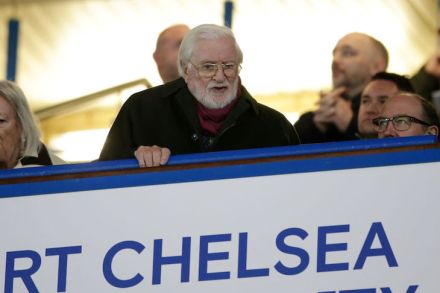
Ken Bates, Chelsea, and the bad old days of football

The timing of the death this weekend of Ken Bates, the former owner of Chelsea and Leeds United, will have struck many older football fans as significant, incongruous or – as football commentators are apt to say – ironic. On the same morning in which millions of Englanders of all backgrounds were preparing to cheer on a conspicuously multi-ethnic England team, the announcement of his passing, aged 94, will have undoubtedly evoked memories of time when the sport in this country was in a very different state, and when some of its fans were of a very different disposition. Hooliganism was rampant and racism on the terraces endemic.

In praise of Anthony Gordon

In an age in which we continue to hear so much about our ‘anxious generation’, it’s heartening to read about one young individual who hasn’t been incapacitated by angst. We live in a time when whole swathes of young people believe they are mentally ill-equipped to face the demands and rigours of the outside world – it was revealed on Tuesday, for example, that the number of people diagnosed with ADHD receiving disability benefits had increased by 40 per cent since Labour came to power. So we should be encouraged by the story of one man who hasn’t quailed when confronted with life’s inevitable challenges.

When did travelling on buses become so intolerable?

You frequently hear the charge today that the social contract in Britain has broken down. And there is much evidence to support this accusation. The epidemic of shoplifting, the tacit acceptance of fare evasion, rampant mobile phone-snatching in the capital, and most seriously of all, the fragmentation of our once much-vaunted multicultural society into a hotch-potch of mutually-suspicious and resentful ethnic and religious groupings: empirical research and personal testimony points to a society undergoing a process of disintegration. The demeanour of London bus drivers today perhaps reflects how fed up they are of having to deal with members of the public For many people, nowhere is this development more evident than in the normalisation of incivility on public transport.

Why gays turned against Pride

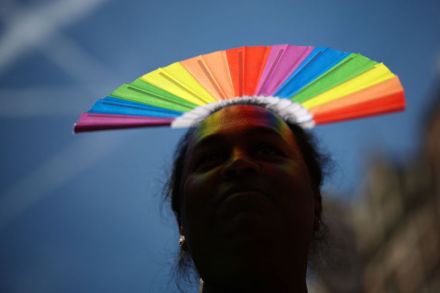
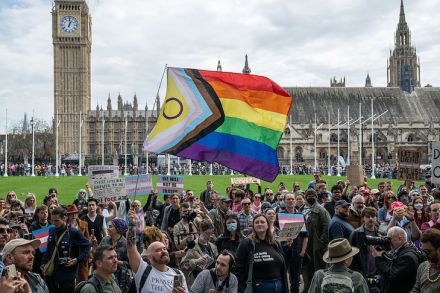
The annual Pride parades celebrated across the globe are not the events they used to be. First held in New York City on 28 June 1970 and going by the name of the Christopher Street Day Marches, they were initially designed to commemorate the first anniversary of the Stonewall Riots, when the gay community in that city rose up in protest against police brutality. Yet what began as a show of defiance and demand for equality by gays and lesbians has incrementally metamorphosed into an event which largely celebrates trans people. And many gays are not happy about this transformation. Not happy at all.

What the sorry state of Hammersmith Bridge says about Britain

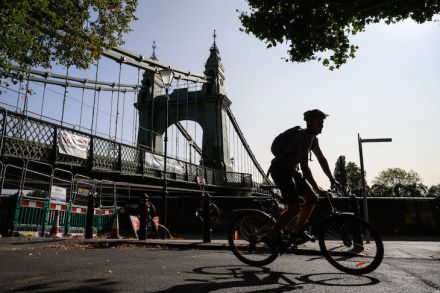
One could be forgiven for thinking that the extensive coverage given to the fiasco surrounding Hammersmith Bridge is typical of a capital-centric press blowing a local issue out of all proportion – it was disclosed this week that the west London structure, which has been closed to motor traffic since April 2019 after cracks were discovered in its pedestals, might never reopen to vehicles. But the reason the debacle has garnered so much attention, and attracted so much interest on social media, is that it is held by many to be symptomatic of this country’s troubled predicament and seemingly intractable problems.

TG Jones and WH Smith deserve to fail

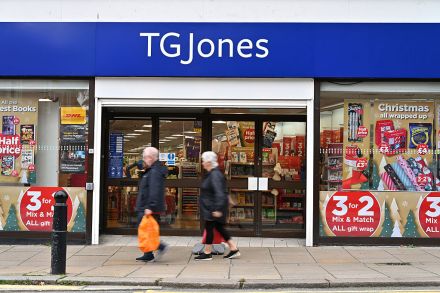
‘Too big to go down’ is an old football maxim and a cautionary tale. It refers to the complacent attitude that creeps up on established clubs, a deluded conviction that given their consistent achievements, they will never be relegated. The same attitude pervades in the world of business. Former household names on either sides of the Atlantic, such as Pan Am, TWA, Atari, Woolworths, BHS and C&A (in the UK) all went bust largely because they thought themselves invincible. The same mood exists at Boots today, which is overpriced and over-reliant on being a source of NHS prescriptions. It also used to be the case at Marks & Spencer until a few years ago, when it woke up to the fact that the likes of Primark and online shopping had arrived in earnest.