Olivia Potts

Olivia Potts

Olivia Potts is the Guild of Food Writers’ Cookery Writer of the Year 2025. She hosts The Spectator’s Table Talk podcast and writes Spectator Life's The Vintage Chef column

A literary romp: Our Noble Selves, by Kate Atkinson, reviewed

It is hard to imagine a setting better suited to bureaucratic absurdity than the lead-up to the 1951 Festival of Britain. Conceived of as a tonic for the battered postwar nation, an exercise in rebuilding, hope and celebration, it captured British eccentricity. There was even an ‘Eccentrics’ Corner’, designed to show off the ‘fertile madness of the British character’, which featured among other things the Festival emblem made up of 604 gallstones – all belonging to one patient. When Kate Atkinson tells us at the beginning of Our Noble Selves that ‘the Festival was due to open in a handful of weeks and absolutely nothing looked as if it would be ready’, we can be in no doubt that we’re in for a good time.

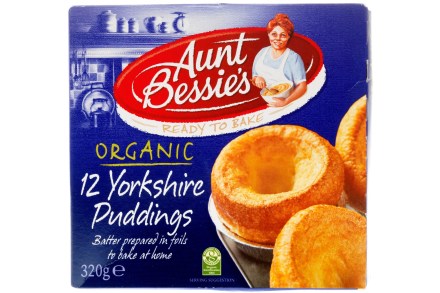
Aunt Bessie did not need a ‘glow up’

Society has always had an issue with women aging. As cosmetic surgery becomes cleverer, more subtle, and more widespread across women in the public eye, it can feel taboo to allow the smile lines to stay, the grey hairs to amass. To not seek to dye, to slim, to trim, to tighten, to pull, to tweak, to cover up – no, to defy! – the physical symptoms of the inexorable human process of getting older. Men mature like fine wine; women decay like compost. Or so we’re led to believe. But even in that context, the decision of a certain classic British brand to give their older, maternal (cartoon!) figure a ‘glow-up’ which, essentially, amounts to making her look considerably younger, feels like we may have entered the twilight zone.

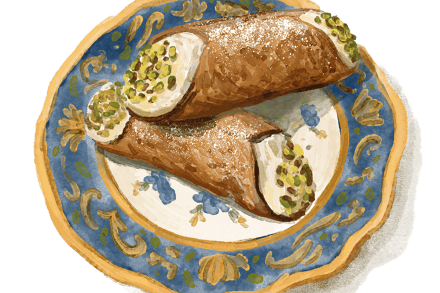
There is no substitute for homemade cannoli

A criticism often levelled at cookery writers is: ‘I could just buy that at the supermarket’, which is an apparent slam-dunk counter to the time and effort needed to make the thing yourself, i.e. why would you bother? With such people, I find myself stutteringly defending cookbooks, recipes and the practice of cooking as a whole. My defence is both obvious and compelling: I can make it better, I can make it cheaper, I know exactly what’s going into it if I’ve made it and, crucially, cooking is one of life’s pleasures. I actively enjoy kneading and proving and waiting and peeking in the oven and stirring and whisking and slicing. Making the thing is often the whole point – the end result a delightful by-product.

The myth of authentic English food

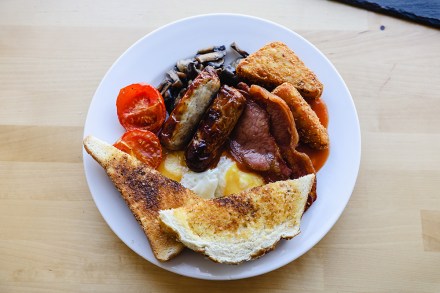
There were two butcher’s pork pies in my bag that also contained a copy of Lewis Bassett’s The Full English. As I began reading this investigation into the story of English food, having those pies on my person felt particularly in keeping with the English culinary tradition. By the time I’d finished the book, I was not so sure. Bassett sets out on well-trodden ground to ask: what is English food? He focuses on a clutch of dishes or products which have long been seen as important to, or turning points within, English food culture: bread, haute cuisine, curry, fish and chips, roast beef, sausage rolls, olive oil. So far so conventional – but that’s rather the point. His contention is that much of our received wisdom about English food is reductive or simply wrong.

For me, cornbread will always be romantic

My early days of baking coincided with the early days of dating the man who became my husband. It is no coincidence that many of those dates revolved around cooking together, shoulder-to-shoulder in his too-small south London kitchen. He was a pretty competent and confident cook; I was an eager and naive idiot, but keen to learn. Slowly (very slowly) his knowledge and skill rubbed off on me. There were some unmitigated disasters (the less said about our Scotch egg attempts the better; did you know it is possible to cock them up in five separate ways?). Others were qualified successes (a coffee and walnut cake which slopes at a 45° angle is still a coffee and walnut cake). But the first ever cornbread I baked was glorious on our first attempt.

Blackberries wait for no woman – so make jam

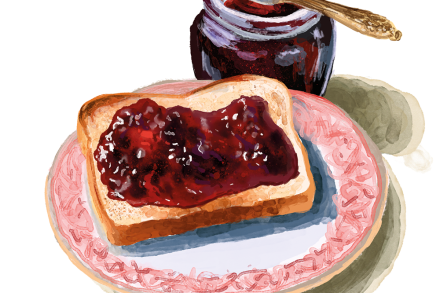
My kitchen is not ready for blackberry jam. I am not ready for blackberry jam. The heat of summer is still beating through my windows; the grass is still a brown dust; I haven’t corralled my jars or set aside preserving time. Nor have I turned my thoughts towards the fruit. I still think of blackberries as a back-to-school fruit: a signifier of autumn and all that goes with it. It just doesn’t feel like blackberry season. But it is, and the brambles wait for no woman. For several years now, the blackberries have been coming earlier and earlier. Right now, the ones near me are at perfect ripeness. A few days ago, they were tight, reluctant to let go of their star-like calyx. They may have looked dark and inky, having changed from their earlier pallid pink, but they weren’t ready.

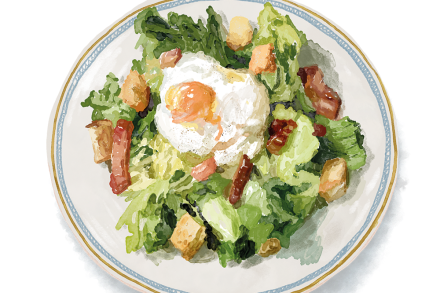
How to do a salade Lyonnaise justice

Salade Lyonnaise is often translated as ‘bacon and egg salad’ and I can’t stand it. Not because it’s inaccurate – beyond the salad leaves and the dressing, the only other non-negotiable elements of the dish are, indeed, bacon and eggs. But it feels like it misses the point. To the English ear, bacon and egg salad sounds like a lacklustre version of a full English – two items chucked into a bowl of leaves because we’re trying to cut carbs. It also – and I am aware this is just me – makes me picture the egg scrambled, and the thought of scrambled egg in a salad is horrible. ‘Bacon and egg salad’ doesn’t do the elegant, balanced and punchy salade Lyonnaise justice.

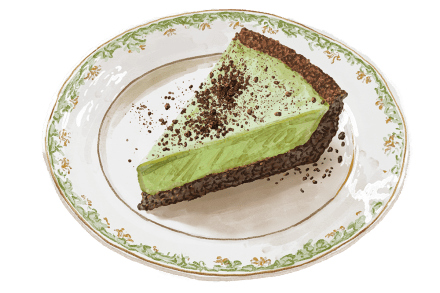
Grasshopper Pie is like a teenage fever dream

Grasshopper pie is an unlikely dish: bright green, mint-flavoured, combined with obscure liqueurs and set with marshmallows, all sitting in an Oreo crust. It feels like the fever dream of a sweet-toothed teenager who’s been let loose on their parents’ drinks cabinet, and will regret it tomorrow. The pie is based on the cocktail of the same name, which combines equal parts crème de menthe, crème de cacao blanc and cream. It’s a heady mix of mint, white chocolate, dairy and alcohol. The cocktail hails from New Orleans and its origin is claimed by Tujague’s in the French Quarter, where it was supposedly invented by the owner, Philip Guchet, in 1918. It tastes exactly as you’d imagine and is, forgive me, far better suited to a pie filling than it is to a drinks party.

All aboard for Paisley: a trip round unloved Britain

‘Most people who have been to Crewe station have never been to Crewe.’ In a moment of serendipity, my train pulls into Crewe station at the exact moment I turn the page to begin the chapter ‘Changing Tracks’ in Chris Moss’s new travelogue Where Tourists Seldom Tread. In his Guardian column ‘Postcards from Britain’, Moss visits and reconsiders ‘improbable, bypassed and unloved’ destinations, such as Warrington, Gateshead, Paisley, Clacton-on-Sea – and Crewe, which my train from London has reached after no small delay. Moss is right, of course: I have travelled through Crewe more times than I have eaten disappointing Upper Crust baguettes, but I have never actually been into the town.

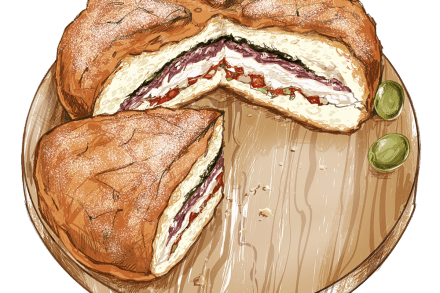
My quest for the perfect muffuletta

Everyone knows the story of the Earl of Sandwich: keen not to interrupt a late night card game at his club, he asked for roast beef to be sliced and put between two slices of bread, to allow him to eat it with his hands without stopping his game. And lo, the sandwich was born. But perhaps less familiar to us is that 140 years later, some 4,500 miles away from the Earl’s cribbage game, another problem was being observed, and was solved in a strikingly similar way. The turn of the 20th century saw an influx of Sicilian immigrants to New Orleans; almost 300,000 arrived in the city between the 1880s and 1920s, setting up shop (literally) in the French Quarter, in an area that became known as Little Palermo.

Drop the wacky wedding stunts 

Picture the scene: it’s midsummer, a bucolic wedding is mid-flow, the bride is radiant, the groom pristine. They stand above their guests in a doorway while caterers ascend the stone staircase carrying the ceremonial wedding cake. But wait! One of the caterers is wobbling! The cake is slipping! The caterer reaches for it but it falls from his hands and tumbles to the ground: splat. A dog appears from nowhere and begins to eat the crumbs. And all of it, every excruciating moment, is captured on camera. Is this one of my night terrors? Well, yes, but it was also the wedding of Anna Boden – the eldest daughter of Boden clothing founder Johnnie – to her now husband Oliver last week.

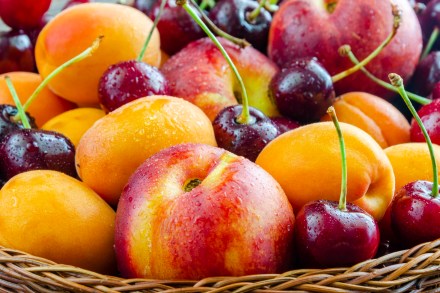
I keep being fooled by ‘ripen at home’ 

Is there a greater scam than the ‘ripen at home’ punnets of fruit that the supermarkets flog? Flimsy netted plastic of peaches, plums and apricots promise so much and deliver so little. When ripe, they need nothing doing to them at all; even cutting them with a knife feels like overkill. But, when they don’t, the result is miserable: their wooly flesh clings to the stone for dear life, and to call the flavour lacklustre would be giving it too much credit. In theory, these fruits should be a joy: representing the bounty of the season. All they should need is a day or two on the counter before they’re ripe for the taking.

Goat is tasty. But don’t force it on me

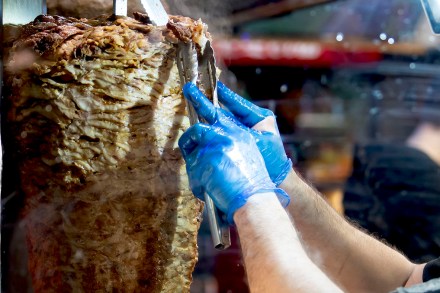
‘Laws, like sausages, cease to inspire respect in proportion as we know how they are made,’ John Godfrey Saxe warned way back in 1869. His jab was really at the ugly business of law-making rather than sausage production, but it was the sausage portion of the phrase that really stuck. The same could be said to go double for doner kebabs, which – in order to create their distinctive cone-like, shaveable structure – are often significantly more processed than the banger. And now the kebab and the law have collided.

Will a VAT cut save our restaurants?

The hospitality industry is in trouble. The last few years have seen an already low-profit, labour-intensive sector battle with a raft of spiralling costs. Soaring energy and ingredient prices, the recent increase in minimum wage and employer national insurance contributions, punishing business rates, and the cost of living crisis have all contributed to the industry being on its knees. Recent data commissioned by trade bodies shows that just under a quarter of these businesses are losing money, with one in six fearing closure before the end of the year. Leading lights of the industry have come out fighting.

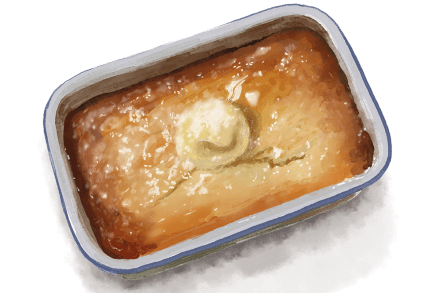
I’ve fallen in love with crème caramel 

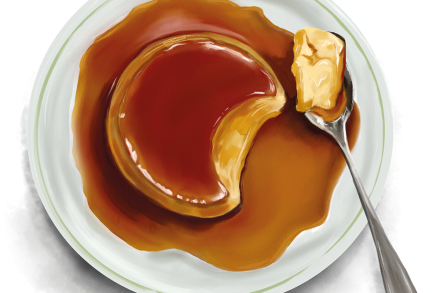
If you’ve stuck out my cookery writing for long enough, you’ll know that I am a bit of a Labrador when it comes to different dishes: greedy, ready to try anything, and likely to enjoy it. Food is where my general cynicism and air of ennui gives way to unbridled enthusiasm. There are very few dishes that, when done well, I won’t chalk up in the ‘good’ column. For a long time, crème caramel was the exception to that rule. To be fair, my experience of it had been limited: childhood self-catering holidays in northern France meant that my introduction to the crème caramel did not show it at its best.

Do single women bother to cook for themselves?

‘Let us begin with cookbooks. Or, rather, with a rejection of them. I cannot look at mine. They remind me of a person I no longer want to be.’ This is a bold start for a book whose title contains the word ‘cookbook’; but then much of The Spinster Cookbook is a subversion of the domestic and the expected. It is, for starters, not a cookbook (though it does contain a few recipes) but sits in several different realms: it is Eli Davies’s personal narrative, edging into memoir; it is a review of spinster literature from the interwar period onwards, taking in everything from Lolly Willowes to Sex and the City; it is a meditation on what it means to make a home; and it is a manifesto on different visions for co-existing. It is not a paean to cosy solo domesticity.

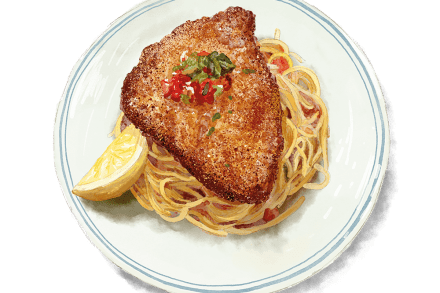
Chicken Milanese is the king of homemade fast food

When it comes to home cooking, we’re obsessed with optimisation. Today this manifests itself in reels on Instagram offering a ‘hack’ to make the time you spend in your kitchen shorter and your dinner to arrive more quickly. Harder, faster, better, stronger. None of this is new: there was a time when every Jamie Oliver cookbook shaved ten minutes of the promised cooking time off the last. Delia Smith’s How to Cheat at Cooking caused a public outcry (can you believe she advocated for frozen mashed potato?). The whole appeal of air fryers is that they’re fast, and while slow cookers don’t exactly get to their destination quickly, they do so with as little intervention as possible from the cook.

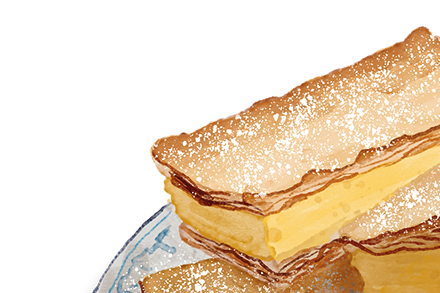
Embrace the squidge of a custard slice

Ihad a culinary revelation this week. I like to think I’m an egalitarian when it comes to food – I like beautiful, fancy restaurant stuff and home-cooked one-pot dishes, I like punchy, in-your-face flavour, and subtle, softer flavours. I love trying new-to-me dishes from around the world, and I love the comfort of eating suppers my grandma would make. You can put virtually anything in front of me and I’ll be thrilled. But as I contemplated this week’s recipe subject, I realised that I avoid foods that ooze. Doughnuts splurging out their jam, uncontainable ice-cream sandwiches, croissants or Danish pastries with custards or compotes that blob onto my clothes. Even really juicy stone fruit or a particularly ripe soft cheese makes me nervous.

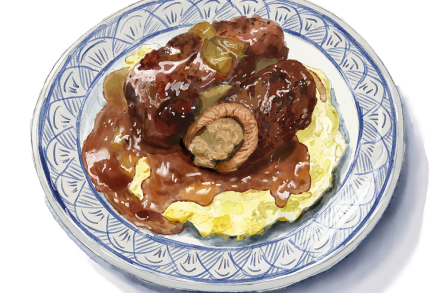
Beef olives – classic comfort food, without an olive in sight 

We all did mad things during the first Covid lockdown. For some it was getting a dog or starting up a microbakery. For me, it was signing up for a NVQ Level 2 in butchery. I’m still not quite sure how it happened, but, once the schools reopened, I spent my Tuesdays in a cold butchery store in east London, socially distanced from my septuagenarian master butchery tutor, who would teach me how to break down whole carcasses, the art of seam butchery and the trick to linking sausages.

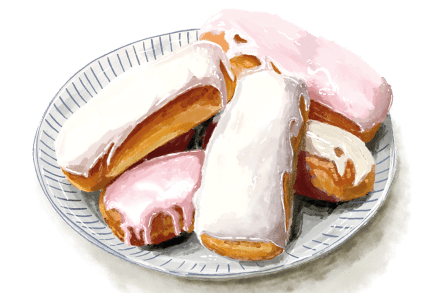
The joy of iced buns

‘It’s just a hot dog bun with icing!’ the iced-bun detractors will shriek. I’m a lady with a lot of opinions about fairly esoteric foodstuffs, many of them declamatory, immovable, or strident, but I do not understand taking against the iced bun. I’m not sure what awful bakery-based trauma must have happened to you during childhood to make iced buns the target of your ire, but they are undeserving. For anyone not a self-proclaimed detractor, iced buns (also called Swiss buns or iced fingers) prompt reveries: forgotten childhood memories of plump buns in trollies and sticky fingers holding grown-up hands.