Michael Simmons

Michael Simmons

Michael Simmons is The Spectator's economics editor. Contact him here.

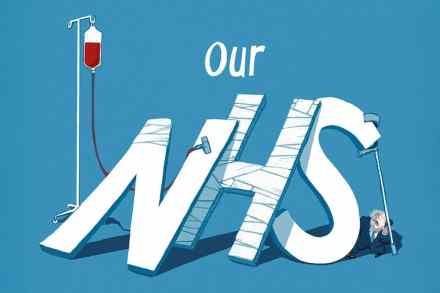
NHS waiting list rises above worst-case scenario

The NHS crisis continues, with a set of data today showing that the extra cash invested by the Tories is not translating into progress. Those waiting 52 weeks for an operation climbed 5 per cent to 323,000. This is worse than the NHS worst-case scenario leaked to The Spectator and published on our NHS data hub. Here are some of the main points from today’s data release. 1. Those waiting more than a year for NHS hospital treatment rose by a further 17,000 to 323,000 - 5 per cent of all patients. This is already 50,000 above what had been expected had Omicron turned out to be mild (as was the case). The total number of people waiting for hospital treatment for any length of time reached 6.

Is there a new Covid wave – and do we need to worry?

Is Covid back on the rise? The ONS survey shows increasing prevalence in England and Northern Ireland, with ‘uncertain’ results in Wales and Scotland. Scotland’s prevalence (2.4 per cent have the virus, according to the ONS) is almost double anywhere else. Hospitalisations are rising too: up 17 per cent since last week – though two-thirds are incidental (ie in hospital for other reasons). So is this a new Covid wave? ‘Early signs that Covid may be rising’, says the BBC. But to those following the data closely, the uptick has been expected for some time – as the natural side-effect of a new variant. It is not, in and of itself, cause for alarm. Omicron is still mutating: and now the sub-variants BA.4 and BA.5 have taken over.

Scotland’s census has failed

Today is deadline day for Scotland’s census. When threats of £1,000 fines were delayed at the start of this month just 74 per cent had returned their form. It’s now 86 per cent. Better, but far short of the 94 per cent national target. Some 370,000 households are yet to complete it. The target of 85 per cent in all local areas hasn’t been met either. Nicola Sturgeon has admitted the outputs could be unreliable. Academics have also warned the data could be ‘useless’ because of low uptake and extensions to the collection period. The minister responsible - Angus Robertson - jetted off to Brussels this morning. Why the low return rate? One theory is that unionists are ‘boycotting’ it to make the government look bad.

Sturgeon’s record in eight graphs

Today, Nicola Sturgeon becomes the longest serving First Minister in the history of devolution. Surpassing Alex Salmond’s seven years, six months and five days. It’s a long time to be in charge: a full generation by some definitions. Certainly time enough to make your mark on a country with devolved powers unparalleled in the democratic world. But what difference has Sturgeon made in her time in office: 1. Life expectancy for Scots men and women has seen the sharpest fall in 40 years – accelerating in the time Sturgeon’s been in power.  Scottish men born today can expect to live 77 years, the lowest of any UK country (it’s 79 in England) and a fall of some 18 weeks on the year before.

No, monkeypox didn’t leak from Wuhan

It’s a familiar story. Close contacts of individuals infected by a dangerous illness are being asked by UK officials to isolate as government concern about the outbreak grows. Just 57 cases have been reported in Britain so far – 168 globally – but already questions are being asked about the virus’s origins. One theory involves the Wuhan Institute of Virology. The lab, which is considered by a growing number of scientists to be the origin of the original Covid pandemic, specialises in so-called ‘gain of function experiments’. These experiments aim to genetically enhance viruses (like Covid) so they are more likely to jump species to humans.

Monkeypox: what we know so far

Contacts of patients infected with monkeypox are being asked to isolate for three weeks, according to guidance from the UK Health Security Agency. They will also be instructed to ‘avoid contact with immunosuppressed people, pregnant women, and children under 12’. In England, there have been just 20 confirmed cases so far but community spread has concerned scientists. Scotland reported its first case this morning. At least 109 cases have been confirmed globally, with Spain seeing the highest prevalence. A large proportion of cases have been reported among gay and bisexual men though monkeypox is not classified as a sexually transmitted disease. One theory under investigation is that a Pride event in Gran Canaria may have acted as a super-spreader event.

Zelensky’s choice

31 min listen

This week Lara Prendergast and William Moore talk to James Forsyth and the academic, Dr Alexander Clarkson about Zelensky's possible path to peace (00:42). Followed by Owen Matthews, The Spectator's Russia correspondent on Turkey's power over Nato expansion (13:28). Finally, a chat between two bowls fanatics, Michael Simmons, The Spectator's data journalist and Andrew Gibson from the bowls green in Streatham (22:00).Hosted by Lara Prendergast & William MooreProduced by Sam HolmesSubscribe to The Spectator today and get a £20 Amazon gift voucher: spectator.

The politics of bowls clubs

Bowls has a reputation as a sedate pastime, but it can be as fiercely competitive as any other sport. It can even get rowdy. At the Edinburgh cup final in 2012, a young player, angry at losing the match, stripped down to his boxers in protest. When committee members from his team tried to restrain him, he headbutted the club secretary. Bowls players have always taken the sport very seriously. According to popular legend, Sir Francis Drake was playing bowls at Plymouth Hoe when the Spanish Armada came into view off the headland. He insisted on finishing the game. Battle could wait, bowls couldn’t. The object of the game is simple: get your bowls closer to the ‘jack’ than your opponent. That said, the sport is more sophisticated than the French variation, boules.

Michael Simmons, C.J. Farrington and Aidan Hartley

16 min listen

On this week's episode, we’ll hear from Michael Simmons on some of the most ridiculous Covid fines. (00:52) After, C.J. Farrington on the light and darkness of Russian culture. (04:10) And, to finish, Aidan Hartley on the return of the buffalo. (11:07)Produced and Presented by Sam HolmesEntries for this year's Innovator Awards, sponsored by Investec, are now open. To apply, go to: spectator.

Six graphs that show how the NHS is collapsing

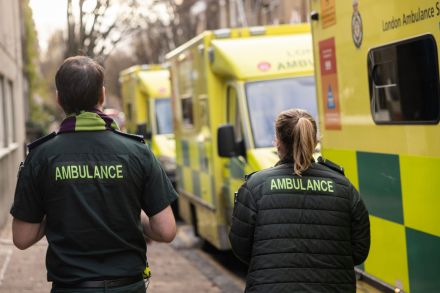
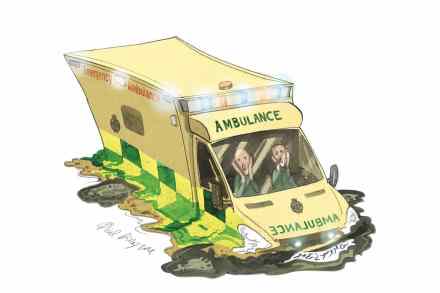
If you called an ambulance last month you probably faced quite a long wait. Figures released this morning show the average time for an ambulance to arrive after a ‘category two’ call-out was 51 minutes, only slightly down from 61 minutes in March. This is still nearly three times longer than the 18 minute target for category two emergency calls, which include serious conditions such as strokes or chest pain.  Pressure is mounting within hospitals too, with 12 hour A&E waits reaching a new high: one in 20 patients now have to wait half a day or more for treatment after arriving at hospital.

From snowball fights to delivering birthday cards: Britain’s 136,000 lockdown penalty charges

While Boris Johnson and Keir Starmer await the police’s judgment, there has been no end to the fines issued to others caught by their lockdown rules. At last count, some 136,000 fixed penalty notices had been issued in Britain. Durham police – a fairly easygoing force by Covid standards – have handed out just 1,090. Is it a bit mean to fine someone for having had a glass of wine or a beer at work? Perhaps. But no more so than the fines still being issued under the lockdown rules that Johnson and Starmer both voted through. A student in Leeds was fined £10,000 for organising a snowball fight. A beggar was fined £434 for having his cap out at King’s Cross station.

The 2022 local election results in five charts

Local elections results are still coming in but one thing is already clear: it’s been a bad night for the Tories. The Conservatives have lost 184 seats and ten councils, not as bad as the 800 councillors they had been forecast to lose. But still hardly a result for Boris Johnson to celebrate. Labour haven’t quite lived up to their highest hopes either. Just over two thirds of councils have declared and Labour have gained 48 councillors and five councils so far. But despite these gains, their vote share appears to be up by around only one per cent on 2018, when these seats were last contested. The biggest gains were made by the Liberal Democrats who have 84 new councillors so far and taken control of Hull from Labour.

What happened to the SNP’s dodgy dossier?

In the final weeks before the 2014 Scottish referendum, the last independent Clydeside shipbuilder went bust. The SNP was boasting about ‘one of the world’s wealthiest nations’ going it alone, so when it went pop something had to be done. A millionaire adviser to Alex Salmond was lined up to buy it on the understanding that he’d bid for government contracts. A year later, a £100 million deal was struck to build two ferries. That deal quickly ran aground. There was no sign of the ferries by 2018 and the bill had doubled to £200 million.

Will Scotland’s census extension ruin the results?

The debacle over Scotland’s census will not, it seems, have a happy ending. Nearly a quarter of households (some 604,000) are yet to complete their return, and had been facing £1,000 fines from today. It could have been a prosecution of unprecedented scale, but the deadline has been extended to the end of May. Sir Tom Devine, perhaps Scotland’s best-known historian, has said he thinks all is lost. ‘Such is the scale of the disaster the authorities have had little choice but to offer a new deadline,’ he said. ‘Will the extension work? It is very doubtful.

Why Scotland’s census blunder matters

Around 700,000 Scottish households – a quarter of the country – are facing £1,000 fines for failing to complete the census. Eleven years ago, the last time the census was run, it took 10 days to reach the current response rate of 74 per cent. This time it’s taken over a month. There’s not much hope in getting the rate up either. Studies from the US show census return rates don’t improve after the first few weeks.  If 700,000 households are to be fined this would be the largest prosecution in Scottish legal history, probably British too. In 2011 – where the final response rate was 94 per cent and over 90 per cent in all council areas – just five people were reported to prosecutors. By the following February there’d only been one conviction.

Katy Balls, Michael Bryant and Michael Simmons

20 min listen

On this week's episode, we'll hear from Katy Balls on the changing face of No.10. (00:49)Next, Michael Bryant on the history of War Crimes. (06:16)And finally, Michael Simmons on Nicola Sturgeon’s secret state. (11:08)Produced and presented by Sam HolmesSubscribe to The Spectator today and get a £20 Amazon gift voucher.

Is Macron in for a surprise?

14 min listen

Ahead of the first round of France's presidential elections on Sunday, Katy Balls asks whether Emmanuel Macron will be able to justify his apparent distance from the campaign trail. Taking part in the discussion with Katy Balls are Spectator contributor Jonathan Miller, Georgina Wright, from Institute Montaigne, and The Spectator's data journalist Michael Simmons.

How much is Europe (still) paying Putin for oil?

When sanctions were imposed on Russia there was a big exception: Europe was still buying and paying for oil – leading to a bizarre situation. The West was doing everything it could to help Ukraine while still sending Putin hundreds of millions of dollars a day. But how much was that revenue worth to the Kremlin? As sanctions began to hit Russia, the price of Brent crude (the oil benchmark) soared to $130 a barrel, the highest since the 2008 financial crisis: an increase of over 90 per cent. It’s fallen since then but today it's still sitting between $107 and $115 dollars a barrel – well above where it had been weeks ago. But are these price rises making money for the Kremlin?

Will Nicola Sturgeon’s mask restrictions have any effect?

As England axes the last of its Covid regulations, Nicola Sturgeon is extending Scotland’s – saying that mask wearing in shops, on buses, trains and taxis will be continued ‘for a further short period’. You can see why. Cases are surging and Scottish hospitals have more Covid patients than at any point during the winter. Weekly Covid-related deaths are 14 per cent higher than in England. But given that England didn’t bring in any additional Christmas restrictions and ended mask wearing at the end of January – and now has lower Covid cases than Scotland – it seems fair to ask: will Sturgeon’s measures actually help?

Covid is rising again. Should we worry?

For some time now, Covid has been rising in Scotland - there are now more Scots in hospital with Covid than at any time throughout the winter. A freak, or a sign of what’s to come nationally? The ONS survey answers that question today, confirming that Covid cases are rising nationally: some 4 per cent of England’s population, it says, would test positive. In Northern Ireland it’s closer to 8 per cent and in Scotland 5.7 per cent. Have waning vaccines created space for another wave - and do we need to worry? Just as Gauteng and South Africa then Lambeth and London were the early warning signs for Omicron’s rise and speedy peak, so seems to be Scotland now. The ONS survey have shown cases rising there for weeks and it’s been puzzling scientists.