Michael Simmons

Michael Simmons

Michael Simmons is The Spectator's economics editor. Contact him here.

Kate Andrews, Anthony Whitehead and Michael Simmons

16 min listen

This week: Kate Andrews laments how Truss is hurting the free-market cause (00:51), Anthony Whitehead explains the 'arrogance' of the latest environmental activist movement the Tyre Extinguishers (06:42) and Michael Simmons reads his notes on barcodes (12:54).Produced and presented by Oscar Edmondson.

How likely are the lights to go out this winter?

Britain will make it through the winter without the lights going out. That’s the view of the National Grid, which is responsible for Britain's energy system. You'd be forgiven for thinking otherwise based on the BBC's headline: 'Homes face winter power cuts in worst-case scenario, says National Grid'. But Fintan Slye, executive director of the grid, offered some words of reassurance:  ‘Under our Base Case we are cautiously confident that there will be adequate margins through the winter period.’  In other words: the lights won’t go out. In the scenario considered most likely, we’ll be left with a small margin of six per cent – or just under four gigawatts (GW) of unused capacity.

The barcode revolution

Beep-bop. The sound of the supermarket checkout – a noise Morrisons felt the need to mute after the Queen’s death – is made possible by an invention which turns 70 this week: the barcode. On 7 October 1952, a patent was granted to American inventors Bernard Silver and Norman Woodland. Four years earlier, a shopkeeper in Pennsylvania went to the local university begging for help. He needed a way to get customers through his store quickly because logistics were stopping him meeting demand since typing in product numbers and prices into tills was cumbersome. An electronic system wasn’t possible, said the university. Silver overheard the conversation, set up shop in his parents’ apartment and enlisted Woodland.

How will Sturgeon respond to Kwarteng’s budget?

Kwarteng’s £45 billion tax cuts will have given Nicola Sturgeon a headache. She has power over income tax and has indicated that she won’t replicate his cuts (especially for the best paid). Which means that Scots could end up paying hundreds of pounds more in income tax next year. Already, there is talk about Scottish tax exiles heading to London (with a particular focus on Edinburgh’s financial service industry.) The Chartered Institute of Taxation has run the figures. If the 1p cut to the basic rate isn’t passed on in Scotland, anyone earning more than £14,732 will pay more tax than those in the rest of the UK. Those earning £30,000 will pay nearly £200 more each year.

Is Truss in trouble?

The history of political popularity shows things go in one direction: down. John Major entered office with a net satisfaction of +15 and left it having lost 42 points. Blair moved into Downing Street a whopping 60 points in the positive. When he left he’d fallen to -27. And so the story goes – even the Maybot started quite popular with a +35. Where you start can make all the difference. If things are only going to go one way, you want as handsome a margin as possible. That’s why today’s political monitor poll from Ipsos Mori could spell trouble for Truss. She’s beginning her term in office on minus two. She joins Boris Johnson as the only prime ministers since 1982 to start on a negative rating.

Why life expectancy is going down in Scotland

Life expectancy is perhaps the surest sign of a country’s welfare, which makes it all the more worrying that Scotland’s is going down. Figures out today show that when it comes to life expectancy, Scotland is no longer near the bottom range of western European countries and has instead joined the ranks of the post-Soviet states. Given Scotland’s level of state spending (amongst the highest in the world) this presents a conundrum. What’s going wrong? A boy born in Scotland today will live to 76.6 years on average, a girl just under 81. That’s a fall of some 11 weeks for men and almost 8 for women since last year. It’s the second year in a row the figure has fallen, bucking international trends.

Is long Covid all in the mind?

What's the link between long Covid and mental health? A study just published in the Journal of the American Medical Association suggests it's a significant one. The paper looked at more than 3,000 people who tested positive for Covid in the US. Of those who went on to develop ‘long Covid’, it found many of them already experienced mental distress before catching the virus. The study looked at 3,193 people – mostly women – who reported Covid symptoms continuing four weeks after first falling ill. They found that those reporting long Covid were more likely to have already experienced a range of symptoms including ‘depression, anxiety, worry about Covid, loneliness and stress’ before they tested positive. The risk increased between 1.3 and 1.5 fold.

US lockdowns wipe out decades of maths and reading progress

In Britain, the damage of lockdown was easily covered up by grade inflation: with 45 per cent of A Level students being given A or A*. In the United States, there are large-scale independent studies published today. It’s pretty devastating. Educational performance scores for nine-year-olds have fallen to levels last seen in 1999: so two decades of progress wiped out. It’s the first time on record that performance in maths has fallen at all, and reading ability fell further than it has at any point in the last 30 years.  The National Assessment of Educational Progress, released today, measures the long term ability of 14,800 nine-year-olds in the US in core reading and maths skills. Average scores fell five points in reading and seven points in maths compared with 2020.

We’re at pandemic levels of death. Why is no one talking about it?

At the peak of the lockdowns, thousands were dying every week. Newspaper front pages demanded action. But in the latest week’s data, covering the week to 12 August, some 1,082 more people than would be expected in a normal year died in the UK. These so-called ‘excess deaths’ have averaged 1,000 for 15 weeks of this year. Yet unlike Covid deaths, they are met with near silence. But it isn’t Covid that’s causing these deaths anymore. In the latest figures, published by the ONS, just 6 per cent of English and Welsh deaths had anything to do with Covid. Of nearly 10,000 weekly deaths in England, just 561 mentioned the virus on the death certificate.

The NHS is collapsing. These figures prove it

Twelve-hour A&E waits are at a record high. Doctors fear that tens of thousands will die because of delays in treatment. Already some 10,000 people have waited more than three months for urgent cancer treatment, a consequence of turning the NHS into the national Covid-but-nothing-else-service during lockdown.  Excess deaths at home, the number of people dying above the five-year average, is nearly 17,000 in England and Wales. Meanwhile, fewer people seem to be dying in hospital. That suggests many patients aren’t even getting proper medical attention. We’re used to hearing about NHS crises in winter, but winter now seems to be all year round.

Has Sadiq Khan’s junk food ad ban really stopped London getting fatter?

London Mayor Sadiq Khan made a bold claim this week: ‘As a result of our junk food advertising ban on Transport for London, nearly 100,000 cases of obesity have been prevented since 2019.’ Hailing the ‘incredible result’, Khan said ‘it’s expected to save the NHS over £200 million’. Is it true though? To ascertain whether the ban worked, researchers from Sheffield university and the London School of Hygiene and Tropical Medicine produced a graph. They found that there were some 4.8 per cent fewer obese people than expected and 1.8 per cent fewer overweight people. What they didn’t do was actually count the obesity rate in London’s population. Instead, their estimates were based on a mathematical model.

Scotland’s drug deaths scandal is a problem no one seems able to solve

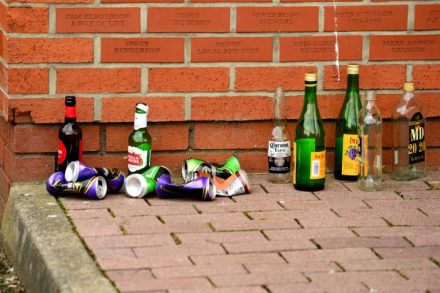
Scotland has a high amount of drugs deaths. But it's not just that. It’s that Scotland suffers drugs deaths at levels unknown anywhere else in the UK or Europe – nearly four times worse than any other country for which records exist. This scandalous figure has been updated today, showing that – although it fell one per cent this year – it has trebled since the SNP came to power. It speaks to a wider collapse of public policy. And one that requires urgent attention. The new figures published show drug-related deaths have fallen to 1,330 – just nine fewer than the year before and the second-highest ever recorded. As a share of the population this is the worst recorded by any European country – and by some margin.

Are masks bad for you?

Could masks be making us sick? That’s the suggestion in a Japanese study, published this week in Nature’s Scientific Report’s journal, which looked at bacterial and fungal growth on face masks worn during the pandemic. The results may put you off your tea. The study looked at the masks of 109 people and shows that bacteria grows in bigger colonies on the inside of the mask compared with the outside. The opposite was true for fungus. Wearing the same mask for a long period of time ‘significantly’ increased the amount of fungus growing on a mask but had no effect on the amount of bacteria. Every mask bar one – 99 per cent of the masks examined – contained bacterial colonies on the inside and 94 per cent on the outside.

Fact check: Is Sadiq Khan right about fires?

Will global warming condemn Britain to more fires? Sadiq Khan, Mayor of London, has been widely quoted this morning comparing recent fires around the capital to the Blitz. ‘Yesterday was the busiest day for the fire service in London since the second world war,’ he said – climate change caused the heatwave which ‘led to the fires’. He added that he was dismayed that the Tory leadership contenders were not discussing this ‘elephant in the room.’ So is this right – or misleading? As so often, it’s a mixture. Khan is correct to say that the number of calls to London fire brigade was a record high: it received more than 2,600 calls. But 999 call handlers can receive hundreds of calls about the same incident.

As the NHS shut down, the wealthy chose to die at home

Since January, some 22,000 more Brits have died at home than would be expected in a normal year. These so-called excess deaths at home had stumped doctors and left GPs calling for an investigation. The causes remain unclear but a study published today offers the first clues to what’s going on. The study, funded by Marie Curie, found that deaths at home increased sharpest in the most affluent areas during the pandemic. While excess deaths occurred in all groups, in England there were 33 per cent more at-home deaths than pre-pandemic in the least deprived areas. Meanwhile, deaths in the most deprived areas grew just 21 per cent. In Scotland the increases were even starker: 44 per cent in the least deprived and 36 per cent in the poorest areas.

Boris’s premiership in seven graphs

Boris Johnson has just quit – forced out by the sheer number of resignations, leaving him without a government. He came into office promising to deliver Brexit. He pledged taxes would be frozen and the size of government would shrink. Everything was of course overtaken by Covid. Here’s a look at his premiership in charts and numbers. Boris is currently the 34th longest serving prime minister, having just today drawn level with Neville Chamberlain. He wants to stay on until party conference season in October – as it stands he’s 28 days behind Theresa May. The PM’s downfall was brought about after a record number of resignations. Since Tuesday over 100 cabinet secretaries, ministers and PPSs have resigned.

Datawatch: Falling attainment in primary school leavers

Last month, concerning data revealed the damage lockdown had done to children. Data released today further illuminates the consequences of Covid restrictions. Figures released this morning by the Department for Education paint a worrying picture: attainment in children aged eight to 11 in five key areas – reading, maths, grammar, writing and science – have fallen drastically. The assessments found that only 59 per cent of children are meeting the expected standards in reading, writing and maths compared with 65 per cent before the pandemic. The results are the lowest attainment scores since 2016. The only area which saw an improvement over the lockdown period was reading, which rose one percentage point to 74 per cent.

The mystery of Britain’s surging at-home deaths

Britain may look like it’s back to normal after the lockdowns but one alarming trend that emerged in 2020 is very much still with us: people dying at home, who would once have been seen in hospital. This is called ‘excess’ at-home deaths; a number very energetically reported when deaths related to Covid — but not so closely followed for the thousands unrelated deaths. So what’s going on? This year so far some 13,000 people more than average died at home in England and Wales. In hospitals though it’s 7,200 below average and there have been 3,649 fewer in care homes too. In Scotland there have been over 7,000 excess deaths at home, but only 1,000 in hospitals and in care homes there were 1,320 less than expected.

Lockdown’s impact on young children: a look at the data

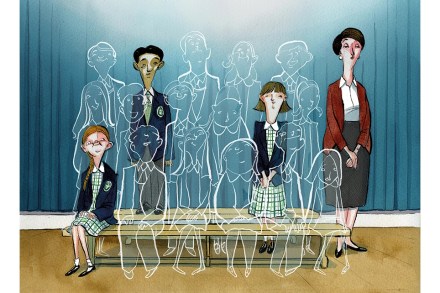
How much damage did lockdown inflict on children’s development? This could be one of the least-explored scandals in public life given that neither Tory nor Labour (who both backed lockdown) are keen to look at the aftermath. But the Institute for Fiscal Studies is branching out from its normal financial remit and has published a report on early years inequality, and it has found serious grounds for concern. The report, Early childhood inequalities (part of the Deaton review) looked at educational and developmental inequality in very young children: especially those aged two. This was a demographic that was considered by no one during lockdown, but other literature shows these two years are crucial in a child’s development.

By-election results in six graphs

Last night's by-elections in Wakefield and Tiverton and Honiton have proved disastrous for the Tories. Labour took Wakefield by 4,925 votes – a swing of almost 13 per cent. The Liberal Democrats meanwhile put another dent in the ‘blue wall’ taking Tiverton by 6,144 and achieving a massive 30 per cent swing. The Tiverton and Honiton result highlights the trouble Boris’s government finds itself in. The seat has been Conservative – and with a large majority – since its creation in 1997. But even before that seats in the area had been Tory since Queen Victoria was on the throne. Turnout was well below general election levels. In Wakefield, just 39 per cent bothered to vote – the lowest ever in the seat.