Michael Simmons

Michael Simmons

Michael Simmons is The Spectator's economics editor.

We’re at pandemic levels of death. Why is no one talking about it?

At the peak of the lockdowns, thousands were dying every week. Newspaper front pages demanded action. But in the latest week’s data, covering the week to 12 August, some 1,082 more people than would be expected in a normal year died in the UK. These so-called ‘excess deaths’ have averaged 1,000 for 15 weeks of this year. Yet unlike Covid deaths, they are met with near silence. But it isn’t Covid that’s causing these deaths anymore. In the latest figures, published by the ONS, just 6 per cent of English and Welsh deaths had anything to do with Covid. Of nearly 10,000 weekly deaths in England, just 561 mentioned the virus on the death certificate.
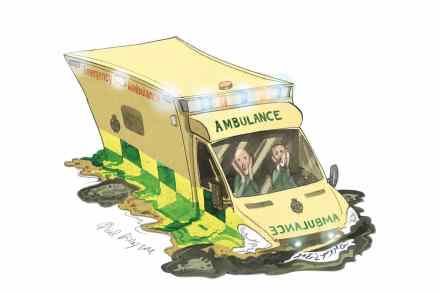
The NHS is collapsing. These figures prove it

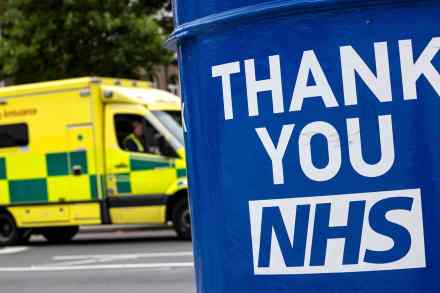
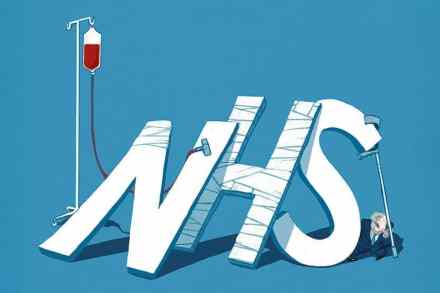
Twelve-hour A&E waits are at a record high. Doctors fear that tens of thousands will die because of delays in treatment. Already some 10,000 people have waited more than three months for urgent cancer treatment, a consequence of turning the NHS into the national Covid-but-nothing-else-service during lockdown.  Excess deaths at home, the number of people dying above the five-year average, is nearly 17,000 in England and Wales. Meanwhile, fewer people seem to be dying in hospital. That suggests many patients aren’t even getting proper medical attention. We’re used to hearing about NHS crises in winter, but winter now seems to be all year round.

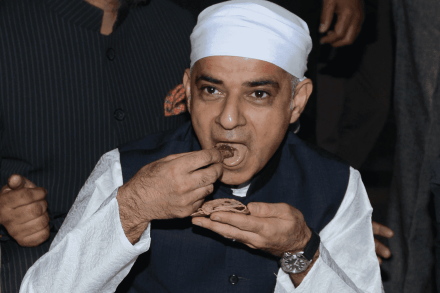
Has Sadiq Khan’s junk food ad ban really stopped London getting fatter?

London Mayor Sadiq Khan made a bold claim this week: ‘As a result of our junk food advertising ban on Transport for London, nearly 100,000 cases of obesity have been prevented since 2019.’ Hailing the ‘incredible result’, Khan said ‘it’s expected to save the NHS over £200 million’. Is it true though? To ascertain whether the ban worked, researchers from Sheffield university and the London School of Hygiene and Tropical Medicine produced a graph. They found that there were some 4.8 per cent fewer obese people than expected and 1.8 per cent fewer overweight people. What they didn’t do was actually count the obesity rate in London’s population. Instead, their estimates were based on a mathematical model.

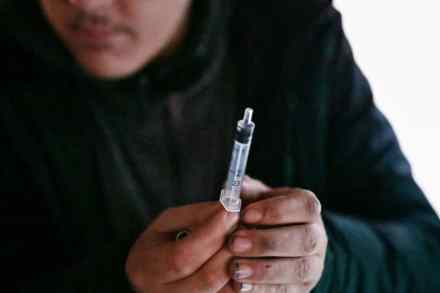
Scotland’s drug deaths scandal is a problem no one seems able to solve

Scotland has a high amount of drugs deaths. But it's not just that. It’s that Scotland suffers drugs deaths at levels unknown anywhere else in the UK or Europe – nearly four times worse than any other country for which records exist. This scandalous figure has been updated today, showing that – although it fell one per cent this year – it has trebled since the SNP came to power. It speaks to a wider collapse of public policy. And one that requires urgent attention. The new figures published show drug-related deaths have fallen to 1,330 – just nine fewer than the year before and the second-highest ever recorded. As a share of the population this is the worst recorded by any European country – and by some margin.

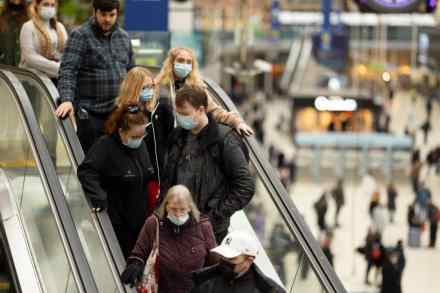
Are masks bad for you?

Could masks be making us sick? That’s the suggestion in a Japanese study, published this week in Nature’s Scientific Report’s journal, which looked at bacterial and fungal growth on face masks worn during the pandemic. The results may put you off your tea. The study looked at the masks of 109 people and shows that bacteria grows in bigger colonies on the inside of the mask compared with the outside. The opposite was true for fungus. Wearing the same mask for a long period of time ‘significantly’ increased the amount of fungus growing on a mask but had no effect on the amount of bacteria. Every mask bar one – 99 per cent of the masks examined – contained bacterial colonies on the inside and 94 per cent on the outside.

Fact check: Is Sadiq Khan right about fires?

Will global warming condemn Britain to more fires? Sadiq Khan, Mayor of London, has been widely quoted this morning comparing recent fires around the capital to the Blitz. ‘Yesterday was the busiest day for the fire service in London since the second world war,’ he said – climate change caused the heatwave which ‘led to the fires’. He added that he was dismayed that the Tory leadership contenders were not discussing this ‘elephant in the room.’ So is this right – or misleading? As so often, it’s a mixture. Khan is correct to say that the number of calls to London fire brigade was a record high: it received more than 2,600 calls. But 999 call handlers can receive hundreds of calls about the same incident.

As the NHS shut down, the wealthy chose to die at home

Since January, some 22,000 more Brits have died at home than would be expected in a normal year. These so-called excess deaths at home had stumped doctors and left GPs calling for an investigation. The causes remain unclear but a study published today offers the first clues to what’s going on. The study, funded by Marie Curie, found that deaths at home increased sharpest in the most affluent areas during the pandemic. While excess deaths occurred in all groups, in England there were 33 per cent more at-home deaths than pre-pandemic in the least deprived areas. Meanwhile, deaths in the most deprived areas grew just 21 per cent. In Scotland the increases were even starker: 44 per cent in the least deprived and 36 per cent in the poorest areas.

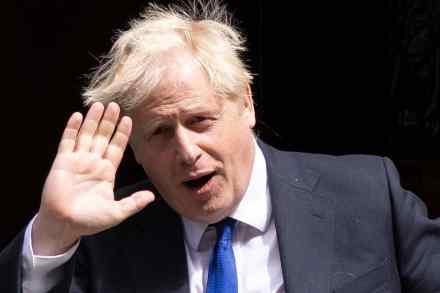
Boris’s premiership in seven graphs

Boris Johnson has just quit – forced out by the sheer number of resignations, leaving him without a government. He came into office promising to deliver Brexit. He pledged taxes would be frozen and the size of government would shrink. Everything was of course overtaken by Covid. Here’s a look at his premiership in charts and numbers. Boris is currently the 34th longest serving prime minister, having just today drawn level with Neville Chamberlain. He wants to stay on until party conference season in October – as it stands he’s 28 days behind Theresa May. The PM’s downfall was brought about after a record number of resignations. Since Tuesday over 100 cabinet secretaries, ministers and PPSs have resigned.

Datawatch: Falling attainment in primary school leavers

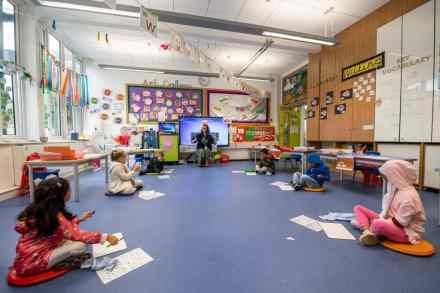
Last month, concerning data revealed the damage lockdown had done to children. Data released today further illuminates the consequences of Covid restrictions. Figures released this morning by the Department for Education paint a worrying picture: attainment in children aged eight to 11 in five key areas – reading, maths, grammar, writing and science – have fallen drastically. The assessments found that only 59 per cent of children are meeting the expected standards in reading, writing and maths compared with 65 per cent before the pandemic. The results are the lowest attainment scores since 2016. The only area which saw an improvement over the lockdown period was reading, which rose one percentage point to 74 per cent.

The mystery of Britain’s surging at-home deaths

Britain may look like it’s back to normal after the lockdowns but one alarming trend that emerged in 2020 is very much still with us: people dying at home, who would once have been seen in hospital. This is called ‘excess’ at-home deaths; a number very energetically reported when deaths related to Covid — but not so closely followed for the thousands unrelated deaths. So what’s going on? This year so far some 13,000 people more than average died at home in England and Wales. In hospitals though it’s 7,200 below average and there have been 3,649 fewer in care homes too. In Scotland there have been over 7,000 excess deaths at home, but only 1,000 in hospitals and in care homes there were 1,320 less than expected.

Lockdown’s impact on young children: a look at the data

How much damage did lockdown inflict on children’s development? This could be one of the least-explored scandals in public life given that neither Tory nor Labour (who both backed lockdown) are keen to look at the aftermath. But the Institute for Fiscal Studies is branching out from its normal financial remit and has published a report on early years inequality, and it has found serious grounds for concern. The report, Early childhood inequalities (part of the Deaton review) looked at educational and developmental inequality in very young children: especially those aged two. This was a demographic that was considered by no one during lockdown, but other literature shows these two years are crucial in a child’s development.

By-election results in six graphs

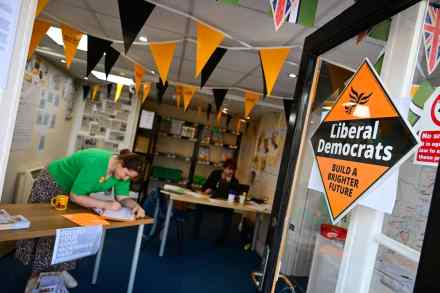
Last night's by-elections in Wakefield and Tiverton and Honiton have proved disastrous for the Tories. Labour took Wakefield by 4,925 votes – a swing of almost 13 per cent. The Liberal Democrats meanwhile put another dent in the ‘blue wall’ taking Tiverton by 6,144 and achieving a massive 30 per cent swing. The Tiverton and Honiton result highlights the trouble Boris’s government finds itself in. The seat has been Conservative – and with a large majority – since its creation in 1997. But even before that seats in the area had been Tory since Queen Victoria was on the throne. Turnout was well below general election levels. In Wakefield, just 39 per cent bothered to vote – the lowest ever in the seat.

NHS waiting list rises above worst-case scenario

The NHS crisis continues, with a set of data today showing that the extra cash invested by the Tories is not translating into progress. Those waiting 52 weeks for an operation climbed 5 per cent to 323,000. This is worse than the NHS worst-case scenario leaked to The Spectator and published on our NHS data hub. Here are some of the main points from today’s data release. 1. Those waiting more than a year for NHS hospital treatment rose by a further 17,000 to 323,000 - 5 per cent of all patients. This is already 50,000 above what had been expected had Omicron turned out to be mild (as was the case). The total number of people waiting for hospital treatment for any length of time reached 6.

Is there a new Covid wave – and do we need to worry?

Is Covid back on the rise? The ONS survey shows increasing prevalence in England and Northern Ireland, with ‘uncertain’ results in Wales and Scotland. Scotland’s prevalence (2.4 per cent have the virus, according to the ONS) is almost double anywhere else. Hospitalisations are rising too: up 17 per cent since last week – though two-thirds are incidental (ie in hospital for other reasons). So is this a new Covid wave? ‘Early signs that Covid may be rising’, says the BBC. But to those following the data closely, the uptick has been expected for some time – as the natural side-effect of a new variant. It is not, in and of itself, cause for alarm. Omicron is still mutating: and now the sub-variants BA.4 and BA.5 have taken over.

Scotland’s census has failed

Today is deadline day for Scotland’s census. When threats of £1,000 fines were delayed at the start of this month just 74 per cent had returned their form. It’s now 86 per cent. Better, but far short of the 94 per cent national target. Some 370,000 households are yet to complete it. The target of 85 per cent in all local areas hasn’t been met either. Nicola Sturgeon has admitted the outputs could be unreliable. Academics have also warned the data could be ‘useless’ because of low uptake and extensions to the collection period. The minister responsible - Angus Robertson - jetted off to Brussels this morning. Why the low return rate? One theory is that unionists are ‘boycotting’ it to make the government look bad.

Sturgeon’s record in eight graphs

Today, Nicola Sturgeon becomes the longest serving First Minister in the history of devolution. Surpassing Alex Salmond’s seven years, six months and five days. It’s a long time to be in charge: a full generation by some definitions. Certainly time enough to make your mark on a country with devolved powers unparalleled in the democratic world. But what difference has Sturgeon made in her time in office: 1. Life expectancy for Scots men and women has seen the sharpest fall in 40 years – accelerating in the time Sturgeon’s been in power.  Scottish men born today can expect to live 77 years, the lowest of any UK country (it’s 79 in England) and a fall of some 18 weeks on the year before.

No, monkeypox didn’t leak from Wuhan

It’s a familiar story. Close contacts of individuals infected by a dangerous illness are being asked by UK officials to isolate as government concern about the outbreak grows. Just 57 cases have been reported in Britain so far – 168 globally – but already questions are being asked about the virus’s origins. One theory involves the Wuhan Institute of Virology. The lab, which is considered by a growing number of scientists to be the origin of the original Covid pandemic, specialises in so-called ‘gain of function experiments’. These experiments aim to genetically enhance viruses (like Covid) so they are more likely to jump species to humans.

Monkeypox: what we know so far

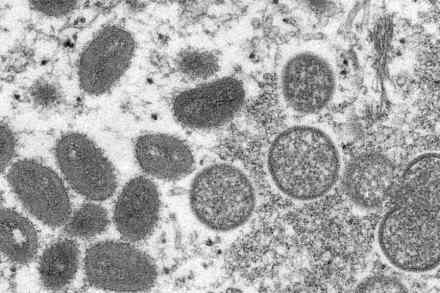
Contacts of patients infected with monkeypox are being asked to isolate for three weeks, according to guidance from the UK Health Security Agency. They will also be instructed to ‘avoid contact with immunosuppressed people, pregnant women, and children under 12’. In England, there have been just 20 confirmed cases so far but community spread has concerned scientists. Scotland reported its first case this morning. At least 109 cases have been confirmed globally, with Spain seeing the highest prevalence. A large proportion of cases have been reported among gay and bisexual men though monkeypox is not classified as a sexually transmitted disease. One theory under investigation is that a Pride event in Gran Canaria may have acted as a super-spreader event.

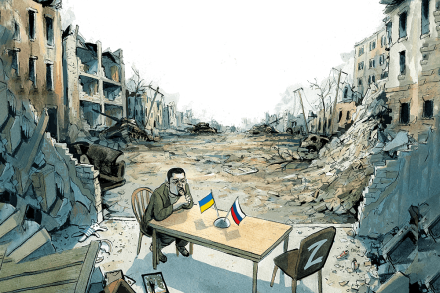
Zelensky’s choice

31 min listen

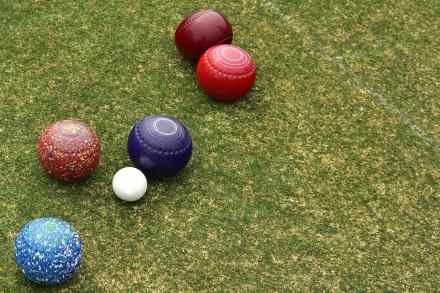
This week Lara Prendergast and William Moore talk to James Forsyth and the academic, Dr Alexander Clarkson about Zelensky's possible path to peace (00:42). Followed by Owen Matthews, The Spectator's Russia correspondent on Turkey's power over Nato expansion (13:28). Finally, a chat between two bowls fanatics, Michael Simmons, The Spectator's data journalist and Andrew Gibson from the bowls green in Streatham (22:00).Hosted by Lara Prendergast & William MooreProduced by Sam HolmesSubscribe to The Spectator today and get a £20 Amazon gift voucher: spectator.

The politics of bowls clubs

Bowls has a reputation as a sedate pastime, but it can be as fiercely competitive as any other sport. It can even get rowdy. At the Edinburgh cup final in 2012, a young player, angry at losing the match, stripped down to his boxers in protest. When committee members from his team tried to restrain him, he headbutted the club secretary. Bowls players have always taken the sport very seriously. According to popular legend, Sir Francis Drake was playing bowls at Plymouth Hoe when the Spanish Armada came into view off the headland. He insisted on finishing the game. Battle could wait, bowls couldn’t. The object of the game is simple: get your bowls closer to the ‘jack’ than your opponent. That said, the sport is more sophisticated than the French variation, boules.