Michael Simmons

Michael Simmons

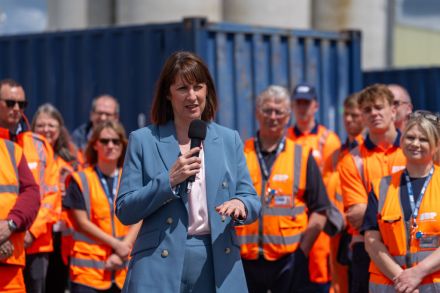
Michael Simmons is The Spectator's economics editor.

2024: Cindy Yu, Michael Simmons, Angus Colwell, Igor Toronyi-Lalic, Mary Wakefield, Fraser Nelson and Michael Gove

38 min listen

On this week’s 2024 Out Loud: Cindy Yu examined Chinese work ethic (1:13); Michael Simmons declared his love of the doner kebab (6:28); Angus Colwell reported from Israel in July (9:27); Igor Toronyi-Lalic explained the inspiration behind the cinema of Marguerite Duras (14:41); Mary Wakefield analysed the disturbing truth of the Pelicot case (20:38); Fraser Nelson signed off as editor of The Spectator (27:01); and Michael Gove revealed his thoughts as he sat down at the editor’s desk (33:15).  Produced and presented by Patrick Gibbons.
Why Britain’s benefits problem is likely to get worse

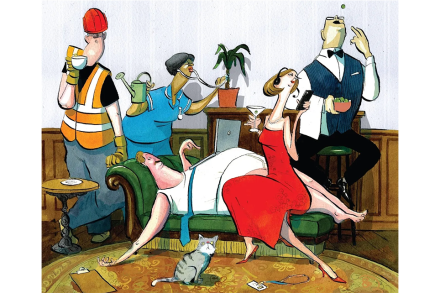
More than half of Britons receive more from the state than they pay in taxes, according to figures from the Office for National Statistics. The proportion of those receiving more through benefits than they paid in taxes last year fell slightly to 52.6 per cent, down a percentage point compared with the year before. The data – which factors in use of public services, such as schools and the NHS, as well as welfare payments and benefits – highlights the fundamental problem underlying the British state: how do we support a population that is aging, getting ill and becoming increasingly workshy?As you’d expect, more than 85 per cent of pensioners are so-called net recipients who take more from the state than they put in.

Muhammad has been a popular name for ages

Muhammad topped the list of most popular boy’s baby names in England and Wales last year, knocking Noah from first place. The figures, released by the Office for National Statistics this morning, show that Muhammad was the most common name given to newborn boys last year; 4,661 boys were named Muhammad with 4,382 Noahs. The year before there were 4,586 Noahs and 4,177 Muhammads. When you analyse the names by different spelling, though, it becomes clear just how popular the name is. The spellings Muhammad, Mohammed, Mohammad and Mohamed combine for a total of 7,730 baby boys in 2023. That’s just over one in every 40 births. While today’s news perhaps seems a milestone demographic change in Britain's story, it’s really nothing new.

How twee triumphed, Graham Brady on Tory turmoil & celebrating pigs in blankets

37 min listen

This week: are we drowning in a sea of twee? Gareth Roberts writes the cover article this week, arguing against what he sees as the hideous triviality of our times. ‘The British have lost their aversion to glutinous sentimentality,’ he declares. How did we get here, and who are the worst offenders? Gareth argues that the triumph of twee has left us unable to face serious things with seriousness. Could there be sinister consequences if we don’t take this more seriously? Gareth joined the podcast to make his case, alongside Josh Cohen, psychoanalyst and author of All The Rage (00:49). Then: was Graham Brady the ‘kingmaker’ or the ‘kingslayer’ of the past Tory era? The shadow cabinet member and Conservative M.P.

The many faces of pigs in blankets

There are not many phrases that offend me more than ‘pigs in blankets’. The correct name for this dish is, of course, kilted sausages. In fact, the bacon-wrapped cocktail sausage has many incorrect names: the Irish go with kilted soldiers while the Germans call them Bernese sausages. The Americans for some reason wrap hotdogs in croissant pastry and call them saucisson en croûte, as though they’re some kind of European delicacy, à la Escoffier. Careful though, sometimes these deviations in name mask a greater sin. One Christmas, my posh nan promised ‘devils riding horseback’. I was thrilled for what I assumed must be the Nigella-fied version. Instead, she served baked prunes stuffed with almonds and wrapped in a sliver of bacon.

Does anyone know how many people live in Britain?

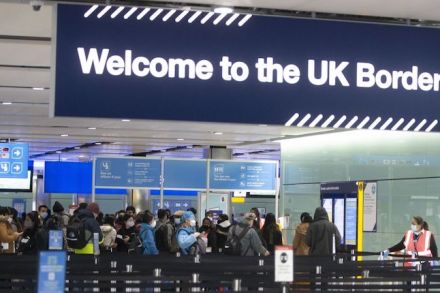
Can Britain trust its economic statistics? The nation’s arbiters of numerical truth, the Office for National Statistics, yesterday released what on the face of it was good news for the Home Office and a vindication of the previous Conservative government’s policies to reduce worker visas and the number of dependants of migrants arriving in the UK. But in truth – and in the same data dump – the previous year’s figure had been revised up so much (by 307,000) that had it not been, the net migration figure published yesterday would have matched the previous record high.These revisions matter.

Starmer attacks ‘open border’ Tories, plus Andrea Jenkyns defects

15 min listen

It's been a day of press conferences in Westminster. First to Reform UK, where Nigel Farage unveiled their newest defection: Dame Andrea Jenkyns, who had served as a Conservative MP from 2015-24. Could there be more defections on the horizon?  Next to Keir Starmer who reacted to the newly published migration figures from the ONS. Net migration for the 12 months to June 2024 stands at 728,000. But the real story was the revised 2023 figures, which showed net migration exceeding 900,000. The politics from the press conference were solid - but what about policy announcements? Oscar Edmondson speaks to James Heale and Michael Simmons, and they also look ahead to tomorrow's unpredictable assisted dying vote. Produced by Patrick Gibbons and Oscar Edmondson.

Labour should be cautious about celebrating the fall in net migration

How can you miss over 300,000 migrants? This morning the Office for National Statistics revised up its previous record high net migration figure to 906,000 meaning that since 2021, 307,000 more migrants are in the country than the ONS previously knew about. So, has Britain turned the corner on migration? There has been a 20 per cent fall in net migration in the year to June compared to the 12 months before, according to figures published this morning by the ONS. Some 1.2 million people migrated to the UK compared with 1.3 million the year before. Meanwhile, 479,000 left the UK, up from 414,000 the previous year.

Who should Labour target to ‘get Britain working’?

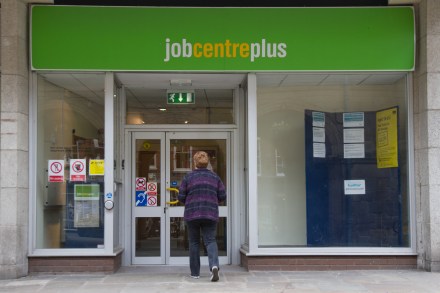
Labour talks of having the ‘bold ambition of an 80 per cent employment rate’. But who should they target to get there? The government published its white paper this week on ‘getting Britain working’ and tackling the growing health and disability benefits bill, which is forecast to hit £120 billion.  Figures slipped out by the Office for National Statistics today give more insight on which groups could perhaps be better targeted. These figures split out employment rates by parental status, and show that already more than 80 per cent of married (or cohabiting) mothers and 93 per cent of married (or cohabiting) fathers with dependent children are working. This doesn’t leave a huge amount of room for boosting the employment rate in a huge section of the population.

Can Keir Starmer get Britain back to work?

10 min listen

The government have announced their latest effort to get Britons back into work. A series of benefit changes intend to tackle the fact that Britain is the only major economy where the employment rate has fallen over the past five years, largely because more people are out of work due to long-term ill health. Why are the UK's post-pandemic figures so much worse than other countries? And can Labour's plans work? The Spectator's data editor Michael Simmons joins Katy Balls and James Heale.

Is Rachel Reeves running out of luck?

11 min listen

An unexpected rise in inflation today takes the rate to higher than the Bank of England's target, and adds to Rachel Reeves's worries. James Heale talks to Katy Balls and The Spectator's data editor Michael Simmons about the latest figures, and they also discuss the shadow minister Alex Burghart's performance at Prime Minister's Questions. Produced by Cindy Yu.

Inflation surge hits Britain’s ailing economy

Inflation rose to 2.3 per cent in the year to October, up from 1.7 per cent in September – its lowest level since the early weeks of the first lockdown in 2021. This surge above the Bank of England’s 2 per cent target was higher than economists and markets had expected. Worryingly, core inflation (which excludes more volatile goods like food and energy) has also increased slightly to 3.3 per cent – up from 3.2 per cent in September. The largest contributors to the rise in inflation were from the effects electricity and gas prices are having on household costs.

How many farmers will be hit by Labour’s inheritance tax raid?

Tens of thousands of farmers will descend on Westminster in their tractors tomorrow to protest at inheritance tax changes that could see them pay death duties when they hand down their farms. The government doesn’t understand the fuss. It says they are just targeting wealthy land buyers trying to dodge tax. Meanwhile the farmers argue their way of life risks being wiped out. Who’s right? Two in five farmers are over the age of 60, so it’s not impossible the tax ends up having to be paid soon The government says the changes ‘are expected to affect the wealthiest 500 estates each year with smaller farms not affected’ – and three-quarters of farms that currently claim reliefs would not be hit.

There are now seven million migrant workers in the UK

For the first time ever there are seven million migrant workers in Britain’s job market. Figures released by the ONS this morning show that more than one in five jobs in Britain is now filled by someone born overseas – despite a fall in EU workers since Brexit. Overall, that’s an increase of 183,000 – equivalent to a town the size of Warrington or a city the size of Southend – since the election, and up over one million since the first lockdown. The rest of this morning’s ONS release suggest the jobs market could be about to face a slowdown. The ONS stats show employers reducing hiring. Above inflation pay rises for once in demand workers are nearing an end. Unemployment is up from 4 per cent to 4.3 per cent – higher than most economists had expected.

How did pollsters get Trump’s victory so wrong?

Was Donald Trump’s win unexpected? Not if you followed the betting markets, which had Trump at a two-thirds chance of winning days out from the election. The polls, on the other hand, told a different story. Analysis of polls carried out in 15 competitive states in the three weeks before last Tuesday’s election shows that whatever the method of polling used, there was a clear and consistent bias in favour of the Democrats. Pollsters spent an estimated half a billion dollars (£388 million) on this election, but most polling methods were still biased towards Kamala Harris by around three percentage points. One method – recruiting participants by mail – managed to be wrong by a whopping 13 points.

Could ADHD bankrupt English councils?

Every time a chancellor sits down after delivering their budget, the Office for Budget Responsibility (OBR) releases their ‘economic and fiscal outlook’. What seems a boringly-named Whitehall document is actually a treasure trove of information about the state of the country. It reveals more about how we live our lives – and what lies ahead, than perhaps any other document apart from the decennial census. Buried within its pages are harbingers of the problems future governments will face. Page 129 of the nearly 200-page document carries one such alarming warning: a huge surge in the amount local authorities are likely to have to provide to fund children with special educational needs and disabilities (SEND).

Britain’s population problem cannot be ignored

Never before have English and Welsh mothers produced so few babies. New data, released by the ONS yesterday, shows the number of babies expected to be born per woman last year fell to 1.44 – down from 1.49 the year before and the lowest recorded level since these things began to be officially tracked in 1938. For a population to ‘naturally’ sustain itself (e.g. without immigration) an average fertility rate of 2.1 is needed. Looking at the raw numbers, fewer babies were born than at any time since the late 1970s. Last year just 591,072 births were registered in England and Wales and the fertility rate has been falling consistently for the past 14 years.

Keir Starmer’s polling calamity

Politicians’ popularity only tends to go in one direction: down. John Major entered office in 1990 with a net satisfaction rating of +15 and left it having lost 42 points. Tony Blair moved into Downing Street in 1997 with an approval rating of +60 points. When he handed over to Gordon Brown in 2007, he’d fallen to -27. Where you start can make all the difference. If things are only going to go one way, you want as handsome a starting margin as possible.  Bad news for Keir Starmer then, who has seen his popularity drop at the fastest rate of any Prime Minister other than Liz Truss.

When will Rachel Reeves take responsibility for the economy?

Is Britain finally heading for growth? This week, the Treasury released its collection of short-term forecasts for the economy. The average growth prediction for this year has reached a new high of 1.1 per cent – still unimpressive, but a significant improvement from the 0.4 per cent expected at the beginning of the year. It’s welcome news for the Chancellor. JP Morgan bumped up its forecasts this week as well, predicting 0.4 per cent growth between July and September, which equates to an annual growth rate of 1.5 per cent. Even more good news came from the GfK Consumer Confidence Index, Britain’s longest-running measure of economic sentiment, which held at a three-year high for August, suggesting British shoppers are optimistic about the economy’s direction.

Why is the pound falling?

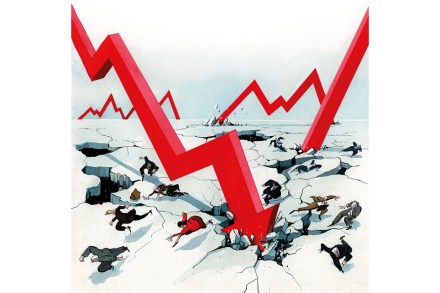
Is America about to enter a recession and take the world with it? Yesterday the pound was on track for its longest losing streak in a year as markets once again began to fear a US recession. The week started with what looked like the bursting of a tech bubble. Japan’s Nikkei dropped by 12 per cent in a day – its largest fall since Black Monday nearly four decades ago. But by Tuesday morning, stocks had recovered 10 per cent and markets looked to be steadying while the jittery hands of investors began to hold firm. Are we out of the woods? Not quite. A leading Wall Street Bank – BNY Melon – this morning warned that global markets would be in turmoil for ‘months’.