Michael Simmons

Michael Simmons

Michael Simmons is The Spectator's economics editor.

Britain’s population problem cannot be ignored

From our UK edition

Never before have English and Welsh mothers produced so few babies. New data, released by the ONS yesterday, shows the number of babies expected to be born per woman last year fell to 1.44 – down from 1.49 the year before and the lowest recorded level since these things began to be officially tracked in 1938. For a population to ‘naturally’ sustain itself (e.g. without immigration) an average fertility rate of 2.1 is needed. Looking at the raw numbers, fewer babies were born than at any time since the late 1970s. Last year just 591,072 births were registered in England and Wales and the fertility rate has been falling consistently for the past 14 years.

Keir Starmer’s polling calamity

From our UK edition

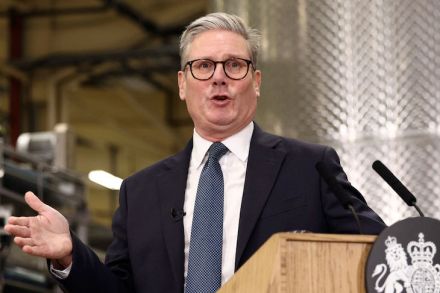
Politicians’ popularity only tends to go in one direction: down. John Major entered office in 1990 with a net satisfaction rating of +15 and left it having lost 42 points. Tony Blair moved into Downing Street in 1997 with an approval rating of +60 points. When he handed over to Gordon Brown in 2007, he’d fallen to -27. Where you start can make all the difference. If things are only going to go one way, you want as handsome a starting margin as possible.  Bad news for Keir Starmer then, who has seen his popularity drop at the fastest rate of any Prime Minister other than Liz Truss.

When will Rachel Reeves take responsibility for the economy?

From our UK edition

Is Britain finally heading for growth? This week, the Treasury released its collection of short-term forecasts for the economy. The average growth prediction for this year has reached a new high of 1.1 per cent – still unimpressive, but a significant improvement from the 0.4 per cent expected at the beginning of the year. It’s welcome news for the Chancellor. JP Morgan bumped up its forecasts this week as well, predicting 0.4 per cent growth between July and September, which equates to an annual growth rate of 1.5 per cent. Even more good news came from the GfK Consumer Confidence Index, Britain’s longest-running measure of economic sentiment, which held at a three-year high for August, suggesting British shoppers are optimistic about the economy’s direction.

Why is the pound falling?

From our UK edition

Is America about to enter a recession and take the world with it? Yesterday the pound was on track for its longest losing streak in a year as markets once again began to fear a US recession. The week started with what looked like the bursting of a tech bubble. Japan’s Nikkei dropped by 12 per cent in a day – its largest fall since Black Monday nearly four decades ago. But by Tuesday morning, stocks had recovered 10 per cent and markets looked to be steadying while the jittery hands of investors began to hold firm. Are we out of the woods? Not quite. A leading Wall Street Bank – BNY Melon – this morning warned that global markets would be in turmoil for ‘months’.

James Heale, Lara Prendergast, Patrick Marnham, Laura Gascoigne and Michael Simmons

From our UK edition

32 min listen

On this week’s Spectator Out Loud: James Heale interviews Woody Johnson, the former American Ambassador to the UK, about a possible second Trump term (1:19); Lara Prendergast reflects on the issue of smartphones for children and what lessons we could learn from Keir Starmer’s approach to privacy (6:35); reviewing Patrick Bishop’s book ‘Paris ’44: The Shame and the Glory’, Patrick Marnham argues the liberation of Paris was hard won (12:37); Laura Gascoigne examines Ukraine’s avant garde movement in light of the Russian invasion (20:34); and, Michael Simmons provides his notes on venn diagrams (28:33).  Presented by Patrick Gibbons.

Venn diagrams are the perfect tool for a politician

From our UK edition

‘I just love Venn diagrams,’ Kamala Harris said in 2022. ‘It’s just something about those three circles, the analysis about where there is the intersection, right?’ Venn diagrams have graduated from school textbooks to a genre of internet meme. After Joe Biden announced he wouldn’t seek a second presidential term, Harris’s team tweeted a picture of some circles, labelled ‘Biden HQ’ and ‘Harris HQ’, overlapping to ‘hold Trump accountable’. Harris’s love of Venn diagrams might seem odd until you realise that they’re the perfect tool for a politician: they make complex issues look simple. They are often found in educational materials for young children, elucidating similarities and differences between things like animals or fruit.

Does Kamala Harris poll better against Donald Trump?

From our UK edition

Kamala Harris seems overwhelmingly likely to replace Joe Biden as the Democratic nominee, having been given the blessing of both Bill Clinton and Biden himself. But does she actually have a better chance of beating Donald Trump than Biden did?  The betting markets think it’s a done deal: the below shows that other possibilities (Gavin Newsom, Whitmer etc) are nothing more than wild outside bets. So let’s focus on Harris. Since the Trump-Biden debate last month, a handful of polls have shown that voters would be no more or less likely to vote Democrat if Harris replaced Biden as the presidential nominee. In all of these polls, Trump leads (albeit by a fairly small margin).

Is the great worker shortage finally coming to an end?

From our UK edition

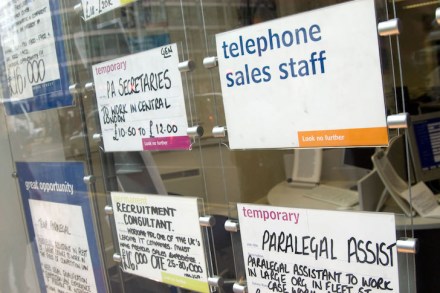
British workers have just experienced their highest pay rises for two years. With inflation remaining at the Bank of England's target, the average worker has now seen their real term pay increase between March and May this year by just over 2 per cent – a level not seen since 2022. However, in cash terms there are clear signs that the heat has firmly left the labour market with pay growth beginning to slow. This is good news for the new government and rate setters at the Bank of England who will need to decide next month whether it’s time for the first interest rate cuts. Doubts about a cut were raised earlier this week with services inflation – a core part of Britain’s economy – stickier than expected.

Does Labour have the stomach to tackle welfare reform?

From our UK edition

Regardless of who wins the coming election, taxes are going up. Spending plans from both Labour and the Tories suggest the tax burden – already at a post-war high – is going to do nothing but rise. During last night's Sky News debate, Rishi Sunak laid the blame at the two ‘once in a century’ events the country has just emerged from. But the truth is that a huge part of these tax rises is needed to fund an ever-growing welfare bill. Analysis published this morning shows that one in every £44 of state spending will be spent on sickness benefits by the end of the decade. The report, published by the Resolution Foundation, shows that incapacity benefits spending will rise faster than pensions over the next parliament.

Why has Douglas Ross resigned as Scottish Tory leader?

From our UK edition

11 min listen

Just when you thought this election campaign couldn’t get any more tumultuous, Douglas Ross has announced he will resign as Scottish Conservative leader. He had lost the support of his colleagues – particularly those in Holyrood – following his decision to effectively take over a Westminster colleague’s constituency when that MP was seriously ill in hospital. Why now?  Michael Simmons speaks to Isabel Hardman and Katy Balls. The Spectator will be hosting a special Live edition of Coffee House Shots in the aftermath of the election. Taking place on Thursday the 11th July - a week after the election - at 7pm here in Westminster, you can join Fraser Nelson, Katy Balls and Kate Andrews as they try to dissect the election results, a new government, and what comes next.

Quentin Letts, Owen Matthews, Michael Hann, Laura Gascoigne, and Michael Simmons

From our UK edition

31 min listen

On this week’s Spectator Out Loud: Quentin Letts takes us through his diary for the week (1:12); Owen Matthews details the shadow fleet helping Russia to evade sanctions (7:15); Michael Hann reports on the country music revival (15:05); Laura Gascoigne reviews exhibitions at the Tate Britain and at Studio Voltaire (21:20); and, Michael Simmons provides his notes on the post-pub stable, the doner kebab (26:20). Produced by Patrick Gibbons and Oscar Edmondson.

The unbeatable glory of a doner kebab

From our UK edition

Ionce shared a bed with a doner kebab. I’d hungrily joined a 3 a.m. queue for much needed post-pub sustenance, only to pass out as soon as I sat down on my bed to eat it. It was a vinegary and leathery bedfellow to wake up to, but I’ve felt ever since that spending a full night with a doner qualifies me as an expert. I can tell you that any major city’s kebab purveyors can be ranked by the number of pints you need to have drunk before you feel like tucking in. Think of this number like the zones on the London Tube map. At the smart end there’s the zone one kebab: restaurant-grade and easily enjoyed as part of a full sit-down meal. At the other end there’s zone six: a last resort on the way home from a six-pint (or more) pub session.

Why are important Covid documents not being released?

From our UK edition

The most important stories from the Covid Inquiry are found in the written evidence and submitted statements. However, the Cabinet Office is refusing to release vital evidence that the Inquiry isn’t interested in, in case it ‘excessively focused’ the public’s attention on lockdown-decision making. If neither side change their position, the British people will be left in the dark. Last November, I reported in the magazine that the witness statement of Ben Warner – who had been brought into No. 10 as Head of Data by Dominic Cummings – revealed that not only was an erroneous graph used to justify the second lockdown but that senior figures, possibly including the Prime Minister, knew that the graph was wrong but decided to broadcast it to the nation anyway.

Brits won’t stop getting pay rises

From our UK edition

Are interest rates still heading ‘downwards’ as the Bank of England Governor Andrew Bailey said last week? Homeowners across the country will be hoping so as average two-year mortgages are again approaching 6 per cent. But the latest figures on the UK job market may dampen hopes of a cut coming soon. Britons have continued to receive above inflation pay rises. Figures just released by the Office for National Statistics show that – against expectations – pay growth in cash terms is at 5.7 per cent. Even when you factor in inflation, pay is still going up and has now hit 1.7 per cent – the highest in two years. More timely figures from HMRC’s PAYE data show April pay jumping 6.9 per cent – though this was largely an effect of the increase in the national living wage.

Who won the local elections? Results in maps and charts

From our UK edition

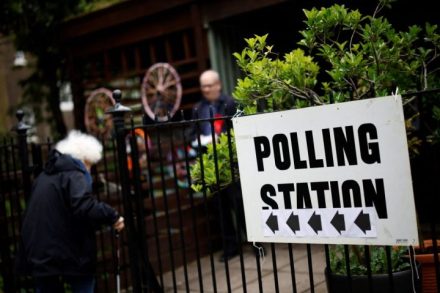
Counting is nearly complete across England and Wales and the picture in the local elections is clear: Tory losses and a red wave. Thursday saw 103 English councils go to the polls with ten mayoral races and dozens of police and crime commissioner positions up for grabs too. The by-election in Blackpool saw a huge swing to Labour but the real story of the night is Reform coming within 100 votes of the Conservatives. Here's the national picture so far: It's notoriously difficult to extrapolate a national result from local elections but Professor John Curtice has had a go for the BBC. They estimate that had the whole country gone to the polls Labour would win with a nine point margin. That's a record equalling low for the Tories but with Labour not extending their lead on a year ago.

Humza Yousaf’s legacy in eight graphs

From our UK edition

Humza Yousaf has announced his resignation as First Minister and leader of the Scottish National Party. His time was short, but he’s overseen a dramatic change in the party he’ll now cease to lead: a discipline once revered by opponents has given way to a party in open dissent. As he prepares to leave the political stage what can Scotland remember him for? Yousaf, who became an MSP in 2011, rose quickly to the top job in Scottish politics. He first served as a minister under Alex Salmond within a year of his election. He was subsequently transport minister in 2017 when Nicola Sturgeon launched the Glen Sannox ferry onto the Clyde with no interior and painted on windows.

Lockdown’s impact on children is only beginning

From our UK edition

Children who started school in the early days of the pandemic will have worse exam results well into the next decade. That’s according to a study released this morning by the London School of Economics, the University of Exeter and the University of Strathclyde. Researchers predict that 60 per cent of pupils will achieve worse than a grade five in their English and Maths GSCEs in 2030, considerably more than the numbers achieving poor marks today. The study, which looked at the effect of school closures on childhood development, is the first to look at both ‘cognitive’ skills as well as ‘socio-emotional’ skills, finding the latter to be just as important.

Sunak declares a crackdown on Britain’s ‘sick note culture’

From our UK edition

10 min listen

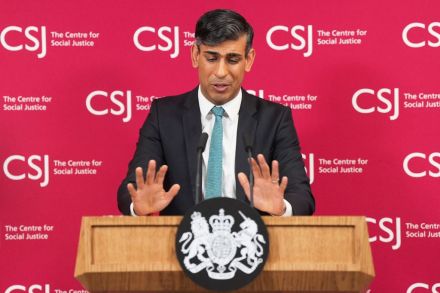
Rishi Sunak has returned to one of his pet bugbears: getting the unemployed back into work. His speech to the Centre for Social Justice this morning was peppered with his favourite facts about the post-pandemic welfare crisis embroiling Britain. Lucy Dunn speaks to James Heale and Michael Simmons.  Produced by Oscar Edmondson.

Worklessness hits eight-year high

From our UK edition

Britain already has the worst post-pandemic workforce recovery in Europe. New figures out today show the problem is getting even worse. The number of those ‘economically inactive’ (not in work or looking for it) rose by a remarkable 150,000 in the last three months to 9.4 million – equivalent to the adult population of Portsmouth and some 850,000 since the first lockdown. Taken as a share of the working-age population, it’s now at an eight-year high – and significantly worse than it was during Covid or its aftermath. What’s driving the worklessness? The biggest single factor is long-term sickness, also at an all-time high. Is this just economic long-Covid, the after-effects of the virus that struck four years ago?

Should the ‘Waspi women’ be compensated?

From our UK edition

13 min listen

The Parliamentary Ombudsman's report on raising women's state pension age in line with men's has been published. It details that women born in the 1950s hit by the state pension age change are owed compensation and has advised that the government should 'do the right thing'. Will the 'Waspi women' end up disappointed?  Michael Simmons speaks to Isabel Hardman and Louise Perry, host of the Maiden Mother Matriarch podcast.