Michael Simmons

Michael Simmons

Michael Simmons is The Spectator's economics editor.

The Spectator reflects on Covid five years on

Five years ago this weekend, the nation was plunged into what was expected to be a three-week lockdown. Weeks turned into months and years, lives were upended, and society was reshaped. But with the Covid inquiry rumbling on and the threat of a new pandemic ever present, it is worth reflecting on what happened.  That’s what we did for today’s special episode of Spectator TV. We wanted to look back on the conversations our contributors were having at the time, so this morning's show starts with an episode from during the pandemic, hosted by Cindy Yu.

Britain’s borrowing is out of control

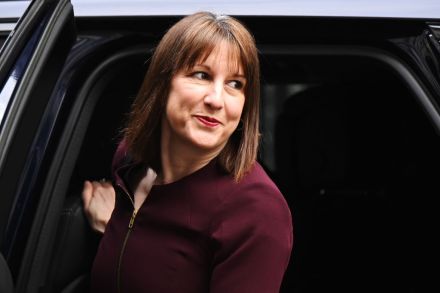
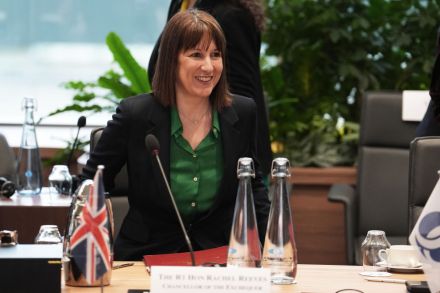
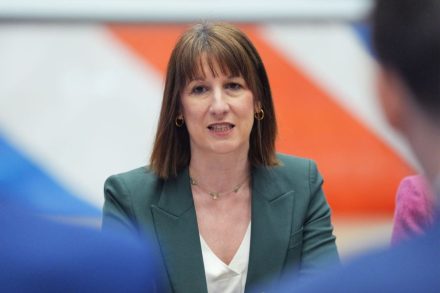
Rachel Reeves is having to borrow more and more money to keep Britain’s show on the road. Figures on the public finances, published this morning by the Office for National Statistics (ONS), show that in the financial year to February we borrowed over £132 billion. That is nearly £15 billion more than at the same point in the last financial year and is the fourth-highest borrowing period since records began in 1993. The Office for Budget Responsibility (OBR) had expected borrowing to total £128 billion for the whole financial year and, by this point, that forecast is already more than £20 billion short. The OBR's budgetary boffins will update that forecast today when they hand the Chancellor their final economic outlook ahead of the Spring Statement next week.

Bank holds interest rate over inflation fears

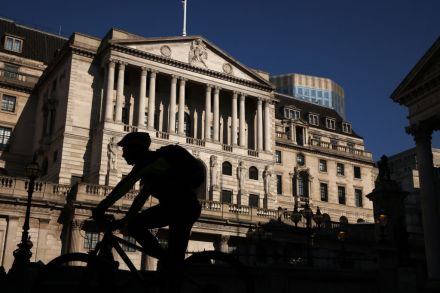
The Bank of England has held interest rates at 4.5 per cent. The Monetary Policy Committee (MPC) voted eight to one to hold the base rate at its current level after reducing it by 0.25 percentage points six weeks ago. Markets and pundits had expected the decision, despite figures last week revealing the economy had contracted slightly in January. The Bank shares the government’s alarm at the lack of growth, warning in its report last month that ‘GDP growth has been weaker than expected, and indicators of business and consumer confidence have declined’. However, its fears that inflation may creep back up again – which the Bank predicts will peak at 3.7 per cent this year – won the day.

The British state is bigger than ever

The state is bigger than ever. The number of workers employed in central government has hit 4 million for the first time. Figures just released by the Office for National Statistics (ONS) show employment in the public sector hit 6.14 million in December, up 53,000 in a year. Employment in central government hit a record high and was up 105,000 in a year. Those employed by the NHS hit a record high too, of over 2 million, and was up by nearly 50,000 in a year. Yet, as Katy Balls and I point out in today’s cover story for the magazine, productivity has not kept pace. Meanwhile, the unemployment rate in the whole economy was steady at 4.

Labour’s growing pains, survival of the hottest & murder most fascinating

43 min listen

This week: why is economic growth eluding Labour?‘Growing pains’ declares The Spectator’s cover image this week, as our political editor Katy Balls, our new economics editor Michael Simmons, and George Osborne’s former chief of staff Rupert Harrison analyse the fiscal problems facing the Chancellor. ‘Dominic Cummings may have left Whitehall,’ write Katy and Michael, ‘but his spirit lives on.’ ‘We are all Dom now,’ according to one government figure. Keir Starmer’s chief aide Morgan McSweeney has never met Cummings, but the pair share a diagnosis of Britain’s failing economy. Identifying a problem is not, however, the same as solving it.

Inside Labour’s welfare split

15 min listen

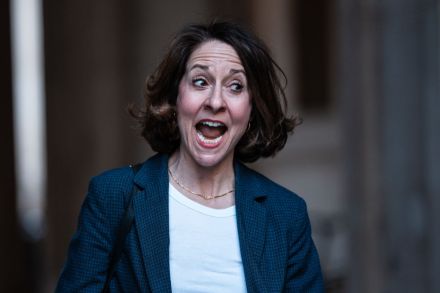
This afternoon we had Liz Kendall’s long-awaited address in the Commons on Labour’s plans for welfare reform. The prospect of £5 billion worth of cuts to welfare has split the party in two, with fears of a rebellion growing over the weekend and into this week. Her announcement was a mixed bag, including: restricting eligibility for the Personal Independence Payment (PIP) so that only those who have the highest level of disability can claim the benefit and – to sweeten the deal for backbenchers – announcing that the government will not bring in vouchers for disability benefit or freeze PIP. One of the new lines that had not been trailed in advance was that under 22s would not be eligible for the health top-up of Universal Credit (UC). What’s the politics of all this?

The OECD’s growth downgrade is yet another headache for Reeves

In more bad news for Rachel Reeves as the Chancellor prepares for next week's Spring Statement, the OECD has downgraded Britain’s growth prospects. The organisation forecast the UK’s economy to grow 1.4 per cent this year and then just 1.2 per cent next year – compared with the 1.7 per cent and 1. 3 per cent that they’d previously estimated. In fairness, the whole world is seeing slower growth, according to the OECD’s estimates. America’s growth forecasts were also downgraded to 2.2 per cent this year, followed by 1.6 per cent in 2026 compared with the 2.4 per cent and 3.1 per cent that had originally been forecast.

The UK economy is shrinking – how much pressure is Rachel Reeves under?

14 min listen

New figures from the Office for National Statistics show the UK economy unexpectedly shrunk by 0.1% in January. This comes only a few weeks after the Chancellor's pro-growth speech, and a fortnight ahead of her Spring Statement. Just how much pressure is Rachel Reeves under? And how likely is it that Labour will change their approach? Economics editor Michael Simmons and deputy political editor James Heale join Patrick Gibbons to discuss, as well as a look ahead to next week's expected announcement on reducing the welfare bill. Produced by Patrick Gibbons.

The economy is shrinking. Rachel Reeves must act

The economy shrank by 0.1 per cent in January according to figures just published by the Office for National Statistics (ONS). The news will come as a disappointing shock to Rachel Reeves after most economists had predicted the year to have started with growth. In December the economy had grown by 0.4 per cent, but a fall in production of 0.9 per cent and in construction of 0.2 per cent tipped the economy back into contraction. Services were up marginally but not by enough to lead to overall growth. Liz McKeown, the ONS’s director of economic statistics, pointed to a ‘notable slowdown’ in manufacturing compounding a downturn in oil and gas extraction as well as construction. On the other hand, it was a strong month for food sales as more people ate and drank at home.

Who’s doing well out of the Trump slump?

Markets are not enjoying Donald Trump’s tariffs. Some 125 days have passed since his second election victory and the S&P 500 is on a clear downward trajectory thanks to Trump’s tariff policies and other poor US economic data. After the same number of days following Biden’s election, the S&P was up 13 per cent; for Obama’s second term it was up nine per cent; and at the same point in Trump’s first presidency it was up 11 per cent. For Trump 2.0 it’s down 3 per cent from election day. Trump has summoned Wall Street bosses to the White House in an attempt to calm nerves, but while US equities struggle, some clear winners are emerging as investors shift their money elsewhere. So, who stands to gain?

Will Trump cause a recession?

Donald Trump has refused to rule out an American recession. He ‘hates to predict things like this’, he said yesterday. When asked if a downturn was coming this year, the President responded that a ‘period of transition’ was on the cards. On Thursday last week the Atlanta Fed’s GDP ‘nowcast’ model was forecasting that America’s economy would shrink by 2.4 per cent in the first quarter of this year – a slight improvement on the 2.8 per cent contraction it had predicted three days earlier. If this reading for the first three months of 2025 proves to be true, and things don’t pick up shortly, could the USA be heading for recession?

Labour is finally waking up to the benefits crisis

The welfare bill currently unsustainably stands at £314 billion. It is forecast to reach nearly £380 billion by the end of the decade. Rumoured Labour cuts, set to be announced as part of the Spring Statement on 26 March, have just been reported by ITV News and include plans for £6 billion of welfare cuts. That won’t do much to stop the bill rising to £380 billion, but the fact that this government is prepared to make cuts suggests it is finally waking up to this unsustainable issue. The reported reforms include £5 billion of savings through making Personal Independence Payments (PIP) – a disability-related benefit – harder to qualify for.

Harry Cole, Zoe Strimpel, Michael Simmons, Nigel Warburton and Justin Marozzi

30 min listen

On this week’s Spectator Out Loud: Having returned from Washington D.C., Harry Cole reads his diary for the week (1:16); Zoe Strimpel reports on the Gen Z fliers obsessed with maximalising their air miles (5:37); Michael Simmons argues that Scotland is the worst when it comes to government waste (12:00); reviewing Quentin Skinner’s Liberty as Independence, Nigel Warburton examines what it means to be free (17:45); and, Justin Marozzi provides his notes on possum (25:02).  Produced and presented by Patrick Gibbons.

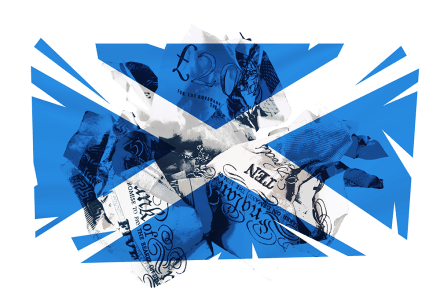
How the SNP wasted £110 million on PR and spin

No country in the UK receives more public money per head than Scotland. An extra £2,200 is spent on every person living there than in England – and £1,900 more than the UK average. Yet public services north of the border are falling apart. Take education. Scotland spends more per pupil than anywhere else – £1,848 per head compared with £1,543 in England. Yet standards have plummeted while those in England have improved. The latest Pisa rankings show Scottish pupils to be a year behind their English counterparts, despite a testing bias in favour of Scottish children. When it comes to economic affairs, some £2,228 per head is spent on growth initiatives, welfare and subsidy in Scotland, compared with £1,805 in England.

Trump announces 25 per cent tariffs on Canada and Mexico

‘He was bad on trade, very bad on trade,’ said Donald Trump ‘with due respect’ to Ronald Reagan in a broadcast from the White House. As the President went on, the Fox News coverage included a ‘Dow Watch’ ticker, which showed the markets in freefall. Trump was speaking to confirm that 25 per cent tariffs would be imposed at midnight on Tuesday on Canada and Mexico, with an additional 10 per cent tariff for China (which has already had 10 per cent tariffs imposed). This means new barriers for America’s three largest trading partners. ‘The tariffs, you know, they’re all set. They go into effect tomorrow,’ Trump said. In response to the tariffs announcement – which markets do not seem to have fully priced in – the Nasdaq Composite fell 2.

The problem of Britain’s idle generation

The number of young people not doing anything with their lives has hit its highest level in 11 years. Figures released this morning by the Office for National Statistics (ONS) on 16- to 24-year-olds not in education, employment or training – so-called NEETs – show that the number has reached just under one million in the last three months of 2024. Standing at 987,000, the number of NEETs is up by 110,000 since the end of 2023 – equivalent to a town the size of Oldham. The new data means that nearly one in seven Britons aged 16 to 24 are not in education, employment or training. The figures are worse for young men than for women (14.4 per cent vs 12.3 per cent); however, ONS statisticians said the increase in the last 12 months came from men and women equally.

The energy price cap rise heaps more misery on Brits

Average gas and electricity bills will rise by £111 a year in April after the regulator Ofgem announced an increase to the energy price cap. The 6.4 per cent hike means the average dual-fuel household bill will hit £1,849 annually. The rise is more than anticipated, with analysts at Cornwall Insight predicting that bills would rise by just 5 per cent in April. Ofgem blamed inflation and ‘rising global wholesale prices’ for the bigger-than-expected increase. As a result, the cap will be £159 (nearly 10 per cent) higher than for the April to June period last year. The rise in energy prices is why the Bank of England recently forecast inflation to return to nearly 4 per cent this summer. As Kate Andrews reported last week, inflation in January rose to 3 per cent, up from 2.

Edinburgh has a snobbery problem – against the English

When I was at Edinburgh University a decade ago, a girl with a thick Surrey accent stopped me as I walked back to my room in halls. ‘Rah, have you been to the reeling society?’ she asked. ‘What makes you think that?’ I replied. ‘You’ve acquired a slight limp.’ ‘It’s the cerebral palsy, luv.’ They’re very forward, these English, I thought. Last week, Peter Mathieson, principal of the University of Edinburgh, claimed that Scots students were facing snobbery from the English. An alumnus, Dr Neil Milliken, had asked what Edinburgh was doing about ‘racial discrimination and class ridicule by self-perceived superior English incomes against native students’. He sounds jolly.

Hugh Schofield, Igor Toronyi-Lalic & Michael Simmons, Lisa Haseldine, Alice Loxton and Aidan Hartley

37 min listen

On this week’s Spectator Out Loud: Hugh Schofield asks why there is no campaign to free the novelist Boualem Sansal (1:26); The Spectator’s arts editor, Igor Toronyi-Lalic, reacts to the magazine’s campaign against frivolous funding and, continuing the campaign, Michael Simmons wonders if Britain is funding organisations that wish us harm (8:00); Lisa Haseldine reflects on whether the AfD’s rise could mean ‘Weimar 2.0’ for Germany (17:08); reviewing Thou Savage Woman: Female Killers in Early Modern Britain, by Blessin Adams, Alice Loxton explores the gruesome ways in which women killed (25:05); and, from Kenya, Aidan Hartley reflects on how a secret half-brother impacted his relationship with his father (35:13).  Produced and presented by Patrick Gibbons.

Has Rachel Reeves broken her fiscal rules?

Rachel Reeves is having to borrow more money than even the worst estimates expected. Figures on the public finances, published this morning by the Office for National Statistics (ONS), show that in the financial year to January we borrowed over £118 billion. This is £11.6 billion more than at the same point in the last financial year and is the fourth highest borrowing period since comparable records began in 1993. The Office for Budget Responsibility (OBR) had expected borrowing to be some £13 billion lower by this point in the year. This news puts even more pressure on the Chancellor who, reports now suggest, has blown her fiscal headroom and failed to stick to her fiscal rules.