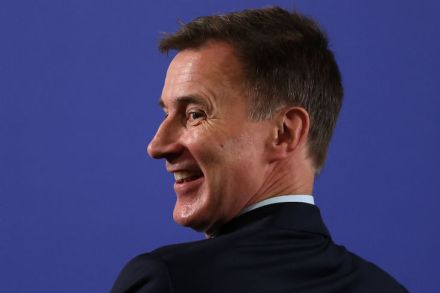
Matthew Lynn

Matthew Lynn is a financial columnist and author of ‘Bust: Greece, The Euro and The Sovereign Debt Crisis’ and ‘The Long Depression: The Slump of 2008 to 2031’

Mark Carney’s attack on Liz Truss has disgraced the Bank of England

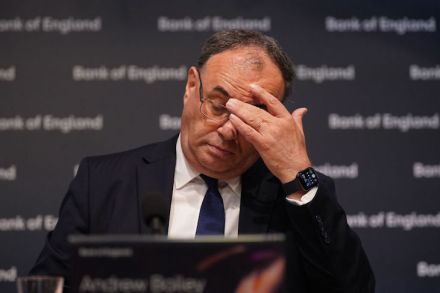
He was a ‘global superstar’. He was the smartest finance official of his generation. He would bring global contacts and experience. When Mark Carney was appointed as the first foreigner to run the Bank of England he was meant to be a refreshing, technocratic figure who would blow some of the cobwebs off the institution. And yet, with his attack on Liz Truss for creating ‘Argentina on the Channel’, Carney has become a disgrace to the Bank. No former governor should ever be so openly partisan. Indeed, if anyone imposed Argentinian-style monetary policies it was possibly Carney himself. It is unheard of for a former governor of the Bank of England to be so openly partisan There was no mistaking the ferocity of the attack.

Is the EU sacrificing net zero to protect its electric car industry?

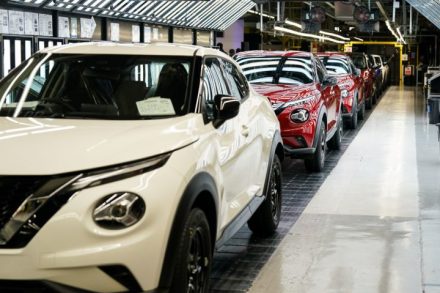
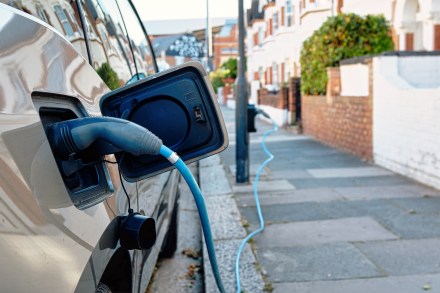
They are too expensive. There are not enough of them on the market. It's too much hassle to charge them. There are lots of reasons why people are still reluctant to switch from petrol to electric cars, with their cost right at the very top of the list. Still, with the world about to be flooded with cheap Chinese electric vehicles (EVs), that is about to change. You might think that anyone seriously worried about combating climate change would welcome that. Except now it turns out that the EU, for all its rhetoric, cares more about protecting its own auto industry and is planning to slap tariffs on Chinese imports.

Why is the EU forcing Apple to change its charger?

When the iPhone 15 is unveiled later today it will no doubt come with an array of flashy tweaks and upgrades. It may be slightly lighter, the camera might be better, and it could even have a slightly better battery life. But the really big change will be something mundane: its charging port. The European Union has forced Apple to adopt the same USB-C charger that is standard on Android and many other devices. New EU rules require all phones sold after autumn 2024 to use this connector for their charging ports. As a result, Apple has reluctantly decided to bin its lightning charger after 11 years and make the USB-C charging port standard around the world. But hold on. Does the EU really know how smartphones should be designed?

One year on, Truss’s case for growth is stronger than ever

There won’t be any fireworks. No one is blowing up the balloons, and there isn’t going to be a cake. The first anniversary of Liz Truss’s unfortunate and quickly terminated premiership today won’t be marked by anything other than a few snarky comments on the site formerly known as Twitter. And yet, as the tumultuous 44 days of her leadership start to fade into history, one thing is surely clear. Her argument that the UK badly needs to do something about lifting its miserable growth rate is becoming stronger all the time.

Can private schools survive Labour’s tax grab?

The latest headmaster of Eton has been recruited from a major private equity firm to help drive the brand’s growth in China. The consortium of hedge funds that own Winchester has been involved in a bitter takeover battle with Rugby, centred mainly on the redevelopment value of its playing fields. Westminster has been acquired by Meta, the owner of Facebook and WhatsApp, to develop campuses in the Metaverse, Netflix has acquired Marlborough to use as a set for romcoms, while Elon Musk has taken control of Ampleforth, sacked most of the teachers and rebranded it as ‘W’ for reasons that no one can quite fathom.

It’s time to get on with the Indian trade deal

The trade secretary Kemi Badenoch will be in India this week for a meeting of G20 trade ministers. The Prime Minister Rishi Sunak will be visiting the country in September. With so many ministers on hand, it might seem the perfect moment to unveil the long-awaited UK-India trade deal. After all, the former PM Boris Johnson at one point promised to get it wrapped up before Diwali in the autumn of 2022, although as so often he over-promised and under-delivered. Even so, the dithering is getting more and more alarming. A trade deal with India is now the big prize of Brexit – and should be wrapped up without delay.  A trade deal with India is now the big prize of Brexit – and should be wrapped up without delay  Trade deals with Australia and New Zealand are all very well.

Working from home is the new British disease

Over mighty trade unions. Short-termist management that prioritises profits over investment. And an education system that doesn’t produce enough scientists or engineers. There have been many different versions of the ‘British disease’ over the years to explain the consistent under-performance of our economy compared to some of our main rivals. But right now there is a new one: the British don’t want to go back to the office – and that is hitting output hard.  According to a survey by the consultancy AWA published this week, the British are more reluctant to go back to the office than workers in almost any other major developed country. Even as bosses plead with them to go back in, the average office worker in this country is only showing up at their office 1.

Wilko is just the first zombie company to come a cropper

It will be harder to pick up a last-minute light bulb. You might have to rely on Amazon Prime for a quick delivery of new tea towels. And your local shopping centre will look even more dismally empty than it already does.  There will, in fairness, be some disadvantages to the hardware chain Wilko disappearing. And yet there is no point in pretending that it is any great loss. In reality, it was one of many ‘zombie’ companies, kept alive by artificially low interest rates. Now that capital costs money again, many more will go bust.  Wilko announced today that it was going into administration, and that its 400 stores are now likely to close, with the potential loss of 12,000 jobs. The chain had been looking for a savior for months.

Sunak can’t blame landlords for not stopping illegal immigration

Small companies will face massive fines for not checking the papers of everyone they hire. Landlords will be put out of business for renting rooms to anyone without permission to be in the UK. With its Rwanda policy stalled, and with the numbers of illegal immigrants still at record highs, the government has a big new idea for trying to stem the numbers of people coming into the country. It will get small businesses to police the system. The only trouble is, that will damage the economy, and we will all suffer from that.  The government’s latest big idea for controlling immigration is to make it a lot harder for anyone who is here illegally to work or find somewhere to live.

Britain’s growing army of pensioners should be delivering pizza

Over-50s could deliver pizza. They could try their hand at Uber driving. Or they could put in the occasional shift at the Amazon warehouse. Mel Stride, the work and pensions secretary, won’t have done his political career any favours this week with his suggestion that retired people who are struggling to make ends meet could earn extra cash in the gig economy. But whether voters in the leafy shires like it or not, Stride is spot on: many pensioners can, and should, work part time and they can’t be too fussy about what jobs are available. The Prime Minister Rishi Sunak is probably already wondering how quickly he can fire Stride, or at least demote him to a couple of days a week making coffee at Pret.

Why the CEO of Coutts had to go

In the end, the only real surprise was that it took so long. The chief executive of NatWest, Dame Alison Rose, had already been forced to step down after it became clear she had leaked confidential information about Nigel Farage’s personal financial affairs to the BBC. The board has been under sustained pressure all week. And now the man at the very heart of the scandal, Peter Flavel, the CEO of Coutts, has stepped down as well. If the bank is to have any future there is a lot of repair work to be done – and Flavel was hardly the man to lead that That was surely the right decision. A private bank only exists to be discreet and to provide exceptional service. It was clear that under Falvel, Coutts had long since stopped doing that.

NatWest needs radical change after the Farage scandal

There are probably worse things a senior banker could do. Taking all the money and running off to the Bahamas, or rescuing Credit Suisse, for example. But leaking confidential information about a client to the BBC is right up there with the worst sins imaginable. After it became clear that the NatWest boss Alison Rose was the source of the BBC’s report that Nigel Farage’s account with Coutts had been closed for financial reasons, and had nothing to do with his politics, the pressure on her to quit became unstoppable. It will have come as no surprise to anyone that by this morning Rose had resigned. Even so, that can hardly be the end of the story. NatWest still needs to change radically, and so does a banking industry captured by pious compliance departments.

Elon Musk has launched X to kill Twitter

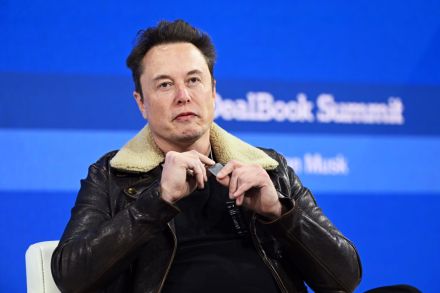
It will trash the brand. It will alienate its core users. And relaunching and rebranding a failing business almost never works. As Elon Musk drops the Twitter blue bird and swaps it for an X, we will hear plenty of arguments about why the world’s second richest man has made another critical commercial mistake. In fairness, some of them have a point. Yet Musk's critics are making a mistake by missing the real purpose of the new name. X only exists to kill off Twitter. The rebrand was announced in a typically haphazard way. As of today, Twitter will be known simply as X. It was Musk’s boldest move yet since his $44 billion (£34 billion) takeover of the social media site, and one that went down about as well as his other changes to the company since taking it over.

Britain should place a big bet on the petrol engine

Ministers should be hailing it as a major vote of confidence in the economy. King Charles should be clearing his diary to make sure he is available for the opening ceremony. And the broadcasters should be leading the news with it. In normal circumstances, you might expect the announcement that two major global corporations will headquarter their new €7 billion joint venture in the UK to be greeted as a huge win for the country. It may not be popular with the green elite, but it is a lot more likely to be successful The trouble is, the Renault joint-venture with China’s Geely has been designed to produce petrol and hybrid engines and not fashionable battery powered cars. But hold on.

Jeremy Hunt’s City reforms are far too timid

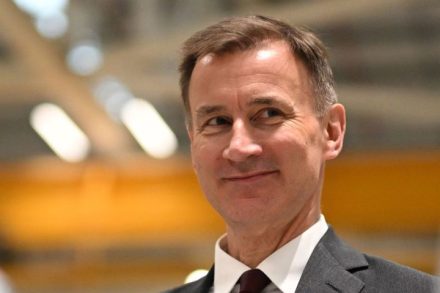
There will be some tweaks to the way that pension funds are allowed to invest their money. There will be some modest rewriting of EU rules on the way investment banks can provide analysis of company performance. And there will be some reduction in the big bundles of paper a company needs to issue before it can sell new shares. And, er, that seems to be about it. The Chancellor Jeremy Hunt may be trying to sell his latest round of City reforms as a significant reduction in red tape that will allow the financial sector to grow again. But, in keeping with his tepid, managerial style, they lack any real vision or guts – and won’t make much difference to anyone.

Will Threads tame Elon Musk’s Twitter?

We will need tighter regulation. We will need new laws and controls. And we will have to organise boycotts of advertisers to bring it into line. Ever since Elon Musk took over Twitter, and started to try and make the liberal-left’s favourite mouthpiece slightly more balanced, not to mention slightly more profitable, there have been endless demands to stop the libertarian billionaire from changing anything about it. Politicians such as the American democratic senator Amy Klobuchar have called for more content moderation and harsher punishment for spreading hate speech. Last October, the EU internal market commissioner Thierry Breton taunted Twitter, saying 'In Europe, the bird will fly by our European rules'.

Labour must resist jumping on the mortgage bail-out bandwagon

Millions of potential voters in marginal constituencies face punishing rises in their mortgage repayments over the coming months and years. The government is in disarray on the issue and is largely to blame for the mess. Labour has spied an opportunity to hammer the Conservatives: it is talking about a 'Tory mortgage penalty' and shadow chancellor Rachel Reeves is jumping on the bandwagon clamouring for mortgage payers to get help. But, if Labour goes too far in its demands, it could pay a heavy price. With inflation stubbornly high, and the Bank of England rapidly losing credibility, mortgage rates are soaring.

Rishinomics isn’t working

Tax rises would bring debts under control. The Bank of England would bring inflation back down again. The government would steadily win back the confidence of the financial markets, repair relations with the EU, remove some of the obstacles to growth and, once all that was in place, try and cut a minor tax or two. When he became Prime Minister, Rishi Sunak promised a very orthodox, centrist economic programme, and one that would have the full backing of the IMF, the financial markets and just about every respectable commentator. There is just one problem, however, and it is not exactly a minor one. It is failing, and failing badly. In truth, Rishinomics is in tatters.  Today’s inflation data was genuinely shocking.

Keir Starmer is clueless about energy security

It will create lots of well-paid jobs, especially in Scotland. It will reduce our electricity bills. And it will make sure the lights can still be switched on regardless of what is happening in the rest of the world. Labour leader Sir Keir Starmer has made a big pitch today for ‘energy security’, promising to rip up planning rules for onshore wind power and create a state-owned green energy giant that will provide all the power the UK needs, as well as hitting all our targets on climate change. But hold on. On closer inspection, it seems that Sir Keir knows barely anything about energy security.

Is France finally changing its tune on Brexit?

The waiters can sometimes be a little surly. That holiday villa you booked in the Loire may not always be as desirable as it looked in the pictures. And you can never be entirely sure which side they will be on in a major war. Still, despite occasional inconsistencies, there is one thing you could always rely on the French for. They will insist forever that leaving the EU has been a catastrophe for the British economy, and by far the stupidest decision any major country has ever made. But hold on. What’s this? In a note this morning BNP Paribas, a bank right at the heart of the French establishment, finally admitted Brexit had not made much difference. At this rate, perhaps even the EU’s chief Brexit negotiator Michel Barnier will be arguing it was all fairly irrelevant all along.