Matthew Lynn

Matthew Lynn is a financial columnist and author of ‘Bust: Greece, The Euro and The Sovereign Debt Crisis’ and ‘The Long Depression: The Slump of 2008 to 2031’

Rishi Sunak was wrong to publish his tax returns

He has plenty of money. He earns a substantial amount from his investments. And he gets a City firm to prepare his returns rather than doing them himself at close to midnight after a couple of fines from HMRC like the rest of us. In truth, there were not a lot of surprises when the Prime Minister Rishi Sunak published his tax returns on Wednesday. We didn’t learn anything we didn’t already know. And yet, even if they didn’t provide any ammunition for his opponents to attack him with, it was still a mistake to publish them – because it puts us on a dangerously slippery slope.  There weren’t any hidden Russian gold mines, or Cayman Islands trusts linked to arms dealers It was perhaps always inevitable that Sunak would give in to pressure to publish his tax returns.

What can save Credit Suisse now?

It would be enough to buy Tesco twice over. Or Barclays, with almost enough change left over to buy Lloyds as well. Even by the standards of the financial markets 50 billion Swiss francs (£45 billion) is a lot of money. And yet, as it turns out, it is not enough to save Credit Suisse. The Swiss government is searching around increasingly desperately for a way to fix the embattled bank, including this weekend a merger with its traditional rival UBS. But in the end it now looks inevitable that it will have no choice but to take it over and wind it down in the most orderly way possible. Credit Suisse is beyond rescuing.

Jeremy Hunt will have to step in after Silicon Valley Bank’s collapse

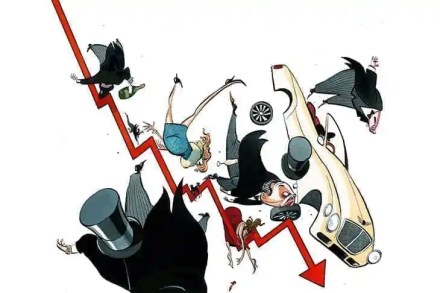
It will be yet another bailout for failed bankers. It will simply encourage yet more risk-taking in the City. It only impacts a tiny number of tech companies and venture capital funds, and anyway we can’t afford it. As the London arm of Silicon Valley Bank – which has gone spectacularly bust over the weekend – is closed down by the Bank of England, there will be plenty of pressure on the Chancellor Jeremy Hunt not to offer any extra money to its depositors beyond what they are entitled to under the existing compensation scheme. The trouble is, that would be a big mistake. If necessary it will have to be rescued.  A full-blown banking crisis was probably not what Hunt was hoping for as the backdrop to his first Budget this week. And yet that is what he will have to confront.

Will the last company to leave the City please turn out the lights?

It would have been bad enough if just one major British company had decided to list its shares in New York rather than London in the space of a single week. But two? First it was the chip-maker Arm, one of the UK’s very few major technology companies. Then came the building materials giant CRH. Shell also said they came very close to shifting their base to the US. The moment has surely arrived for the UK to radically deregulate its listing regime – or else watch the City slowly wither away. At this rate, within a few years there might only be a couple of retailers and a bus company on the London Stock Exchange Fewer and fewer companies have been bothering to list their shares in London for many years.

Why does Starmer think Britain should be richer than Poland? 

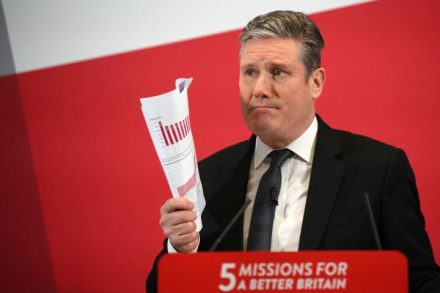
Our growth rate has been miserable. We have not invested enough. And over thirteen years the Conservatives have cut spending too much, damaged our trading relationships with our major neighbours, and made a mess of the tax system. These were Labour leader Sir Keir Starmer's major criticism of Tory economics today in a speech in which he unveiled his latest plans for the economy.  He summed it all up with one damning statistic. We will, he argued, soon be poorer than Poland. Poland! But hold on. Why does Sir Keir imagine the British have some God-given right to be richer than the Poles? And why doesn’t he take a moment to reflect on the policies that have made Poland so successful – because if he were in Warsaw he would oppose all of them.

How bitcoin bounced back after FTX

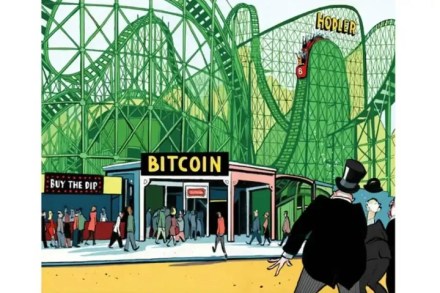
One of the major exchanges has gone spectacularly bust. Billions of investor’s money has been lost. There have been allegations of widespread fraud, and one of the biggest corporate trials in modern history is set to dominate the business pages over the rest of the year. The collapse of the FTX, and the arrest of its high-profile founder Sam Bankman-Fried, was meant to finish off bitcoin and the rest of the cryptocurrencies. And yet, this year digital money is staging a dramatic revival – and making fools of its critics all over again.  When FTX went down, there was no shortage of people telling us, with ill-disguised glee, that bitcoin was finished.

Why is it so hard for Britain to control inflation?

We are not leading the world in deregulation, or in creating new ‘green industries’. We certainly don't lead in tax-cutting, or innovation, or technology. Still, there is one respect in which the British economy can claim to be ahead of everyone else. Rising prices. When the world is caught up in an inflationary spiral, the UK always seems to suffer more than anyone else – and that is turning out to be just as true in the 2020s as it was in the 1970s and 1980s.  When the inflation date was released today, it did at least record a modest fall. The rate at which prices are rising dropped to 10.1 per cent for January – now a whole percentage point below its peak. That is better than nothing. Yet inflation is now falling more significantly elsewhere.

Rishi Sunak’s tax rise is already backfiring

It would raise the money needed to fix the health service. It would make sure the burden of paying for Covid fell on the broadest shoulders. And because it would do little more than bring the UK back into line with its major industrial rivals, it wouldn’t even have any impact on our competitiveness. When Rishi Sunak announced the decision to raise Britain’s rate of corporation tax from 19 to 25 per cent back when he was still Chancellor it was sold as a necessary step to restore the public finances, and one that would have a negligible impact on business. But hold on. AstraZeneca said this week that it was planning to build a new plant in Ireland because Britain’s taxes were now hitting it too hard – and it is likely to be far from the last to invest elsewhere.

Trussonomics is slowly winning the argument

It was self-indulgent, whinging. Dull in places while completely batty in others. All the usual insults will be hurled at former prime minister Liz Truss for her essay defending her short time in Downing Street, published today. Perhaps it would be better for her to retire gracefully from public life and let some ambitious young revisionist historian in the 2060s make the case that she was treated unfairly. Except she still has one key card to play. Events are gradually showing that she was right along: Trussonomics, or whatever it will be called next, is gradually winning the intellectual argument. Her argument has something else going for it: a ring of truth There won’t be many people in the Conservative Party welcoming Truss’s return, and certainly not in the government.

Don’t condemn Shell over its bumper profits

It is 'obscene' and 'an insult to working families', according to the TUC. If there was one thing more predictable than the doubling of profits of the energy giant Shell – given that the stuff it sells has soared in price over the last year – it was the storm of protest that it ran into following the announcement today. 'No company should be making these kind of outrageous profits out of Putin’s illegal invasion of Ukraine,' said the Lib Dem leader Ed Davey. Inevitably, there are now calls for higher windfall taxes, and even for state-ownership. But hold on? Shouldn’t we celebrate a major British company making lots of money, rather than condemn it?  There is no question that Shell had a good year.

The UK is right to keep faith in crypto

It will be a charter for fraudsters. It will usher in an open-season mindset for money launderers and criminals. And it will drag down the reputation of the City. There will be plenty of critics of today’s government decision to push forward with a regulated cryptocurrency market in London. In the wake of the FTX scandal, one of the largest in corporate history, many would rather see it banned completely. But crypto is more resilient than that – and the UK, if moves quickly, it can carve out a lucrative space as its leading hub.  No one could accuse Rishi Sunak or Jeremy Hunt of taking any risks with the British economy. Nor have the Prime Minister or Chancellor shown much interest in boldly re-inventing the country’s business model.

Davos man is back in charge of the global economy

Davos was back with a bang this week for the first full-scale winter conference since the pandemic. And yet, the occasion marked something more significant than just a week of power breakfasts and champagne receptions. ‘Davos Man’ is back in charge of the global economy – and for better or worse everyone better get used to it. The Davos consensus is typically smug, self-satisfied and complacent as its many critics never tire of pointing out Sir Keir Starmer flew in to pitch his pro-business plans for the government everyone expects him to lead in a couple of years.

We will miss the non-doms when they’re gone

It will cover a generous pay rise for the nurses. It will bail out the NHS. It will put the public finances back on track, and, even better, it will make the country more equal. The Labour party has a simple solution to most of the problems the UK faces. It will abolish ‘non-dom’ status, and collect lots of extra tax revenues from rich foreigners. Hey, presto, problem solved. The trouble is, there is a slight flaw in the plan. They are already fleeing, and we will miss them when they are gone.  It is a complete fantasy to think we will raise any extra tax revenue from abolishing non-dom status Nom-dom status has always been controversial.

The UK has finally chalked up a Brexit win

We haven’t lowered tariffs on food. We haven’t done many new trade deals, and certainly not one with the United States. Hardly any rules and regulations have been repealed, and if anyone thought it was going to help fix the NHS then the winter crisis will have disappointed them. Six years since we voted to leave, and two years after we finally severed our ties with the European Union, Brexit wins have been noticeable mainly by their absence. But hold on. We may finally have one – a partnership with the drugs developer BioNTech to pioneer cancer treatments.

When will Covid fraud catch up with Rishi Sunak? 

Remember Rishi-mania? It came around the time of the ‘Eat Out to Help Out’ scheme, which was designed to help the restaurant trade recover from the Covid lockdowns. As chancellor, Sunak won over stomachs –­­ and hearts – with his generous financial scheme to help everybody through the crisis. Cometh the hour, cometh the Treasury.  But it is now quite clear that hundreds of millions, even billions, of pounds were stolen from the taxpayer through these schemes. And for all his supposed competence as a technocratic administrator, in reality, Sunak presided over fraud on an unprecedented scale. It may be just a matter of time before this massive scandal catches up with him.

What is Keir Starmer’s plan for growth?

A few vague promises about upgrading skills. And something or other about promoting innovation and raising productivity. Sir Keir Starmer did not exactly set the world alight in his speech to the CBI today. Given that he is twenty points ahead in the opinion polls, and sometimes more depending on the latest Tory implosion, perhaps he felt he didn’t need to. Instead the Labour leader seemed content to confirm a point that was already obvious to anyone: the Prime Minister doesn’t have a plan for growth. And the prime-minister-in-waiting doesn’t have one either.  Rishi Sunak’s talk to the CBI yesterday was not exactly a hard act to follow. Over 40 minutes, the PM waffled his way through some guff about balancing the books.

Sunak’s Conservatives are the party of zero growth

We might get a new nuclear power station one day, unless the protestors or the Supreme Court find a way to block it. We will plough on with High Speed Rail 2 regardless of its mounting cost. And there will be some re-heated waffle about supporting technology and innovation, complete with misty-eyed homilies to Alexander Fleming and John Logie Baird that could have been lifted word for word from any chancellor’s speech over the last fifty years. And, er, that was about it. In his Autumn Statement today, Jeremy Hunt had nothing to say about growth – because, in reality, Rishi Sunak’s Conservatives have become a zero-growth party.

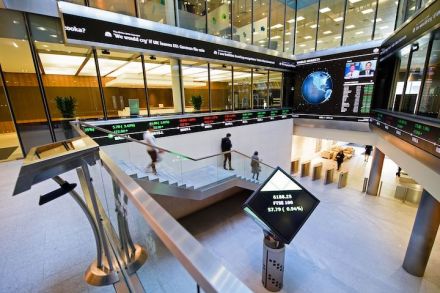
The decline of the London stock market

There is plenty for anyone in Paris to feel smug about if they happen to look across to the other side of the English Channel right now. France has been able to watch British prime ministers come and go with almost comical regularity. It can supply everyone else with electricity from its nuclear power stations if they ask nicely enough. And it is about to watch its football team cruise to defending its crown at the Qatar World Cup. But there is one more that will make the French especially pleased. Paris has just overtaken London as Europe’s largest stock market – and the UK has only itself to blame.

Why interest rates are still lower than you might think

Anyone with a mortgage will be in serious trouble. Small businesses will go to the wall. Demand will be hammered. And the cost of government debt will soar. After the Bank of England upped interest rates yesterday to 3 per cent, the highest level in more than a decade, there was one point on which everyone agreed. The Bank might be moving too fast or too slow, but it is imposing steep rises in rates. But hold on: is that right? After all, when you take into consideration rising inflation, the real cost of money has hardly ever been cheaper.  The Bank’s decision to hike rates by 0.75 percentage points was widely expected.

Rishi Sunak’s potential tax rises would guarantee a recession

It could be National Insurance. It could be income tax. Perhaps it could even be a rise in VAT. We don’t yet know what taxes Rishi Sunak and his Chancellor Jeremy Hunt have planned for their fiscal statement later this month. One point is surely clear, however. There will be no point in pretending that those can be paid for by either ‘big business’ or ‘the rich’. And, even worse, it will guarantee a recession, making even more tax rises inevitable in the future. It may not be quite so bad on the day. Both Sunak and Hunt are slick enough political operators to know that if they leak in advance that the fiscal statement will involve eye-watering tax rises – and if the rises are in the end simply very painful rather than completely brutal, many of us will be relieved.