Matthew Lynn

Matthew Lynn is a financial columnist and author of ‘Bust: Greece, The Euro and The Sovereign Debt Crisis’ and ‘The Long Depression: The Slump of 2008 to 2031’

Will Nvidia stock keep going up?

It more than doubled its sales. It unveiled a new line of microchips. It promised to keep rolling out new products for the next few years. In the end, Nvidia, the chip manufacturer, delivered the kind of blockbuster results that traders and investors had been waiting for. Yesterday’s ‘Nvidia Day’ (as the company’s quarterly results days are now known on Wall Street) turned out to be better than even the most bullish investor could have hoped for. There is just one snag. The company is now powering the bull market. If anything goes wrong with its turbo-charged expansion, it will bring equities down with it. It’s great for the moment There was no question that it was an impressive set of figures.

Western economies are failing – but capitalism isn’t the problem

Real wages have barely increased for more than a decade. Banks have had to be bailed out, and many still exist on a form of state life support. Growth has stalled, taxes are at 70-year highs, yet governments are still bankrupt. Unless you happen to be part of a tiny plutocracy made up mostly of tech entrepreneurs and financiers, there has rarely been a point, at least since the nadir of the mid-1970s, when the economic system seemed beset by quite so many challenges as it is today. The left has smartly stepped into the intellectual space that has been created with a series of well-timed polemics, which, while they vary in precise analysis and on solutions, have at least one thing in common. They argue that the system is fundamentally broken, and it will take radical action to fix it.

The FTSE 100 hits a new high – but don’t celebrate yet

Another day, another all time high. As the week closed, the FTSE 100 index hit 8,433 — the highest level it has ever reached — and this is turning into a regular occurrence. The FTSE has now hit 11 all-time-highs over the last month, and it is close to equalling the record set way back in 1984 of 12 all-time-highs within a single four-week period. Add in a mega-bid and better than expected growth figures and it may look as if the UK is booming again. Well, perhaps. In reality, however, all that is happening is that the FTSE 100 is finally recovering from two decades of miserable under-performance — and it would have to go a lot higher to break any real records.  The FTSE 100 would have to go a lot higher to break any real records.

Passport e-gate outages are an embarrassment to Britain

Queues that stretch for hours. Technology that doesn't work. And a system so poorly designed that this isn't the first time it's broken down. There appears to be a perfectly innocent explanation for the failure of the passport e-gate system across the UK’s airports last night – a 'system network issue' – despite the wilder conspiracy theories that immediately started circling on the internet. But one point is surely clear: the e-gates have become a national embarrassment – and if we can't rely on them to work, we should get rid of them. Some passengers spent longer waiting to go through passport control than they did on their flights The scenes at airports including Heathrow, Gatwick, Edinburgh, Birmingham, Bristol, Newcastle and Manchester were disgraceful.

Is Javier Milei’s medicine working?

Javier Milei was taking too many risks. Argentina’s president didn’t have enough political support. And his radical version of free market economics didn’t offer any solutions anyway, especially in a world where the state is more crucial than ever. When Milei won the presidency last year there were plenty of predictions that he would fare as well as Britain’s Liz Truss. And yet, there are signs the medicine is starting to work – and that will be globally significant.   Over the past couple of weeks, the data coming out of Argentina has been far better than anyone expected. This month, inflation is forecast to dip below 10 per cent – admittedly a month-on-month figure – compared with a high of close on 300 per cent earlier this year.

The truth about Ireland’s £600 million Brexit ‘bonanza’

Ireland is reaping the benefits of a Brexit bonus to the tune of €700 million (£600 million). It is not hard to understand why hardcore Remainers are gleefully reporting the news that the government in Dublin is collecting huge extra revenues, much of which comes from imposing tariffs on British goods. What is being reported as a ‘Brexit bonanza’ for the Irish isn't quite what it seems 'The level of customs duties has effectively doubled in recent years compared to the previous decade, reflecting the transformation of Great Britain into a third country in 2021,' says the Irish Revenue Commissioners. British companies suffer, and a foreign government makes lots of extra money; no wonder some of Brexit's critics are saying: I told you so. But hold on.

Meta’s AI investment plan has backfired on Zuckerberg

It will write your WhatsApp messages for you. It will post a cute picture of your cat on Instagram, even if you don’t actually have a cat. And it will put some enhanced memories up for you on Facebook, while cheerfully making connections with people you don’t know and who may well not actually exist... When Mark Zuckerberg started explaining his plans for Meta – the company formerly known as Facebook – to start investing billions of dollars in Artificial Intelligence (AI) yesterday, investors should have been cheering all the lucrative possibilities. Instead, the share price has promptly sunk like a stone. The stock market has started to become suspicious of the AI hype – and rightly so.

Elon Musk doesn’t know how to turn Tesla around

The share price is in freefall. Sales are sliding at an accelerating rate as customers lose interest. The Chinese are moving in, and the brand is tarnished. When Elon Musk unveils the quarterly results for Tesla later today, he will need to convince his shareholders he has a plan to turn the company around. The only trouble is, right now there is not much sign Musk has a clue what to do. Musk is a brilliant entrepreneur. There is no question of that. But he has also spread himself too thinly Tesla’s results this week are expected to be its worst in years. Sales have already fallen by 8 per cent in the first three months of this year, ending a decade of rapid expansion. Profit margins are getting squeezed.

Elon Musk (Photo: Getty)

If Apple loses against China so will the West

It has been a long time since the West dominated shipbuilding, or steel making. We are already aware that we are losing ground in consumer goods, as well as in finance and transport. Add it all up, and we no longer expect the US, Europe or its allies to control the global market in most major industries. Still, even as other industries lost ground there was one thing most economists and industrial experts would have felt sure we could rely on: Apple. Whatever else happened, nothing would knock its world-beating iPhone – without question the world’s most profitable product – off its well-secured perch. But hold on. Apple’s market share is now falling at an accelerating pace, and its Chinese rivals are rising fast.

The Bank of England can’t blame IT for its dodgy forecasts

It hires the cleverest young graduates every year. It brings in talent from around the world. And it has the budget to acquire all the resources it needs. With all this at its disposal, you would think the Bank of England could at least come up with a better excuse for its dismal record on forecasting how the economy works than blaming it all on a creaking IT system. Its response to the review published today by the former Federal Reserve chairman Ben Bernanke is not going to wash – and sooner or later the Bank will need an honest reckoning with its failings over the last decade.

It’s hard to be proud of the FTSE 100

It has finally happened. In trading on Tuesday afternoon, the UK’s FTSE 100 index finally closed in on an all-time high. It hit 8,015 points, itching above the previous record closing level of 8,014 set in February 2023 – even if it was still a whisker below the intra-day trading record of 8,043, also from February last year. With stock markets rising around the world, at some point this week or perhaps next, the FTSE 100 will be setting fresh records daily. We may even be treated to one of those self-congratulatory tweets the Prime Minister, Rishi Sunak, specialises in. The trouble is, there is nothing to celebrate. In reality, the FTSE has been a dismal disappointment. Nothing will change that soon.  With inflation, record highs are inevitable.

The Swiss are cutting interest rates. Why can’t we?

Mortgage rates will finally start to come down again. Consumers will have a little more money in their pockets. And companies will find it cheaper to invest. Today’s cut in interest rates was a much needed boost for the economy. Oh, but hold on. That was over in Switzerland, where the central bank this morning cut rates by 0.25 per cent. By contrast, the Bank of England has today kept them on hold. This raises the question of whether the Swiss or British central banks have a better record of managing monetary policy. If most people in the markets had to put money on it they would probably place a franc or two on Switzerland.  The Bank of England has blundered all over again – and the price for that will be a high one This may well prove to be just the beginning.

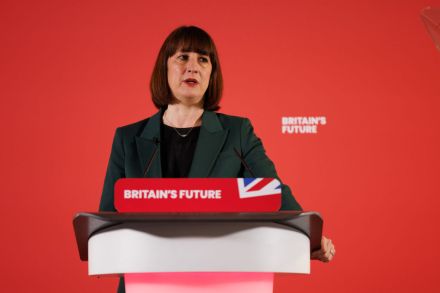
Rachel Reeves will regret promising growth

Growth will be turbo-charged, animal spirits will be unleashed, and foreign investment will flood back into Britain. Shadow chancellor Rachel Reeves is promising a Thatcher-style revival of the British economy if Labour wins power. But there's a problem with the pitch that she will deliver in her keynote Mais lecture on the economy today: a Labour government isn't going to deliver this promised growth. Reeves is setting herself up for failure.  Labour's proposals are painfully thin With at most only a few months left before she takes charge of the Treasury, as she inevitably will, Reeves is making it clear that she expects the UK to return to the 2.5 per cent annual rate of expansion that were normal in the 1980s and 1990s.

Cutting National Insurance won’t save the Tories

It will put more money in people’s pockets. It will improve the incentives to work. And it will put down a marker that the party does still believe taxes can occasionally be cut. The Chancellor Jeremy Hunt is not the world’s finest speech-maker, but he will probably attempt a few rhetorical flourishes when he cuts 2 per cent off the rate of National Insurance in his Budget later today. The trouble is, it is going to prove a damp squib, and not least because it has been widely trailed in advance. In reality, a modest reduction in National Insurance is not going to save the Conservative party from defeat at the looming election. It is too late for that now.

Nissan is setting an alarming trend with their electric cars

At a certain point, your smartphone may no longer accept the latest software update from Apple or Google. Your laptop could get so cranky after four or five years that it is easier to replace it with a new one than spend hours staring at the blue screen of death. Even your toaster or your iron is not going to run forever. We are all used to the idea of built-in-obsolescence. Even so, the news that it can now extend to our cars, with Nissan switching off software for older models, is alarming – and will make selling more battery-powered vehicles even harder. There won’t be any vintage market in old electric cars because the software has been turned off The Nissan Leaf was one of the pioneers of electric vehicles (EV) in the UK, selling thousands to early adopters.

Apple is right to steer clear of the electric car market

Apple's much-hyped electric car appears to have been killed off before it ever hit the road. For years, the tech firm's plan to branch out into developing an electric, semi-autonomous car have been the subject of much excitement. Codenamed Project Titan, fans speculated that Apple would turn its magic to designing a car that would revolutionise driving. The template of a square box with four wheels underneath that has dominated auto design for more than a hundred years would become a thing of the past. Over the last decade, as rumours emerged about the project – which was never officially announced – Apple nerds, who admittedly have a tendency to be somewhat obsessive, have been busy speculating on what an 'iCar' might look like.

Javier Milei’s Argentine revolution seems to be working

The currency would collapse. Output would go into freefall. Unemployment would soar, and the IMF would be back in charge quicker than you could say ‘chainsaw’. When Argentina voted into power its libertarian new president Javier Milei there were predictions that his radical free market reforms would quickly plunge the country into chaos. But hold on. In fact, it is not quite going according to the script – instead there are signs that Milei’s harsh medicine might be working.  The Hayek-quoting Milei represents a decisive break from a century of big-state Argentinian politics that turned what used to be one of the world’s richest countries into a synonym for chaos and mismanagement.

The valuable lesson learnt from Japan’s stock market recovery

A lot has happened over the past 34 years: the Cold War ended, several wars have taken place in the Middle East, a banking collapse occurred, and a global pandemic left millions stuck inside their homes. But one thing remained constant throughout: the bear market – a price drop of 20 per cent or more from the most recent high – in Japanese equities ground on and on relentlessly. After hitting an all time high of 39,915 points on 29 December 1989, the Nikkei 225 which covers the country’s major companies slumped and slumped again. Today, it finally recovered all those losses, setting a fresh all time high. There is a lesson in that for investors everywhere. All bear markets end eventually, even Japan’s.

London has France to thank for its Brexit win

The City of London would be hollowed out. Bankers would have to retrain as burger chefs. And Paris and Frankfurt would emerge as the twin centres of the European financial markets, leaving London as little more than a backwater. Of all the predictions made by some Remainers during Brexit, there was one that kept re-emerging: that financial trading would inevitably move to the other side of the Channel.  It's clear that this doom mongering was overblown. A deal has finally been struck between EU chiefs and the bloc’s member states that will keep the City of London in business for several years to come.

Does the EU’s tech ‘enforcer’ know what he’s talking about?

Thierry Breton is, on the face of it, well qualified to regulate Europe's tech industry. After a brief spell as French finance minister, from 2009 to 2019 he ran the computing giant Atos, one of the champions of France's IT industry. Yet Atos is now in deep trouble. Shares have plunged more than 90 per cent in the past five years; an issue of new shares to raise fresh capital has been cancelled. Whether the company will survive without a bailout is far from clear. It is, of course, a while since Breton left Atos for Brussels, where he works as the European Union’s internal market commissioner. A lot may well have changed since Breton's departure. Yet it is hard to shake the feeling that Atos's woes go further back than the last few months.