Martin Vander Weyer

Martin Vander Weyer

Martin Vander Weyer is business editor of The Spectator. He writes the weekly Any Other Business column.

Negroni inflation is out of control

Forty years ago this Christmas I visited Hong Kong for the first time – a few days after the signing in Beijing of the Sino-British Joint Declaration that sealed the former colony’s transfer to mainland rule in 1997. It was a moment of apprehension, but at least the timetable had been set. And how lucky I was to have experienced that extraordinary outpost as it was then, in such contrast to what China’s masters have made it now. The Christmas Day service in St John’s Cathedral, overhead fans stirring the turbid air, was a poignant glimpse of Hong Kong’s past. Norman Foster’s Hongkong Bank building, the most expensive in the world at the time, was approaching completion as a symbol of commercial confidence in the future.

The marketing genius of Jaguar

Woke it may be, but Jaguar’s ‘Copy Nothing’ video is a work of marketing genius. With its ungendered models, ungrammatical slogans (‘live vivid’, ‘delete ordinary’) and strange absence of cars, the 30-second ad has brought global attention to a brand that was dying for want of a new generation of customers, in an auto industry in turmoil over its stalled transition from carbon fuel to battery power. And a week later comes the reveal in Miami of the futuristic Type 00 electric concept car that the fuss was really about.

The dark side of Black Friday

How is it possible that we’re still reading headlines about the £4 billion fundraising from the Gulf that saved Barclays from a bailout in 2008? It’s not too sweeping to say that most of the financial world smelled something fishy in the undisclosed £322 million of advisory fees that were paid to Qatari investors – and that whiff never went away, despite the collapse of criminal charges against individuals at Barclays in 2019. The Financial Conduct Authority has called the behaviour of Barclays ‘reckless and lacking integrity’, while recognising that the bank ‘is a very different organisation today’.

A sparkling celebration of innovation – and business optimism

November is the season for the fireworks display of talent that is The Spectator’s Economic Innovator of the Year Awards gala dinner, in partnership with Rathbones. This year, at the Kimpton Fitzroy Hotel in London’s Russell Square, the energy generated among the assembled founders, judges and sponsors beats any Guy Fawkes pyrotechnics. We’ve attracted more entries each year since we launched these Awards in 2018. This year, our judges chose 50 regional finalists from 267 ventures representing every corner of the UK and every sector, from beans and ketchup in the food industry to the frontiers of bioscience and engineering. A theme of this year’s entries was a growing number of mentions of AI.

What does the City really think of the Chancellor?

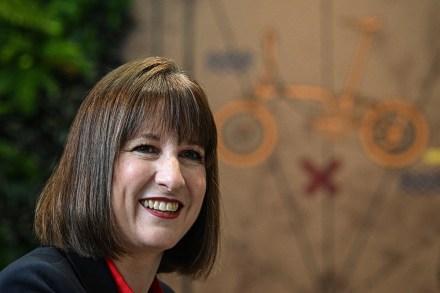
Regular invitations to Mansion House banquets petered out after I asked a shifty-looking waiter for a glass of champagne and he told me he was a deputy governor of the Bank of England. So I can’t report firsthand whether last week’s speech by Chancellor Rachel Reeves was greeted by assembled financiers with napkins on their heads or cries of ‘By George, I think she’s got it!’. What I can say is that – her text having been largely leaked beforehand – she was well upstaged by Governor Andrew Bailey’s unexpected attempt to reopen the Brexit debate; and that she seems to ‘get’ the City a lot better than she understands business owners, start-up entrepreneurs, shivering pensioners, aspirational parents and angry farmers. A low bar, but be thankful for small mercies.

Why Trump changed his tune on crypto

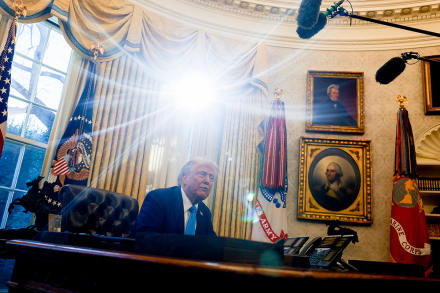
This column comes to you from Atlanta, Georgia, where but for one giant ‘Trump Stands Up For Families’ billboard and some Harris-Walz placards in the leafier suburbs, you would hardly know there had just been an election. I was hoping to report a whiff of teargas after a contested result, but no. Urban Atlanta voted for Harris but rural Georgia was so solid for Trump that nothing was left to argument. The chattering classes on the east and west coasts may be traumatised, but for plainer folks – with a sense of relief that no violent disruption kicked off – it’s back to daily life and business as usual. Or is that, I wondered, a false observation from conversations with my conference group here? ‘No, you’re right,’ a Washington economist told me over breakfast grits.

Is No. 10 coming for game shooting next?

I confess I was lunching at L’Escargot in Greek Street as Rachel Reeves delivered her Budget. My excuse was that I thought I already knew what was in it – but in reality the package was even more anti-business than I feared. My punishment was a risotto too glutinous to finish, but the Chancellor’s 76-minute sermon proved just as indigestible when I tuned in later. Like the wild mushrooms in my dish, the more pungent Budget measures had to be picked out of a blander mass – and I was roused from postprandial torpor by a call from a veteran entrepreneur, regularly quoted here under a variety of disguises, in a fury at one such small-print item.

Still hunting for a Trump trade? Gold may have further to rise

Anyone hunting for a ‘Trump trade’ at this late stage has probably missed the US election bus. If you bought gold as a traditional safe-haven asset back in February at £1,600 an ounce, you’d be a smug 33 per cent up by now – though my man in the bullion market tells me the rise is by no means all to do with presidential hopes and fears. There has also been big buying from China possibly linked to moves, with Russia and other unfriendly actors, towards ‘de-dollarisation’ of world trade using a partially gold-backed alternative currency. Which means there could be more upside ahead, my man says, and gold ETFs are still worth a look.

Wahed’s alarming Tube adverts

As the interminable Budget wait goes on, so does the trawl through the Chancellor’s bin bags. I refer to the old tabloid method of digging in celebrities’ dustbins for evidence of depravity or scandal; in Rachel Reeves’s case, that would mean piecing together shredded Treasury analyses on all the various tax wheezes floated since July. One curry-smeared paper no doubt addresses the pros and cons of an inheritance raid on ‘aristocrats and landowners’; beneath the Red Bull cans and pizza crusts, might there be another headed ‘Clawbacks on Enterprise Investment Scheme’? Not that there have been substantive rumours, mind you. But that’s rather the point: having had so many draft Budget items shot to pieces, she must be desperate to shield some last surprises.

In defence of eating out

Scheduling the Budget almost four months after their election victory would have counted as a monumental misjudgment for the Labour government were it not for all the other cock-ups that turned their first 100 days into a sitcom. Still, the extended period of speculation about which taxes Rachel Reeves is really planning to raise has done no good at all to her carefully groomed reputation as a ‘serious economist’ (to quote Mark Carney) who is somehow uniquely pro-business and pro-worker. On the contrary, there have even been suggestions that she could be about to unleash chaos on the financial markets akin to the Truss-Kwarteng fiasco of two years ago. But in essence it’s pretty obvious.

Where are all my after-dinner speaking gigs?

How excited are you to hear the Prime Minister talking tech with Eric Schmidt, an American billionaire who used to run Google? Me neither. But their on-stage conversation is billed as the highlight of the government’s International Investment Summit in London next week, designed to show the world the UK is ‘open for business’. What with Downing Street looking like Game of Thrones after the Red Wedding massacre, and both Angela Rayner’s Employment Rights Bill and Rachel Reeves’s tax-grab Budget looming, the timing of this summit could hardly be worse.

Goodbye to Old King Coal

So farewell, Ratcliffe-on-Soar: the UK’s last coal-fired power station shut down on Monday, having burned five million tonnes of coal per year since it opened in 1968. Back then, 80 per cent of national power came from coal, our primary energy source since the 1880s; at the turn of this century there were still 25 coal plants in operation across the country. Now there are none – and 36 per cent of our power in the past year came from wind, solar and hydro with 7 per cent from biomass, compared with 24 per cent from natural gas and just 1 per cent from Ratcliffe’s coal. That’s a remarkable transition – but far from proof that we’ll have sufficient clean energy to keep the mid-century lights on.

The Murdochs’ next move: Rightmove

Next month’s Budget tax raids on capital have provoked a festival of creative doom-mongering on the fringes of Labour’s conference as well as in the columns of the business press. Most frequently voiced is the prediction that the 2,000 or so denizens of London’s private equity community who benefit from the ‘carried interest’ tax wheeze will pack their Louis Vuitton bags into their Chelsea tractors and form a convoy down the M20 towards continental tax havens.

In defence of McJobs

The burden of higher taxation must fall on those with ‘the broadest shoulders’, says the Prime Minister, and City folks assume that means yet more raids on banks. Soft targets because no one loves them, they have also profited from higher interest rates. But they’re already subject to a surcharge on corporation tax and an extra levy on the size of their balance sheets – one effect of which has been to shrink their appetite for the corporate lending which is essential for Labour’s growth ambitions. Loans to small- and medium-sized enterprises fell for five successive quarters to the end of last year and the level was still lower in Q1 2024 than in Q3 2022.

Don’t look back in anger… it’s just how ticket sales work

We expect Ryanair tickets to cost more on holiday Saturdays than term-time Tuesdays and Uber fares to surge in the rush hour. When bidders drive an Old Master painting into the millions, we praise the skill of the auctioneer. And of course dynamic prices can go down as well as up. These are market mechanisms to match supply and demand, recognising that some buyers will pay more than others for desirable scarce goods. So why the hoo-hah about ticket prices for Oasis’s reunion tour, which doubled as supply dwindled for those towards the end of the online queue? Labour ministers, Brussels bureaucrats and US justice officials have all declared that the Ticketmaster sales platform needs looking into, while commentators agree that any such offer should at least be fully transparent.

Why is no one marching against VAT on school fees?

How passively we respond to revelations of Labour’s real direction of travel. As millions of pensioners brace for the confiscation of winter fuel payments and other Budget tax raids, shouldn’t they be pinning on their medals, raising their banners and marching down Whitehall – alongside columns of private school parents, furious at the imposition of VAT on fees? Yet so far barely a whimper of protest, as though those affected are racked with guilt at having kept the Tories in power for so long. In response to the school-fee fait accompli, Eton with its mile-long waiting list will hit parents with a full 20 per cent VAT hike from January, taking the annual cost per pupil to £63,000.

My time on Hinge

Back to work, back to school, back to politics: the French call it la rentrée and my own summer idyll in their country must end soon too. Back to the miserabilism of Starmerland – where all news, especially good news, must be seen as bad. What good news is that? I mean that shop prices fell this month by 0.3 per cent, after heavy discounting of non-food goods, for the first time since 2021; overall UK inflation having fallen close to the Bank of England’s 2 per cent target. Which makes autumn interest-rate cuts all the more likely, improving the outlook for mortgage borrowers and increasing the chance that the last two quarters’ strong growth will be sustained. In short, the Tories left a recovering economy for Labour to derail.

The tragic misfortune of Mike Lynch

Twice I met the tech tycoon Mike Lynch, once a decade or so ago and again this year, shortly after he returned from his fraud trial acquittal in California. On the first occasion, I followed him as a speaker at a corporate conference in, of all places, the National Football Centre in Burton-on-Trent. He was the star of the show and we exchanged barely a nod. In those days – after he sold his software company Autonomy to Hewlett Packard of the US for $11 billion, but before his career was overtaken by HP’s allegations that Autonomy’s accounts were fraudulent – he had a reputation for arrogance in business which did not help him rally support against the extradition process that eventually took him to a San Francisco courtroom.

After the Olympics, France has to face its grim reality

The French television personality Laurent Baffie, interviewed by Le Figaro, came up with a nice phrase for the success beyond most expectations of the Paris Olympics: it had been ‘une parenthèse enchantée’, he said, but parentheses always have to close and ‘la merde va revenir’. I’m guessing he meant France’s brief political truce will end and attention will refocus on economic woes, even after a slight fall in unemployment – to 7.3 per cent, compared with the UK rate of 4.4 per cent – that was announced as another ‘bonne surprise’. Writing from the Dordogne, where lunch is long and markets that matter are not global and financial but local and focused on tomatoes and melons, I hope you’ll forgive me if I take Baffie’s cue and offer a sunny interlude.

Market apocalypse? No, a welcome correction

A bout of global stock-market turmoil and an outbreak of UK street violence as adjacent news items gave an apocalyptic feel to the start of the week. But as rioting continued, markets appeared to steady, led by Tokyo with a 10 per cent Tuesday rebound. We know the ugly sentiments that animate the thugs – but do we understand the sudden nerviness of investors? Once media clamour about 1,000-point falls subsided, two strands emerged, both American. First, fear – driven by bad employment figures – that the US economy is weaker than previously thought, fuelling a conviction that the Federal Reserve should have cut interest rates at its late-July meeting rather than waiting for the next in mid-September.