Martin Vander Weyer

Martin Vander Weyer

Martin Vander Weyer is The Spectator’s business editor

Don’t touch Boots!

From our UK edition

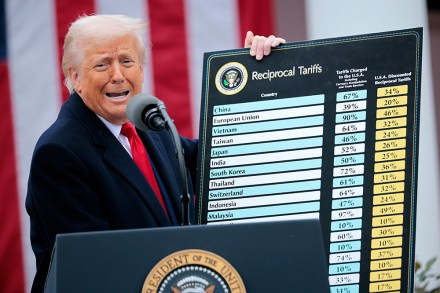
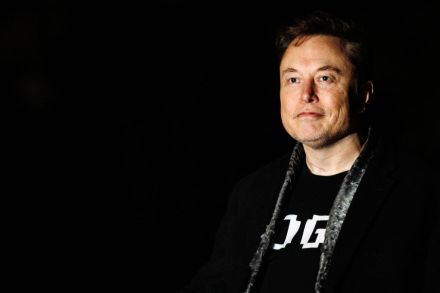
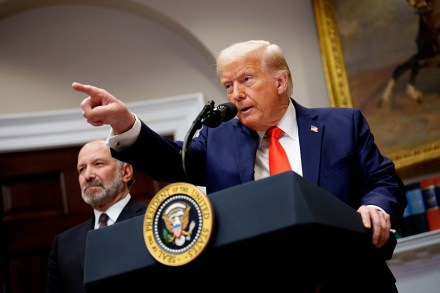
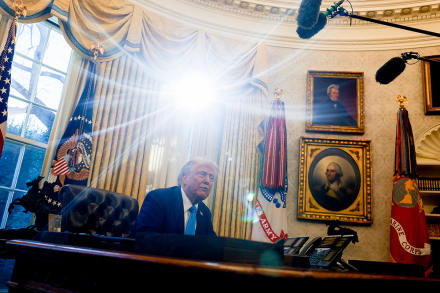
‘Don’t stress over short-term stock market swings’ is a maxim on which Donald Trump and I might agree, even if he is keen to take credit for upward rallies. The shakedown of the past few days is a natural reaction to the wild six-week ride of Trump’s tariff and foreign policy gambits and the realisation that if he keeps it up, he’s far more likely to harm the US economy than boost it. But with a mad king surrounded by madder courtiers anything can happen, including ever more eccentric reversals. So watch the White House tragicomedy but don’t get hung up on the Dow Jones index. But having said that, there’s one stock whose descent is more significant than others. Tesla, Elon Musk’s electric vehicle company, has lost more than half its value since December.

Do not be hypnotised by Trump’s America

From our UK edition

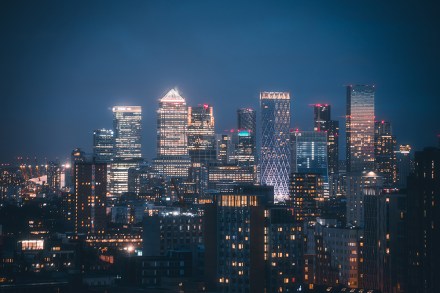
I’ve been judging a beauty parade, but I hasten to add that no bikinis were involved. Four leading investment firms were competing for the mandate to manage a charitable endowment – and offering insights into the way professional stock-pickers see the world. First, despite (or if you’re a disciple, because of) the madness of Donald Trump, any portfolio designed for even a moderate-risk UK investor will be heavily weighted towards US tech and consumer stocks. On the other hand, none of the pitches said anything about China or other previously fashionable emerging markets. And their lack of enthusiasm for pure UK equities (as opposed to London-listed multinationals) was impossible to disguise.

BMW’s Oxford retreat signals deep trouble for UK carmaking

From our UK edition

Among British car factories, Nissan at Sunderland is the most productive and Jaguar Land Rover at Solihull probably the most advanced. As for industrial landmarks, the former British Leyland complex at Longbridge is reduced to a research and development facility for Chinese-owned MG; but ‘Plant Oxford’ at Cowley, the original home of Morris Motors now owned by BMW of Germany, still produces 1,000 Minis per day. And BMW’s decision to halt a £600 million project to build electric Minis there is, I fear, a moment of destiny for the whole UK auto industry. The truth is that the transition to electric cars has descended into chaos. Total UK car production in 2024 was at its lowest (in non-pandemic conditions) since 1954.

Brace for an outbreak of Trumpist investor activism

From our UK edition

If the new Trump era has a theme, it’s one of quixotic disruption with random consequences. In that spirit, stand by for more interventions from activist shareholders seeking to electrify sluggish businesses while making fast bucks on the way through. The first episode over here was the attack by the New York investor Boaz Weinstein on seven London-listed investment trusts, in which he acquired stakes and forced shareholder votes to replace board members, with the aim of taking the trusts’ assets under the management of his own firm, Saba Capital. ‘Go home! You’re selfish and wasteful,’ shouted one headline after Weinstein was emphatically defeated in all seven polls.

Where have all the new businesses gone?

From our UK edition

The Chancellor’s appeal to regulators last month for suggestions to boost growth was mocked as evidence that the government itself is hopelessly bereft of ideas. Might as well ask traffic wardens to devise urban regeneration schemes, we scoffed, or food safety inspectors to plan state banquets. But it made sense to the extent that smarter regulation really should have the potential to boost economic activity – and there are signs the message has got through. Bank of England governor Andrew Bailey speaks of using Brexit freedoms to shield smaller UK banks from ‘Basel rules’ that would require them to hold larger reserves.

Europe should be careful in wishing for their own Trump

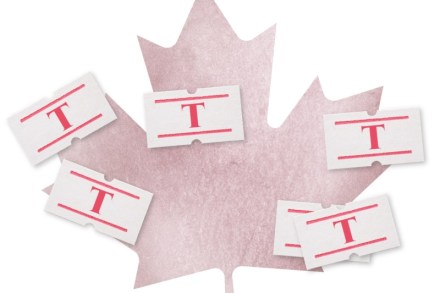
When I visited Toronto with a UK delegation last winter, conversation focused on the issues of immigration, housing and inflation that were contributing to the unpopularity of Justin Trudeau, who finally announced his resignation as prime minister last month. The prospect of Donald Trump’s return to the White House was the slumbering python in the chandelier above the conference table: I sensed our hosts preferred not to think about how bad it might turn out to be. Well, now they know. In response to Trump’s declaration of 25 percent tariffs on Canadian goods, plus 10 percent on imported energy, Trudeau retorted with tariffs on many billions worth of US products.

Trump

Britain’s Trumpists should be careful what they wish for

From our UK edition

When I visited Toronto with a UK delegation last winter, conversation focused on the issues of immigration, housing and inflation that were contributing to the unpopularity of Justin Trudeau, who finally announced his resignation as prime minister last month. The prospect of Donald Trump’s return to the White House was the slumbering python in the chandelier above the conference table: I sensed our hosts preferred not to think about how bad it might turn out to be. Well, now they know. In response to Trump’s declaration of 25 per cent tariffs on Canadian goods, plus 10 per cent on imported energy, Trudeau retorted with tariffs on many billions worth of US products.

I’m being driven mad by Microsoft Outlook

From our UK edition

Call me a cynic, but I suspect this week’s headlines about a revival of Heathrow’s third runway plan amount to little more than a political game. Arguments for and against this project have been aired many times over, from a white paper in 2003 to the Davies Commission’s final report (in favour) in 2015. Much to the detriment of London’s status as a global city, the runway has stayed in the long grass – due to marginal-seat politics under the flight path as much as genuine environmental concern – while no satisfactory alternative at Gatwick or Stansted has ever advanced and the advent of the Elizabeth line is Heathrow’s only real improvement in living memory.

Is it worth it for Trump to buy Greenland?

"The art of the deal" is President Trump’s much-vaunted modus operandi as well as the title of his 1987 bestseller. But how smart would he be to make an offer for Greenland to the Danish government? Leaving aside issues of military sites and future unfrozen shipping routes, would the currently still-frozen north Atlantic island be worth a rich price for its mineral deposits alone? I consulted an intrepid investor who spent six years there prospecting for tantalum, a "transition metal" used in capacitors for mobile phones. His answer was not encouraging. There’s no disputing the potential to find everything from gold and uranium to rare earth elements such as neodymium and dysprosium, in demand for advanced electronics. But the operating difficulties are truly formidable.

Greenland

Would it be worth Trump buying Greenland?

From our UK edition

London’s capital market needs a kick in the pants, as I write every week, and ‘activist investors’ are no bad thing if they provoke sharper corporate performance. The assault by the New York hedge funder Boaz Weinstein on seven UK investment trusts – demanding shareholder votes to replace directors with his own people and take the management of the trusts into his own firm, Saba Capital – looks like the kind of intervention that might bring positive change to the UK’s historic investment trust sector, which accounts for a third of FTSE 250 companies but according to critics offers lacklustre returns, with share prices too often stuck at discounts to the underlying value of trusts’ asset portfolios (NAV).

Rachel Reeves owes Brompton bikes an apology

From our UK edition

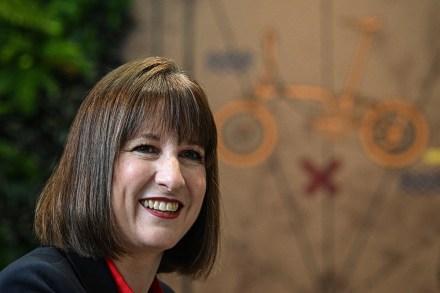
I long to write less about Rachel Reeves and more about world-beating British businesses – such as Brompton, the folding bicycle maker whose fortunes I have followed since I bought the product and interviewed the founder-designer, Andrew Ritchie, 20 years ago. The latest Brompton news was that profits collapsed from £11 million in 2023 to breakeven for the year to March 2024 in the teeth of a post-pandemic demand slump; and that additional hiring has been put on hold after Labour’s NI increase added ‘hundreds of thousands of pounds’ of extra costs. A move from cramped west London premises to a new base at Ashford in Kent, with room for big increases in output and skilled jobs, had already been deferred to 2029.

Should you leave the country? Other questions for 2025

From our UK edition

I was intending to write one of those ‘Ten tips to change your life’ lists that fill so many column inches at this drab time of year. But I got no further than ‘Buy bigger trousers’. Instead, I’ll tackle some of the obvious questions you might be asking as you watch snow turn to slush and wait for the boiler repair bloke to answer his phone. Can I cheer you up? Let’s see. First, will 2025 be a good year to buy a new home (a decision that should always be taken on at least a five-year time horizon)? Pundits see house prices going up (and mortgage rates eventually coming down) in 2025, but not by much. More usefully, Savills predicts 23.

My business predictions for 2025

From our UK edition

Headed for ‘the worst of all worlds’ is not where any of us would wish to find ourselves at the start of the new year. But that was the phrase used by the CBI economist Alpesh Paleja to sum up the predictions of member businesses – of reduced hiring and output, rising prices and weak growth. Since that survey, a revision to zero of the official growth figure for the third quarter of 2024 and reports of depressed pre- and post-Christmas consumer spending have provoked even darker whispers of a return to recession. Whence cometh such pessimism? Has it bubbled out of the Tories’ black hole of fiscal shame? Can we blame the Bank of England and the Treasury ‘blob’? Or the rare alignment of planets that’s expected in three weeks’ time?

Why we must not forget Hong Kong

Forty years ago this Christmas I visited Hong Kong for the first time — a few days after the signing in Beijing of the Sino-British Joint Declaration that sealed the former colony’s transfer to mainland rule in 1997. It was a moment of apprehension, but at least the timetable had been set. And how lucky I was to have experienced that extraordinary outpost as it was then, in such contrast to what China’s masters have made it now. The Christmas Day service in St. John’s Cathedral, overhead fans stirring the turbid air, was a poignant glimpse of Hong Kong’s past. Norman Foster’s Hongkong Bank building, the most expensive in the world at the time, was approaching completion as a symbol of commercial confidence in the future.

Hong Kong

Negroni inflation is out of control

From our UK edition

Forty years ago this Christmas I visited Hong Kong for the first time – a few days after the signing in Beijing of the Sino-British Joint Declaration that sealed the former colony’s transfer to mainland rule in 1997. It was a moment of apprehension, but at least the timetable had been set. And how lucky I was to have experienced that extraordinary outpost as it was then, in such contrast to what China’s masters have made it now. The Christmas Day service in St John’s Cathedral, overhead fans stirring the turbid air, was a poignant glimpse of Hong Kong’s past. Norman Foster’s Hongkong Bank building, the most expensive in the world at the time, was approaching completion as a symbol of commercial confidence in the future.

The marketing genius of Jaguar

From our UK edition

Woke it may be, but Jaguar’s ‘Copy Nothing’ video is a work of marketing genius. With its ungendered models, ungrammatical slogans (‘live vivid’, ‘delete ordinary’) and strange absence of cars, the 30-second ad has brought global attention to a brand that was dying for want of a new generation of customers, in an auto industry in turmoil over its stalled transition from carbon fuel to battery power. And a week later comes the reveal in Miami of the futuristic Type 00 electric concept car that the fuss was really about.

The dark side of Black Friday

From our UK edition

How is it possible that we’re still reading headlines about the £4 billion fundraising from the Gulf that saved Barclays from a bailout in 2008? It’s not too sweeping to say that most of the financial world smelled something fishy in the undisclosed £322 million of advisory fees that were paid to Qatari investors – and that whiff never went away, despite the collapse of criminal charges against individuals at Barclays in 2019. The Financial Conduct Authority has called the behaviour of Barclays ‘reckless and lacking integrity’, while recognising that the bank ‘is a very different organisation today’.

A sparkling celebration of innovation – and business optimism

From our UK edition

November is the season for the fireworks display of talent that is The Spectator’s Economic Innovator of the Year Awards gala dinner, in partnership with Rathbones. This year, at the Kimpton Fitzroy Hotel in London’s Russell Square, the energy generated among the assembled founders, judges and sponsors beats any Guy Fawkes pyrotechnics. We’ve attracted more entries each year since we launched these Awards in 2018. This year, our judges chose 50 regional finalists from 267 ventures representing every corner of the UK and every sector, from beans and ketchup in the food industry to the frontiers of bioscience and engineering. A theme of this year’s entries was a growing number of mentions of AI.

What does the City really think of the Chancellor?

From our UK edition

Regular invitations to Mansion House banquets petered out after I asked a shifty-looking waiter for a glass of champagne and he told me he was a deputy governor of the Bank of England. So I can’t report firsthand whether last week’s speech by Chancellor Rachel Reeves was greeted by assembled financiers with napkins on their heads or cries of ‘By George, I think she’s got it!’. What I can say is that – her text having been largely leaked beforehand – she was well upstaged by Governor Andrew Bailey’s unexpected attempt to reopen the Brexit debate; and that she seems to ‘get’ the City a lot better than she understands business owners, start-up entrepreneurs, shivering pensioners, aspirational parents and angry farmers. A low bar, but be thankful for small mercies.

Why Trump changed his tune on crypto

From our UK edition

This column comes to you from Atlanta, Georgia, where but for one giant ‘Trump Stands Up For Families’ billboard and some Harris-Walz placards in the leafier suburbs, you would hardly know there had just been an election. I was hoping to report a whiff of teargas after a contested result, but no. Urban Atlanta voted for Harris but rural Georgia was so solid for Trump that nothing was left to argument. The chattering classes on the east and west coasts may be traumatised, but for plainer folks – with a sense of relief that no violent disruption kicked off – it’s back to daily life and business as usual. Or is that, I wondered, a false observation from conversations with my conference group here? ‘No, you’re right,’ a Washington economist told me over breakfast grits.