Martin Vander Weyer

Martin Vander Weyer

Martin Vander Weyer is business editor of The Spectator. He writes the weekly Any Other Business column.

Will Labour’s rail replacement service leave travellers stranded?

By spooky coincidence, on Saturday night I watched an old episode of Slow Horses in which a passenger died mysteriously on a replacement bus between High Wycombe and Oxford Parkway – and on Sunday I woke to reports that the first service of the new era of rail renationalisation, the 5.36 from Woking to Waterloo, had also featured a replacement bus. Nobody died, but it wasn’t a good omen. Nor was it quite the ‘turning point for the future of our railways’ that Transport Secretary Heidi Alexander declared. South Western Railway’s return to state hands this week was in fact the fifth major passenger franchise to go that way – four having already failed under the previous government.

It’s time to get rid of the Rich List

Here’s a takeover tale that captures the zeitgeist. It involves two FTSE 250 companies and some deep-pocketed US investors – and I’ll explain it as simply as I can. In essence, how would you feel if your GP surgery fell into the hands of American investors associated with the book title Barbarians at the Gate? The first of the two London-listed companies is Assura, which owns 600 NHS surgeries and diagnostic facilities and has accepted a cash offer of £1.6 billion from a pair of New York investment giants.

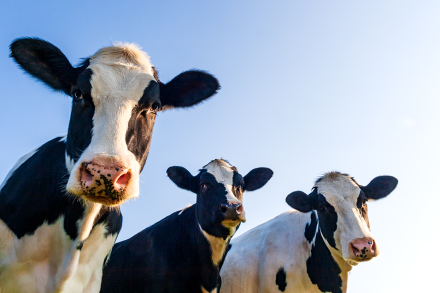
Beef farmers have been stitched up

An awkward delay in the unveiling of the Mansion House Accord was, we’re told, nothing more than a Downing Street ‘timetabling issue’. It was perhaps a tenterhooks issue too, as Donald Trump’s Sharpie hovered over the UK-US trade deal which was clearly going to make bigger headlines. But the Accord also had to contend with City discord around the issue of ‘mandation’ of pension funds to invest in unlisted equity that might contribute to future UK growth. In July 2023, 11 institutions inked the first Mansion House ‘compact’, committing 5 per cent of ‘defined contribution’ pension monies to private equity by the end of the decade. Now 17 industry leaders have committed to upping the target to 10 per cent, at least half of which will back UK ventures.

Entrepreneurship matters more than ever

The Spectator’s Economic Innovator of the Year Awards 2025 are open for entries. We’re excited to hear from high-growth businesses in every sector and every corner of the UK that are leading their markets and making positive contributions to society. And we’re delighted to be working with our sponsor Rathbones, one of the UK’s leading wealth management groups with an extensive regional network and a deep commitment to entrepreneurship. Now in their eighth year, these Awards are widely recognised as a prestigious salute to UK innovation which has created its own lively network of founders and investors. The number and range of entrants has grown year by year and we’ve watched many previous winners flourish nationally and internationally.

If the numbers add up, Shell should bid for BP

A hangar full of analysts and investment bankers must have spent the long weekend formulating advice for Shell chief executive Wael Sawan for and against a takeover of BP. On the plus side, Shell’s strong share performance, reflecting its undiluted focus on oil and gas and boosting its market value to £150 billion, makes a bid look almost bite-sized – BP’s value having shrunk to £56 billion over the past two years as investors decried the commitment to renewables that its board has belatedly reversed. And the addition of BP’s assets in North America and the Gulf of Mexico would turn Shell into a carbon-fuel giant to challenge the likes of Exxon and Chevron in the US.

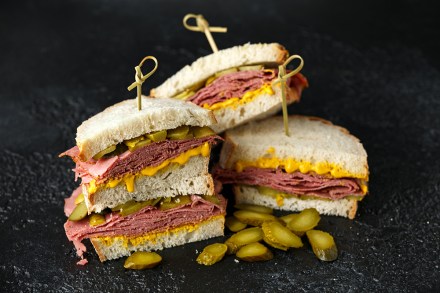
The New York deli sandwich that changed history

There’s nothing new about bringing maverick businesspeople into government to give the bureaucratic blob what an unnamed ‘Trump adviser’ was recently quoted as calling ‘a swift kick in the ass’. After all, it was David Cameron who in 2010 hired the now all but unmentionable retail buccaneer Sir Philip Green to find ways to cut Whitehall waste. But Donald Trump’s conferment of the role of solo global peacemaker on his real-estate buddy Steve Witkoff – who has no known foreign policy or government expertise – takes that idea to a scary new extreme. Take a look on X at a clip of him arriving alone to meet Vladimir Putin and a line-up of Kremlin heavies. When a woman, face unseen, takes the seat next to Witkoff, he turns to her and says: ‘Are you my translator?

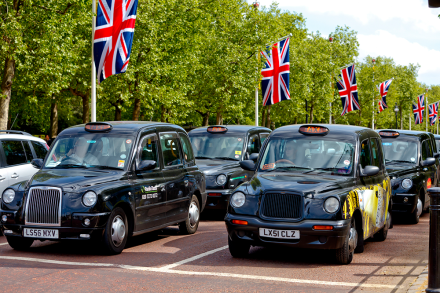
Save London’s black cabs!

Donald Trump’s Soprano-like threat that the ‘termination’ of Federal Reserve chairman Jerome Powell ‘cannot come fast enough’ has been headlined as one of his wildest thrusts to date, but is actually one of his most conventional. Prickly politicians always resent unelected central bankers, though they also see them as useful scapegoats for economic trouble. Liz Truss longed to fire Andrew Bailey from the Bank of England; Gordon Brown gave Eddie George’s Bank its ‘independence’ but took away so much of its power that George nearly resigned; Margaret Thatcher never accepted the most potent modern governor, Gordon Richardson, as ‘one of us’.

No one wants American cars

The weekend’s Scunthorpe drama was a distraction from endless chatter about Donald Trump and his tariffs. Perhaps Downing Street’s spinners stage-managed it with that in mind. Or perhaps the heroic tale of shop stewards confronting villainous Chinese managers while rescue teams scoured the horizon for emergency shipments of iron ore and coking coal was a different kind of smokescreen – to hide the fact that British steelmaking has been doomed for decades and what just happened is a job-saving nationalisation that will be a massive drain on public funds for as long as it takes to admit that the last British blast furnaces belong to history. I’m sorry to take such a downbeat view.

Why it might be best if US stock markets go on falling

It gives me no pleasure to say I told you so. ‘If [Donald Trump] is prepared to cause mayhem in global trade as his first move, he’s even more dangerous than his detractors thought,’ I wrote in February. ‘British commentators of the “Why can’t we have visionary maverick musclemen like Trump?” persuasion should be careful what they wish for.’ And in November, ahead of the presidential election, I wrote that gold could have ‘more upside ahead’ while bitcoin holders would be wise to take profits – advice that looked wildly wrong in December but finally came right with gold at an all-time high and the cryptocurrency suffering its worst first quarter for a decade.

Britain needs a Rearmament Isa

The City’s self-styled ‘cheerleader in chief’, Lord Mayor Alastair King, on a recent visit to Beijing and Shanghai found leading Chinese banks keen to expand in London. What with Chinese diplomats also keen to establish a fortress-embassy at Royal Mint Court on the City’s eastern edge, that may ring alarm bells with those who regard Xi Jinping’s neo-Maoist regime as anything but friendly. But as King also observes, ‘the tectonic plates are shifting’. All geopolitical relationships are up for review – though what follows is my own analysis, not the Lord Mayor’s.

UK tax on US tech is a useful bargaining chip

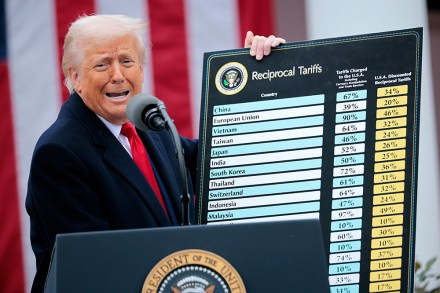
The Digital Services Tax (DST) is a relatively easy bargaining chip to give away in a last-ditch bid to appease Donald Trump, whose final menu of tariffs on UK exports to the US is expected imminently. First tabled by Philip Hammond as chancellor in 2018 and enacted by his successor, Sajid Javid, two years later, this 2 per cent levy on tech multinationals with more than £25 million of UK digital revenues was always seen as a raid on the likes of Apple, Amazon, Netflix, Google, Meta and Microsoft,  though it must by now also catch Shein and other Chinese operators – and was always a provocation to the White House. Within months, there were rumours that Boris Johnson’s government was ready to scrap DST to secure a longed-for UK-US trade deal.

Can Trump fix eggflation?

From our US edition

"You can’t make an omelette without breaking eggs" is a maxim attributed to leaders on both sides of the French Revolution. "Move fast and break things" is today’s equivalent, emanating from Silicon Valley and amply demonstrated by Donald Trump and Elon Musk in their approach to government and geopolitics. "You can’t make omelettes at all if you can’t afford eggs" might be the next variant: inflation and scarcity afflicting America’s favorite breakfast have become a major political issue. In brief, a dozen US eggs used to cost $2 or less but by January this year the supermarket price was $5 and rising – in some places $9 was reported, rationing had to be introduced and Mexican suppliers were spotted smuggling truckloads across the border.

eggs

Will eggflation burst Trump’s bubble?

‘You can’t make an omelette without breaking eggs’ is a maxim attributed to leaders on both sides of the French Revolution. ‘Move fast and break things’ is today’s equivalent, emanating from Silicon Valley and amply demonstrated by Donald Trump and Elon Musk in their approach to government and geopolitics. ‘You can’t make omelettes at all if you can’t afford eggs’ might be the next variant: inflation and scarcity afflicting America’s favourite breakfast have become a major political issue. In brief, a dozen US eggs used to cost $2 or less but by January this year the supermarket price was $5 and rising – in some places $9 was reported, rationing had to be introduced and Mexican suppliers were spotted smuggling truckloads across the border.

Let’s hope Elon Musk’s name fades like Tesla’s stock

From our US edition

"Don’t stress over short-term stock market swings" is a maxim on which Donald Trump and I might agree, even if he is keen to take credit for upward rallies. The shakedown of the past few days is a natural reaction to the wild six-week ride of Trump’s tariff and foreign policy gambits and the realization that if he keeps it up, he’s far more likely to harm the economy than boost it. But with a mad king surrounded by madder courtiers anything can happen, including ever more eccentric reversals. So watch the White House tragicomedy but don’t get hung up on the Dow Jones index. But having said that, there’s one stock whose descent is more significant than others. Tesla, Elon Musk’s electric vehicle company, has lost more than half its value since December.

Tesla

Don’t touch Boots!

‘Don’t stress over short-term stock market swings’ is a maxim on which Donald Trump and I might agree, even if he is keen to take credit for upward rallies. The shakedown of the past few days is a natural reaction to the wild six-week ride of Trump’s tariff and foreign policy gambits and the realisation that if he keeps it up, he’s far more likely to harm the US economy than boost it. But with a mad king surrounded by madder courtiers anything can happen, including ever more eccentric reversals. So watch the White House tragicomedy but don’t get hung up on the Dow Jones index. But having said that, there’s one stock whose descent is more significant than others. Tesla, Elon Musk’s electric vehicle company, has lost more than half its value since December.

Do not be hypnotised by Trump’s America

I’ve been judging a beauty parade, but I hasten to add that no bikinis were involved. Four leading investment firms were competing for the mandate to manage a charitable endowment – and offering insights into the way professional stock-pickers see the world. First, despite (or if you’re a disciple, because of) the madness of Donald Trump, any portfolio designed for even a moderate-risk UK investor will be heavily weighted towards US tech and consumer stocks. On the other hand, none of the pitches said anything about China or other previously fashionable emerging markets. And their lack of enthusiasm for pure UK equities (as opposed to London-listed multinationals) was impossible to disguise.

BMW’s Oxford retreat signals deep trouble for UK carmaking

Among British car factories, Nissan at Sunderland is the most productive and Jaguar Land Rover at Solihull probably the most advanced. As for industrial landmarks, the former British Leyland complex at Longbridge is reduced to a research and development facility for Chinese-owned MG; but ‘Plant Oxford’ at Cowley, the original home of Morris Motors now owned by BMW of Germany, still produces 1,000 Minis per day. And BMW’s decision to halt a £600 million project to build electric Minis there is, I fear, a moment of destiny for the whole UK auto industry. The truth is that the transition to electric cars has descended into chaos. Total UK car production in 2024 was at its lowest (in non-pandemic conditions) since 1954.

Brace for an outbreak of Trumpist investor activism

If the new Trump era has a theme, it’s one of quixotic disruption with random consequences. In that spirit, stand by for more interventions from activist shareholders seeking to electrify sluggish businesses while making fast bucks on the way through. The first episode over here was the attack by the New York investor Boaz Weinstein on seven London-listed investment trusts, in which he acquired stakes and forced shareholder votes to replace board members, with the aim of taking the trusts’ assets under the management of his own firm, Saba Capital. ‘Go home! You’re selfish and wasteful,’ shouted one headline after Weinstein was emphatically defeated in all seven polls.

Where have all the new businesses gone?

The Chancellor’s appeal to regulators last month for suggestions to boost growth was mocked as evidence that the government itself is hopelessly bereft of ideas. Might as well ask traffic wardens to devise urban regeneration schemes, we scoffed, or food safety inspectors to plan state banquets. But it made sense to the extent that smarter regulation really should have the potential to boost economic activity – and there are signs the message has got through. Bank of England governor Andrew Bailey speaks of using Brexit freedoms to shield smaller UK banks from ‘Basel rules’ that would require them to hold larger reserves.

Europe should be careful in wishing for their own Trump

From our US edition

When I visited Toronto with a UK delegation last winter, conversation focused on the issues of immigration, housing and inflation that were contributing to the unpopularity of Justin Trudeau, who finally announced his resignation as prime minister last month. The prospect of Donald Trump’s return to the White House was the slumbering python in the chandelier above the conference table: I sensed our hosts preferred not to think about how bad it might turn out to be. Well, now they know. In response to Trump’s declaration of 25 percent tariffs on Canadian goods, plus 10 percent on imported energy, Trudeau retorted with tariffs on many billions worth of US products.

Trump