Martin Vander Weyer

Martin Vander Weyer

Martin Vander Weyer is business editor of The Spectator. He writes the weekly Any Other Business column.

Give us a pubs tsar – but spare us Tim Martin

More than a third of UK universities are in financial doo-doo: staff cuts, cancelled courses, slashed research budgets and possible bankruptcy beckon. Behind this is the fact that domestic students paying £9,250 in fees (way behind inflation since that figure was last raised in 2017) cost £11,750 to teach, representing a collective annual £5 billion loss hitherto made up by international students paying £20,000 each. But the last government’s ban on foreign students bringing dependants with them has provoked dramatic falls in non-EU recruitment: bizarrely, the straw that’s breaking some universities’ backs is a 49 per cent decline in Nigerian students applying for one-year Master’s courses.

How many summers do you have left?

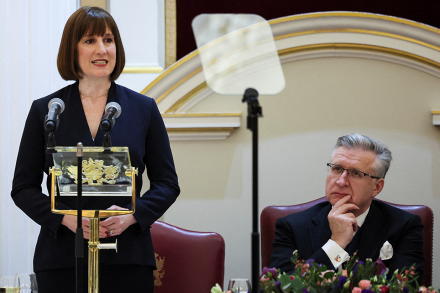
If the new government’s ‘pensions review’ takes forward last year’s ‘Mansion House reforms’ – credited to chancellor Jeremy Hunt but largely the work of the then Lord Mayor of London, Nick Lyons, and designed to push the UK’s largest private-sector pension providers to commit funds to unlisted equities and vital infrastructure – all to the good. If it succeeds in ‘unleashing the full investment might’ of the £360 billion Local Government Pension Scheme (LGPS), as the new Chancellor Rachel Reeves says she intends, even better. We’d have a public investment fund to rival those of the Netherlands and Singapore, though still way behind the likes of Norway and South Korea.

How the markets reacted to Trump’s assassination attempt

Market reactions to the assassination attempt in Pennsylvania represent, according to taste, rational bets on the significantly increased likelihood of a second Trump presidency or stark confirmation of the madness that has overtaken America and threatens the civilised world. Shares in Trump Media & Technology – the parent of his social media platform Truth Social – rose by 30 per cent on Monday, adding more than $1 billion to Trump’s notional fortune despite the company’s revenues being, as one observer pointed out, ‘comparable to that of two Starbucks stores’. Also up were shares in gunmakers such as Smith & Wesson and in private prison operators – and US Treasury bond yields, reflecting fears that Trump will let government debt rip.

How safe do you feel boarding a Boeing?

‘They knocked down our old house in three hours,’ says a friend who has embarked on what he says is a conventional rebuild, nothing Grand Designs about it, on the south coast. ‘But it’s taking forever to get planning permission for the new one. They want reports on everything, from bats to highway impacts: you’d think we’re trying to build a whole huge housing estate.’ And if you do happen to be in the business of building whole huge housing estates, you’ll be eager to know whether Rachel Reeves’s reforms and ‘mandatory targets’ – aimed at delivering 1.5 million new homes in this parliament – will put rockets under the planning system or run straight into a brick wall of nimbyism, exacerbated by lack of capacity and adverse market forces.

Let’s start the new era with a glass of champagne

‘I drink champagne when I’m happy and when I’m sad,’ Madame Lily Bollinger (1899-1977) remarked. ‘Sometimes I drink it when I’m alone. When I have company I consider it obligatory.’ As the last constituency results trickle in, we’ll all inevitably find ourselves in some combination of those four states. If you’re sad, I hope at least you have good company – and that you’re as well supplied with the great French spirit-lifter as I have been this week, with a busload of Spectator readers on a tour to Reims, Epernay and Aÿ. But I suspect you’ve also consumed more than enough media comment on the spectacle of second-rate politicians slime-wrestling, dog-whistling and lying about tax plans.

Can things only get better under Starmer?

‘We are the masters now,’ I chirrup to my Holborn and St Pancras neighbours – misquoting Labour attorney-general Hartley Shawcross from 1946. I don’t mean I’ve decided to throw in my vote with the predicted Labour landslide: frankly, I’d rather give it to the candidate calling himself Nick the Incredible Flying Brick. What I mean is that as constituents of the incoming prime minister, we’re the heirs to Blair’s Trimdon Labour Club crowd in 1997. The world’s media will be all over us: we’ll be the first archetypes of the age of Starmer. But how will we feel in five years’ time?

Seized Russian assets should be used against Putin

From our US edition

The seizure of enemy treasure, formerly known as plunder and pillage, is an ancient tool of war. Though still practiced in the world’s nastiest conflict zones, it’s a tricky business within a rules-based international order. The G7’s agreement to lend $50 billion to Ukraine — using income from $300 billion of frozen Russian assets to cover interest and repayments on the loan — is a vivid case in point. And some would say, a lily-livered half-measure. The key feature of the deal is that it does not actually claim ownership of Russian loot — which however ill-gotten is mostly held in EU banks in the form of western government bonds. It merely diverts interest payments due on the bonds from the issuing governments.

Russian

Why should Putin be allowed to keep seized Russian assets?

The seizure of enemy treasure, formerly known as plunder and pillage, is an ancient tool of war. Though still practised in the world’s nastiest conflict zones, it’s a tricky business within a rules-based international order. The G7’s agreement to lend $50 billion to Ukraine – using income from $300 billion of frozen Russian assets to cover interest and repayments on the loan – is a vivid case in point. And some would say, a lily-livered half-measure. The key feature of the deal is that it does not actually claim ownership of Russian loot – which however ill-gotten is mostly held in EU banks in the form of western government bonds. It merely diverts interest payments due on the bonds from the issuing governments.

Nigel Farage is right: the City should not kowtow to Shein

Nigel Farage and I agree on one thing: a red-carpet welcome at the London Stock Exchange for Shein, the Chinese online fashion retailer, would be ‘a very bad idea’. Valued at £50 billion, Shein could become London’s biggest-ever initial public offering. Both the departing Chancellor Jeremy Hunt and the shadow business secretary Jonathan Reynolds have met Shein’s chairman, Donald Tang, to encourage that prospect. Both clearly recognise that the City’s global status is weakened by a dearth of LSE debutants and a fad for listing in New York instead – with yet another FTSE 100 company, the £24 billion plant-hire giant Ashtead, reported to be thinking of shifting its listing across the Atlantic. But could Shein turn the tide?

A thriving City will test Labour’s tolerance

The City is having a busier year than pessimistic observers – including me – might have expected. The biggest deal on the block, the £39 billion bid by Australian giant BHP Billiton for its London-listed South African mining rival Anglo American, has fallen away. But plenty of bankers’ and advisers’ fees have already been clocked up on both sides and BHP may now pursue global domination of the copper market by stalking other London-listed miners such as Antofagasta of Chile. Meanwhile, the £3.

Bury the Canaletto, now

I’m not on the guest list for the Duke of Westminster’s wedding, but I wish him luck anyway. Mind you, the young seventh duke – Hughie to his friends – hardly needs more luck than has already come his way in the form of the £10 billion Grosvenor property empire in London and elsewhere. When the playboy second duke known as ‘Bend’Or’ died in 1953, Pimlico had to be sold to pay record death duties. But the Grosvenor family has taken a firmer grip on tax planning since then, their fortune multiplying despite the dukedom passing through three cousins to reach the father of today’s incumbent, who inherited via reportedly tax-proof trusts in 2016 and should have little to fear from a Labour regime. In other stately drawing rooms, however, teacups are rattling.

Perfect pitch: tips for Innovator success

Entries for The Spectator Economic Innovator Awards, in partnership with Investec Wealth & Investment (UK), come in all sizes and sectors. How do our judging panels choose between them? We’ve asked three of our most experienced judges to offer their top tips for regional finalists to make the very best of a 10-15 minute pitch. But before that, entrants must answer the first question in the online entry form: ‘Please describe your business very clearly in 50 words or fewer.’ In short, make it punchy, passionate and special. That’s the path to Innovator success.

The need for greed

I suspect I’ve had a lot more fun writing about the annual Sunday Times Rich List over the years than many of its denizens have had clambering into it and staying there behind their high-tech security gates and their phalanx of tax advisers. The 2024 roll call includes some great British wealth-creation stories – led by the industrialist Sir Jim Ratcliffe, the inventor Sir James Dyson and the Far Eastern trading Swire dynasty. But if the completed jigsaw of 300 names makes any sort of picture, it is of a vast treasure hoard from elsewhere, and in some cases from nowhere, that has found a relatively safe vault in the UK. That’s not a bad thing in itself as an advert for our quality of life and rule of law.

Can Starmer and Reeves add some fizz to the economy?

If the 0.6 per cent first-quarter GDP uplift reported by the Office for National Statistics is sustained for the rest of this year, Rishi Sunak will be able to claim – as he waves goodbye – that he and Jeremy Hunt have succeeded against their naysayers in dragging the UK economy from pandemic depths back to the level of ‘trend growth’, around 2.5 per cent per annum, that used to be thought of as normal. That’s spookily in line (as is the path of inflation) with Ken Clarke’s achievement as Tory chancellor in 1996 ahead of the election that swept Blair and Brown to power the following May.

We’re looking for an outstanding Innovator to Watch

All the chosen finalists in The Spectator’s Economic Innovator of the Year Awards, in partnership with Investec Wealth & Investment (UK), have unique stories to tell. And in 2024, alongside regional and overall winners and an extra award for excellence in Sustainability, we’re looking for a very special entrant which we’re calling the One to Watch. It’s the range of sizes, sectors and stages of development that makes our awards such a fascinating challenge Our Innovator finalists always have positive traits in common.

Russia

Who actually gets hurt by sanctioning Russia?

From our US edition

The US crackdown on trade finance for Russia from international banks — designed to impede imports needed for the continuing assault on Ukraine — is biting hard, reports the FT, quoting an investor who thinks “the logical endpoint of this is turning Russia into Iran.” Quite right too: sanctions like these are a vital non-military way to hobble Vladimir Putin’s campaign. But war and finance intersect in many different ways. Consider also the fate of 400 western-owned commercial aircraft that were leased to Russian airlines before the invasion in February 2022. Now stuck in Russia or its satellites, unmaintained to western standards and unfit to fly back into our airspace, they’re a potential multibillion loss for their owners and insurers.

How to bottle Britishness

The US crackdown on trade finance for Russia from international banks – designed to impede imports needed for the continuing assault on Ukraine – is biting hard, reports the FT, quoting an investor who thinks ‘the logical endpoint of this is turning Russia into Iran’. Quite right too: sanctions like these are a vital non-military way to hobble Vladimir Putin’s campaign. But war and finance intersect in many different ways. Consider also the fate of 400 western-owned commercial aircraft that were leased to Russian airlines before the invasion in February 2022. Now stuck in Russia or its satellites, unmaintained to western standards and unfit to fly back into our airspace, they’re a potential multibillion loss for their owners and insurers.

Live the high life… in a mid rise

How radically left-wing is Labour’s proposed ‘renationalisation’ of the railways? Though militant Mick Lynch of the RMT union ‘strongly welcomed these bold steps’, the real answer is: hardly at all. The revolutionary socialist group Counterfire agonised thus: ‘While it would be extremely obtuse to say that Labour’s policy is bad, it would be naive to say it was adequate, let alone particularly socialist.’ I’m struggling to disagree with that summary. The central idea of taking train operating franchises into public hands as they expire comes as no shock: LNER, Northern, Southeastern and the dreadful TransPennine Express have already met that fate, along with Scottish and Welsh trains, and those that remain private are largely despised by passengers.

Saluting the best of UK entrepreneurship

Hot news for UK entrepreneurs: The Spectator Economic Innovator of the Year Awards 2024, in partnership with Investec Wealth & Investment (UK), is open for entries. As ever, we’re excited to hear from high-growth businesses in every sector and every corner of the UK. We’re also delighted to welcome back our sponsor, Investec Wealth & Investment (UK), who have recently combined with Rathbones Group Plc to become the UK’s leading discretionary wealth manager. The combined business has an extensive footprint among UK wealth managers and a deep commitment to entrepreneurship. This is the seventh year of our quest to salute the UK’s most innovative companies.

How Pret ate itself

How bad would it be if Royal Mail’s parent company, International Distributions Services (IDS), were to be taken over by the Czech billionaire Daniel Kretinsky? Our historic postal service is heavily lossmaking, struggling to maintain its universal delivery obligation and at war with its unions: a foreign owner would surely take an axe to it. Kretinsky, who owns almost 28 per cent of stockmarket-listed IDS, has gone back on an assurance that he would not try to take the company private and has tabled a £3.1 billion offer – above the group’s current market value but well below what other shareholders think it is worth. He won’t win with this first gambit but he’s likely to be back with a higher one.