Martin Vander Weyer

Martin Vander Weyer

Martin Vander Weyer is The Spectator’s business editor

Now the economy is recovering, is it a good idea to buy Poundland shares?

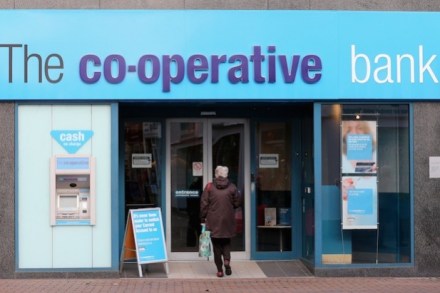
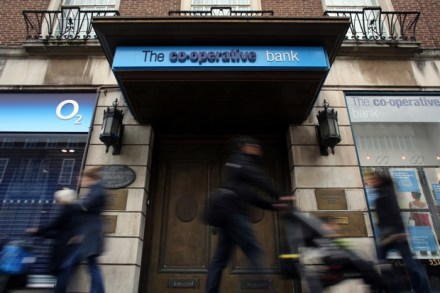
‘Satan seizes control of saintly bank’ would be a fair summary of much of the coverage of the deal that has rescued the crippled Co-operative Bank from oblivion, or ‘resolution’ as it is technically called. In order to avoid that fate, the parent Co-op Group has had to inject £462 million into the bank while accepting a reduction in its own equity stake to 30 per cent. Dominant among the holders of the other 70 per cent will be a group of hedge funds from New York and Los Angeles who may or may not represent the prince of darkness but are certainly looking for what Co-op Group chief Euan Sutherland calls ‘recovery value’.

Martin Vander Weyer: Arise, Sir Jim, the hero of the Grangemouth affair

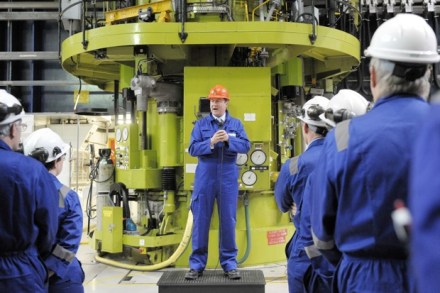
You know my theory that Unite leader ‘Red Len’ McCluskey is a Conservative secret agent? Well, having watched events at Grangemouth last week, I’m convinced his Scottish comrades Pat Rafferty, Unite’s Scottish secretary, and Stevie Deans, chair of Falkirk Labour as well as Unite’s Grangemouth convenor, are part of the same subversive cell. Having called an overtime ban over alleged ‘victimisation’ of Deans, they escalated the dispute until Grangemouth’s owner — the Swiss-based conglomerate Ineos — threatened to close the plant.

Kuenssberg, Pym, Yueh, Davis, Kennedy, Islam or Perry — who will be the BBC’s next business editor?

My Any Other Business item this week on who’s in the frame to succeed Robert Peston as BBC business editor seems to have caused a bit of a stir. The strong rumour is that the appointment must go to a female candidate, and there’s clearly support for the delightful Laura Kuenssberg, who came to fame reporting the 2010 general election for the BBC but has been a lot less visible since she moved to ITV News as business editor in 2011. Does Pesto think she’s given him a run for his money these past couple of years? I suspect he’d say not, and if I were Laura’s career adviser I’d say play to your strength and get back to covering politics as soon as you can.

Martin Vander Weyer: The BBC should replace Robert Peston with Grayson Perry

Prediction, as Mervyn King once observed, is ‘a stab in the dark’. Who can say with confidence where the wholesale price of electricity will be in ten years’ time, let alone 45 years hence at the end of the contract struck by Energy Secretary Ed Davey with EDF of France for the building of the £16 billion Hinkley Point nuclear station? We can be pretty sure the price will be a lot higher than today’s and it’s not mad to think it might have doubled by 2023, which is the starting assumption of the EDF deal.

Notes on … Skiing in Switzerland

There’s a myth in the Spectator office, which I’ve never discouraged, that I’m Yorkshire’s answer to Franz Klammer — a veteran ski ace who likes nothing better than to have himself helicoptered to remote peaks in search of deep, virgin powder. But myth it is, I’m afraid: your business columnist is fat, 58 and was never fast on skis or any other form of self-propulsion, even in his youth. So you might think I’m the wrong man to be telling you about my favourite Swiss winter-sports station, which is the picture-book village of Wengen in the Bernese Oberland. This, after all, is the place where ski-racing was invented by British sportsmen in the 1920s, and is still home to the muscular Downhill Only Club.

Martin Vander Weyer: Cut it out, America. This is not Hollywood

Some say it’s natural optimism that makes the Americans so different from the British, and some say it’s a lack of cynicism. Either way, our cousins over there have long had difficulty distinguishing fact from fiction, and are forever finding ways to make their public life look like the action movie that always ends well for the hero, or the TV series in which some of the good guys turn out to be bad but the really good guy lives to fight another season. The ultimate expression of this national naivety — for that’s surely what it is — occurred on 1 May 2003 when President George W.

Martin Vander Weyer: Bad news for pawnbrokers. Is that good news for the rest of us?

While attention has focused on the sudden ubiquity and alleged iniquity of payday lenders, boom and impending bust has infected another part of the short-term credit sector. For the very reason that the global economy is recovering, Britain’s pawnbrokers are in trouble. Pawnbroking traces its history to the Medicis, but owes its traditional image in this country to Charles Dickens: ‘Of the numerous receptacles for misery and distress with which the streets of London unhappily abound,’ he wrote in 1835, ‘there are, perhaps, none which present such striking scenes as the pawnbrokers’ shops.’ Today’s UK market leader H&T, formerly Harvey & Thompson, opened for business on Vauxhall Bridge Road in 1897.

Martin Vander Weyer: Freeze gas bills, freeze fuel duty – and one day we’ll all freeze in the dark

‘We need successful energy companies in Britain, we need them to invest for the future,’ said Ed Miliband in his conference speech, as though channelling my thoughts at the very moment I was writing last week’s item on the lack of a national energy strategy. Then he ruined it: ‘If we win the election, the next Labour government will freeze gas and electricity prices until the start of 2017. That’s what I mean by a government that fights for you.’ And that’s what we all mean by politicians making ill-conceived promises for short-term gain. George Osborne’s response?

Making It Happen, by Iain Martin – review

Fred Goodwin’s descent from golden boy of British banking to ‘pariah of the decade’ would be the stuff of tragedy if the former Royal Bank of Scotland chief were not such a rebarbative personality. A bully to his subordinates, obsessed with the wrong kind of detail, driven by an egoistic urge to trample his enemies, he sounds a lot like another once-prominent Scot who has recently disappeared from public view. Indeed the pair used to enjoy regular ‘cosy chats’ before it all went horribly wrong. As someone told Iain Martin: ‘Gordon and Fred are actually quite similar. Both are quite introverted individuals and that expresses itself in sometimes extremely awkward dealings with others.

This isn’t a property bubble – it’s a reason to improve London’s transport

Everyone —including me, if I’m honest — has been talking about a new property bubble. But is it for real? London house prices are rising at an annual rate of almost 10 per cent, and shares in the capital’s bellwether back-from-the-dead estate agency Foxtons soared on their stock market debut last week. Yet according to the Office for National Statistics, the national rise is just 3.3 per cent, the average price of a home having only recently regained its pre--credit-crunch peak. -Outside the South-East, and hotspots such as oil-rich Aberdeen, the pattern is largely flat or even falling.

Bet on Royal Mail, not Twitter

Royal Mail delivers to 29 million UK addresses; last year it generated £9 billion of revenues, of which £324 million remained as profit before tax; and it is likely to be valued at £3 billion in its privatisation share sale, indicating a price-earnings ratio modestly below ten. Twitter — the microblogging phenomenon beloved of self-admiring celebs, but now so ubiquitous as a mode of communication that it is compulsory for British ambassadors abroad — has 200 million users and is expected to generate revenues of just £365 million this year, maybe twice that next year. Twitter says it’s profitable but has so far kept its accounts private, and is nevertheless likely to be valued at £6 billion-plus in its forthcoming flotation.

Welcome back, TSB: your founder’s spirit is alive and well and living in Airdrie

A big hello to the revived Trustee Savings Bank — the spin-off of 631 Lloyds branches that were going to be sold to the Co-operative Bank to fulfil EU conditions for the bailout of Lloyds after its catastrophic takeover of HBOS. The new entity starts life with 4.6 million personal and small-business customers, a clean balance sheet, no investment banking arm and no foreign skeletons in its cupboard. That all sounds promising, but those of us who have long argued for a break-up of mega-banks and a return to relationship-driven high-street finance will watch closely to see whether the new TSB’s slogan, ‘Welcome back to local banking’, turns out to be just that, or a real mantra for change.

What Vodafone should do with its huge windfall: invest it in the next Vodafone

Vodafone, which has just collected an £84 billion windfall from the sale of its 45 per cent stake in Verizon Wireless of the US, is either a hero or an anti-hero of British capitalism, according to taste. To me, the world’s second-largest mobile phone business is heroic because it achieved that position from a standing start just 30 years ago, when poker-playing Ernie Harrison, chief executive of a military radio manufacturer called Racal, bet everything he had on the future of mobile telephony.

A windfall tax on monster basements could solve London’s housing problem

The mega-rich are best housed behind high fences, on wooded estates patrolled by dogs; that way, they don’t have to annoy the rest of us. But I can see how irritating it must be, if you live in the crowded Ladbroke Grove area of west London, to have a neighbour like Reade Griffith, an American hedge-fund manager who has received planning permission for a vast basement extension to his house that will take many months to excavate.

What Heathrow needs is not a third runway but a complete rethink of its central hellhole

Justine Greening is unlucky to have been passed the transport chalice so early in her cabinet career, and her tenure will surely be even shorter than the already short average for the post. On the issue of a third Heathrow runway, opposition to which was a theme of her campaign for her Putney seat in 2010, she seems at a loss to respond to a surge of Tory opinion led by former minister Tim Yeo in favour of the runway project as a symbol of newly assertive, globally connected, growth-seeking post-Olympic -Britain. I feel obliged, in a chivalrous way, to help her marshal her arguments before she’s forced to depart. Here goes.

Unpaid internships turned me into a banker – but I still think they’re a good thing

My thanks to ‘AndyB’, the only reader who posted an online comment on my column last week. It was ‘Don’t you ever go on holiday?’ and the answer is yes I do, and here I am deep in the Dordogne, glass of rosé to hand, lunch on the terrace in prospect, scanning cyberspace for some fizzing ingredients to make an Any Other Business cocktail. Upbeat economic news from home, led by ‘CBI lifts growth forecast amid optimism’, merely adds to the mellowness of mood. As for local issues to raise the pulse, there isn’t even a decent ruckus to be had over shale gas, since François Hollande has barred all exploration of it beneath French soil.

Back off, nimbyists, or fracking will benefit Beijing more than Balcombe

The fracking debate has been brought to a new heat by David Cameron’s message to Home Counties nimbyists and eco-crusties that he wants ‘all parts of our nation’ to share the shale gas bounty, not just lucky northerners. But the argument is proceeding in almost total ignorance of how the controversial extraction technique works and how soon it’s likely to happen. So I asked one of Britain’s top energy executives this week whether shale is really the game-changer it’s fracked up to be. It certainly looks that way in the US, he said, because gas-based energy costs have been cut by two thirds, energy representing 10 per cent of all production costs.

Whisper it, but the big banks are finally getting their houses in order

By and large it was a good week for the big banks — underpinned by encouraging news from the wider economy, in which every little uptick brings a few more zombie borrowers back to the land of the living. Lloyds returned to profit, promised to start paying decent dividends again and declared itself oven-ready for return to the private sector, with the market anticipating an immediate sale to institutions of a first tranche of the taxpayers’ 39 per cent stake. HSBC reported varied performance around the world but still clocked up a fat result for the half-year — and asked the Vatican to close its account as part of a sweep against money laundering.

Dear Justin Welby – here’s how you can really take on Wonga

I’ve been in the pulpit again, this time to salute the centenary of the death of Charles Norris Gray, a formidable Victorian vicar of my Yorkshire town of Helmsley. Gray was a social activist with strong opinions on everything from sanitation to election candidates, and he did a great deal of good for his parish — so I’m not averse to the idea of churchmen intervening in worldly affairs, and I think Archbishop Justin Welby was right to highlight the parasitical nature of ‘payday lenders’ such as Wonga, even if he was subsequently embarrassed to discover that the Church of England was an indirect investor in it.

The free market didn’t kill Detroit: blame bad managers and worse unions

One of the best articles I ever commissioned as an editor was an account by James Doran of a road trip from the steps of the New York Stock Exchange to the back streets of Detroit in October 2008, at the nadir of the financial crisis. At his destination, Doran found a shocking vista of empty, vandalised factories, all once ‘bit-part players in the now dying auto industry… The desolation was so complete that it hardly seemed real.’ Five years on, the city of Detroit is bankrupt with $18 billion of debts, its population has shrunk to 700,000 from a peak of more than two million, leaving mostly the poor, black and unemployed behind, its public services have disintegrated, and the count of abandoned homes and buildings has risen to 78,000.