Martin Vander Weyer

Martin Vander Weyer

Martin Vander Weyer is business editor of The Spectator. He writes the weekly Any Other Business column.

This isn’t a property bubble – it’s a reason to improve London’s transport

From our UK edition

Everyone —including me, if I’m honest — has been talking about a new property bubble. But is it for real? London house prices are rising at an annual rate of almost 10 per cent, and shares in the capital’s bellwether back-from-the-dead estate agency Foxtons soared on their stock market debut last week. Yet according to the Office for National Statistics, the national rise is just 3.3 per cent, the average price of a home having only recently regained its pre--credit-crunch peak. -Outside the South-East, and hotspots such as oil-rich Aberdeen, the pattern is largely flat or even falling.

Bet on Royal Mail, not Twitter

From our UK edition

Royal Mail delivers to 29 million UK addresses; last year it generated £9 billion of revenues, of which £324 million remained as profit before tax; and it is likely to be valued at £3 billion in its privatisation share sale, indicating a price-earnings ratio modestly below ten. Twitter — the microblogging phenomenon beloved of self-admiring celebs, but now so ubiquitous as a mode of communication that it is compulsory for British ambassadors abroad — has 200 million users and is expected to generate revenues of just £365 million this year, maybe twice that next year. Twitter says it’s profitable but has so far kept its accounts private, and is nevertheless likely to be valued at £6 billion-plus in its forthcoming flotation.

Welcome back, TSB: your founder’s spirit is alive and well and living in Airdrie

From our UK edition

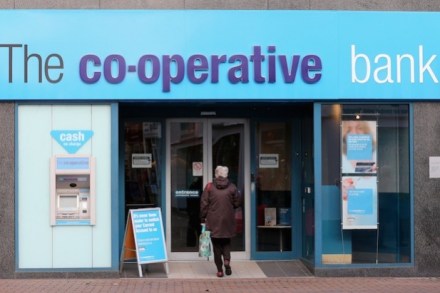
A big hello to the revived Trustee Savings Bank — the spin-off of 631 Lloyds branches that were going to be sold to the Co-operative Bank to fulfil EU conditions for the bailout of Lloyds after its catastrophic takeover of HBOS. The new entity starts life with 4.6 million personal and small-business customers, a clean balance sheet, no investment banking arm and no foreign skeletons in its cupboard. That all sounds promising, but those of us who have long argued for a break-up of mega-banks and a return to relationship-driven high-street finance will watch closely to see whether the new TSB’s slogan, ‘Welcome back to local banking’, turns out to be just that, or a real mantra for change.

What Vodafone should do with its huge windfall: invest it in the next Vodafone

From our UK edition

Vodafone, which has just collected an £84 billion windfall from the sale of its 45 per cent stake in Verizon Wireless of the US, is either a hero or an anti-hero of British capitalism, according to taste. To me, the world’s second-largest mobile phone business is heroic because it achieved that position from a standing start just 30 years ago, when poker-playing Ernie Harrison, chief executive of a military radio manufacturer called Racal, bet everything he had on the future of mobile telephony.

A windfall tax on monster basements could solve London’s housing problem

From our UK edition

The mega-rich are best housed behind high fences, on wooded estates patrolled by dogs; that way, they don’t have to annoy the rest of us. But I can see how irritating it must be, if you live in the crowded Ladbroke Grove area of west London, to have a neighbour like Reade Griffith, an American hedge-fund manager who has received planning permission for a vast basement extension to his house that will take many months to excavate.

What Heathrow needs is not a third runway but a complete rethink of its central hellhole

From our UK edition

Justine Greening is unlucky to have been passed the transport chalice so early in her cabinet career, and her tenure will surely be even shorter than the already short average for the post. On the issue of a third Heathrow runway, opposition to which was a theme of her campaign for her Putney seat in 2010, she seems at a loss to respond to a surge of Tory opinion led by former minister Tim Yeo in favour of the runway project as a symbol of newly assertive, globally connected, growth-seeking post-Olympic -Britain. I feel obliged, in a chivalrous way, to help her marshal her arguments before she’s forced to depart. Here goes.

Unpaid internships turned me into a banker – but I still think they’re a good thing

From our UK edition

My thanks to ‘AndyB’, the only reader who posted an online comment on my column last week. It was ‘Don’t you ever go on holiday?’ and the answer is yes I do, and here I am deep in the Dordogne, glass of rosé to hand, lunch on the terrace in prospect, scanning cyberspace for some fizzing ingredients to make an Any Other Business cocktail. Upbeat economic news from home, led by ‘CBI lifts growth forecast amid optimism’, merely adds to the mellowness of mood. As for local issues to raise the pulse, there isn’t even a decent ruckus to be had over shale gas, since François Hollande has barred all exploration of it beneath French soil.

Back off, nimbyists, or fracking will benefit Beijing more than Balcombe

From our UK edition

The fracking debate has been brought to a new heat by David Cameron’s message to Home Counties nimbyists and eco-crusties that he wants ‘all parts of our nation’ to share the shale gas bounty, not just lucky northerners. But the argument is proceeding in almost total ignorance of how the controversial extraction technique works and how soon it’s likely to happen. So I asked one of Britain’s top energy executives this week whether shale is really the game-changer it’s fracked up to be. It certainly looks that way in the US, he said, because gas-based energy costs have been cut by two thirds, energy representing 10 per cent of all production costs.

Whisper it, but the big banks are finally getting their houses in order

From our UK edition

By and large it was a good week for the big banks — underpinned by encouraging news from the wider economy, in which every little uptick brings a few more zombie borrowers back to the land of the living. Lloyds returned to profit, promised to start paying decent dividends again and declared itself oven-ready for return to the private sector, with the market anticipating an immediate sale to institutions of a first tranche of the taxpayers’ 39 per cent stake. HSBC reported varied performance around the world but still clocked up a fat result for the half-year — and asked the Vatican to close its account as part of a sweep against money laundering.

Dear Justin Welby – here’s how you can really take on Wonga

From our UK edition

I’ve been in the pulpit again, this time to salute the centenary of the death of Charles Norris Gray, a formidable Victorian vicar of my Yorkshire town of Helmsley. Gray was a social activist with strong opinions on everything from sanitation to election candidates, and he did a great deal of good for his parish — so I’m not averse to the idea of churchmen intervening in worldly affairs, and I think Archbishop Justin Welby was right to highlight the parasitical nature of ‘payday lenders’ such as Wonga, even if he was subsequently embarrassed to discover that the Church of England was an indirect investor in it.

The free market didn’t kill Detroit: blame bad managers and worse unions

From our UK edition

One of the best articles I ever commissioned as an editor was an account by James Doran of a road trip from the steps of the New York Stock Exchange to the back streets of Detroit in October 2008, at the nadir of the financial crisis. At his destination, Doran found a shocking vista of empty, vandalised factories, all once ‘bit-part players in the now dying auto industry… The desolation was so complete that it hardly seemed real.’ Five years on, the city of Detroit is bankrupt with $18 billion of debts, its population has shrunk to 700,000 from a peak of more than two million, leaving mostly the poor, black and unemployed behind, its public services have disintegrated, and the count of abandoned homes and buildings has risen to 78,000.

Don’t blame the baby boomers – they had it tough too

From our UK edition

Here’s a competition for you: ‘The most irritating discussion on Radio 4 in the past month.’ Answers in not more than 140 characters — but on a proper postcard, preferably written in fountain pen. My own choice was an edition of The Moral Maze that heaped abuse on ‘Baby Boomers’ (usually understood as those born in the decade after the second world war, including me as a happy arrival of January 1955) for ‘raiding their kids’ piggy-banks’ and other offences of ‘generational theft’. The argument — vehemently made by the former Labour policy guru Matthew Taylor, and rebutted by Melanie Phillips when she could get a word in — is that the cohort now at retirement age is, in a moral sense, disgustingly well off.

With one cunningly placed number, Boris may have killed HS2

From our UK edition

‘Does anyone seriously doubt that this amazing scheme is actually going to go ahead?’ boomed Boris Johnson last week. ‘No is the answer!’ He was waxing rhetorical about the redevelopment of Battersea Power Station, the fourth such scheme since the landmark hulk’s turbines were switched off in 1975. The Malaysian consortium behind this £8 million gamble are ignoring both the site’s troubled history and my own advice — which was to lose the shopping mall plans and start digging for minerals — by going for a full-blown residential-retail-office complex that’s a sure sign of economic optimism, underpinned by mayoral enthusiasm.

The world is better off without Marc Rich – but his heirs still control the price of almost everything

From our UK edition

Marc Rich, the godfather of global commodity trading who died last week, ‘deserves credit as one of the greatest creators and sharers of wealth in business history’, wrote James Breiding in the Financial Times in a counterblast to obituarists who had painted the secretive Swiss-based billionaire and former fugitive from US justice as ‘a flamboyant, tax-evading crook’. Bill Clinton certainly saw the better angel in Rich’s nature, granting a presidential pardon for his embargo-busting dealings with Iran against all precedent and advice.

No one liked Mervyn King – but history could yet be on his side

From our UK edition

Sir Mervyn King was his own man to the end: professorial, downbeat, against the tide. At last week’s Mansion House dinner — as in his final vote in favour of more QE, on which his Monetary Policy Committee colleagues bade him farewell by defeating him six to three — he was still worrying about a potential reversal of the fragile recovery. Even as he packs his collection of Aston Villa programmes and MPC minutes into plastic crates, the prospect of collateral damage from another euro-storm will be furrowing his brow. So his last speech as Governor was short on jokes and long on warnings: about ‘unfinished business’ and lessons unlearned, about ‘the audacity of pessimism’ as an antidote to complacency.

Stephen Hester was pushed out of RBS for telling politicians the truth

From our UK edition

Quite a spell of bowling from the Chancellor last week, skittling Stephen Hester’s stumps at RBS and causing Paul Tucker of the Bank of England to walk even before the new Canadian umpire had time to raise his finger. The kindest thing to be said about Hester’s innings (enough of the cricket already) is that he made a pretty good stab at bringing RBS back from the dead in the face of fierce political pressure, given that he was never really the right man for the job.

George Osborne’s Lloyds sale will be all about votes – just as Mervyn King warned

From our UK edition

When a politician’s speech is spun ten days in advance, you know there’s trouble behind the scenes. Next week’s Mansion House dinner will be seen by City attendees principally as a farewell to Sir Mervyn King — and journalists present (including your columnist) will be timing the ovation to see how it compares with Eddie George’s full five minutes in 2003. But we learn that the Chancellor is ‘poised’ to use the occasion to ‘signal’ a public offer of Lloyds Banking Group shares that could raise up to £17 billion and mark a turning point in the post-crisis clean-up of the banking sector. By giving discounts to small investors, it might also swing votes away from Ukip.

Energy special: It’s decision time on shale gas

From our UK edition

‘UK shale Eldorado just off the M62’, declared the Financial Times, reporting a huge gas find below Cheshire. Shale gas is natural gas trapped in beds of underground shale; it can be released by hydraulic fracturing, or ‘fracking’, which means pumping water, sand and chemicals into the shale under high pressure. That much we know for sure — but we also know that Eldorado, the city of gold lost in South America’s rainforests, turned out to be one of the world’s great myths. Had the FT forgotten, or was it issuing a coded warning? Either way, it provided a reminder that the scale, viability and dangers of the ‘shale gas revolution’ are still surrounded by forests of myth and counter-myth.

Let’s get fracking

From our UK edition

Great news on the fracking front. A company called IGas says it’s sitting on a huge shale gas reserve deep below Cheshire. Given the company’s ‘most likely’ estimate of 102 trillion cubic feet of gas, and a potential extraction rate of around 15 per cent, that could fulfil five years of UK gas demand, which runs at three trillion cubic feet per year — half of it currently imported. The other leading player in this field, Cuadrilla, has already claimed reserves of 200 trillion cubic feet in Lancashire, so all told (and subject to lots of caveats) that could be 15 years’ worth of fuel to keep us going until new nuclear stations get built and someone designs a wind turbine that works in the lightest of English breezes.

To save the High Street, sack Mary Portas and slash business rates

From our UK edition

On my way to chair a town meeting, I was chuckling over Phillip Warner’s cartoon last week headed ‘Mary Portas reinvigorates the High Street’. First, TV’s sharp-tongued queen of retail holds forth in front of a row of abandoned shops; then townsfolk dance in the street at the news that she has ‘buggered off in a taxi’. Call me an old cynic, but I think turning stars into tsars is a sign of Downing Street desperation: witness Alan Sugar’s lame stint as ‘enterprise champion’ in the dying days of Gordon Brown, and wince at James Caan from Dragon’s Den tackling social mobility.