Martin Vander Weyer

Martin Vander Weyer

Martin Vander Weyer is The Spectator’s business editor

Sir Richard Greenbury’s business model is worth recalling when capitalism’s critics are on the rampage

Sir Richard Greenbury, the former Marks & Spencer chairman who died last week aged 81, was one of those choleric but thin-skinned corporate chiefs (Sir Alastair Morton of Eurotunnel was another) who never learned to handle journalists. The Telegraph reporter Kate Rankine famously caused him to blow his top at a 1997 press conference by asking when he intended to retire; he made matters worse by describing her later as ‘a silly little girl’.

Monarch was an airline from an earlier era – but were its owners to blame for its demise?

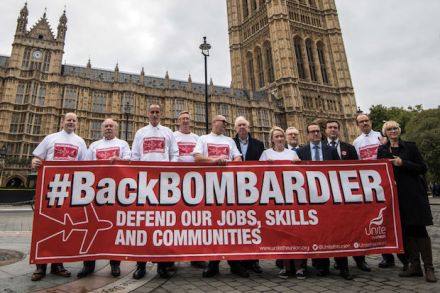
Monarch Airlines was the ghost of an earlier age of holiday travel. When I used to see its planes lined up at Leeds-Bradford airport alongside those of Ryanair and its brash northern rival Jet2, I sometimes wondered why Monarch was still there. Now it has been brought down by a combination of the weak pound, too much competition on Iberian routes and too little demand for terrorist-threatened ones to Turkey, Tunisia and Egypt. Even the orderly repatriation of 110,000 Monarch passengers has had an old-fashioned feel to it (perhaps even a touch of Dunkirk, for those who have seen that excellent film), enhanced by the reassuring tones of Dame Deirdre Hutton, the veteran quango queen who chairs the Civil Aviation Authority.

Uber was the ugly snowplough that cleared the path but its dominance is bound to fade

An Uber insider tells me not to write off the ride-hailing giant too soon, because it’s a very smart company for all its faults — and because the numbers of drivers and users for whom it is part of daily life will make it difficult for Transport for London to uphold its licence withdrawal on appeal, so long as Uber makes gestures of humility. But the moral of the story, says my source, is that as a ‘tech disrupter’ invading a regulated sector, the company created by Travis Kalanick ‘relished the fight with governments and entrenched interests far more than was normal or reasonable’, rather than seeking to be part of the urban fabric through collaboration or partnership.

A rate rise in November? After years of dithering, don’t bet on it

It is more than three years since Bank of England governor Mark Carney was accused by Labour MP and Treasury Select Committee member Pat McFadden of behaving like ‘an unreliable boyfriend, one day hot, one day cold’ in his hints about forthcoming interest-rate rises. And it’s more than a decade since the last time the official UK bank rate actually moved upwards: the only shift since McFadden’s remark has been a cut from 0.5 per cent to 0.25 per cent in August last year. In fact there’s a palpable sense that the Bank, in common with other central banks, has all but lost the power to deploy interest rates as a monetary tool, having left them so low for so long.

Time and technology are overtaking the arguments for Hinckley Point

The price of offshore wind power has halved, making those giant inshore turbine arrays we love to hate look competitive with new nuclear power for the first time. The headline number in this story is £57.50, which is the guaranteed electricity price per megawatt hour bid by two windfarm ventures in the government’s latest ‘contracts for difference’ subsidy auction. Both due for first delivery in 2022-23, these projects at Hornsea on the East Yorkshire coast and Moray East off the north of Scotland, are between them theoretically capable of powering 2.4 million homes. Just two years ago, windfarms were bidding up to £120 per megawatt hour in comparable auctions; their slashed pricing today can be set alongside the £92.

London is still the world’s pre-eminent financial centre – for now

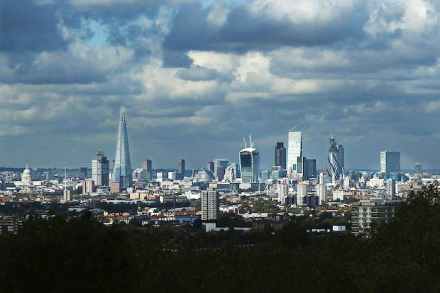
Should we place faith in a survey, conducted in June but published this week, that says London is still the world’s pre-eminent financial centre? Yes, in the sense that no one challenges that long-standing claim as of today; no, in the sense that complacency would be a huge mistake while every financial firm operating in the City, the West End and Canary Wharf is busy making contingency plans for a bad Brexit outcome.

The iPhone X could be a feelgood deal

Am I ready to shell out £1,000 for an iPhone X with its exciting new ‘Face ID’ feature? Of course not. Readers may recall I was keen to take several tech-steps back to the retro Nokia 3310 that was relaunched in March — but when I finally plucked up courage to take my unloved iPhone 3 to what turned out to be a Carphone Warehouse inside a Currys PC World on the York bypass, I was so hypnotised by the sales patter that I swiftly lost my willpower. Within moments I had given so much personal data that the salesman (as he acknowledged with a thin smile) could have emptied my bank account and assumed my identity before I got home. Had I really survived this long without their £10-a-month insurance deal on top of my contract? OK, sign me up. How about a £19.

The City still leads the financial world but faces a fight on all fronts

Should we place faith in a survey, conducted in June but published this week, that says London is still the world’s pre-eminent financial centre? Yes, in the sense that no one challenges that long-standing claim as of today; no, in the sense that complacency would be a huge mistake while every financial firm operating in the City, the West End and Canary Wharf is busy making contingency plans for a bad Brexit outcome.

David Tang’s tips for running a corporate empire

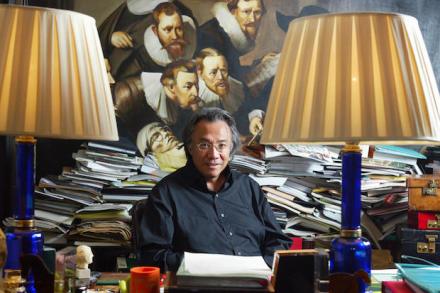
Sir David Tang, who died last week aged 63, was once The Spectator’s distributor in Hong Kong. His special achievement in his later entrepreneurial career was to turn his own stylish tastes in clothes, restaurants, clubs and cigars into a highly personal international brand, and to make it all look like great fun. In many ways he was comparable to Sir Richard Branson — except that Tang was a much more lovable personality, capable of filling a room with bonhomie without resorting to Bransonian stunts. But how good a businessman was he? The key to running a corporate empire, Tang told me — over coffee at his house in Eaton Terrace, served by his butler Kevin — was cash flow.

Ten years after the banking crisis, the unfairness still stings

Arguably it was Robert Peston’s breathless reporting of trouble at Northern Rock on the evening of 13 September 2007 that kicked off the crisis. The next morning, depositors were queuing round the block and the drama that would almost bring down the global banking system a year later had begun. Looking back after a decade, we can be grateful for the bailout interventions that shored it all up at the moment of cataclysm — but we can also observe the lingering and deep unfairnesses of the longer-term recovery.

Ten years after the banking crisis began, the unfairness of its aftermath still stings

Arguably it was Robert Peston’s breathless reporting of trouble at Northern Rock on the evening of 13 September 2007 that kicked off the crisis. The next morning, depositors were queuing round the block and the drama that would almost bring down the global banking system a year later had begun. Looking back after a decade, we can be grateful for the bailout interventions that shored it all up at the moment of cataclysm — but we can also observe the lingering and deep unfairnesses of the longer-term recovery.

Hurricane Harvey is bigger news than the bankers at Jackson Hole

In Houston last November I spent an evening at the city’s industrial-scale food bank, where I heard a presentation on the Houstonian tradition of offering hospitality to refugees, including 200,000 displaced from New Orleans by Hurricane Katrina. We were also given some positive spin on the strength of co-operation, in time of crisis, between the region’s major oil companies and its state and city governments. Now Houston itself is the victim of Hurricane Harvey.

The truth about Brexit? One professor’s guess is no better than another’s | 28 August 2017

Removing all trade and tariff barriers as part of a hard Brexit would generate ‘a £135 billion annual boost to the UK economy’, according to Professor Patrick Minford on behalf of Economists for Free Trade — while those who claim his ideas spell economic suicide are ‘hired hands, they work for government, they work for big industry…’ Well maybe, as I frequently say: Minford talks of a 4 per cent GDP gain from free trade, 2 per cent from ‘improved regulation’ and more from reclaiming our net EU budget contribution and ‘removing the taxpayer subsidy to unskilled immigration’. All of which adds up to much more, for example, than the ‘best-case scenario’ of a 1.

The interesting histories behind the Rathbones and Smith & Williamson merger

The proposed marriage of two mid-sized wealth managers, Rathbone Brothers and Smith & Williamson, has not made City pulses race. But it will create a business with £56 billion under management, following a trend of sector consolidation in search of economies of scale that kicked off with the merger of Standard Life and Aberdeen Asset Management. And though the new couple’s names won’t mean much unless you already happen to be their clients, they have interesting histories. Rathbones began as a timber-trading venture in Liverpool in 1742 and is the family firm of a dynasty of Quaker social reformers, including the formidable proto-feminist Eleanor Rathbone (1872–1946).

The truth about Brexit? One professor’s guess is no better than another’s

Removing all trade and tariff barriers as part of a hard Brexit would generate ‘a £135 billion annual boost to the UK economy’, according to Professor Patrick Minford on behalf of Economists for Free Trade — while those who claim his ideas spell economic suicide are ‘hired hands, they work for government, they work for big industry…’ Well maybe, as I frequently say: Minford talks of a 4 per cent GDP gain from free trade, 2 per cent from ‘improved regulation’ and more from reclaiming our net EU budget contribution and ‘removing the taxpayer subsidy to unskilled immigration’. All of which adds up to much more, for example, than the ‘best-case scenario’ of a 1.

There could be a downside to the surprisingly steady inflation rate

The core consumer price index of inflation held unexpectedly steady at 2.6 per cent in July, further removing any possibility of an interest-rate rise this year. So what’s the downside? My eye is drawn to a bulletin from Nationwide, the UK’s most sensible mortgage lender. It reports a fall in quarterly profits after a rise in bad debts to £36 million from £16 million for the same period last year — small numbers but a significant trend — and its chief executive Joe Garner warns the sector to ‘balance its lending carefully’ as cheap-rate consumer credit continues to balloon while growth prospects decline. I’d say he’s right on the money.

Forget London’s lost Garden Bridge: bring on Nine Elms-to-Pimlico instead

I can’t work up much indignation at the collapse of London’s Garden Bridge project, which has been strangled by the refusal of mayor Sadiq Khan to guarantee its continuing operational and maintenance costs — assuming its trustees, led by former banker and minister Lord Davies of Abersoch, would have succeeded in raising the £150 million of private capital required to build the bridge and plant its 270 trees in the first place. Promoted by Joanna Lumley and Sadiq’s predecessor Boris Johnson, this was a beautiful but whimsical idea, placed in an overcrowded stretch of the Thames and based on a ramshackle business plan.

Forget London’s ramshackle Garden Bridge: bring on Nine Elms-to-Pimlico instead

I can’t work up much indignation at the collapse of London’s Garden Bridge project, which has been strangled by the refusal of mayor Sadiq Khan to guarantee its continuing operational and maintenance costs — assuming its trustees, led by former banker and minister Lord Davies of Abersoch, would have succeeded in raising the £150 million of private capital required to build the bridge and plant its 270 trees in the first place. Promoted by Joanna Lumley and Sadiq’s predecessor Boris Johnson, this was a beautiful but whimsical idea, placed in an overcrowded stretch of the Thames and based on a ramshackle business plan.

Even in the cesspit of elite football, the Neymar deal has a pungent whiff to it

In a quiet season for business news, the giant cesspit that is the world of elite football can be relied upon to provide a money story with a pungent whiff to it. I refer to the transfer of the 25-year-old Brazilian known only as Neymar from Barcelona to Paris St Germain for a world-record fee close to £200 million. When Neymar was bought by Barcelona from Santos of Brazil in 2013, a £200 million break clause was inserted in his contract in the belief that no club in the world could possibly afford to buy him out. But PSG has done so even though Spanish football authorities refused to facilitate the payment, in the belief that it might breach ‘financial fair play’ rules designed to prevent clubs spending beyond their means.

Why is your holiday exchange rate so awful? Because investors see hope for the eurozone

As usual for August, I’m in France, where the news in brief is ‘Euro up, Macron down’. The youthful French president, who swept to power with two-thirds of the second round vote in May, has seen his approval rating plunge to 36 per cent — at the time of writing, 2 per cent worse than Donald Trump’s latest score in the US. Macron’s move to slash housing benefits for millions of lower-income citizens, including students, is one factor that has brought his honeymoon with French voters to an abrupt end, though his proposed labour law reforms are still playing well with employers.