Martin Vander Weyer

Martin Vander Weyer

Martin Vander Weyer is The Spectator’s business editor

Capitalism and KFC

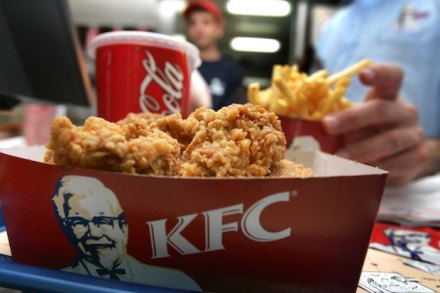
This week’s funniest parable of capitalism unravelling was the news that KFC had run out of chicken — or at least 550 of its 900 UK outlets had done so. In the way of the modern world, an immediate search began for someone to blame, and the finger of guilt swiftly pointed to DHL, the parcels business that took over KFC’s supply contract in November. DHL is owned by Deutsche Post, which is not only German and privatised but also a ruthless competitor to our own highly unionised Royal Mail, facts which no doubt prompted Mick Rix of the GMB union to weigh in by calling conditions at the DHL distribution centre ‘an utter shambles’.

Investors were right to sell Carillion shares when they spotted trouble ahead

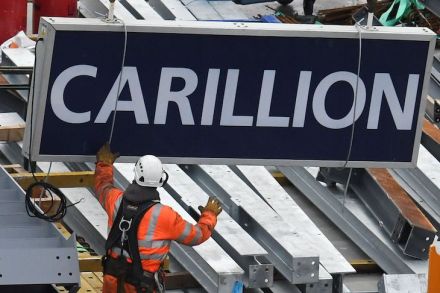
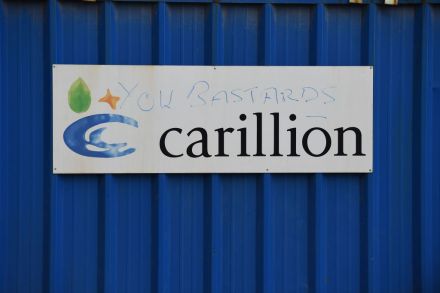
The fallout from Carillion’s bankruptcy spreads in slow motion — just as the outsourcing and construction giant’s finances gradually stretched to breaking point over the months before it went down in January. The company’s auditor, KPMG, was rightly under the spotlight this week. But the impact on the ground seems to have been less disruptive than early reports predicted. Receivers have made 1,000 redundancies but have re-let many contracts, securing thousands of other jobs. Construction of the £335 million Royal Liverpool Hospital — one of the overrunning contracts that contributed to Carillion’s cash crisis — won’t now be completed this year, but outsourced services in many other places have been seamlessly reorganised.

A Korean thaw is fake news

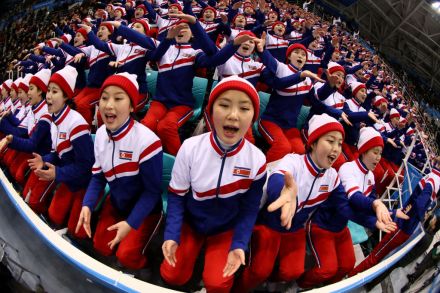
Fake news of the week, I suggest, was the sudden warming of relations on the Korean peninsula following the visit to the Winter Olympics of cute little Kim Yo-jong, sister of North Korea’s nuke-waving Kim Jong-un — not only attracting positive coverage for the games but driving a splinter between South Korea and the US and nudging Vice President Mike Pence towards a tentative offer of direct talks with the North. But is the thaw for real? As a long-time student of prospects for Korean unification, I suspect not.

Could the SFO put an end to Barclays as we know it?

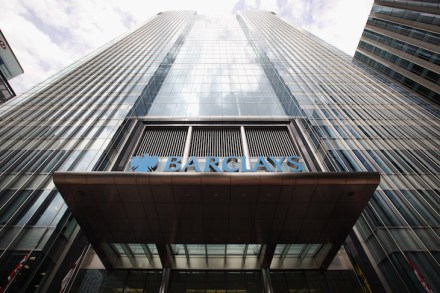
The Serious Fraud Office has upped the stakes in the case of the controversial $3 billion Qatari financing that saved Barclays from a taxpayer bailout in 2008, by extending the charge of ‘unlawful financial assistance’ to the operating company, Barclays Bank plc, as well as the parent, Barclays plc. Four senior former Barclays employees, including the then chief executive John Varley, are already due to stand trial early next year on the same and other fraud-related charges. The significance of the SFO’s move is that Barclays Bank plc stands in danger of losing its licences to run banking businesses, including branch networks, in the UK and elsewhere if convicted of a serious criminal offence.

Why can’t anyone fix the problems with the East Coast mainline?

Regular passengers on the East Coast mainline are inured to change — and baffled as to why this transport artery cannot be run at a steady but modest profit by a private-sector operator. We recall with sadness the demise of GNER, the first post-privatisation franchisee from 1996 to 2007: part of the Sea Containers group that also owned the Venice-Simplon Orient Express, its service standards won passenger loyalty but it overbid for franchise renewal in 2005 and ran into losses; its parent went bust the following year. Then we had to put up with back-to-basics National Express East Coast, which lasted barely two years before defaulting, followed by five years under a taxpayer-owned ‘operator of last resort’.

Falling US shares tell us only that investors were overexcited in January

If you were the incoming or retiring chairman of the Federal Reserve, you might be quietly pleased to see stock markets plunge on the day of the handover. As Jerome Powell was sworn in on Monday to succeed Dr Janet Yellen as head of America’s central bank, the Dow Jones index of leading US stocks was falling by a one-day record of 1,175 points, with Asian, European and London markets following overnight. But this wiping out of recent gains does not reflect badly on Yellen, whose steady hand leaves behind US inflation at just 2 per cent, unemployment barely above 4 per cent and a strongly recapitalised banking system.

What companies, apart from Ikea, have made an egalitarian contribution to modern civilisation?

Ingvar Kamprad, who died this week aged 91, was a tortured soul but a retail genius. As the founder of Ikea he sold cheap but stylish furniture to millions of what are now called ‘hard-working families’: those who want to improve their homes and make better nests for their children on limited budgets. Though his fortune does not seem to have made him happy, his stores have made a benignly egalitarian value-for-money contribution to modern civilisation and it’s interesting to list other companies that have done likewise. Here are a few for starters. Ford, Fiat and Volkswagen for ‘people’s cars’ more reliable than anything ever built by 20th-century British marques.

The real reason hospitals threw back that Presidents Club cash

I visited St Thomas’ Hospital on Monday, to discuss fundraising for a cardiology research project. On the way in, I spotted an acquaintance taking her little boy for tests; she was busy explaining why the doctors needed to do what they were about to do, so I didn’t interrupt. I also spotted a block on the map labelled ‘future site of Evelina Children’s Hospital’, and my thoughts turned to the £650,000 pledged for Evelina at the Presidents Club dinner: £400,000 of it in an auction bid from the restaurant tycoon Richard Caring to secure naming rights on a high-dependency unit.

Blockchain offers a moment of brightness on these dull January days

This is an extract from Martin Vander Weyer's 'Any other business' column, in this week's Spectator. In a week that felt rather starved of exciting business stories — the fat cats were evidently too busy packing for Davos — an unknown called Stapleton Capital, previously described as a telecoms investor, notched up a brief 130 per cent spike in its share price by changing its name to ‘Blockchain Worldwide’ and announcing that it has ‘seen a number of very exciting blockchain opportunities in recent months’ even if it has yet to buy into any of them.

Forget a Channel bridge and celebrate Crossrail

This column has long been a sucker for a grand projet. ‘Time for a trip to Boris Island,’ I gushed in 2010 when London’s then mayor came up with his much-mocked (though in engineering terms not unfeasible) wheeze to shift Heathrow to a giant man-made landing strip in the Thames estuary. But even I could see no merit in the Foreign Secretary’s equally unscripted suggestion, during the recent Sandhurst summit with President Macron, of a bridge across the Channel — which would play havoc with vital shipping lanes and cost upwards of £120 billion. If the objective is to facilitate continuing trade with Macron’s compatriots after we leave the EU, as one expert observed: ‘It would really be cheaper to move France closer.

Carillion’s catastrophe is not a parable of the evils of outsourcing

This is an extract from Martin Vander Weyer's 'Any other business' column in this week's Spectator.  Carillion is a disaster on all fronts, but my sympathies go first to the fallen contracting giant’s sub–contractors. Upwards of 30,000 smaller firms were already facing 120-day payment delays and may now have to fight court battles to get paid at all, driving many hard-pressed entrepreneurs to bankruptcy. But the political spotlight won’t help them, because Labour spokesmen who despise small business as well as large will merely use the case to attack the concept of outsourcing public services for private-sector profit.

Carillion’s crash is not a parable of the evil of outsourcing

Carillion is a disaster on all fronts, but my sympathies go first to the fallen contracting giant’s sub--contractors. Upwards of 30,000 smaller firms were already facing 120-day payment delays and may now have to fight court battles to get paid at all, driving many hard-pressed entrepreneurs to bankruptcy. But the political spotlight won’t help them, because Labour spokesmen who despise small business as well as large will merely use the case to attack the concept of outsourcing public services for private-sector profit.

Wolff told us the US awaited a president who could cast a spell on markets: now it has one

I once commissioned Michael Wolff —currently the world’s most talked-about journalist as the author of the White House exposé Fire and Fury — to write for The Spectator. It was just before the 2004 presidential election in which Republican incumbent George W. Bush looked set to see off the Democrat challenger John Kerry, and I invited Wolff to tell us the implications for the stock market. His thesis was that the Democrats had become ‘the party of wealth and Wall Street’ while the Republicans had become ‘non-players’, Bush having turned his back on business to be ‘a God-squad cheerleader’. America was waiting in vain for a president who could ‘cast a spell of optimism over consumers and markets’.

Beware the Bitcoin bluffers

During the long interval since our pre-Christmas issue, Bitcoin has continued to generate crazy headlines — and crazy profits for those smart enough to sell at the peaks. The price tumbled from above $19,000 to below $13,000 but it did not crash out of sight, as sceptics continue to predict. Meanwhile, from Japan we hear that the ‘wealth effect’ of a million Bitcoin holders who believe themselves richer could be the turbo-boost to consumer spending that Japan’s flaccid economy has been seeking for decades. US news sources express concern about the environmental impact of global computer operations related to Bitcoin, which now consume as much electricity as three million American households or the whole of Denmark.

There’s one common thread in all these stories about Bitcoin’s success…

Over Christmas, Bitcoin has continued to generate crazy headlines — and crazy profits for those smart enough to sell at the peaks. The price tumbled from above $19,000 to below $13,000 but it did not crash out of sight, as sceptics continue to predict. Meanwhile, from Japan we hear that the ‘wealth effect’ of a million Bitcoin holders who believe themselves richer could be the turbo-boost to consumer spending that Japan’s flaccid economy has been seeking for decades. US news sources express concern about the environmental impact of global computer operations related to Bitcoin, which now consume as much electricity as three million American households or the whole of Denmark.

Is it possible to defend the Persimmon boss’s nine-digit bonus? Well, let me try

New Year’s Eve was certainly a day for celebration in the household of 53-year-old Jeff Fairburn, chief executive of the housebuilder Persimmon. He was due to receive the first £50 million tranche of shares under a bonus scheme that has won him total entitlements of £110 million. He must have done a terrific job, you’ll be thinking, if shareholders value him so highly. But in fact his winnings (plus £400 million shared by 150 other Persimmon executives) are the freak outcome of a 2012 scheme that was tied to the company’s share price and dividend record but failed to include a cap on how high rewards might go.

Instead of schmoozing at City parties, this year I’m Sarah the Cook in panto

Last Christmas I offered you a cruel satire about a boardroom big-shot whose career went so awry that he ended up as a pantomime dame. So perhaps there’s justice in the fact that this year, that’s what’s happened to me. Instead of schmoozing the City’s festive party round, I’m cross–dressing nightly on a Yorkshire stage as Sarah the Cook in Dick Whittington and His Cat. The original Whittington, four times Lord Mayor of London between 1397 and 1419, was a mercer who exported English cloth across the North Sea, importing silks and velvets in return. But in panto, Dick and his crew turn their backs on our European partners and sail in search of new trade deals ‘on stormy seas where rough winds blow/ to the sandy shore of Moroc-co!

2017: The best and the worst of the year that was

And so to my annual awards. Best business recovery of 2017: Lloyds Banking Group, which returned from the bailout sin-bin to full membership of the private sector in May. The year’s most lamented collapse: the upmarket Swan Hellenic cruise line in January. And the least lamented? The devil’s own PR firm, Bell Pottinger, in September. The best business books, by a long chalk, were Till Time’s Last Sand, David Kynaston’s richly entertaining history of the Bank of England; and The Spider Network by David Enrich, which unravels the part played in the Libor scandal by Tom Hayes, the UBS trader who is serving a long stretch for conspiracy to defraud.

Instead of schmoozing at City parties, I’m Sarah the Cook in a Yorkshire panto

Last Christmas I offered you a cruel satire about a boardroom big-shot whose career went so awry that he ended up as a pantomime dame. So perhaps there’s justice in the fact that this year, that’s what’s happened to me. Instead of schmoozing the City’s festive party round, I’m cross--dressing nightly on a Yorkshire stage as Sarah the Cook in Dick Whittington and His Cat. The original Whittington, four times Lord Mayor of London between 1397 and 1419, was a mercer who exported English cloth across the North Sea, importing silks and velvets in return. But in panto, Dick and his crew turn their backs on our European partners and sail in search of new trade deals ‘on stormy seas where rough winds blow/ to the sandy shore of Moroc-co!