Martin Vander Weyer

Martin Vander Weyer

Martin Vander Weyer is The Spectator’s business editor

Cash in your bitcoins and run

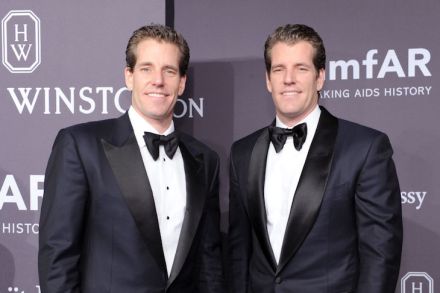
This is an excerpt from Martin Vander Weyer's 'Any Other Business' column. I don’t know which is more worrying: that the bitcoin market becomes madder by the day, or that it becomes more mainstream. The market price of a unit of the cryptocurrency has spiked above $11,800, up from $750 a year ago, for no reason other than speculative fever. The total value of bitcoins in existence (if that’s the right word) has surpassed the GDP of New Zealand. The first bitcoin billionaires have been announced as Tyler and Cameron Winklevoss, the American twins who were in at the birth of Facebook. The Chicago Mercantile Exchange is about to launch its first bitcoin futures contract and an analyst at JPMorgan says bitcoin could soon rival gold as a safe-haven holding.

The LSE’s skulking assassins are a terrible advert for the City’s global aspirations

The revenge tragedy at the London Stock Exchange whose plot I outlined last month has reached its third act, but the carnage may not be over. Chief executive Xavier Rolet has left the building, rather than staying one more year as the LSE first announced, and declared that he won’t come back under any circumstances. Despite whispers that ‘aspects of his operating style’ sparked this row in the first place, Rolet is due a £13 million golden farewell — which the Daily Mail called ‘obscene’ but his fans see as fair reward for all the value he has delivered. Chief among those fans is LSE shareholder and hedge-fund princeling Sir Chris Hohn, who agitated for Rolet to stay and LSE chairman Donald Brydon to go.

A sound industrial strategy and stronger banks. What could go wrong?

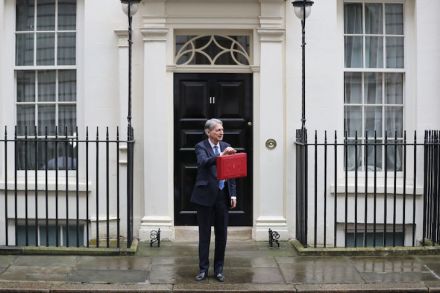
One week you’re fighting to survive the dance-off amid vicious backstage rivalries, the next you’re scoring a perfect ten from Bruno Tonioli for your shimmering tango. As it was on Strictly for Debbie McGee, so it was — well, almost — for Philip Hammond at the despatch box. Unlike many of the Budgets of his predecessors Osborne and Brown, this one did not unravel immediately or prove full of black holes and political tricks. Clear in its analysis, frank in its forecasts, limited in its objectives, it took modest steps to ease the housing crisis and encourage entrepreneurs — and not much else.

Was the record sale of Da Vinci’s Salvator Mundi a bellwether or a freak show?

Now the hubbub has subsided after last week’s sale of Leonardo’s ‘Salvator Mundi’ at Christie’s New York for $450 million, we can assess whether the record-shattering price was an indicator of an impending turn in the boom-bust cycle or merely an extreme example of art market operators conspiring to ease the burden of the super-rich. Yes, the era of cheap money and asset-price inflation has gone on too long and there are signals everywhere, from the madness of Bitcoin to the nervousness of IPO markets, that a downturn is due. But my own conclusion is that the Leonardo sale was less of a bellwether and more of a freak show.

The very simple reason why Hammond’s housebuilding target is pie in the sky

The Chancellor sounded purposeful when he declared that he’ll do ‘whatever it takes’ to boost the rate of housebuilding — including pushing developers and councils to use up land banks and act on existing planning permissions — with a view to hitting a politically symbolic target of 300,000 units per year. But I wonder whether the post-Budget small print will reveal any sort of plan to overcome the most basic obstacle to achieving this objective, which is a critical shortage of bricks? When housebuilding went into sharp decline after the 2008 crisis, many British brick factories closed down. To build even half of Philip Hammond’s target, the industry needs more than 2.

Armageddon is coming: how real-life employers are preparing for life under Corbyn

Numerous readers told me they liked my recent tale — offered as an antidote to ‘media sniping at corporate capitalism’ — about the temporary school built by Porta-kabin after the Grenfell Tower fire. I’m on the lookout for other business stories that celebrate the positive, and I had it in mind to write about an entrepreneur I’ve known throughout his career who has built an international brand that pleases customers, creates skilled jobs and has carried him through tough times to a fortune. But when we spoke, our conversation took an unexpected turn. Did I realise, he asked, how he and his cohort are beginning to think in relation to the risk of an incoming Corbyn-McDonnell government?

Morality seems to have evolved as much in taxation as it has in flirtation

What would a perfect tax system look like? For companies, profit taxes should be competitively low, to encourage inward investment, with generous reliefs for start-ups, research and capital projects; the corporate tax code should be designed to generate rising productivity and prosperity rather than to maximise short-term tax revenues, and companies should acknowledge a duty to contribute wherever their profits arise. For individuals, income tax rates should rise only to the lowest level that maximises revenue collection and thresholds should be high enough to keep low earners out of the net, while pension savers and first-time home-buyers should be incentivised.

Yes, Jay Powell is the compromise candidate for the Federal Reserve – but not a bad one at that

Perhaps we should be relieved that Donald Trump has made a dull appointment to succeed Janet Yellen as chairman of the Federal Reserve, America’s central bank. He might have picked another alt-right wacko or Kremlin stooge — or his Las Vegas buddy Phil Ruffin, the casino owner he allegedly thought of sending as envoy to China. But in fact he has chosen Jerome ‘Jay’ Powell, an identikit lawyer-turned-banker who has been called the candidate of ‘continuity’ and ‘compromise’ after a late run to beat frontrunner Kevin Warsh, a former Trump adviser with more aggressive opinions on the need for monetary tightening.

Should the City be sending money into Putin’s banking system?

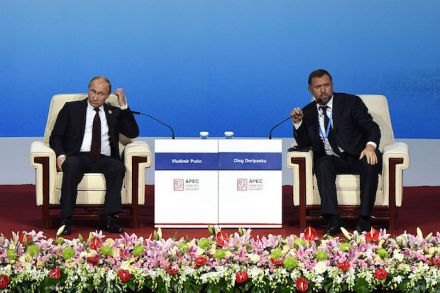
This is an extract from Martin Vander Weyer's 'Any Other Business' column. In connection with the receding possibility of a London Stock Exchange listing for Saudi Aramco, I wrote that the City authorities’ apparent eagerness to accommodate companies ‘from places not best known for their accounting standards, business probity or general attachment to democracy and the rule of law’ smacked of Brexit-driven desperation. Russia was one of the places I had in mind. Now along comes a listing candidate that rings more alarm bells than the secretive Saudi oil giant. The company concerned is called EN+ Group, and it is the first Russian entity to come to the London market since Russia’s aggression in Ukraine and Crimea provoked US and EU sanctions in 2014.

The interest rate rise is a tiptoe back towards the economic normality we have almost forgotten

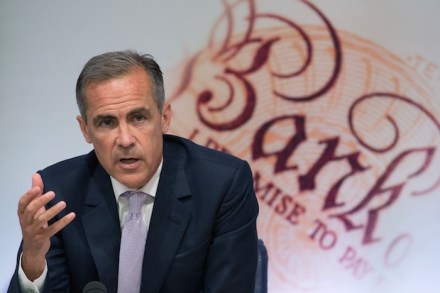
There are occasions when an apparently negative economic indicator is also in some sense positive. September’s 9 per cent drop in new car registrations compared with the same month last year was no bad thing if it means fewer people are loading themselves up with debt to buy cars — and won’t hurt British car factories that are part of a global supply chain. Likewise, falling London house prices may carry a negative message about international confidence in the UK, but will help London workers to buy homes. And a quarter-point interest rate rise may look like a sign of concern at the Bank of England and a worry for mortgage borrowers, but is actually a tiptoe back towards the economic normality we have almost forgotten.

Yes, the City needs new global clients – but should they include Putin’s pal?

In connection with the receding possibility of a London Stock Exchange listing for Saudi Aramco, I wrote that the City authorities’ apparent eagerness to accommodate companies ‘from places not best known for their accounting standards, business probity or general attachment to democracy and the rule of law’ smacked of Brexit-driven desperation. Russia was one of the places I had in mind. Now along comes a listing candidate that rings more alarm bells than the secretive Saudi oil giant. The company concerned is called EN+ Group, and it is the first Russian entity to come to the London market since Russia’s aggression in Ukraine and Crimea provoked US and EU sanctions in 2014.

Rio Tinto’s colossal corporate cock-up

Another week, another blue-chip in the dock. The US Securities and Exchange Commission has brought fraud charges against London-based mining giant Rio Tinto and two former executives in relation to an ill-starred coal venture in Mozambique. Whatever its legalities, this was a colossal corporate cock-up. In 2010, Rio paid $3.7 billion for Riversdale, an Australian company that controlled large coal deposits in the Tete region of Mozambique. The plan was to send coal by barge 400 miles down the Zambezi river to the coast, for shipping to Chinese power stations. But the coal reserves proved disappointing, while the Mozambique government refused to permit the barge operation and a rail link proved too expensive.

Up the Zambezi: why Rio Tinto’s colossal coal cock-up is going to court

Another week, another blue-chip in the dock. The US Securities and Exchange Commission has brought fraud charges against London-based mining giant Rio Tinto and two former executives in relation to an ill-starred coal venture in Mozambique. Whatever its legalities, this was a colossal corporate cock-up. In 2010, Rio paid $3.7 billion for Riversdale, an Australian company that controlled large coal deposits in the Tete region of Mozambique. The plan was to send coal by barge 400 miles down the Zambezi river to the coast, for shipping to Chinese power stations. But the coal reserves proved disappointing, while the Mozambique government refused to permit the barge operation and a rail link proved too expensive.

No, we’re not half a trillion poorer, but foreign investment looks shaky

How did we mislay half a trillion pounds? Revised data from the Office for National Statistics has just reduced the UK’s ‘net international investment position’ from a surplus of £469 billion to a deficit of £22 billion. Downing Street dismissed this as ‘a technical revision’ — and in truth it’s not as bad it sounds, since what it tells us is that we own fewer foreign assets, and foreigners own more British assets, than had previously been recorded. Does national pride not attach to the idea that the rest of the world sees us as an investment safe haven? So why worry? Well, past miscounting apart, actual current trends in this respect do not encourage optimism.

Thank goodness for doses of statistical reality

How did we mislay half a trillion pounds? Revised data from the Office for National Statistics has just reduced the UK’s ‘net international investment position’ from a surplus of £469 billion to a deficit of £22 billion. Downing Street dismissed this as ‘a technical revision’ — and in truth it’s not as bad it sounds, since what it tells us is that we own fewer foreign assets, and foreigners own more British assets, than had previously been recorded. Does national pride not attach to the idea that the rest of the world sees us as an investment safe haven? So why worry? Well, past miscounting apart, actual current trends in this respect do not encourage optimism.

Are we really half a trillion poorer? No, but we’re not pulling in investors like we used to

How did we mislay half a trillion pounds? Revised data from the Office for National Statistics has just reduced the UK’s ‘net international investment position’ from a surplus of £469 billion to a deficit of £22 billion. Downing Street dismissed this as ‘a technical revision’ — and in truth it’s not as bad it sounds, since what it tells us is that we own fewer foreign assets, and foreigners own more British assets, than had previously been recorded. Does national pride not attach to the idea that the rest of the world sees us as an investment safe haven? So why worry? Well, past miscounting apart, actual current trends in this respect do not encourage optimism.

Digby Jones should be on the Brexit negotiating team

Ah yes, our top Brexit negotiating team... Sack Boris! Sack Spreadsheet Phil! Don’t bother sacking Theresa because she’s already had the real P45 from her colleagues as well as the joke one from the prankster; she just hasn’t been asked to leave the building yet. That leaves David Davis as the last man standing but there’ll be clamour for him to go too if deadlock persists, as seems likely despite this week’s talk of ‘acceleration’. So who should we send to the table next? Last week I had the fun of chairing an audience with (Lord) Digby Jones, the irrepressible former CBI chief and trade minister, whose latest book Fixing Business recalls that he was ‘thrilled’ by the referendum result in June last year.

The Bombardier dispute leaves Britain at risk of looking like a powerless minor player

This is an extract from the 'Any Other Business' column in this week's Spectator.  'Bombardier exposes post-Brexit realities’ was the FT’s headline after the Trump administration imposed a 300 per cent tariff on sales of the Canadian manufacturer’s C Series aircraft into the US, threatening 4,000 Bombardier jobs in Northern Ireland. Irish Taoiseach Leo Varadkar weighed in: ‘There’s been a lot of talk of a new trade deal between the UK and the US and how great that would be for the UK, but we are now talking about the possibility of a trade war.

Let’s resist the Corbynist mob and celebrate corporate capitalism

A reader in the FTSE boardroom world told me sternly the other day that I should resist the temptation to join the Corbynist mob and most of today’s media in sniping at corporate capitalism, and instead celebrate its positive achievements. So, here’s a parable designed to do just that.  The Kensington Aldridge Academy is a state-of-the-art secondary school that opened in 2014 next to Grenfell Tower in North Kensington, and now has 960 pupils. ‘Aldridge’ refers to a charitable foundation created by Sir Rod Aldridge, the multimillionaire former chairman of the outsourcing giant Capita, to sponsor schools with a special focus on entrepreneurship.

Bombardier says more about aircraft makers’ dirty tricks than the future of UK-US trade

‘Bombardier exposes post-Brexit realities’ was the FT’s headline after the Trump administration imposed a 300 per cent tariff on sales of the Canadian manufacturer’s C Series aircraft into the US, threatening 4,000 Bombardier jobs in Northern Ireland. Irish Taoiseach Leo Varadkar weighed in: ‘There’s been a lot of talk of a new trade deal between the UK and the US and how great that would be for the UK, but we are now talking about the possibility of a trade war.