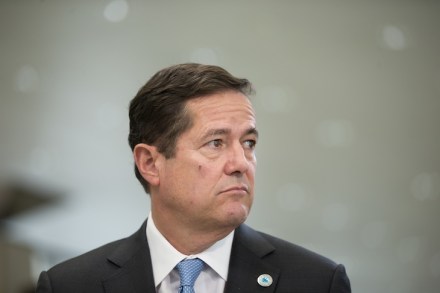
Martin Vander Weyer

Martin Vander Weyer

Martin Vander Weyer is business editor of The Spectator. He writes the weekly Any Other Business column.

Is the Bank of England a Libor-manipulating villain?

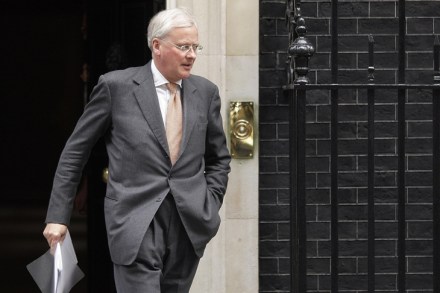
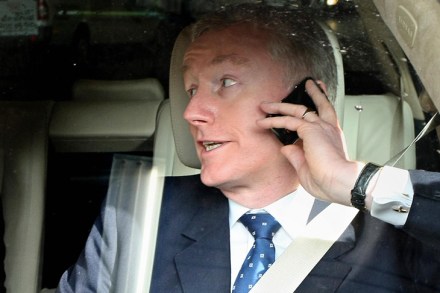
The BBC made much this week of a recording, from 2008, of one Barclays manager instructing another to submit artificially low rates into the daily interbank Libor fixing because ‘we’ve had some very serious pressure from the UK government and the Bank of England about pushing our Libors lower’. How shocking is that? Well, perhaps not as shocking as it looks — even if it appears to contradict select committee evidence given by the Bank’s former deputy governor, Sir Paul Tucker. The latter part of 2008 saw a liquidity panic in the City, in which the interbank lending market all but froze.

On balance, I’d vote for a rate rise and a stronger pound

Since Article 50 was triggered last week, City traders have been avidly watching the fluctuations of the pound. Analysts at Barclays, Nomura and Citigroup think sterling is undervalued against the euro and the dollar, and due for a rebound, having dived in the market tizzy that followed last June’s referendum and kept its head down through the phoney war of the past nine months. As ambiguity over Brexit terms begins to recede, says the City, it’s time for the pound to perk up. Well, maybe — as I’m often moved to observe in relation to bald economic statements. Let’s take a closer look.

How to solve the Gibraltar problem – in the style of Donald Trump

Two of the top tips in Donald Trump’s The Art of the Deal, of which I wrote last week even though he allegedly didn’t write it himself, are ‘Think Big’ and ‘Maximise the Options’, also expressed as ‘I keep a lot of balls in the air’. How should Theresa May apply that advice in response to Spain’s opportunistic bid to raise the issue of sovereignty over Gibraltar as a potential Brexit hurdle? She could, of course, offer a repeat of the 2002 referendum in which Gibraltarians voted 99 per cent ‘No’ when asked whether Britain and Spain should share the Rock’s sovereignty. But the ‘balls in the air’ gambit I have in mind for her is bolder than that.

How good a businessman is Donald Trump?

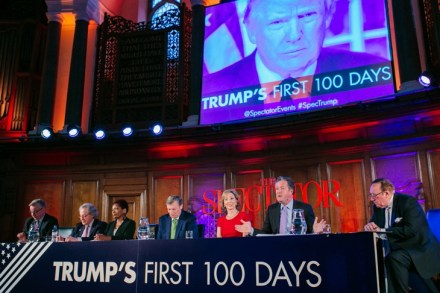
How good a businessman is Donald Trump? Maybe the answer doesn’t matter, since barring death or impeachment he’ll be the most powerful man in the world until January 2021, or even 2025, come what may. Or maybe it does matter, in the sense that the only positive spin to be put on his otherwise ridiculous presidency is that the irrepressible cunning of the real-estate tycoon will eventually win through for the good of America — and thereby, we must hope, the good of the free world — against opponents who have smaller cojones and less dealmaking prowess than the Donald does. ‘He’s the closer,’ declared White House spokesman Sean Spicer, shortly before his boss failed to close his biggest political deal so far, the American Health Care Act.

Does the truth about Trump’s art of the deal really matter?

How good a businessman is Donald Trump? Maybe the answer doesn’t matter, since barring death or impeachment he’ll be the most powerful man in the world until January 2021, or even 2025, come what may. Or maybe it does matter, in the sense that the only positive spin to be put on his otherwise ridiculous presidency is that the irrepressible cunning of the real-estate tycoon will eventually win through for the good of America — and thereby, we must hope, the good of the free world — against opponents who have smaller cojones and less dealmaking prowess than the Donald does. ‘He’s the closer,’ declared White House spokesman Sean Spicer, shortly before his boss failed to close his biggest political deal so far, the American Health Care Act.

The Brexit bellwether will be the health of our car industry

As I’ve said before, the bellwether of post-Brexit prosperity will be the health of the UK car industry, rather than that of the far larger financial sector. The City is nimble enough to look after itself come what may; it requires little more than plug sockets and clever lawyers to outmanoeuvre barriers to its trade. Car-makers, by contrast, require massive investment in research, robotics and logistics to keep them at the cutting edge of a globalised manufacturing system operating on the tightest of margins. So every indicator is worth tracking. Peugeot-Vauxhall was a mixed signal, and a cloud hangs over the Ford engine plant at Bridgend.

Google still needs to try a lot harder to do the right thing

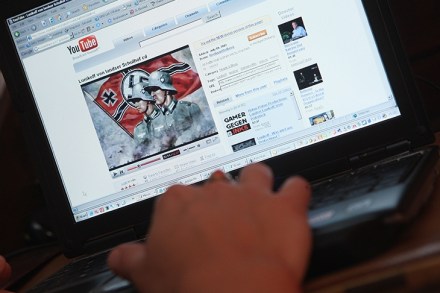
Shortly before agreeing, early last year, to pay token back taxes on a decade’s worth of UK-generated profits, Google also abolished its global slogan ‘Don’t be evil’. Instead it adopted a code of conduct that urged employees to ‘do the right thing’ — but at least in one important respect, they didn’t. Marks & Spencer, HSBC, Audi and numerous other top brands found their banner adverts displayed alongside a variety of YouTube hate videos which Google had failed to exclude, apparently because it did not have sufficient resources to monitor all the video content that was being uploaded at the rate of 400 hours per minute. For fear of losing a chunk of its UK ad revenues, the company has apologised and promised to do better.

White men grab the chairs

Tesco chairman John Allan provoked feminist fury by telling would-be non-exec directors, ‘If you’re a white male, tough: you’re an endangered species’ — then claimed he was really trying to make the opposite point, that ‘it’s a great time for women’. But to the contrary, this was a week in which tough white males grabbed the corporate prizes, while one high-flying woman from an oppressed minority was hounded out of her job. First, the blokes. HSBC announced, for the first time in its history and to the satisfaction of governance zealots, the appointment of an outside chairman.

Spot the endangered species: white men grab the chairs while Hogg loses her job

Tesco chairman John Allan provoked feminist fury by telling would-be non-exec directors, ‘If you’re a white male, tough: you’re an endangered species’ — then claimed he was really trying to make the opposite point, that ‘it’s a great time for women’. But to the contrary, this was a week in which tough white males grabbed the corporate prizes, while one high-flying woman from an oppressed minority was hounded out of her job. First, the blokes. HSBC announced, for the first time in its history and to the satisfaction of governance zealots, the appointment of an outside chairman.

Charlotte Hogg didn’t know what her brother did at Barclays. Why would she?

It’s too late now, but I didn’t feel Charlotte Hogg made enough of her defence that until recently she didn’t even know what her brother did at Barclays. His own colleagues probably didn’t know either: operating somewhere below the board and executive committee where strategic decisions are really made, a ‘director of corporate strategy’ in an institution perpetually riven by power struggles is at best the equivalent of a powerless squire in Game of Thrones. I speak from experience: for a few months long ago, I held the title of ‘head of international corporate finance’ in Barclays’ investment bank, but as far as I could ascertain it carried no authority at all.

How Philip Hammond’s National Insurance hike affects the ‘gig economy’

You might argue that the self-employed enjoy less security than the employed, so it’s fair they contribute less; you might argue that the ‘sharing economy’ is a nifty pocket-money source for hard-pressed families, and that tax grabs will swiftly kill it. But revenue-starved Chancellor Hammond will retort that all income and commerce, however novel in form, must be taxed unless specifically exempted, otherwise government can’t make ends meet: tax should keep pace with changing patterns of life and technology. Thus Microsoft founder Bill Gates recently proposed that if robots are replacing humans in business, then companies operating robots should pay income tax on their behalf.

Mike Ashley isn’t the villain in the Agent Provocateur deal

Another eye-catcher, not least for the gratuitous picture opportunities it offered, was the sale of Agent Provocateur to a group led by Sports Direct tycoon Mike Ashley. But the terms of this one are ‘preposterous’, or so said the lingerie brand’s founder, Joe Corré. Well, yes — if for a horrible moment you imagine portly Ashley wearing the Provocateur product, in the way that he likes to be seen wearing the Newcastle United strip he also sells. Ashley’s name is enough to taint any deal these days, whatever he’s wearing, but in fact the villain of this one appears to be the seller, 3i, rather than the buyer, Four Marketing, of which Ashley holds 25 per cent.

New European giants? Standard-Aberdeen looks a better bet than Peugeot-Vauxhall

Budget week also turned out to be a week of notable deals. PSA, French owner of Peugeot and Citroën, went ahead with its €2.2 billion takeover of Vauxhall and Opel from General Motors, creating ‘a new European giant to challenge Volkswagen’, according to the spin, and new fears for those who foresee post-Brexit attrition of the British motor industry. By way of reassurance, PSA boss Carlos Tavares said a hard Brexit is an ‘opportunity’ — to beef up the domestic supply chain while reducing component imports from the EU — and that ‘I trust Vauxhall workers’ to improve their productivity. That last bit sounded to me more like a threat to their jobs.

The joys of the Nokia 3310

I’m eager to order a Nokia 3310, the classic mobile phone of the millennium that was relaunched this week. The original was famed for its simple functions, unbreakable casing and ultra-long battery life; my earlier 3210 was just as good. I lost it on a coach trip 15 years ago and haven’t been truly happy since, having never learned to love my iPhone. But what’s more interesting about this revival is what it tells us about the turbulent evolution of the mobile device market, as well as the curious history of Nokia itself. Nokia is Finland’s contribution to corporate parable.

A business rates rise benefits nobody

I campaigned hard for a business rates review, and even tried to claim credit for it — or at least for its pro-northern bias — when details emerged last September. The smallest enterprises are exempt and the provinces will gain some benefit; but it’s clear that new rateable values from 1 April will impose undeservedly harsh rises on mid-sized businesses in London and the south-east. I’m even feeling a twinge of sympathy for Victoria Beckham, whose Dover Street boutique reportedly faces a 415 per cent hike. Philip Hammond, meanwhile, is in ‘listening mode’ — not least, we might imagine, when accosted by furious shopkeepers in his Runnymede and Weybridge constituency — and is expected to introduce extra reliefs in his Budget next week.

London Stock Exchange picked a bad year to join a pan-European project

The marriage of the London Stock Exchange and Deutsche Börse may not be stone dead but that’s the way to bet, as Damon Runyan would have said. This so-called ‘merger of equals’ — with the Germans holding the larger stake and the top job but with the head office in London, at least to begin with — has foundered over a demand from EU competition authorities that the LSE should sell its majority stake in MTS, an Italian bond-trading platform. Having had its alternative proposal (to sell a French clearing operation) rejected, the LSE refused to comply, allegedly without first consulting its German partners.

Why I’m glad that Unilever saw off predatory robot Kraft Heinz

I was sorry Kraft Heinz’s £115 billion bid for Unilever collapsed so fast — unveiled on Friday, it was dead by Sunday. Not that I saw the aggressor as a worthy potential victor; but a longer battle would have provided great material for column-sermons on good and bad capitalism. Aha, I hear you ask, but which side is which? Unilever is the Anglo-Dutch maker of Dove soap and Magnum ice creams. With its dual headquarters in London and Rotterdam, its multi-layered bureaucracy and its bosses who bang on about social responsibility, it might be seen as a big fat corporate proxy for the European Union — in urgent need of a shake-up.

The Greek crisis continues to strike terror into the EU establishment

I didn’t have to be Delphic to predict that the Greek crisis wasn’t over when an €86 billion third bailout deal was provisionally agreed in July 2015, with the aim of preventing forced exit from the euro: ‘Impossible to see how it could be “over” without the debt relief [Greece] asked for but the Germans adamantly refused,’ I wrote. Of course that wasn’t how Brussels presented the deal: ‘On this basis, Greece… will irreversibly remain a member of the euro,’ declared Jean-Claude Juncker — without, presumably, having consulted any oracles himself.

My survey of bank closures suggests a new purpose for the tarnished Co-op

Many thanks to the stampede of readers who sent news of bank branch closures. There’s certainly a national pattern, and possibly an epidemic, with HSBC, NatWest, Clydesdale and Yorkshire Bank closing outlets as fast as they can, and only the Nationwide building society making a virtue of offering an undiminished service. Counter staff still in post are praised for their kindness, particularly to readers’ elderly mothers, but sham ‘consultations’ on closures that are faits accomplis are a frequent cause of irritation. It’s clear that many towns will soon be left with no more than a single ATM plus, if they’re lucky, a post-office counter — making life particularly tough for small businesses.

In this digital age, should we worry about bank branch closures? Yes we should

Almost a decade after the financial crisis loomed, our high streets and town centres are full of life again: who ever thought consumers could sustain so many cafés, bakeries and nail bars? But the revival is being undermined by yet another wave of bank branch closures, leaving small businesses adrift and personal customers at the mercy of call centres and insecure, ill-designed online platforms. More than a thousand branches have closed over the past two years, and another 400 or so are scheduled to go soon. HSBC is showing the way with a savage cull of its network.