Martin Vander Weyer

Martin Vander Weyer

Martin Vander Weyer is The Spectator’s business editor

Enjoy your feelgood summer – there may be trouble ahead

I’ve been on a mini-tour, full of echoes and warnings. First, to the Grange Festival in Hampshire, where we might still have been enjoying the summer of ’87: a moneyed audience in a Barings mansion laughing at funny foreigners in John Copley’s retro Seraglio (see Richard Bratby’s crit last week). Then to Oxford, to show an American friend the gardens of my alma mater, Worcester College, and recall the sweltering heat of ’76 that distracted us from revising for finals or noticing the Labour-driven economic crisis that would blight the start of our careers that autumn. Then to London, to make light of Trump with other American friends — and back home to Helmsley, of which more in a moment.

Patience has its rewards

Very few business plans survive their first interaction with the real world,’ says Luke Johnson, whose own ventures have ranged from Pizza Express to fresh fish distribution and the UK’s largest chain of dental surgeries. ‘Entrepreneurs have the advantage that they can adapt swiftly — “pivot”, as they say in Silicon Valley — to satisfy real demand, or improve their product and its distribution. Bigger companies find it much more difficult to change course in that way. ‘I’m a great believer in incubating a business quietly: pivoting it until the model works. Maybe I’m unconventional, but I believe raising money too early — through crowdfunding, for example — can be a dangerous thing.

Carmakers are an undeniable voice in the Brexit debate

The voice of business has been all but silent in the Brexit debate ever since former Marks & Spencer boss Stuart Rose made such a hash of trying to lead the pre-referendum ‘Britain Stronger in Europe campaign’. Now suddenly there’s a business cacophony: Airbus, BMW, Siemens and the heads of the CBI, the Institute of Directors, the Federation of Small Businesses, the British Chambers of Commerce and the Engineering Employers’ Federation, all saying roughly the same thing: never mind the politics, all we ever asked for is clarity, preferably accompanied by ‘frictionless trade’.

We need to embrace India’s love of retro British brands

Whatever happened to Horlicks? Patented in Chicago in 1883 by British-born brothers William and James Horlick, the malted milk drink was manufactured in Slough from 1908 and came to be thought of as a British product — but disappeared from most of our kitchens half a century ago. It lingered only as a figure of speech, as in foreign secretary Jack Straw’s 2003 description of Downing Street’s dossier on Iraqi weapons of mass destruction as ‘a complete Horlicks’. Meanwhile the product itself found a huge market elsewhere — in India, where it had first arrived in British troop rations during the war.  Under the ownership of Beecham, now part of GlaxoSmithKline, Horlicks became one of India’s most popular beverages, especially for children.

The path to growth — and the exit

Maybe it’s a sandwich chain, or a price comparison website, or a bioscience breakthrough: but the start-up was your baby, and you’ve worked night and day to prove its potential. Now it needs capital to go to the next level — and you need liquidity for family needs, as well as a plan for long-term exit. Who do you turn to, and what questions should you ask? Earlier in this series, Julian Cooper of Julius Baer told us that entrepreneurs need to think well ahead — and ‘meet the right people, the right lawyers, the right potential investors’. Simon Ward is a lawyer with Farrer & Co who acts for businesses backed by venture capital and private equity.

The myth and menace of cryptocurrencies

‘So, Professor Shin, tell us what you really think about cryptocurrencies.’ I’m guessing that’s the brief the Bank for International Settlements (the Basel-based central bank of central banks) gave economist Hyun-Song Shin to write a chapter for its annual report, published this week. His response delivers a serious kicking to the whole befuddled concept of ‘permissionless’ online currencies that ‘promise to replace trust in long-standing institutions such as commercial and central banks’. For a start, he argues, Bitcoin and its ilk are an environmental disaster because their systems consume enough electricity to power Switzerland.

It’s not always true that bosses should walk the plank when something goes wrong

Should he stay or should he go — or will he already have gone by the time you read this? These are frequently asked questions about chief executives whose businesses hit troubled waters. It’s true that the higher you rise, the higher the risk if you don’t deliver, but it’s not always true that bosses should walk the plank whenever something major goes wrong: sometimes it makes more sense to stick around, take the flak and solve the problem. However, in the cases of Gavin Patterson of BT (ousted a week ago) and Paul Pester of TSB (still in post as we go to press), it would be fair to say the only way is exit.

For Pester of TSB, like Patterson of BT, the only way is exit

Should he stay or should he go — or will he already have gone by the time you read this? These are frequently asked questions about chief executives whose businesses hit troubled waters. It’s true that the higher you rise, the higher the risk if you don’t deliver, but it’s not always true that bosses should walk the plank whenever something major goes wrong: sometimes it makes more sense to stick around, take the flak and solve the problem. However, in the cases of Gavin Patterson of BT (ousted a week ago) and Paul Pester of TSB (still in post as we go to press), it would be fair to say the only way is exit.

Let’s hope RBS emerges as something worth owning shares in

At last the government has restarted the process of selling its stake in Royal Bank of Scotland. A first £2 billion sale in 2015 (of 5 per cent of the bank’s shares) took place at 330 pence per share, against a purchase price of 502 pence in the 2008 bailout. Those numbers looked so embarrassing for George Osborne that the sell-off file was consigned sine die to a Treasury basement; but now that RBS has returned to a slim profit after nine years of losses, Philip Hammond sold another £2.5 billion tranche on Monday, ahead of what his advisers evidently think will be a weaker stock market after the European summit, but at an even worse price of 271 pence.

Let’s hope we get a better RBS when it’s finally back in the private sector

At last the government has restarted the process of selling its stake in Royal Bank of Scotland. A first £2 billion sale in 2015 (of 5 per cent of the bank’s shares) took place at 330 pence per share, against a purchase price of 502 pence in the 2008 bailout. Those numbers looked so embarrassing for George Osborne that the sell-off file was consigned sine die to a Treasury basement; but now that RBS has returned to a slim profit after nine years of losses, Philip Hammond sold another £2.5 billion tranche on Monday, ahead of what his advisers evidently think will be a weaker stock market after the European summit, but at an even worse price of 271 pence.

In praise of Pret

I shop at WH Smith with gritted teeth but I positively salivate when I spot a Pret A Manger. Some serious investors think likewise: the sandwich chain has just been sold for more than £1.5 billion by the US investment firm Bridgepoint to JAB Holdings, the vehicle of the German billionaire Reimann family who also own Krispy Kreme doughnuts and Kenco coffee. Though recently criticised by the Advertising Standards Authority for describing its sandwiches as ‘natural’ when there are E-numbers in its bread, Pret has sustained the authenticity of its brand while expanding globally with the hand of high finance on its shoulder.

Entrepreneurship is a way of life

James Espey was born in Zambia and educated in South Africa before moving to London in 1977. For many years he worked for international drinks companies, developing brands such as Malibu, Baileys and Johnnie Walker Blue Label. For the past two decades he has been an entrepreneur in his own right, as well as a mentor to others. He is a client of Julius Baer, which is also a sponsor of The Shaw Mind Foundation, a charity founded by Adam Shaw and James to support mental health sufferers and their families.  James is the author of Making Your Marque, subtitled ‘100 tips to Build your Personal Brand and Succeed in Business’ — and he has an aphorism for every aspect of starting and building a business.

Pret A Manger is an excellent example of what British entrepreneurs do best

I shop at WH Smith with gritted teeth but I positively salivate when I spot a Pret A Manger. Some serious investors think likewise: the sandwich chain has just been sold for more than £1.5 billion by the US investment firm Bridgepoint to JAB Holdings, the vehicle of the German billionaire Reimann family who also own Krispy Kreme doughnuts and Kenco coffee. Though recently criticised by the Advertising Standards Authority for describing its sandwiches as ‘natural’ when there are E-numbers in its bread, Pret has sustained the authenticity of its brand while expanding globally with the hand of high finance on its shoulder.

WH Smith was once a clever new thing: now it’s ripe to be disrupted

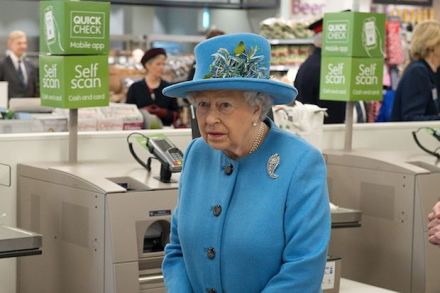
I’m not in the least surprised to learn that WH Smith has been voted Britain’s worst high-street retailer in a Which? survey of more than 10,000 consumers: this is the eighth year in a row that the newsagent and bookseller has come bottom or second-to-bottom in the same poll. These days its cramped shops give more shelf space to bottled water than to books, but if you do pick a paperback from the narrow choice of ‘bestsellers’ on offer — or a copy of The Spectator, if you can find it behind Men’s Health and Closer — you’re channelled into a dehumanising encounter with a self-service till, usually followed by an ill-tempered encounter with the staff member whose job it is to stand near the machines to make them work and calm the customers.

No wonder our productivity looks permanently sickly

With one state-imposed compliance exercise after another getting in the way of business, no wonder our productivity looks permanently sickly. The EU’s General Data Protection Regulation, which takes effect this week, has imposed a huge bureaucratic burden on companies and charities — as well as, for those that do it properly, a sacrifice of valuable data — following hard upon the UK government’s demand last month for ‘gender pay gap’ statistics from every entity with more than 250 employees. On the other hand, what a rare pleasure it has been to delete so many GDPR-driven ‘Click here to stay in touch’ emails from people and organisations I never had any wish to be in touch with in the first place.

Broadbent’s faux pas puts the focus on female candidates to follow Carney

If Ben Broadbent’s Daily Telegraph interview last week was the launch of a bid for the governorship of the Bank of England, then it spectacularly misfired. The deputy governor’s use of ‘-menopausal’ to describe an economy past its productive peak — damned by the Guardian as ‘un-abashed misogyny’ even though his awkward metaphor, on closer inspection, was also about loss of male potency — has significantly lengthened the odds on Broadbent succeeding Mark Carney in June next year. Indeed, even though he has the golden qualification of a decade at Goldman Sachs, I hear he’s no longer the favourite even among the four current deputy governors and their immediate predecessors.

Let’s not cancel the Crossrail celebrations yet

Until a few days ago, reporting of the almost completed Crossrail project had been focused chiefly on the impact of the new Elizabeth Line on local house prices, ‘Still time to buy into Acton’s Crossrail hot spot’ being a typical example. Now we learn that the project’s much repeated if slightly fudged claim about being delivered within an overall £14.8 billion ‘funding envelope’ has almost certainly been blown. A £190 million budget overrun for the year to March, and the departure of chief executive Andrew Wolstenholme to join BAE Systems, were the first indications of problems that may now require a £500 million bailout to see the job finished in time for its scheduled December opening by the Queen.

Hooray for a British industrial hero at the top of the Rich List

It’s heartening to see an authentic British entrepreneur heading this year’s Sunday Times Rich List, the industrial-ist Jim Ratcliffe, who has overtaken a coach-load of oligarchs as well as the Duke of Westminster with an estimated £21 billion fortune. This column has long admired Ratcliffe, whose Ineos chemicals conglomerate was built by buying up businesses his major competitors did not want. During his stand-off with the Unite union at the Grangemouth Refinery in Scotland in 2013, I called him ‘an industrial hero’ who deserved to be made a Knight of the Thistle for his willingness to invest in such an unpromising site.

Smart advice for entrepreneurs

All would-be entrepreneurs are told that ‘most start-ups fail’. A popular factoid from the US says nine out of ten new businesses don’t survive. UK statistics are more encouraging, but not spectacularly so. Here, surveys say roughly four out of ten new businesses live to celebrate their fifth birthday. Some sectors have higher survival rates than others, but whether your entrepreneurial vision is to make hats, cakes, apps, medical devices or space rockets, survival through infancy is your first challenge. You’ll have to risk your own savings and persuade family or angels to provide capital that will allow you to perfect your product and bring it to market — while praying no one else comes up with a better or cheaper product in the same field.

If you want £10k at 25, you should have to compete for it

Would it really be fairer, in an inter-generational sense, to whack an ‘NHS levy’ on pensioners while giving every 25-year-old £10,000 to help them buy a first home or start a business? These are recommendations by the Resolution Foundation, chaired by former Tory minister Lord Willetts, to address what it sees as a breakdown in the ‘contract’ between young and old. That contract allegedly says that each generation should expect to be better off than its parents — but in the current economic climate, many of our delicate ‘millennials’ believe they’re going to end up worse off, unable to afford their own homes and saddled with the ever-rising cost of healthcare for oldsters who refuse to pay for it themselves.