Martin Vander Weyer

Martin Vander Weyer

Martin Vander Weyer is business editor of The Spectator. He writes the weekly Any Other Business column.

In praise of Pret

I shop at WH Smith with gritted teeth but I positively salivate when I spot a Pret A Manger. Some serious investors think likewise: the sandwich chain has just been sold for more than £1.5 billion by the US investment firm Bridgepoint to JAB Holdings, the vehicle of the German billionaire Reimann family who also own Krispy Kreme doughnuts and Kenco coffee. Though recently criticised by the Advertising Standards Authority for describing its sandwiches as ‘natural’ when there are E-numbers in its bread, Pret has sustained the authenticity of its brand while expanding globally with the hand of high finance on its shoulder.

Entrepreneurship is a way of life

James Espey was born in Zambia and educated in South Africa before moving to London in 1977. For many years he worked for international drinks companies, developing brands such as Malibu, Baileys and Johnnie Walker Blue Label. For the past two decades he has been an entrepreneur in his own right, as well as a mentor to others. He is a client of Julius Baer, which is also a sponsor of The Shaw Mind Foundation, a charity founded by Adam Shaw and James to support mental health sufferers and their families.  James is the author of Making Your Marque, subtitled ‘100 tips to Build your Personal Brand and Succeed in Business’ — and he has an aphorism for every aspect of starting and building a business.

Pret A Manger is an excellent example of what British entrepreneurs do best

I shop at WH Smith with gritted teeth but I positively salivate when I spot a Pret A Manger. Some serious investors think likewise: the sandwich chain has just been sold for more than £1.5 billion by the US investment firm Bridgepoint to JAB Holdings, the vehicle of the German billionaire Reimann family who also own Krispy Kreme doughnuts and Kenco coffee. Though recently criticised by the Advertising Standards Authority for describing its sandwiches as ‘natural’ when there are E-numbers in its bread, Pret has sustained the authenticity of its brand while expanding globally with the hand of high finance on its shoulder.

WH Smith was once a clever new thing: now it’s ripe to be disrupted

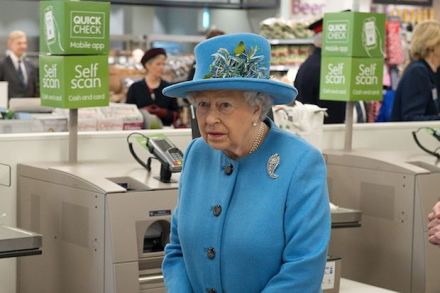
I’m not in the least surprised to learn that WH Smith has been voted Britain’s worst high-street retailer in a Which? survey of more than 10,000 consumers: this is the eighth year in a row that the newsagent and bookseller has come bottom or second-to-bottom in the same poll. These days its cramped shops give more shelf space to bottled water than to books, but if you do pick a paperback from the narrow choice of ‘bestsellers’ on offer — or a copy of The Spectator, if you can find it behind Men’s Health and Closer — you’re channelled into a dehumanising encounter with a self-service till, usually followed by an ill-tempered encounter with the staff member whose job it is to stand near the machines to make them work and calm the customers.

No wonder our productivity looks permanently sickly

With one state-imposed compliance exercise after another getting in the way of business, no wonder our productivity looks permanently sickly. The EU’s General Data Protection Regulation, which takes effect this week, has imposed a huge bureaucratic burden on companies and charities — as well as, for those that do it properly, a sacrifice of valuable data — following hard upon the UK government’s demand last month for ‘gender pay gap’ statistics from every entity with more than 250 employees. On the other hand, what a rare pleasure it has been to delete so many GDPR-driven ‘Click here to stay in touch’ emails from people and organisations I never had any wish to be in touch with in the first place.

Broadbent’s faux pas puts the focus on female candidates to follow Carney

If Ben Broadbent’s Daily Telegraph interview last week was the launch of a bid for the governorship of the Bank of England, then it spectacularly misfired. The deputy governor’s use of ‘-menopausal’ to describe an economy past its productive peak — damned by the Guardian as ‘un-abashed misogyny’ even though his awkward metaphor, on closer inspection, was also about loss of male potency — has significantly lengthened the odds on Broadbent succeeding Mark Carney in June next year. Indeed, even though he has the golden qualification of a decade at Goldman Sachs, I hear he’s no longer the favourite even among the four current deputy governors and their immediate predecessors.

Let’s not cancel the Crossrail celebrations yet

Until a few days ago, reporting of the almost completed Crossrail project had been focused chiefly on the impact of the new Elizabeth Line on local house prices, ‘Still time to buy into Acton’s Crossrail hot spot’ being a typical example. Now we learn that the project’s much repeated if slightly fudged claim about being delivered within an overall £14.8 billion ‘funding envelope’ has almost certainly been blown. A £190 million budget overrun for the year to March, and the departure of chief executive Andrew Wolstenholme to join BAE Systems, were the first indications of problems that may now require a £500 million bailout to see the job finished in time for its scheduled December opening by the Queen.

Hooray for a British industrial hero at the top of the Rich List

It’s heartening to see an authentic British entrepreneur heading this year’s Sunday Times Rich List, the industrial-ist Jim Ratcliffe, who has overtaken a coach-load of oligarchs as well as the Duke of Westminster with an estimated £21 billion fortune. This column has long admired Ratcliffe, whose Ineos chemicals conglomerate was built by buying up businesses his major competitors did not want. During his stand-off with the Unite union at the Grangemouth Refinery in Scotland in 2013, I called him ‘an industrial hero’ who deserved to be made a Knight of the Thistle for his willingness to invest in such an unpromising site.

Smart advice for entrepreneurs

All would-be entrepreneurs are told that ‘most start-ups fail’. A popular factoid from the US says nine out of ten new businesses don’t survive. UK statistics are more encouraging, but not spectacularly so. Here, surveys say roughly four out of ten new businesses live to celebrate their fifth birthday. Some sectors have higher survival rates than others, but whether your entrepreneurial vision is to make hats, cakes, apps, medical devices or space rockets, survival through infancy is your first challenge. You’ll have to risk your own savings and persuade family or angels to provide capital that will allow you to perfect your product and bring it to market — while praying no one else comes up with a better or cheaper product in the same field.

If you want £10k at 25, you should have to compete for it

Would it really be fairer, in an inter-generational sense, to whack an ‘NHS levy’ on pensioners while giving every 25-year-old £10,000 to help them buy a first home or start a business? These are recommendations by the Resolution Foundation, chaired by former Tory minister Lord Willetts, to address what it sees as a breakdown in the ‘contract’ between young and old. That contract allegedly says that each generation should expect to be better off than its parents — but in the current economic climate, many of our delicate ‘millennials’ believe they’re going to end up worse off, unable to afford their own homes and saddled with the ever-rising cost of healthcare for oldsters who refuse to pay for it themselves.

A hot weekend for takeover deals and cycle racing

The bank holiday turned out to be a hot one, not least in the takeover arena. First, Shire Pharmaceutical accepted a £46 billion offer from Takeda of Japan — though the stock market did not seem wholly convinced that the deal will proceed. If it does, should we care? Shire is a FTSE100 company that began in the UK and ended up stateless. As a start-up in Basingstoke in 1986, it made calcium-based treatments for osteoporosis; since then it has grown by acquisition to become ‘the world’s leading global biotechnology company focused on serving patients with rare diseases’. In 2008, when it was the UK’s third biggest drug manufacturer, Shire shifted its domicile to take advantage of Ireland’s ultra-low corporate tax rates.

The UK economy isn’t all doom and gloom

This is an extract from this week's 'Any Other Business' column.  The UK economy grew just 0.1 per cent in the first quarter, says the ONS, reflecting low construction activity, sluggish manufacturing, squeezed consumers, Brexit uncertainties and bitter weather. That’s the worst quarter since 2012 — so no wonder I had such a feeble response to my call a fortnight ago for evidence of feelgood. Two readers broke through the gloom, however. The first is a veteran banker who lends to small-to-medium UK corporate borrowers and describes himself as ‘miserable, cynical and pessimistic’ by nature and experience.

TSB’s new owners should have seen this computer catastrophe coming

The systems breakdown at TSB is not (yet) the worst UK bank computer cock-up of all time: that prize is held by RBS, whose problems in 2012 afflicted customers for a month and attracted a £56 million fine. But the failure of TSB to migrate four million customers’ accounts from systems bequeathed by its former parent Lloyds to a streamlined IT structure, designed by new Spanish owner Banco Sabadell, is surely the fiasco that has been longest foreseen. It dates from 2009, when Brussels insisted that Lloyds dispose of part of its branch network as a condition for the bailout that followed its acquisition of HBOS during the financial crisis.

It’s time to shout at your bank chairman about branch closures

This is an extract from Martin Vander Weyer's 'Any other business' column in this week's Spectator The season of high-street banks’ annual general meetings is with us and I urge you to turn up and make trouble. When I say ‘you’, I don’t mean the likes of New York ‘activist’ Edward Bramson — who holds 5 per cent of Barclays and may or may not agitate for a boardroom seat at next Tuesday’s gathering. I mean you, dear reader, the modest shareholder-customer who suffers rotten service, too-frequent computer glitches and negative returns on savings while directors on the platform congratulate themselves on the spurious performance measures that underpin their bonuses. This is your annual chance to make them squirm.

Bank AGMs are an opportunity to shout about branch closures

The season of high-street banks’ annual general meetings is with us and I urge you to turn up and make trouble. When I say ‘you’, I don’t mean the likes of New York ‘activist’ Edward Bramson — who holds 5 per cent of Barclays and may or may not agitate for a boardroom seat at next Tuesday’s gathering. I mean you, dear reader, the modest shareholder-customer who suffers rotten service, too-frequent computer glitches and negative returns on savings while directors on the platform congratulate themselves on the spurious performance measures that underpin their bonuses. This is your annual chance to make them squirm.

Can WPP’s model survive without Martin Sorrell in charge?

I said last week that WPP chief executive Sir Martin Sorrell was in ‘a very exposed position’. Sure enough on Saturday he resigned from the global advertising giant he created and had run for more than 32 years. ‘But he didn’t “create” it,’ one ex-employee told me, illustrating the internal resentments that seem to have contributed to Sorrell’s downfall. ‘He just made a lot of acquisitions and counted the pennies.’ Whatever he did or didn’t do, his departure was undignified and ill-explained.

I’m an optimist for trade despite the idiocies of politicians

I’m proud to be a member of the 661-year-old Company of Merchant Adventurers of the City of York, having qualified on the strength of a first career spent trying to sell British financial services around the globe from Hokkaido to Gdansk. Before our annual feast last week we prayed optimistically for the discovery of ‘a better world’ from which we might bring back treasure, spiritual and material — and I couldn’t help thinking that UK trade prospects are a lot less straightforward today than they were in 1357, when the known world was eager to buy woollen cloth from English mercers as often as their little ships could cross the choppy North Sea.

How have the Russian oligarchs got away with swaggering around London for so long?

A decade ago I commissioned an article about Vladimir Putin’s business cronies. Among other lines of enquiry, it sought to finger ‘a coterie of wealthy and politically influential industrialists, many believed to be former or current secret service officials’ who allegedly had shareholdings in Russian companies which, if we or anyone else had been able to prove that they were controlled by the president, might have evidenced a personal Putin fortune of tens of billions. Sensibly, The Spectator’s lawyer would not let me publish — but the US Treasury has now done its own version of the job by imposing sanctions on seven oligarchs and 17 senior Russian officials who are believed to form the innermost presidential clique.

The US shows London how to cold-shoulder Putin’s cronies

A decade ago I commissioned an article about Vladimir Putin’s business cronies. Among other lines of enquiry, it sought to finger ‘a coterie of wealthy and politically influential industrialists, many believed to be former or current secret service officials’ who allegedly had shareholdings in Russian companies which, if we or anyone else had been able to prove that they were controlled by the president, might have evidenced a personal Putin fortune of tens of billions. Sensibly, The Spectator’s lawyer would not let me publish — but the US Treasury has now done its own version of the job by imposing sanctions on seven oligarchs and 17 senior Russian officials who are believed to form the innermost presidential clique.

What would a serious trade war between the US and China look like?

This is an extract from Martin Vander Weyer's 'Any Other Business' column in this week's Spectator. 'Stocks plunge as China hits US goods with tariffs,’ said a headline after the long weekend, and the FTSE100 duly dipped below 7,000. But I wonder what a serious trade war would look like — and how markets would respond if the White House and Beijing took the gloves off. Last year, China exported $500 billion worth of goods to the US, while US exports to China amounted to $135 billion. Last month, President Trump announced import tariffs on $50 billion worth of Chinese steel and aluminium, 10 per cent of the total import bill.