Martin Vander Weyer

Martin Vander Weyer

Martin Vander Weyer is business editor of The Spectator. He writes the weekly Any Other Business column.

The mystery behind Patisserie Valerie’s collapse

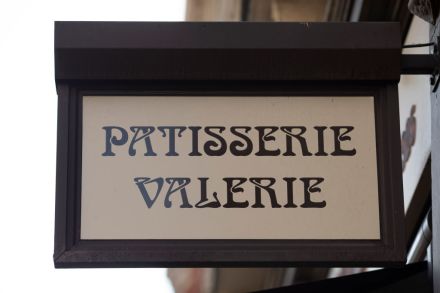
Patisserie Valerie, the cake-shop chain that found a potentially fraudulent £40 million black hole in its finances last October, fell into administration today after failing to persuade its bankers not to pull the plug. Chairman Luke Johnson, having lent the company £10 million plus last-minute cash to help pay this month’s wages for 3,000 staff, joins the creditors’ queue. Investors who put £15 million into his attempted rescue late last year are disgruntled, while investigations into the role of auditors Grant Thornton and former finance director Chris Marsh have yet to throw light on what went wrong in the first place. What’s curious about this mystery story is that it could not have happened to a more genteel brand.

Is the UK auto industry only struggling because of Brexit?

The popular new narrative for the UK auto industry is that its troubles are only temporarily to do with Brexit and much more to do with misguided policies, wrong decisions and economic swings. There’s a sharp decline in demand for luxury models from pinched Chinese consumers, while diesel sales have slumped because regulators continue to penalise them despite cleaner engines, leaving manufacturers regretting model-range investments. The EU’s new emissions testing regime has caused production problems across the continent; electric vehicle sales won’t take off until governments provide more charging points; and as interest rates begin to rise, motorists are losing the appetite for buying new cars on credit.

Darkness looms as distracted ministers fail to address the widening energy gap

Transfixed as you were by Westminster chaos, did you also spot the news that Hitachi is about to cancel or suspend construction of the Wylfa nuclear power station in North Wales? The Japanese engineering giant has evidently failed to reach agreement on a guaranteed electricity price and terms for a UK government stake in the project; its decision follows that of its compatriot Toshiba, which in November pulled out of building a nuclear station at Moorside in Cumbria, largely because it disliked the Treasury’s favoured financing model that loads risk on to the contractor. These two projects between them were intended to keep the lights on in 11 million UK homes, factories and offices.

Has the single currency proved its worth?

Against a background of drooping eurozone growth (the consensus forecast is 1.6 per cent this year) I met no one in France who was celebrating the 20th birthday of the euro, despite European Commission president Jean-Claude Juncker’s imaginative toast to it as ‘a symbol of unity, sovereignty and stability [that] has delivered prosperity and protection for our citizens’. The French associate the euro with the inflation that is stoking unrest, but only the very old feel nostalgic for the franc (and they tend to mean the pre-1960 ‘old franc’, of which there were 100 to the new one).

Why Macron is happy to leave Ghosn shivering in his Tokyo cell

In France after New Year, the only gilets jaunes I spotted were a rather dejected bunch near an autoroute exit. I was ready to give them a cheery thumbs-up rather than risk having my path blocked, but they took no notice of me — and no one I met expressed support for them. The novelty has worn off and sensible French citizens are horrified that the protests have led to deaths in car and lorry accidents at the barricades.

A seven-year winter or a pleasant surprise? Your guess is as good as mine

A friend reminds me that she sold her house last summer because I warned her 18 months ago that Brexit chaos would loom over every aspect of life by the beginning of 2019. I got that horribly right, and I was right too that the dismissive attitude of Westminster politicians towards the Irish border problem — call it ‘the Barnier trap’ if you prefer, but I can tell you I heard grown-up Irish voices trying in vain to alert UK ministers as long ago as September 2016 — would come back to baulk the entire negotiation. But would I care to make any sort of prediction for the three months ahead? No, I wouldn’t.

All I want for Christmas is a City time machine

Are smartphones fuelling a pandemic of youthful anxiety and depression? That’s the question parents will wrestle with this Christmas as their offspring clamour for the latest Samsung or Huawei. And the answer seems to be yes: these must-have accessories are corroding the nature of human interaction for the next generation — but the young can’t live without them, so we’d better get used to it. And that gives rise to an even trickier yuletide dilemma: what of the previous generation? Is there a digital device that’s safe to pop under the tree for an elderly relative? The solution, I suggest, is the iPad.

Who’s really to blame for the Crossrail fiasco?

There’s been a strong sense of pre-Christmas turkeys coming home to roost in this week’s news, as stories I’ve written about for months or years have reached, if not a denouement, then at least a new twist in the plot. Saddest of these is Crossrail, London’s east-west mass--transit system that was originally scheduled for its royal opening next week: now we hear it needs ‘hundreds of millions’ more of public money if it is to meet its delayed completion a year hence, though even that date no longer looks a safe bet. Its chairman Sir Terry Morgan has announced that he’s waiting to be sacked, both from Crossrail and from the chairmanship of the possibly even more troubled HS2 project.

How a betting business saved Stoke-on-Trent

I wrote last week of my fear that we’ll never ‘take back control of our fish’, as Brexiteers ardently wish, because the rights of UK fishermen — whose diminished industry contributes less than half a per cent of GDP — will be too easy to give away in the next negotiating phase. Sure enough, last Sunday’s Brussels summit to approve the withdrawal agreement produced an explicit warning from President Emmanuel Macron that unless the UK allows continuing access into its waters for EU (meaning specifically French) fishing boats, he may veto a wider trade deal, which means the hated ‘backstop’ would come into force instead.

Brexit negotiators need to focus on our fishermen

I listen in despair to Brexiteers’ dismissals of pleas from business for a settlement that allows them to plan beyond March next year. On last Friday’s Any Questions?, Jürgen Maier — who runs the £5 billion manufacturing business that is German-owned Siemens UK, and who may be the most respected industrialist in the north of England — spoke persuasively (in the accent of his Leeds schooldays) about the ‘dramatic’ fall-off of business investment and potentially ‘catastrophic’ impact of a no-deal outcome. The response of Tory MP John Redwood was so condescending, essentially ‘well done for coming here and building a business but stop scaremongering’, that I wanted to pour a boiling kettle over the radio.

Nissan’s Carlos Ghosn was a tall nail but was he really a bent one?

The arrest of Carlos Ghosn and the move to oust him as chairman of Nissan in Japan has stunned the auto industry of which he’s a global megastar — serving simultaneously as head of Renault in France, and having bolted together the Renault-Nissan-Mitsubishi alliance that built more than ten million cars last year. Nissan has accused the Lebanese--Brazilian engineer of violating Japanese securities law by understating his remuneration in the company’s public documents, and of ‘numerous other significant acts of misconduct… such as personal use of company assets’. That allegedly includes using Nissan funds to buy properties for his own use in Beirut and Rio de Janeiro. We must of course wait to hear the evidence.

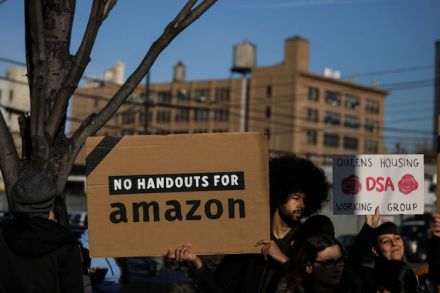
Anyone seen Jeff Bezos? I’m here to talk to him about tax

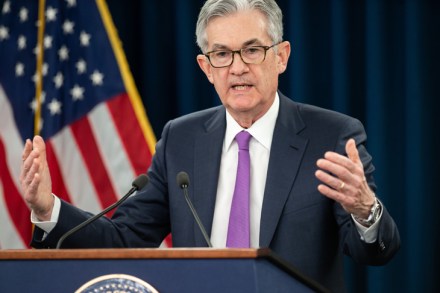
 Los Angeles/Seattle US stocks briefly rallied after the midterm results as markets looked favourably on a divided Congress and the possibility of cooperation between Donald Trump and House Democrats. The Fed kept interest rates on hold until next month, while remarking on strong growth and a continuing fall in unemployment. That, in a nutshell, is the economic news as I land at Los Angeles — but a more vivid update is delivered, as ever, by the talkative cab driver who takes me into the city. He’s from Mexico, and his story is a cameo of the vigour with which Americans build their own prosperity as best they can.

Is Mike Ashley the only person on a mission to keep bricks-and-mortar retailing alive?

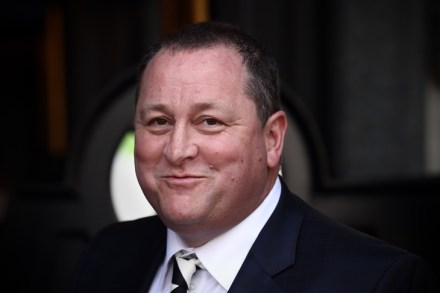
I dreamed I saw a monster advancing through a devastated town centre, mighty footsteps shaking semi-derelict buildings. I awoke in my armchair to find I had been reading a news item about Sports Direct tycoon Mike Ashley’s latest gambit: buying the 60-shop Evans Cycles chain out of administration for just £8 million, to follow his swoop on House of Fraser’s tottering department stores group in August. Say what you like about Ashley’s ruthless opportunism — he’s already said himself that half the Evans outlets will have to close — he’s the only big beast out there who’s on a mission to keep bricks-and-mortar retailing alive.

The Irish border issue is no mere sideshow – and UK ministers are mostly to blame

We may or may not hear news soon of a settlement of the Irish border issue that will allow Brexit to proceed without the calamity of ‘no deal’. Word this week was that Irish taoiseach Leo Varadkar might offer a compromise ‘review mechanism’ for the ‘backstop’ which might otherwise leave the UK locked in a customs union — but like me, you’re probably none the wiser as to what that actually means.

Tough choices and worthy winners in a dazzling field

Mail Rail — the venue for the grand finale of The Spectator’s Economic Disruptor Awards, sponsored by Julius Baer — is the former terminus of the driverless underground London Post Office Railway that shuttled mail between London’s major sorting offices from 1927 until 2003. A fine example of the disruptive technology of its era, it had a Doctor Who ambience that made it the perfect setting to celebrate the entrepreneurial creativity showcased in this first year of our Disruptor Awards. The range of innovative business ideas presented to us from all over the country was dazzling: everything short of a better model of sonic screwdriver for the Doctor, you might say. That made for a fascinating six-month project, but a very tough final choice for the judges.

Has Hammond saved the high street? No, but every little helps

How much did Philip Hammond’s giveaway Budget help dying town centres? Not enough, say campaigners, but let’s give the Chancellor some credit. A one-third relief in business rates for retail properties with a rateable value of less than £51,000 means an annual saving of up to £8,000 for a huge number of small businesses; pubs where people still drink beer and spirits in old-fashioned style benefit from a duty freeze that one industry body says will ‘secure upwards of 3,000 jobs’; and there’s money to help convert disused premises into homes.

Philip Hammond’s Budget plan won’t save the High Street

How much did Philip Hammond’s giveaway Budget help dying town centres? Not enough, say campaigners, but let’s give the Chancellor some credit. A one-third relief in business rates for retail properties with a rateable value of less than £51,000 means an annual saving of up to £8,000 for a huge number of small businesses; pubs where people still drink beer and spirits in old-fashioned style benefit from a duty freeze that one industry body says will ‘secure upwards of 3,000 jobs’; and there’s money to help convert disused premises into homes.

What can Monday’s Budget do to make business feel better?

‘Uncertainty is draining investment from the UK, with Brexit having a negative impact on eight in ten businesses,’ says Carolyn Fairbairn of the CBI. OK, let’s pause for a chorus of ‘She would say that, wouldn’t she?’ But even if we shade off for ‘scaremongering’, her survey (of 236 firms) is bleak: ‘44 per cent of businesses with contingency plans intend to stockpile goods… 30 per cent intend to relocate production and services overseas… 15 per cent intend to move jobs…’ And I’ve seen no rival surveys that contradict the gist of it. So what can Monday’s Budget do to make business feel better?

Can Hammond’s Budget make business feel better about Brexit?

‘Uncertainty is draining investment from the UK, with Brexit having a negative impact on eight in ten businesses,’ says Carolyn Fairbairn of the CBI. OK, let’s pause for a chorus of ‘She would say that, wouldn’t she?’ But even if we shade off for ‘scaremongering’, her survey (of 236 firms) is bleak: ‘44 per cent of businesses with contingency plans intend to stockpile goods… 30 per cent intend to relocate production and services overseas… 15 per cent intend to move jobs…’ And I’ve seen no rival surveys that contradict the gist of it. So what can Monday’s Budget do to make business feel better?

From Faangs to Baangs – why it makes sense to go for gold

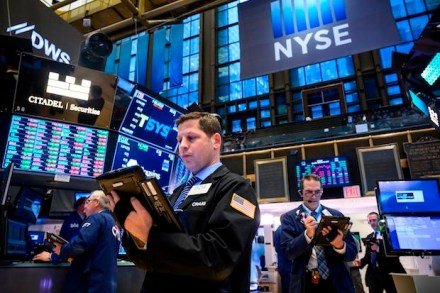
The current stock-market correction has been steaming down the track since August and I claim no wisdom for having predicted it: the FTSE100 dipped below 7,000 at the start of the week, having shed all of the 10 per cent it had gained since it began to surge in April. Weaker UK growth forecasts from the EY Item Club, reflecting the impact of the Brexit impasse on business and consumer confidence, are just one factor in the autumnal mood. But let’s cheer ourselves up with a round of applause for our veteran investor Robin Andrews, whose ‘Faangs to Banngs’ trading idea I offered you on 1 September.