Martin Vander Weyer

Martin Vander Weyer

Martin Vander Weyer is The Spectator’s business editor

The welcome death of the ‘my truth’ investment boom

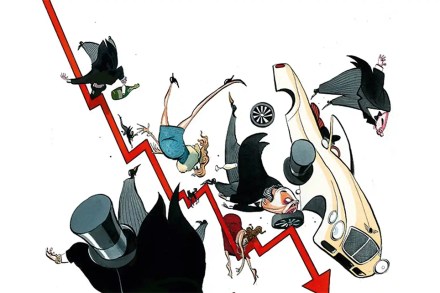
A colourful selection of news items this week seem to have a central thread. Elizabeth Holmes, founder of the Theranos fake blood-test venture once valued at $9 billion, was sentenced to 11 years in prison for fraud. Sam Bankman-Fried, founder of FTX, the collapsed crypto exchange once valued at $32 billion, was holed up in the Bahamas awaiting extradition to face US justice. Despite continuing crypto mayhem, Binance – the Cayman-based rival exchange that declined to rescue FTX – announced the auction of ‘seven animated NFT statues’ celebrating the triumphs of footballer Cristiano Ronaldo.

Why we should pray for crypto’s survival

Note to self: don’t sound smug about the sudden collapse of FTX – the Bahamas-based crypto exchange whose valuation has been zapped from $32 billion to zero – because however much it plays to I-told-you-so instincts about the mug’s game of crypto, the episode may herald a wave of wealth destruction that’s the last thing the financial world needs when there’s already so much bad stuff going on. Still, smugness is a strong temptation here – and what could be more provoking of that sentiment than a photograph in the Daily Telegraph of Sir Tony Blair and Bill Clinton on an FTX-badged stage alongside the firm’s 30-year-old founder Sam Bankman-Fried in his shorts and scruffy trainers?

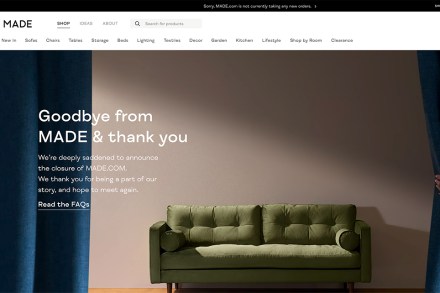
Made.com is a dotcom parable from an earlier era

‘Reparations’, much bandied about at Cop27, is a dangerous word. It speaks of an admission of historic guilt, which no one can deny has a place in public discourse. But its intention is to put a punitive price on guilt itself, rather than to advance collaborative work needed to rectify damage that can be traced back to bad acts, whether committed through greed, prejudice, aggression or ignorance. It says, in short: ‘Don’t send us your supposedly superior expertise and your lectures about how to improve ourselves. Just send cash. And keep sending it until your tortured conscience is assuaged.’ But in relation to climate impacts, the argument over who pays, who receives and how much would rage for decades while the damage gets worse and the repair costs rise.

The morality of begging for trade with Saudi and Qatar

Cop27? Me neither. Barring a last-minute call to join Boris Johnson’s Sharm El Sheikh entourage, I’ll be minding my carbon footprint at home. But I’m sorry not to be reporting firsthand from a more controversial Middle Eastern gathering of the global elite: the Future Investment Initiative in Riyadh, or ‘Davos in the Desert’. A ticket to Cop27 is a virtue signal in itself. But attendance at last week’s FII, an annual showcase for progressive sovereign spending within Mohammed bin Salman’s otherwise medieval Saudi state, is a moral conundrum.

After the Truss-Kwarteng crash, a tentative welcome for Sunak

Let’s hope Tuesday’s partial eclipse of the sun was a good omen for the return of Rishi Sunak to Downing Street, this time as Prime Minister. Understandably, he looked more earnest than triumphant. Business leaders and financial markets gave him a positive welcome but – understandably also after months of turmoil, with huge challenges ahead – rather a tentative one. Ten-year gilt yields dropped from a panic-driven 4.5 per cent to a still worried 3.8 per cent, double their recent lows; the pound blipped up, then settled back to its recent benchmark of $1.13. A ‘dullness dividend’ is what money men are hoping for, we’re told, after Johnson’s narcissistic inattention and the crackpot Truss-Kwarteng entr’acte.

Innovator of the Year Awards: London

23 min listen

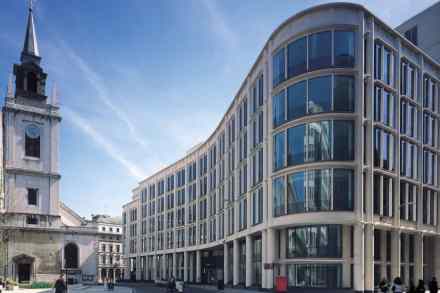
For the final round of The Spectator’s Economic Innovator of the Year Awards, our kind sponsors, Investec, hosted us at their offices on Gresham Street, London. We met 11 finalists for lunch — out of a record total of 176 entries across the whole of the UK — to pitch their ventures to our distinguished panel of judges.Our finalists are: UpCircle Beauty, Elvie, Ultromics, Silverstream, eConsult Health, Itaconix, Thought Machine, Recycleye, Project Etopia and Housekeep.The judges; Matthew Robinson who works in Private Equity with ICG;Eva-Maria Dimitriadis CEO of Conduit Connect, and finally Kate Gribbon and Michelle White from Investec.

Innovator of the Year Awards: Bristol and Birmingham

34 min listen

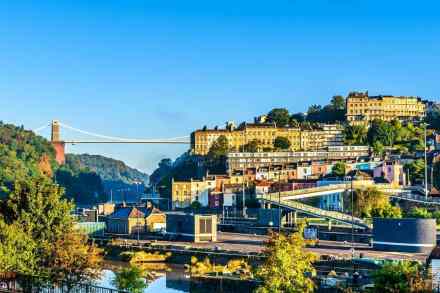
For this year's Midlands and Southwest Innovator of the Year Awards, the judges met four finalists at each region respectively. These eight finalists were shortlisted down from a record 176 applications.In Birmingham, the finalists in this podcast were MoM incubators, Hybrid Air Vehicles and Bambino Mio. The judges, Martin Vander Weyer, business editor of The Spectator met Steve Hewitt, non-executive director of Gymshark; Clive Bawden, COO of Warwick Music and former finalist of the Innovator of the Year Awards and Michelle White representing Investec.The judges faced the tough task of comparing businesses in very different sectors and stages of development. But all four made compelling pitches – and the variety of entries is part of the fun of these awards.

The truth about corporate taxes

I’ve chosen to write about corporate tax rates this week not because they’re the sexiest subject available but because – unlike the government’s frontbench, the value of the pound and the scale of winter fuel bills – they’re unlikely to change dramatically during the shelf-life of this column. An increase in corporation tax from 19 per cent to 25 per cent, originally announced by Rishi Sunak, will go ahead in April, despite new Chancellor Jeremy Hunt’s own leadership campaign pledge to cut the rate to 15 per cent, which would have placed the UK between Ireland and Singapore in competitive tax tables. The uplift will, we’re told, tip £19 billion (based on HMRC’s reckoner of £3.

Innovator of the Year Awards: Manchester

28 min listen

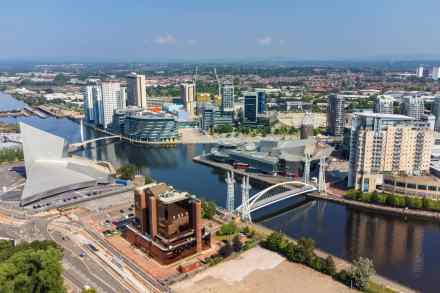
This year’s regional podcast series for The Spectator’s Economic Innovator of the Year Awards kicked off with a fascinating lunch at The Ivy Cafe in Manchester. We invited four finalists for the North West region — out of a record total of 176 across the whole of the UK — to pitch their ventures to our distinguished panel of judges. The finalists you’ll hear about on this podcast are: LoveRaw which makes vegan chocolate; Ordo which makes electric toothbrushes; Interact, which drives energy efficiency in data centres and IT systems; and Better2Know, which provides sexual health testing services.

Innovator of the Year Awards: Leeds

23 min listen

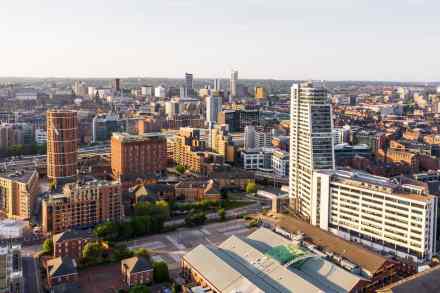
For the next round of The Spectator’s Economic Innovator of the Year Awards sponsored by Investec, we met in Leeds at the Dakota hotel and restaurant.For the Yorkshire and Northeast region, three finalists joined us for lunch — out of a record total of 176 entries across the whole of the UK — to pitch their ventures to our distinguished panel of judges. The finalists you’ll hear about on this podcast are: Testcard, in the healthcare sector; MudDaddy, a portable dog shower and Tofooco. After lunch, we also met Powersheds via Zoom who couldn’t make it to the pitching lunch.The judges were Gordon Black, venture capitalist and former manufacturer; Caroline Theobald, entrepreneur and chair of the Newcastle Business School at Northumbria University.

Innovator of the Year Awards: Edinburgh

26 min listen

The second regional podcast for The Spectator’s Economic Innovator of the Year Award sponsored by Investec was set in the picturesque city of Edinburgh where the judges and finalists met for lunch at the Dome on George Street. We invited four finalists for the Scotland and Northern Ireland region — out of a record total of 176 across the whole of the UK — to pitch their ventures to our distinguished panel of judges. The finalists you’ll hear about on this podcast are: Cardinal Analytics a fintech business that predicts when enterprises are about to go bankrupt; MacRebur a novel invention for road surfacing; Roslin Technologies which make lab-grown meat; and Synaptec which work in manufacturing for fault sensors in power networks.

A house-price crash won’t be the only effect of the Kwarteng calamity

Where next for house prices? Clearly, they’re going down as mortgage rates go up – and my forecast in May that they would shed ‘recent froth’ and then stagnate rather than plunge, has been entirely overtaken by events, or at least by Kwasi Kwarteng’s calamitous ‘fiscal event’ last month. Reverberations from the Chancellor’s debut continue apace, with more emergency bond-buying by the Bank of England despite news that the OBR-assessed forecast missing from his September speech will now be unveiled on 31 October instead of on 23 November.

Is Credit Suisse the tornado on the banking horizon?

Headlines about ‘alarm over CreditSuisse’ might be read as a sign of normality in financial news, rather than the reverse. The second-ranked Swiss bank (behind UBS) has slipped on so many banana skins in recent years that, as I wrote in February: ‘I sometimes wonder how and why it survives.’ As a recognised basket-case, its difficulties are not usually seen as harbingers of systemic trouble. But in the Kwarteng-induced febrile mood of London’s markets, the question has to be asked. This is October, the devil’s favourite month for provoking crashes. Could Credit Suisse be the tornado on banking’s horizon? Amid rumours of critical balance-sheet weakness, Credit Suisse’s shares have fallen 60 per cent this year.

City slickers’ reaction to Kwarteng’s unfunded plan is entirely rational

‘Fury at the City slickers betting against UK plc,’ shouted the Daily Mail on Tuesday, after Monday’s mayhem saw the pound hit an all-time low of $1.03. A more accurate corporate metaphor, though less punchy as headline material, would have been something like this… Activist mavericks seize boardroom control of giant sluggish utility. Novice finance director slashes prices, raises dividends for rich shareholders, shuns in-house forecasters and says he’ll borrow whatever it costs. To which markets reply: ‘Blimey, mate, that’s bonkers. So we’re dumping your shares and the cost of your debt just doubled.’ And that, I’m afraid, is an entirely rational response, not a wickedly speculative one.

Is this really the moment to scrap bankers’ bonuses?

Chancellor Kwasi Kwarteng – keen to sharpen the City’s competitive edge, we’re told – wants to remove the legislative cap, imported from Brussels in 2014, that limits bankers’ bonuses to 100 per cent of their base salary, or up to 200 per cent with shareholder approval. That raises interesting questions. Was the cap a good idea in the first place? If not, why wasn’t it binned as soon as we left the EU? Is now the ideal moment to do so? And are bankers still a breed of greedy bastards? The answer to the first question is certainly not. This column called the cap a ‘boneheaded’ measure that would merely provoke wily moneymen to find ways of gaming an unwelcome restraint on their wealth.

Let’s see some energy policy action

At His Majesty’s Treasury, it’s all looking a bit like Year Zero in revolutionary Cambodia. Kwasi Kwarteng’s first act was to sack the respected but ‘orthodox’ permanent secretary Sir Tom Scholar. Now the FT reports the Chancellor ordering underlings to focus ‘entirely on growth’, presumably at the expense of financial discipline. I’m picturing a locked basement of fearful officials labouring under Kwarteng’s lash to translate his forthcoming ‘fiscal event’ – tax cuts on top of massive spending to cap energy bills and unlimited borrowing to pay for it – into the sort of Whitehall language that might make it sound reasonable.

Can anything halt the pound’s fall?

My predecessor Christopher Fildes looked at exchange rates through a cocktail glass: three negronis for the Italian lira equivalent of a tenner, good; a $2 martini for £1, even better. That latter ratio applied briefly 30 years ago when, he wrote, the favoured tipple ‘brushed against my lips like an angel’s kiss’. It recurred during the financial crisis of 2007-08, when no one was really able to enjoy it, and has never been seen since. On Monday, as Liz Truss was crowned, the pound dipped below $1.15, in sight of its 1985 all-time low of $1.05. ‘The prospect of …parity versus the dollar,’ said Bloomberg, ‘is becoming ever less outlandish.’ What cocktail of misfortunes brought us to this?

Will energy bills kill off working from home?

‘The jury’s out’, was Liz Truss’s pert response to the question ‘Macron: friend or foe?’ at last week’s Norwich hustings. ‘I’ll judge him on deeds not words.’ In a video clip of the event you can see a bald bloke in the second row applauding wildly, as if she had just delivered from memory the whole of Henry V’s speech before Agincourt. Hard to know which is worse: whether as Foreign Secretary she thinks it’s shrewd diplomacy to cast doubt on the bona fides of our nearest ally and Europe’s only current statesman; or whether, even with victory in the bag, she’ll say anything to win the vote of every last backwoods xenophobe in the Tory party.

‘Good’s never going to triumph’: the makers of BBC show Industry on bad bankers

Finance in screen fiction is a realm of monsters. From Gordon Gekko in Wall Street and Patrick Bateman in American Psycho to the crazed party animals of The Wolf of Wall Street, the arena of deal-making is portrayed – particularly in America – as winner-take-all without trace of empathy or redemption. Industry – the British-made television drama that follows a group of young bankers competing on a City trading floor whose second series airs on BBC1 later this month – is a more subtle example of the genre. Its characters are not monstrous but they are all flawed, ruthlessly transactional in their dealings with each other, and frankly hard to like. There aren’t any nice guys.