Martin Vander Weyer

Martin Vander Weyer

Martin Vander Weyer is business editor of The Spectator. He writes the weekly Any Other Business column.

Is fracking the answer to the energy crisis?

I’ll approach the hot topic of a ban on Russian oil by way of personal anecdote: I’ve never been a soldier or a spook but I have twice found myself ensconced in secure Nato conference rooms. The first occasion was a group visit to the military alliance’s Brussels headquarters 42 years ago, when an unsmiling American defence expert introduced us to the concept of ‘Mutually Assured Destruction’ – whose acronym was the key to the tense but relatively stable Cold War stand-off. In simple terms, it would have been utter madness for either side to fire the first nuclear missile. The odds on that happening by Kremlin order or error today are by no means as long as they were in 1980.

At least BP and Shell tried to teach Russia true capitalism

BP will offload the 20 per cent stake in Rosneft, the Kremlin-controlled energy giant, that is the residue of 25 years’ effort to teach true capitalism in Russia. Shell is ditching a deal with Gazprom, the other state oil and gas major, that includes participation in the stalled Nord Stream 2 gas pipeline to Europe and an LNG project at Sakhalin in the Russian far east. Western companies in many other sectors will abandon their footholds in Putin’s empire in the coming days. Russia’s one-generation dalliance with the western way of business – as opposed to lawless homegrown kleptocracy – is over. But just because Rosneft pays handsome dividends, let’s not vilify BP (or Shell) for trying.

Pipeline politics: what happens if Putin cuts off Europe’s gas?

The price of Brent Crude oil was hovering at $100 a barrel as Germany halted approval of the controversial Nord Stream 2 gas pipeline from Russia in response to Putin’s latest aggression. The oil price is five times its low point in 2020 — and the name itself, from the now-defunct Brent field in the North Sea, is a reminder of the UK’s energy vulnerability. ‘But only 3 per cent of our gas comes from Russia’ is irrelevant because we pay world prices for oil and gas from Norway, the US and the Gulf — prices driven both by physical constraints and global market sentiment. A cut-off of Russian gas supplied via Ukraine, for example, would directly affect only Slovakia, Austria and Italy, but you can be sure it will notch the prices we pay higher.

Bad news, Governor: the wage-rise spiral is already raging

I’ve had the opportunity recently to take part in wage-rise discussions for several small entities in which I’m involved. The conversation has been much the same everywhere. ‘How about we offer them 3 per cent?’ ‘But that’s less than current inflation and they didn’t have a rise when they were on furlough last year.’ ‘So how about 5 per cent?’ ‘Safer to say 7, but they’d still be worse off than before the pandemic. And they’ll get 10 per cent or better if they move anywhere else.’ All of which was perfectly confirmed by official figures this week: annual pay settlements running at 3.7 per cent but (because so many people having been moving jobs for better wages) average pay up by 6.

Why windfall taxes are a rotten idea

Annual profits of £9.5 billion at BP this week followed a £20 billion jackpot at Shell last week, thanks to soaring global wholesale energy prices that BP boss Bernard Looney recently said had turned his company into a ‘cash machine’. For the very same reason, Ofgem has announced a 54 per cent (roughly £700) increase in the energy price cap for 22 million UK customers, while the Chancellor is scrabbling to keep at least some of those households out of ‘fuel poverty’ by offsetting half the rise with a £200 energy discount, to be recouped over five years, plus a £150 council tax rebate.

The ghosts that could come back to haunt Blair

I’m picturing Sir Tony Blair enjoying a fitting of his Garter robes after watching Boris Johnson stagger through PMQs. ‘I’m in the clear these days,’ he’s thinking. ‘So much water under the bridge, what could possibly come back to haunt me?’ Well, here are two items he might like to consider: the application of the 2003 US-UK extradition treaty in the case of Dr Mike Lynch; and Foreign Secretary Liz Truss’s statement that new sanction rules will mean ‘nowhere to hide for Putin’s oligarchs’ and their fin-ancial assets.

Martin Vander Weyer, Laurie Graham, Michael Mosbacher

15 min listen

On this week's episode, we’ll hear from Martin Vander Weyer on the crash of crypto. (00:47)Next, Laurie Graham on the difficulties of downsizing. (04:20)And finally, Michael Mosbacher on the history of the fur industry. (12:20)Produced and presented by Sam HolmesSubscribe to The Spectator today and get a £20 Amazon gift voucher:spectator.

What’s really behind the crypto crash

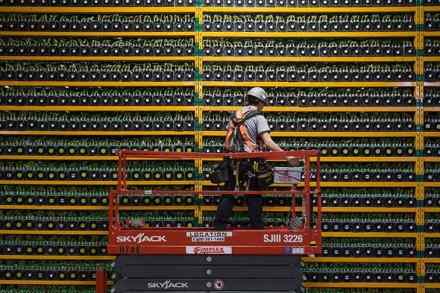
‘Market turmoil’ looks set as the theme of the week, so let’s take a close look at a trading arena more prone to mayhem than most. Why has bitcoin lost half its value since November? First, I could make a case that since crypto investment has become at least a small part of many mainstream portfolios, its prices tend to respond to the same signals that influence conventional share indices — rather than following fantasy flight paths of their own. So just as FTSE and Nasdaq investors are seriously rattled by the prospect of war in Ukraine on top of existing fears about interest-rate rises and tighter money, so crypto fans are also naturally nervous.

The TV licence is a dead duck

‘Tell me we’re winning the media battle!’ I imagine Unilever boss Alan Jope barking at his team on Tuesday, following the revelation on Sunday of his rejected £50 billion bid for GlaxoSmithKline’s consumer healthcare arm. ‘Yes, sir,’ replies the flustered PR, ‘Very much so… except for top investor Richard Buxton of Jupiter telling the FT: “The idea of letting the goons at Unilever run [the GSK business] is laughable.” Then there’s an analyst in the Telegraph saying: “We can’t imagine many things that would unnerve us more about Unilever” than this deal going ahead. Oh, and our shares fell 7 per cent yesterday.

Hunterston’s closure is the nuclear accident no one noticed

So farewell, Hunterston B, the nuclear power plant on the Firth of Clyde that shut last week after 46 years’ service. It will be followed this summer by Hinkley Point B in Somerset and in 2024 by Hartlepool and Heysham, leaving the UK with just four nuclear stations boasting five gigawatts of generating capacity between them — when they’re not suffering extended ‘outages’ for maintenance and repair. That compares with 15 stations and 13 gigawatts, meeting a quarter of UK electricity demand, at the UK’s mid-1990s nuclear peak. Meanwhile, the 3.

Will the energy price spike bring down Boris?

What does the new year have in store for consumers — and families trying to make ends meet? A stumbling recovery at best, with a continuing tide of inflation that I predict will swiftly pass the Bank of England’s current forecast of ‘around 6 per cent by spring 2022’ and take much longer to turn than the Bank’s Cnut-like posturing seeks to suggest. And driving that surge will be the energy price spike, which could be the factor — far more potent than endemic sleaze and proven incompetence — that topples the Johnson regime. Fact: wholesale natural gas prices have quadrupled in the past year.

Inflation, rates and dividends: A financial review of 2021

36 min listen

The world economy is bouncing back from the impacts of Covid 19. It has been bumpy year of recovery which has included labour shortages and consistent inflationary pressures. But it hasn't been all doom and gloom. Kate Andrews, the Spectator's economic's editor reviews this financial year. She is joined by Martin Vander Weyer, the Spectator's business editor and Paul Abberley, chief executive of Charles Stanley group. This podcast is kindly sponsored by Charles Stanley. The recording took place just before the Bank of England announced the rise of interest rates to 0.25%.

Gastro-nomics: a foodie’s guide to a changing world

Twice recently I’ve been asked my opinion of ‘Doughnut Economics’. The first time, I was tempted to cover my ignorance with a Johnsonian impromptu riff on supply-chain issues in the deep-fried batter sector. But sensing seriousness I steered off and googled the phrase later, so I was ready the second time to discuss Kate Raworth’s 2018 book of that title, about why we should abandon pursuit of GDP growth in favour of a gentler model in which we take better care of nature and each other — illustrated by her ‘doughnut of social and planetary boundaries’.

Don’t strand Cambo until our energy future is secure

If the phrase ‘stranded asset’ hasn’t yet entered your vocabulary, here’s a useful example of what it means. The 178 million barrels of oil in the Cambo field west of Shetland may stay there for ever because of government shilly-shallying over whether and when to end exploitation of the UK’s remaining hydrocarbon resources — while we import equivalent volumes of oil or gas from the Middle East, Norway and Vladimir Putin’s Russia, just to keep our lights on.

For industry, the pandemic isn’t over yet

‘So you think it’s all over? Ho ho ho!’ That’s the message from Satan’s dark laboratory (twinned with Wuhan’s) where the Omicron variant turns out to have been bubbling in its test tube while we dared to resume our normal lives during the autumn. But whether that ugly little globule ruins Christmas or proves to be largely a scare story, the pandemic’s disruption of business ain’t over yet either: supply chain hold-ups, labour shortages, cost spikes and debt pressures continue apace. Here, for example, is news that the UK car industry produced fewer than 65,000 cars in October, down 41 per cent on the same month last year and its lowest October output since 1956.

Why you should be wary of buy now pay later

Are you logged on to Klarna, Clearpay, Laybuy or Zilch for your Black Friday shopping binge — or are you an old-timer like me who still uses traditional credit cards and even sometimes tries to pay for purchases in cash? If those four brand names meant nothing to you, you are yet to join the millions of UK shoppers who have discovered ‘buy now pay later’ (BNPL) apps that offer, with a couple of simple checkout clicks, payment for fashion and beauty purchases, and even groceries, in a series of interest-free instalments. ‘Shopping just levelled up’ is Klarna’s witty slogan for its three-instalment offer; at Laybuy, it’s six; at Zilch, 25 per cent up-front and the rest later.

Shell’s Dutch departure is a boost for the city of London

The scrapping of most of the eastern leg of HS2, originally planned from Birmingham to Leeds, is a news item that’s been waiting like a crowded train stuck at a vandalised signal while ministers squabbled over which cheaper substitutes might appease competing pockets of ‘red wall’ voters. Likewise the ‘Northern Power-house’ high-speed line from Manchester to Leeds, which is set to be replaced by a few more trains running a bit quicker on the existing scenic route. None of this merits the title ‘Integrated Rail Plan’ which it will carry when formally announced by Transport Secretary Grant Shapps, rather than leaked in snippets. But ‘Cynical Rail Compromise’ wouldn’t have quite the same ring.

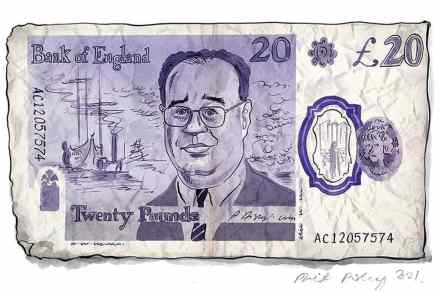
Andrew Bailey has been a bitter disappointment

Earlier this year I drew a comparison between the Bank of England governor Andrew Bailey and the Metropolitan police commissioner Dame Cressida Dick. When appointed, both were hailed as head-and-shoulders the best qualified internal candidate for the job. Yet both have subsequently attracted volleys of flak for everything that has gone wrong on their watch. That’s a peril of the media age for any high-profile public servant. But Dame Cressida, hugely respected by fellow officers, seems to rise above it. Bailey, by contrast, is beginning to look beleaguered, a recent fiasco over interest rates having followed the rattling of several skeletons in his record as a former regulator. Many in the City now wonder whether he was ever the right man for the top job.

Entrepreneurs’ 2021 agenda: save the planet, help the NHS

When our panel of judges convened in The Spectator’s convivial Westminster dining room under the chairmanship of Andrew Neil to decide the Economic Innovator of the Year Awards for 2021, one thing several of us commented upon was the remarkable scatter-pattern of finalists across the map. From Tintagel to Belfast, from Shepton Mallet to Skipton, Redcar and Scarborough, our 27 regional finalists — drawn from a record total of more than 150 entries — seemed to give new meaning to the concept of working from home. More importantly, and contrary to the conventional view that innovation thrives best in tight Silicon Valley-style clusters, the geography of this year’s competition confirms that entrepreneurship is alive and well in every byway of the UK.

Bankers, not Greta, will save the planet

I have observed before how useful really big numbers can be in response to crises: when US treasury secretary Hank Paulson unveiled his $700 billion Wall Street bailout package in 2008, an aide famously let slip that the number had been pulled out of the air because it sounded reassuringly huge. Now we’re told that more than 450 banks and investment firms representing $130 trillion of assets (that’s 40 per cent of global savings, give or take a few soaring bitcoins) have joined the Glasgow Financial Alliance for Net Zero led by Mark Carney and Michael Bloomberg, who tell us that ramping up clean energy fast enough to avoid the worst impacts of climate change will require new investment, mostly from the private sector, ‘likely in the ballpark of $100 trillion’.