Martin Vander Weyer

Martin Vander Weyer

Martin Vander Weyer is The Spectator’s business editor

It’s time to clear out the Bank of England’s board

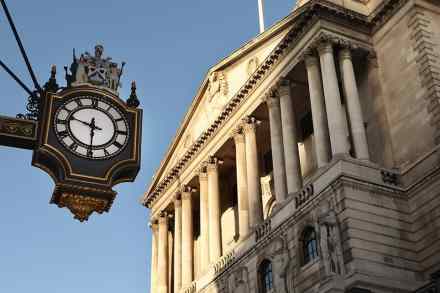
Liz Truss says she intends to review the Bank of England’s mandate, which has been fixed as a 2 per cent inflation target since Gordon Brown gave the Bank its independence in 1997. We’re told Governor Andrew Bailey, keen to keep his job, thinks a review is ‘probably the right thing’. But is it? A return to the long-term inflationary average of 2 per cent is highly desirable as soon as global price spikes subside – but if the odds-on next PM thinks the Bank incapable of achieving it, setting more dynamic inflation-and-growth objectives would surely be an overreach. Instead, maybe she should take her axe to the organisation, starting with the Bank’s board of directors, known as the Court.

Blaming Saudi Arabia won’t make energy cheaper

From our US edition

How outraged should we be that Saudi Aramco has reported a world-record quarterly profit of $48 billion, representing a giant bonus from the global oil price spike provoked by the war in Ukraine? Well, that’s how the cookie crumbles when you’re sitting on oil reserves so abundant and so easily accessible that your marginal cost of producing the next barrel is less than $10 when the market price has just doubled to $130 — as it did in March, before settling back to around $95 today. And you might think that this recent price retreat is likely to continue as oil demand begins to shrink with the onset of recession in developed economies – just as you worry that your own reserves will one day dwindle.

saudi arabia

Blaming Saudi won’t make energy cheaper

How outraged should we be that Saudi Aramco has reported a world-record quarterly profit of $48 billion, representing a giant bonus from the global oil price spike provoked by the war in Ukraine? Well, that’s how the cookie crumbles when you’re sitting on oil reserves so abundant and so easily accessible that your marginal cost of producing the next barrel is less than $10 when the market price has just doubled to $130 – as it did in March, before settling back to around $95 today. And you might think that this recent price retreat is likely to continue as oil demand begins to shrink with the onset of recession in developed economies – just as you worry that your own reserves will one day dwindle.

How to save money: switch to cash and reprogram your boiler

We’ll find out shortly whether official statistics agree with economists surveyed by Bloomberg who say UK GDP probably shrank by 0.2 per cent in the second quarter. But at an uncomfortable moment when we know things can only get worse, looking backwards doesn’t help and nor does holding out hope for a miraculous ‘emergency budget’ in September. As for forecasting beyond that, it’s almost too scary to contemplate. Better to shun economists and politicians and focus instead on facts that tell us what’s happening now – such as data from Barclaycard – and things we can do keep our own budgets in balance.

Why British Gas’s owner is right to restore its dividend

‘What’s worse, they’re paying the profits to shareholders,’ said a grey-haired woman ahead of me in the Co-op queue. ‘Bloody shareholders,’ her friend of similar age and class spat back. I guessed they were talking about Centrica, parent of British Gas, which at a time when domestic energy bills are rising 23 times faster than wages (as Frances O’Grady of the TUC puts it) has announced half-year operating profits of £1.3 billion, up from £262 million last year – and the restoration of a penny-per-share interim dividend after a three-year gap. Both ladies looked likely to be beneficiaries of pensions nourished by dividends from the likes of Centrica, Shell and BP.

How to save Royal Mail

The government’s ‘cost-of-living tsar’, Just Eat co-founder David Buttress, was appointed last month as a Canutian gesture against the inflation tide. He says his role is to encourage retailers and utilities to offer discount deals that might relieve short-term pain for consumers. But wouldn’t it be good if he also had powers to shame companies or sectors for profiteering by whacking their prices up far ahead of inflation? Any firm for which energy or scarce raw materials are major cost elements has possible reason for scorching price rises; many others do not.

Sack Heathrow’s boss? No, put him on the front line

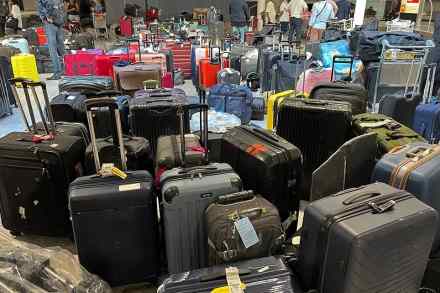
Airports are on my mind, since I’ve just stepped off an on-time early-morning flight from East Midlands to Bergerac – yes, Ryanair, efficient as ever. But what a relief not to be battling through Heathrow, where such anarchy has taken hold that the Civil Aviation Authority and Department for Transport have given chief executive John Holland-Kaye an ‘ultimatum’ to sort it out – after he capped passenger numbers at 100,000 a day, forcing innumerable flight cancellations. As the airport that used to be Britain’s gateway to the world becomes a global embarrassment, attention turns to the question of whether the man in charge should resign or be fired.

My Tory leadership race fantasy game

‘Black swan’ theory, developed by the writer Nassim Nicholas Taleb, refers to unexpected events that have extreme consequences but are rationalised afterwards by pundits who say ‘That was always going to happen.’ Covid was a big one; Putin’s war on Ukraine another. It’s in the nature of global events that there’s always a dark-feathered disruptor lurking somewhere, waiting to make its presence felt. Right now, it just might be hidden in reports of protestors in Zhengzhou, capital of China’s Henan province, demanding their money back from four local banks that suspended withdrawals in April. Runs on small banks are not unknown in China; nor is embezzlement by corrupt managers.

Spikes and stagnant growth: why we are where we are

We live in discombobulating times, economically speaking. We know we’re descending into the highest inflation for half a century and an almost certain recession. But we don’t know quite how painful it’s going to be and we don’t know how to apportion blame between bad decisions and ‘black swans’. Clearly the coming train crash has something to do with the Covid pandemic and quite a lot to do with the madness of Vladimir Putin. But what if economic prospects had been fundamentally damaged, especially for the most vulnerable, by policy responses to the previous crisis, namely the ultra-low interest rates and money printing deployed after the near collapse of the global banking system in 2008?

Is our card-only culture fuelling inflation?

Is anything anywhere getting noticeably better – economically speaking – or at least less bad? Are commodities and manufactured goods beginning to move more freely, for example, to ease the demand pressures that are stoking inflation? It’s good news that the number of container ships anchored off Los Angeles-Long Beach waiting to unload has fallen from more than 100 in January to around 20 at the latest count, but I note also that dockers there are demanding a 10 per cent pay rise. Drewry’s World Container Index – the handiest indicator of global shipping costs – has fallen 32 per cent from its peak last autumn, but remains five times higher than in the autumn of 2019.

How to save Oxford Street – and your high street

Oxford Street is ‘a dinosaur district destined for extinction’, says Marks & Spencer boss Stuart Machin – whose plan to replace its ‘flagship’ Marble Arch store with a new ten-storey retail and office block has been referred to a public inquiry by Michael Gove as Housing Secretary, despite winning approval from Westminster council. Machin points out that his real flagship nowadays is M&S’s website, which accounts for a third of the group’s clothing and home sales, while much of its pre-second-world-war store estate stands in sad need of repurposing or right-sizing.

The rail strikes could be the end of the line for Boris

Here I go again, in my occasional role as your intrepid transport correspondent. Last week I reported on airport chaos, last month on the opening of the Elizabeth line. Now here I am boldly defying the rail strike on a Grand Central train from York to King’s Cross. To be honest, on a perfect sunny morning, it feels less stressful than my regular journeys on this crowded and often disrupted line. The RMT pickets at the station entrance were less aggressive than the pigeons on the platform trying to steal a bite of my bacon roll.

How Michael O’Leary can stop the flying blame game

Stock markets are tumbling, but given the tide of economic news, that’s hardly surprising. The S&P 500 index dived into bear market territory – 20 per cent down since January – after a rise in US inflation for May. Our own FTSE indices reacted badly to an unexpected 0.3 per cent drop in UK GDP for April. Interest rate rises predicted on both sides of the pond this week will make investors jumpier still. So expect further falls in markets that have been driven by weight of cheap money to stay unnaturally high despite an increasingly bleak backdrop. And wait for the turn. When might that be? When investors think they can see beyond the inflation spike and pick value among depressed stocks.

Can this Made in Chelsea star harness the power of nuclear fusion?

Long involvement in The Spectator’s Economic Innovator Awards has taught me that entrepreneurs come in all shapes and sizes. Even so, when I met the founder of a British rocket-science venture called Pulsar Fusion, I was looking for a bespectacled boffin rather than someone I might have presumed was a musical-theatre actor – or a star of one of those TV reality shows populated only by the young, fit and blond, such as Made In Chelsea. Well, guess what: 35-year-old Richard Dinan actually was a star of Made in Chelsea and he has the teeth, hair and cheekbones to prove it. But he’s also been a serial start-up entrepreneur since he was 16 and now he’s a self-taught astrophysicist as well. ‘Not really a scientist,’ he explains with a hint of apology.

Who dares ask how far Brexit is to blame for UK inflation?

After the Jubilee dream of a lovely lost Britain, back to reality with a face-slap: the reality of the £8 pint of beer, the £8-plus gallon of diesel and the death throes of a Downing Street regime that has no discernible answers to the cost-of-living crisis. All of which takes me back to some questions I’ve been pondering for a while: whether the UK faces higher inflation and a deeper downturn than the rest of the western world, if so why, and who we should blame. By way of caveat, let’s recall the shifting pattern of Covid statistics over time: just because the UK topped April’s G7 inflation table – at 9 per cent, ahead of 8.3 per cent in the US and 7.4 per cent in Germany – doesn’t mean we’ll still look worst when this is all over.

Who’s to blame for the air travel crisis?

I sincerely hope you’re not reading this on a holiday flight that’s sitting on the tarmac with no indication as to when it might take off – or a sad train home after your flight was suddenly cancelled. Brace for three-hour delays at security, we’re told; don’t even try checking bags in, and at worst, as happened to Tui passengers at Manchester who thought they were going to Kos, watch out for a text after you’ve boarded telling you you’re going nowhere at all. How and why? When the pandemic set in, airlines and airports – thinking, not unreasonably, that their industry was doomed – made mass redundancies rather than keeping sufficient staff on furlough.

Is the Elizabeth line worth the cost?

It’s 8.16 on Tuesday morning and I’m actually writing this on a moving Elizabeth line train. Moving in the sense that we’ve just zipped from Paddington to Liverpool Street in 13 minutes – which if nothing else will be a boon for City commuters from west of London. Moving also in the sense that I’ve been writing about the project formerly known as Crossrail, first in optimism but later in frustration and rage, since its then chairman Terry Morgan gave me a personal tour of the Bond Street diggings back in June 2013.

How far will house prices fall?

‘Forecasting is a mug’s game’ is a truism attributed to everyone from fantasy author Douglas Adams to former Bank of England governor Mervyn King. It reminds us that commentators should never be smug when they call the near future right, or quick to crow at others who turned out to be wrong. I may have been a step or two ahead of the pack this season on inflation and recession risks and I’ve always said crypto, which we’ll come to in a moment, was the road to perdition. But I confess my record on property trends is frankly lamentable.

Could Haldane have helped save us from inflation?

Would Andy Haldane, the economist who left the Bank of England to run the Royal Society of Arts, have made a better governor than Andrew Bailey? You might be thinking that Daffy Duck would have made a better fist than Bailey of combatting the cost of living crisis. But seriously, Haldane was an outsider (backed by this column) in the race won by Mark Carney in 2012, and Dominic Cummings reportedly wanted him to follow Carney in 2020. He’s a brilliant real-world observer and it’s poignant to know that, though he warned Monetary Policy Committee colleagues early last year to brace for inflation, it has ‘surpassed my worst expectations’.