Martin Vander Weyer

Martin Vander Weyer

Martin Vander Weyer is The Spectator’s business editor

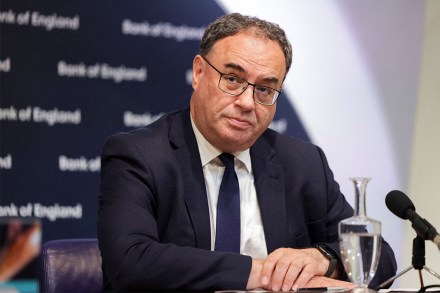
What Andrew Bailey’s eyebrows can tell us about the NatWest scandal

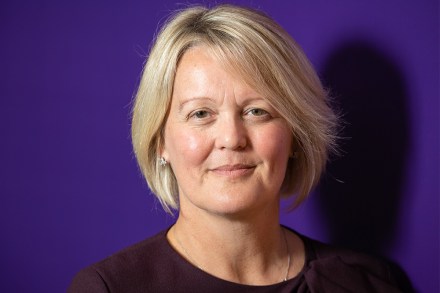
Enough said about the fall of Dame Alison Rose; more than enough about the second coming of Nigel Farage. But one question remains: what happened to the Governor’s eyebrows? In former times, the fate of errant bank chiefs was unequivocally a matter for the Bank of England. Careers were sunk or salvaged by a twitch of the governor’s supercilia. When Bob Diamond of Barclays was under fire in 2012 after the rate-fixing scandal and the Barclays board tried to save him by offering the head of chairman Marcus Agiusinstead, the then governor, Mervyn King, ordered Agius to unresign and fire Diamond – while the chancellor George Osborne denied any part, saying it wasn’t his job to decide who ran Britain’s banks. Not so nowadays.

Dame Alison’s ousting lifts the lid on banking’s wider moral pickle

When Dame Alison Rose was a frontrunner for chief executive of NatWest in 2019, I described her as ‘sensible’ and ‘unspun’ and said I hoped she’d get the job. That view was based partly on personal impression and partly on a prejudice of mine, expressed consistently since the 2008 crisis, that women often make better senior bankers than men, being less prone to macho risk-taking. Rose has now yielded to political pressure and resigned over her role in the false reporting of the decision to ‘exit’ Nigel Farage as a customer of NatWest’s subsidiary, Coutts. But this column has never been in the business of following the baying crowd in hounding corporate chiefs from office.

Save our railway ticket offices!

‘Always be cheerful’ – a motto to which I’ll return in the final item – speaks to my natural demeanour. But when asked whether I see grounds for optimism in the UK business scene, I’ve struggled lately to find anything positive in the near-certain advent of a Labour government, the agonisingly slow retreat of inflation and the damage of still-rising interest rates. Nevertheless, let me take a step back. In an ONS survey this month, four times as many respondents (36 per cent) thought their business performance would improve over the next 12 months compared with those who thought it would decline (9 per cent). There were also upticks in expectations for manufacturing output and in consumer confidence.

Would a German takeover of BT be so bad?

To the Mansion House, on an unbearably humid evening, for the Lord Mayor’s annual ‘Financial and Professional Services’ dinner. It’s a big night for the City, with the formal unveiling of reforms designed to channel pension money into unlisted equities, creating by 2030 a £50 billion pool of capital for high-growth UK companies that might otherwise list in New York or sell themselves elsewhere. Simplified London listing rules, favourable to founder-entrepreneurs, will be another part of a wider reform package, much of which has been foreshadowed in this column over recent months. But what a way to put out a major policy announcement.

Let’s flush away the idea of a return to state-owned water

Water, water everywhere in the media this week, as the Thames Water utility – crippled by debt and shamed by Niagaras of raw sewage – reached the brink of collapse. Anticipating government intervention if Thames’s owners cannot inject sufficient new equity, pundits decried the 1989 privatisation of English and Welsh water – which passed from conventional shareholders to private equity and foreign sovereign wealth that combined to extract £72 billion of dividends while loading the industry with £60 billion of debt and allegedly denying it new reservoirs and leak-free pipes. Put like that, the fate of water – a resource so natural that some say it should be immune from all financial alchemy – is indefensible.

Markets will celebrate Putin’s fall – but not yet

As the Wagner convoy rumbled northwards towards Moscow on Saturday, markets braced for turmoil. What would armed uprising in Russia do to the supply and price of oil, gas, wheat or fertiliser? Would it provoke investor flights to gold or bitcoin? But when the episode fizzled out, Monday’s prices saw little more than upticks, with natural gas traders more preoccupied by outages in Norway and FTSE action refocused on dim domestic economic prospects. Sighs of relief all round, then, and a simple conclusion: world markets will hail the demise of Vladimir Putin – so long as he goes slowly, of natural causes, and not before the end of the great inflation. Money matters ‘What should I read to understand inflation?’ asks a friend.

How to avert a mortgage car-crash

How real is the ‘mortgage crisis’ and what, if anything, can be done to relieve it? BBC vox pops of borrowers whose monthly costs have already rocketed or who face imminent rate resets at 6 per cent or worse certainly give a dramatic impression. But in reality this is a slow-motion car-crash – for Rishi Sunak as well as the afflicted – in which some 1.4 million mortgages (out of a UK total of 13.2 million) will move to higher rates sometime this year and another million next year. Forgive my arithmetic, by the way, but that looks like 18 per cent of the mortgage-holding population who constitute 28 per cent of all households, so just one in 20 households overall.

Should crypto be regulated like shares – or more like a casino?

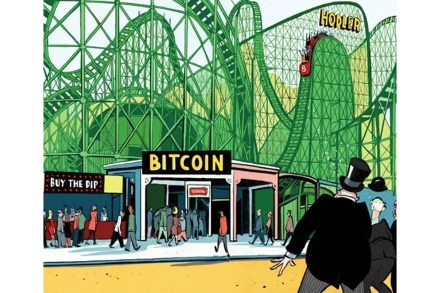
‘Crypto assets are commodities,’ said my neighbour at dinner. No they’re not, I replied, commodities are natural raw materials that have ultimate real-world uses. Crypto is merely a collection of blips in cyberspace to which adherents choose to attribute value. ‘Just like fiat currencies,’ my neighbour shot back. ‘What’s real about them? Aren’t they just an idea in the mind of central bankers?’ And off we went on a ding-dong debate.

If inheritance tax can’t be scrapped let’s change it for the better

I’d happily jump on the Telegraph bandwagon for the abolition of inheritance tax, even in the company of Liz Truss and Nigel Farage. The urge to provide a cushion of capital for children and grandchildren is an honourable one. Recipients of already-taxed cash from deceased relatives are arguably less likely to be burdens on the state in their own later lives, just as the state is unlikely to spend the same money, if confiscated, in efficient ways for the greater good. And to argue against inheritance is to put socialist hostility to wealth ahead of the worthy aim of family betterment. Enough said. The trouble with this campaign, however, is that it’s also a call for a £7 billion tax cut for the better-off, which simply isn’t going to happen.

Whose job is it to keep airport e-gates open?

Do you hate airport e-gates? Me too. The instructions are poor, the facial recognition frequently fails and the ‘Don’t abuse our staff’ posters tell you you’re trapped in a system that’s bound to annoy. Last Saturday it went from bad to worse, when all 270 e-gates at UK entry points stopped working. ‘A technical nationwide border system issue’, the Home Office called it. But I think we should know who’s responsible – and a Hollywood-hacker-style trawl has led me to a 2021 report by David Neal, ‘independent chief inspector of borders and immigration’. Neal reveals that a single-supplier contract for UK e-gates was awarded in 2013, until 2023-24, to a Portuguese firm called Vision-Box.

Regulators should not roll over for Revolut

Since we launched our Economic Innovator (originally ‘Disruptor’) awards in 2018, I’ve had enjoyable contacts with well over 100 entrepreneur-led high-growth companies picked as finalists from across the UK. Most I met at convivial pitching lunches; the rest told me their stories by Zoom or phone. Only one chosen finalist has ever shunned both the lunch and the opportunity for a call: it was Revolut, the London fintech venture that’s currently hustling for a UK banking licence. Revolut’s 38-year-old Russian-born founder Nikolay Storonsky has built a serious disruptor, valued in 2021 at $33 billion. Though Schroders – as a Revolut shareholder – has marked that figure down to $18 billion, it still bears comparison with Barclays and NatWest at £25 billion each.

Rampant unions will embed high inflation

So farewell, Transpennine Express, the northern rail operator whose hapless management were no match for the Aslef union that was determined to see this underperforming franchise renationalised. TPE’s drivers, beneficiaries of the super-luxury conditions I recited last month, have effectively invented a new form of moral hazard: have no fear of crippling your employer with outrageous demands and relentless non-cooperation, because if it goes down, the government will step in and re-employ you on the same terms or better. Aslef has more strikes planned nationally for 31 May and 3 June, and the other rail union RMT – having done its best to disrupt travel to Eurovision in Liverpool – says it may join in on the second date, which happens to be FA Cup final day.

The scourge of London’s ‘American candy’ stores

Should US regulators ban short-selling of bank stocks? That’s a hot topic as investors refuse to accept reassurance from the Fed chairman Jerome Powell that the recent banking crisis-that-wasn’t is over. Following JPMorgan’s rescue of First Republic, shares in other regional banks such as PacWest in Los Angeles, Western Alliance (Phoenix) and First Horizon (Memphis) have fluctuated wildly and fingers have pointed at short-sellers – who borrow shares they think are about to fall in order to sell, buy back cheaper and pocket a profit. That’s bad, say critics, in the broad sense that it’s a negative form of investment, the reverse of backing companies you believe in; and much worse if sellers spread false rumours to push shares down.

Is Britain really ‘closed for business’?

Is Britain really ‘closed for business’? That, we’re told, is the view of US ‘Big Tech’ as expressed by Activision Blizzard – the company whose most famous product is the violent videogame Call of Duty – in response to the blocking by the UK Competition and Markets Authority (CMA) of Activision’s proposed $70 billion merger with Microsoft, which would have given the latter a dominant position in the emergent field of ‘cloud-based gaming’. You don’t need to know exactly what that means to be worried that the world’s digital giants take a dim view of the UK as a marketplace and investment destination. But are they right? Some pundits have used Activision’s scorn as a prompt to recite the UK’s obvious faults.

The war on landlords is a plague on the economy

During a lull in the pandemic I rented a little flat in Oxford for the academic year I was thrilled to have been offered; then Covid came back, my college all but closed and I made so little use of my lodgings that it would have been cheaper per night to stay in a suite at Le Manoir aux Quat’Saisons. As bills mounted, I learned that modern renting is astonishingly expensive – while for the landlord, I thought, it looked like easy money. So in the next phase of life, I became a buy-to-letter myself – and as I do the maths at the end of the tax year, I’m discovering the meaning of what the Daily Telegraph recently called ‘Britain’s demented war on landlords’.

This season of bank panics may not be over

‘March madness’ was a tag applied with hindsight to last month’s scare provoked by the unconnected collapses of Silicon Valley Bank and Credit Suisse. Nothing systemic there, said the wise men. But this week began with another rumble, as reputable US institutions, including State Street of Boston and the stockbroker Charles Schwab, reported large deposit outflows, while shares in others dived. Meanwhile, the Bank of England was assessing whether to raise the state guarantee of bank deposits from its current £85,000 to avert social-media panics. But the problem is becoming circular: as interest rates rise, depositors are keener to move money around in search of higher yield.

Who speaks for pie factories if the CBI goes down?

Three months ago I praised Tony Danker, director general of the Confederation of British Industry, for berating the government over corporate tax rises and skill shortages: at last, I said, a CBI chief con brio. But now he’s been fired following an investigation into his ‘workplace conduct’ and three other CBI staffers have been suspended over other claims, including a rape allegation. The taint is life-threatening: if members flee, the CBI won’t survive. And if it doesn’t, say critics, not much is lost – because as a lobby group for the interests of its dominant large corporate subscribers, the UK’s leading employers’ organisation was already past its sell-by date. Fair comment?

Should we really sell chocolate to Mexico?

BBC News reported Britain’s imminent accession to the Comprehensive and Progressive Agreement for Trans-Pacific Partnership behind two stories about racism in cricket, giving no suggestion that it might represent a major economic breakthrough. Rather the opposite, with emphasison the cautious official prediction that CPTPP membership will add just 0.08 per cent to UK GDP over the next 15 years. But as a former Asia-Pacific wanderer myself, I’m almost as excited as Lord Frost about the prospect of tariff-free trade with Australia, Brunei, Canada, Chile, Japan, Malaysia, Mexico, New Zealand, Peru, Singapore and Vietnam.

The next banking calamity: office blocks

When markets are in ‘seek and destroy’ mode, like the last dragon in Game of Thrones, it’s fruitless to guess where they might attack next. Silicon Valley Bank’s excess of deposits was not in itself a signal of distress. Credit Suisse’s balance sheet was stronger than those of many other leading European banks. Deutsche Bank is a lot better-managed than Credit Suisse. But still investors swarm in search of weaklings. And their next focus – alongside the impact on bond portfolios of fast-rising interest rates, as in SVB’s case – will be the most traditional of all causes of banking crises: commercial property. America has $20 trillion worth of it.

Credit Suisse lingers still. Why?

From our US edition

If G-SIBs were a gentlemen’s club rather than a category invented by the Basel-based Financial Stability Board, Credit Suisse would have been kicked down the front steps months ago. G-SIBs are the thirty "global systemically important banks" and even within that list, Credit Suisse counted among those with the lowest "required levels of addition capital buffers": in short, regulators considered it rock-solid. But that was a judgment on its end-2021 balance sheet, not its management. Credit Suisse has been so badly run for so long — so riven by tension between the dull Swiss wealth business it ought to have been and the global player it imagined itself to be — that some of us wondered how it survived.

credit suisse