Lisa Haseldine

Lisa Haseldine

Lisa Haseldine is The Spectator's online commissioning editor - foreign affairs.

The crisis in language teaching

The British are, on the whole, rather rubbish at languages. We all know people who live up to P.G. Wodehouse’s description of the ‘shifty hangdog look which announces that an Englishman is about to talk French’. As more of the world speaks English, our monolingualism is getting worse. According to the British Council, only one in three of us speaks a second language. But it’s not entirely our fault – we’ve been set up to fail by our education system. The national struggle with languages starts young. The first time most of us will encounter a modern language – usually French – is at primary school, where its teaching is patchy to say the least.

What Prigozhin’s clandestine funeral says about the Kremlin

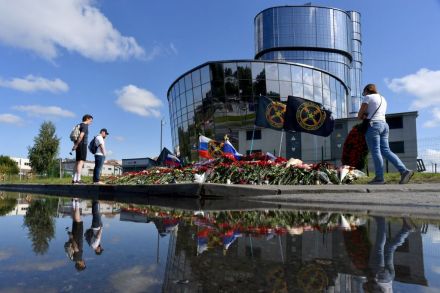
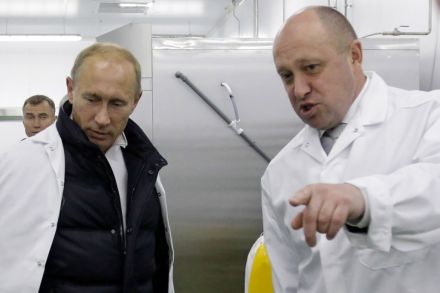
For the past week, the arrangements for Yevgeny Prigozhin’s funeral have been shrouded in secrecy. Now it has been confirmed that the leader of the mercenary Wagner group was buried today in St Petersburg – just under a week after he was killed in a plane crash outside Moscow.   According to a statement released by Prigozhin’s press service, his funeral took place in private at the Porokhovskoe cemetery this afternoon. According to one anonymous cemetery worker, between 20 and 30 people attended the ceremony, which lasted approximately 40 minutes. Now the ceremony is over, anyone who wants to pay their respects is welcome to do so, the press service’s statement said.

Ukraine steps up its drone warfare against Crimea

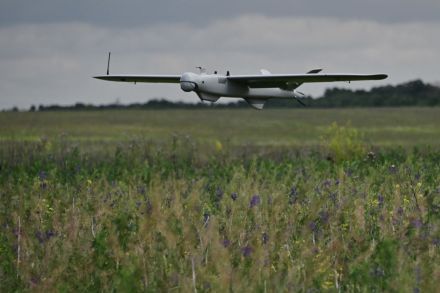
In the early hours of this morning, Ukraine launched 42 unmanned drones at the annexed territory of Crimea, the Russian ministry of defence has claimed. Announcing on Telegram that the attack had been ‘thwarted’, the Russian MoD said nine of the drones had been shot down, while the remaining 33 were electronically jammed and downed ‘before they reached their target’. If the number of drones Russia claims to have been attacked with is correct, this would amount to the largest Ukrainian air attack on Russian-held territory since the beginning of the war. This could amount to the largest Ukrainian air attack on Russian-held territory since the beginning of the war.

How Russia’s media reacted to the Prigozhin plane crash

After Yevgeny Prigozhin’s aborted march on Moscow at the end of June, the Wagner Group leader became a divisive figure in Russia. He was not quite a pariah – on account of his mercenary group’s huge contribution to the war in Ukraine and Putin’s seemingly weak decision to condemn him to barely enforced exile in Belarus – but definitely not a hero either. Therefore it comes as no surprise that, following his sudden demise in a plane crash en route to St Petersburg yesterday, the Russian press has struggled with how to cover the news. Notably, despite Prigozhin’s status for nearly a year as an invaluable contributor to the ‘special military operation’, none of the papers have run obituaries or glowing, weepy tribute pieces to a ‘war hero’.

Yevgeny Prigozhin reported dead in plane crash

From the moment Yevgeny Prigozhin aborted his march on Moscow it was a question of when and how – not whether – he would end up dead. Yesterday we saw a video of him for the first time talking about Wagner promoting Russia’s interests in Africa. Now, two months to the day after that coup was launched, we hear that his plane has crashed in Russia – apparently shot down.  The Russian press is saying that Prigozhin was one of ten passengers listed on a small jet that crashed in the Tver region to the north east of Moscow earlier today. Footage has emerged on social media showing what looks like the tail of an antiaircraft missile. The plane, reportedly on its way to St Petersburg, is then seen to crash with one wing missing.

Putin tries to turn Africa against the West

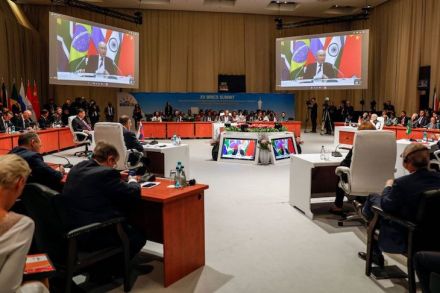
After Vladimir Putin’s speech at the Brics global summit in South Africa, there can be no doubt that the Russian president has set his sights set on wooing the nations of Africa. In an effort to present Russia as a cooperative ally to, and leader of, the Brics bloc (currently made up of Brazil, Russia, India, China, and South Africa, but with 40 more aspiring members) Vladimir Putin pinned the blame on the West’s ‘illegal sanctions regime’ for the global food supply problems experienced by many countries in the wake of his invasion of Ukraine.

James Heale, Lisa Haseldine and Neil Clark

19 min listen

This week: James Heale reads his politics column on why the Tories should fear the Greens (00:56), Lisa Haseldine outlines some of the changes to Russia's school curriculum (06:04) and Neil Clark extols the joys of non-league football (13:02).   Produced and presented by Oscar Edmondson.

From ABC to AK-47: Russia’s new wartime curriculum

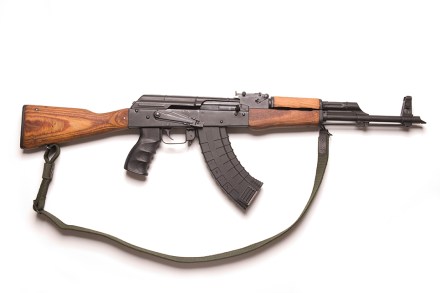
Russia’s education system is about to undergo a radical transformation. Next month, when the new academic year begins, classes will be required to teach teenagers how to assemble, handle and clean Kalashnikov rifles, how to use hand grenades and how to administer first aid in combat. This military training for sixth-formers – 16 and over – will be taught as part of their ‘fundamentals of life safety’ classes. Such classes have existed in various forms since the 1980s. In the past children have been taught quite practical skills, including how to stay safe in terrorist attacks, deal with radiation poisoning following the Chernobyl nuclear disaster and, more recently, the basics of online safety.

Russian military chief lets slip the cost of invasion

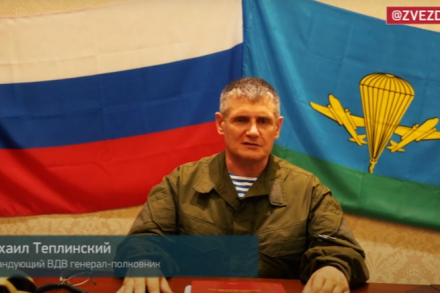
When it comes to disclosing the true cost of the war in Ukraine for Russia, the Kremlin has rarely, if ever, chosen to be honest. But occasionally, things slip out. Last Wednesday, Mikhail Teplinsky, commander-in-chief of the Russian Airborne Forces, congratulated his troops on the anniversary of the division’s founding. He said how proud he was of the ‘special military operation’ in Ukraine and reeled off the number of soldiers honoured as ‘Heroes of Russia’, as well as the 30,000 who had received other honours from the state. A video of his speech, below, was posted to the Russian ministry of defence’s social media channels and website. But the video was taken down quickly because Teplinsky let some other figures slip.

The drone attacks on Moscow are only just beginning

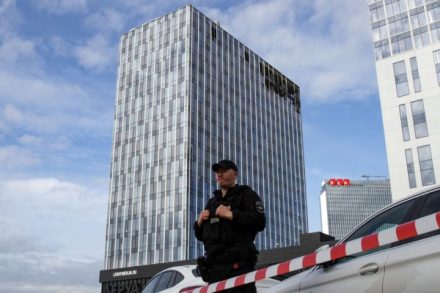
A drone has hit a tower in Moscow’s financial district – just two days after the building was targeted in another attack. In the early hours of this morning, the 21st floor of the IQ-Quarter building in Moscow City was hit by an unmanned drone, marking the second time in just over 48 hours that Russian governmental offices have been successfully targeted.  These attacks are bringing the idea home that Moscow is not the infallible fortress many have long believed it to be The building is home to several Russian government offices, with the 21st floor making up part of the ministry of economic development.

Zelensky’s drone warning to Russians

Hours after Moscow was once again attacked by unmanned drones in the early hours of Sunday, Volodymyr Zelensky has declared that the war is turning back on Russia. Speaking in his daily video address, the Ukrainian president stated that ‘Russian aggression had failed on the battlefield’. ‘Ukraine is getting stronger,’ he continued. ‘Gradually, the war is returning to the territory of Russia – to its symbolic centres and military bases, and this is an inevitable, natural and absolutely fair process.’ This is the sixth drone attack on the Russian capital in three months and the latest incident appears to mark a significant departure in tactics for Ukraine. Until now, Kyiv has rarely acknowledged any attacks on Russia or Russian-annexed territories.

Drones strike Moscow in fifth attack since May

For the fifth time in three months, Moscow has once again been targeted by drones. In what is fast becoming a regular occurrence, the Russian ministry of defence reported that two drones attacked the city in the early hours of this morning. Despite the ministry's claims to have intercepted and jammed the drones, they were still able to inflict damage on two buildings in the south west of the city. According to the government news agency TASS, one of the drones hit a non-residential building on Komsomolsky Prospekt, a mere two miles from the Kremlin and just over the river from Moscow's famous Gorky Park.

Prigozhin reappears for first time since failed Wagner coup

Nearly four weeks on from his failed coup, Evgeniy Prigozhin, leader of the Wagner group, has finally resurfaced in public. A video published on the social media app Telegram shows the mercenary chief apparently greeting newly-arrived fighters at a military camp in Belarus and praising them for their efforts on the front line in Ukraine. Due to the near-darkness in which the footage was taken, only Prigozhin’s silhouette is visible; nevertheless, his distinctive bald head, faintly illuminated by the setting sun, and his voice make him confidently identifiable. It appears the video was taken in recent days at a military camp identified by some as the one at Osipovichy in the eastern Mogilev region.

Crimea’s Kerch bridge targeted in second attack

https://youtu.be/IlHA60tJx3Y The Kerch bridge, Russia’s only road link to Crimea, has been targeted once again in what seems to have been a drone attack. The damage appears to be extensive may take weeks, if not months, to repair. The Russian-installed head of the Crimean parliament, Vladimir Konstatinov, has blamed the ‘terrorist regime in Kyiv’ for a ‘new crime’ – but in Kyiv, it will be seen as an audacious attack on a legitimate military target. This attack underlines the vulnerability of Russia's most important assets to a new wave of Ukrainian drones.

Have we seen the last of the Wagner Group?

Three weeks after marching on Moscow, the Wagner Group has seemingly been withdrawn from the battlefield in Ukraine, according to the Pentagon. Pentagon press secretary Patrick Ryder said there was evidence to suggest that the 25,000-strong mercenary group was not ‘participating in any significant capacity in support of combat operations in Ukraine’. The Pentagon’s statement follows weeks of rumours and speculation about how successfully Vladimir Putin is dealing with the fallout of Yevgeny Prigozhin’s rebellion. Many Kremlin-watchers expected the President to crack down hard on the Wagner leader – and were subsequently puzzled when Prigozhin was allowed to nominally retreat into self-imposed exile in Belarus.

Drone strikes Russian military base near Moscow

Just as Moscow was beginning to recover from the shock of Evgeniy Prigozhin’s march on the capital, the city has, once again, been targeted by drones.  In the early hours of this morning, according to the Russian ministry of defence, five drones were intercepted before they reached the capital. Eyewitnesses reported seeing two of the drones flying in the direction of Moscow at a low altitude of approximately 200 metres. They came within touching distance of the city, getting as far as the New Moscow suburb to the south west. According to Russia, four of the drones were shot down.

Has Putin had Sergei Surovikin locked up?

When Evgeniy Prigozhin started his armed insurrection, it was clear that he had allies within the ranks of the Russian military. His Wagner Group walked unopposed into Rostov, the HQ of the Russian military in the south and they were almost entirely unmolested as they came within 120 miles of Moscow. Vladimir Putin granted him amnesty, in return for retreat and exile, but a hunt seems to be on for those who might have backed him.  The Moscow Times is reporting the arrest of Sergei Surovikin, a general who until recently led the assault on Ukraine and had been close to Prigozhin. Citing two sources close to the Russian Ministry of Defence, the report says Surovikin ‘chose (Prigozhin’s side in the rebellion) and now he’s been grabbed by the balls’.

Did Putin’s allies flee Moscow?

As soon as the Wagner coup started, Ukrainian social media was full of memes of Vladimir Putin saying 'I don’t need ammo, I need a ride' – the inverse of Volodymyr Zelensky’s quip when tanks moved towards Kyiv. But is there any truth in it? Did Putin – or his allies – flee Moscow at news of trenches being dug around the capital, while the Wagner Group were 200km away? The Kremlin says not, but there was plenty of suspicious activity to suggest otherwise. The independent Russian investigative media organisation Important Stories reported some notable movement: Putin’s personal jet plane, an Ilyushin Il96-300-PU, took off in the direction of St Petersburg shortly after 2:15 p.m. local time.

Full text: Putin on Wagner coup

Vladimir Putin has just released a speech to Russians after the Wagner mercenary group took over Russian military headquarters in the south of the country in what is described by the Kremlin as an attempted coup. Full text below. https://www.youtube.com/watch?v=MgRcDoa_SZw 'We are fighting for the life and security of our people, for our sovereignty and independence, for the right to be and remain Russian: a state with a 1,000-year history. This battle, when the fate of our people is being decided, requires the cohesion of all forces: unity, consolidation and responsibility. We must throw aside everything that weakens us, any strife that our external enemies can and will use to undermine us from within.

What’s behind Germany’s far-right surge?

Alternative für Deutschland (AfD), Germany’s far-right populist party, is enjoying a surge in support. A poll by broadcaster ARD this month revealed that 18 per cent of voters backed the AfD – its highest rating since the party was founded in 2013. This level of support – which puts the AfD on level pegging with the SPD – is ringing alarm bells in Berlin. Since the end of the second world war, Germany’s post-war identity has been moulded around coming to terms with its history. Germans even have a word for it: ‘Vergangenheitsbewältigung’. The national mantra for eight decades has been ‘never again’. But is something sinister afoot in German politics?