Lisa Haseldine

Lisa Haseldine

Lisa Haseldine is The Spectator's online commissioning editor - foreign affairs.

Even in the Arctic Circle, Navalny remains uncowed

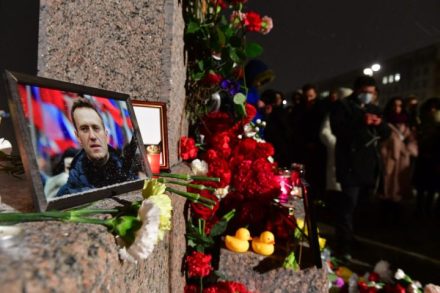
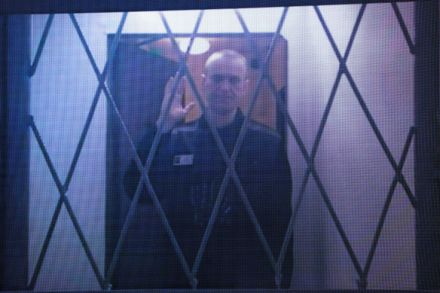
Alexei Navalny had a brutal December. At the start of the month the Putin critic abruptly disappeared from his prison colony in Vladimir, east of Moscow. For 20 days no one knew of his whereabouts until his lawyers tracked him down to the ‘Polar Wolf’ colony of Kharp, deep within the Arctic Circle. Yesterday, he was seen by the public for the first time since his transfer.   Appearing over video link, the gaunt Kremlin critic held a short press conference ahead of his appointment in court to sue the Vladimir colony where he was being held until December. Standing behind a metal grille, head shaved and dressed in a prison jumpsuit, Navalny looked thrilled, and a little relieved, to be allowed to interact with journalists.

Russia’s curious reaction to Britain’s hacking allegations

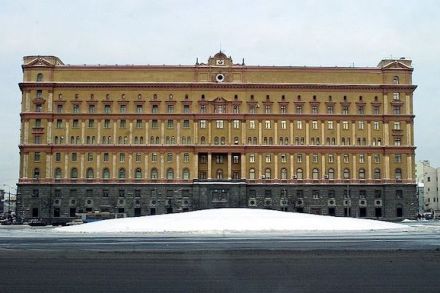
That Russia's security services have been targeting British politicians and other high-profile figures won't come as a surprise. But the scale of the accusations levelled today at the Russian Federal Security Service (FSB) by the British government is still shocking. GCHQ has said that, since 2015, Russia has carried out hundreds of hacks against MPs, journalists and civil servants. Former trade secretary Liam Fox and the ex head of MI6 Richard Dearlove are among the victims. British intelligence revealed a surprising amount of detail about the FSB unit responsible for this hacking activity. The group allegedly goes by the name ‘Star Blizzard’ and belongs to the FSB’s Centre 18.

Is Russia trying to flood Finland with migrants?

Against the background of the war in Ukraine, a diplomatic row is brewing between Russia and Finland. Last week, Finland announced that it would imminently be closing four of its eight border crossings into Russia, promptly doing so on 18 November. The reason? An unexpected increase in the number of illegal migrants coming over the border from Russia in recent weeks. Finnish minister of internal affairs Marie Rantanen put the blame for this squarely on Russia. ‘The activities of the Russian authorities have changed in such a way,’ she said, ‘that it has become possible to get from Russia to Finland, despite the lack of necessary documents.

Cameron’s Ukraine trip provides a welcome boost for Zelensky

Just days after returning to government as Lord Cameron, the former prime minister and new Foreign Secretary has made his first foreign visit. Unsurprisingly, the destination of this trip was Kyiv, to meet with Ukrainian president Volodymyr Zelensky.  The news of Cameron’s visit broke early this morning, although whether it took place this morning or earlier in the week remains unclear thanks to the wartime high security protocols that exist around such visits. In footage posted by Zelensky to X/Twitter, the Ukrainian premier is shown welcoming Cameron and his delegation to Kyiv. Shaking hands, Cameron calls it an ‘enormous honour’ to meet Zelensky.

Why Putin thinks war with Ukraine is like the Israel-Palestine conflict

Who is to blame for the shocking pogrom in the Dagestani city of Makhachkala, where a mob of hundreds stormed the local airport in search of Jews on a flight from Tel Aviv? Vladimir Putin has offered a predictable answer: the West. In a meeting with Russia’s security council and law enforcement agencies, president Putin said the actions of the anti-Semitic mob in Dagestan were ‘inspired through social media, including originating from Ukraine, created at the hands of agents of Western intelligence services’.

Why Putin hosted Hamas at the Kremlin

Since Hamas’s attack on Israel nearly three weeks ago, Vladimir Putin has been torn between who to back. It took the Russian president several days to address the conflict, and even longer to speak to Israeli premier Benjamin Netanyahu. Now, it increasingly appears that he has made up his mind. Yesterday afternoon, at the invitation of the Kremlin, a Hamas delegation touched down for talks in Moscow. The visit was not briefed out in advance and was only confirmed by the Russian foreign ministry once news of the meeting began appearing in the Russian state media. The delegation was led by Moussa Abu Marzouk, a senior member of the Palestinian group.

Putin will be hoping for gifts from Xi in Beijing

In the early hours of this morning, Vladimir Putin touched down in Beijing to attend the third forum of the Belt and Road initiative (BRI) at Xi Jinping’s invitation. The trip is clearly important to Putin: it is just the second time that he has left Russia, and the first time travelling beyond the former Soviet Union, since the international criminal court (ICC) issued a warrant for his arrest in March. Xi invited Putin to attend the forum back in March in a show of unity when the former visited Moscow just days after the ICC issued its warrant.

Juncker dismisses ‘corrupt’ Ukraine joining EU in near future

Just days after Ukraine’s President Zelensky declared his intention to start EU membership negotiations by the end of this year, the bloc’s former president Jean-Claude Juncker has poured cold water on the idea, branding it a country ‘corrupt at all levels of society’. In an interview with the South German regional Augsburger Allgemeine paper, Juncker accused current EU officials of making ‘false promises’ to Ukraine and ‘telling Ukrainians that they can become members immediately’.  The Ukrainian government admitted that only two of the seven EU membership conditions had been met ‘Despite its efforts, it is not eligible to join and needs massive internal reform,’ he said.

How a pro-Russia party triumphed in Slovakia’s election

The staunchly pro-Russian Robert Fico is back in power for a third time in Slovakia. Fico’s Smer party clinched at least 23 per cent of the vote – enough to lead a coalition government. His victory comes five years after Fico was forced to resign following mass protests over the murder of a journalist investigation corruption in his government.  Fico has not been shy during campaigning about his views on Russia and Ukraine. His most striking pledge was to immediately end military support for Kyiv, promising to ‘not send a single round’ of ammunition to Ukraine if voted into power; now that he is, Ukraine’s allies are concerned about whether he will follow through – and what other trouble he may cause.

The West and Russia are at war, says Sergei Lavrov

The United States and Britain are at war with Russia. So said the Russian Foreign Minister Sergei Lavrov at a UN press conference on Saturday. ‘You can call this whatever you want,’ said Lavrov. ‘But they are directly at war with us. We call this a hybrid war but that doesn’t change the reality.’ Lavrov was answering the question: ‘At what point does this actually become a direct conflict with the United States, not simply a proxy conflict via Ukraine?’ Earlier that day it had been announced that President Biden had agreed to supply Ukraine with long-range army tactical missile systems (ATACMS), capable of hitting targets 190 miles away.

Olaf Scholz’s failing coalition is leaking support to the AfD

Germans are increasingly fed up with their hapless chancellor Olaf Scholz and his traffic light coalition. Just a quarter of voters believe the government has any long-term goals for the country, according to research conducted for the Frankfurter Allgemeine Zeitung by the Allensbach Institute for Demoscopy. Seven in ten voters said they associated the coalition with poor decision making and infighting. The Green-SPD-FDP coalition has had a rocky time since it came to power less than two years ago. Scholz has had to wean the country off Russian oil and gas, deal with an economic recession and manage the dilemma of whether or not to send weapons to Ukraine.

The crisis in language teaching

The British are, on the whole, rather rubbish at languages. We all know people who live up to P.G. Wodehouse’s description of the ‘shifty hangdog look which announces that an Englishman is about to talk French’. As more of the world speaks English, our monolingualism is getting worse. According to the British Council, only one in three of us speaks a second language. But it’s not entirely our fault – we’ve been set up to fail by our education system. The national struggle with languages starts young. The first time most of us will encounter a modern language – usually French – is at primary school, where its teaching is patchy to say the least.

What Prigozhin’s clandestine funeral says about the Kremlin

For the past week, the arrangements for Yevgeny Prigozhin’s funeral have been shrouded in secrecy. Now it has been confirmed that the leader of the mercenary Wagner group was buried today in St Petersburg – just under a week after he was killed in a plane crash outside Moscow.   According to a statement released by Prigozhin’s press service, his funeral took place in private at the Porokhovskoe cemetery this afternoon. According to one anonymous cemetery worker, between 20 and 30 people attended the ceremony, which lasted approximately 40 minutes. Now the ceremony is over, anyone who wants to pay their respects is welcome to do so, the press service’s statement said.

Ukraine steps up its drone warfare against Crimea

In the early hours of this morning, Ukraine launched 42 unmanned drones at the annexed territory of Crimea, the Russian ministry of defence has claimed. Announcing on Telegram that the attack had been ‘thwarted’, the Russian MoD said nine of the drones had been shot down, while the remaining 33 were electronically jammed and downed ‘before they reached their target’. If the number of drones Russia claims to have been attacked with is correct, this would amount to the largest Ukrainian air attack on Russian-held territory since the beginning of the war. This could amount to the largest Ukrainian air attack on Russian-held territory since the beginning of the war.

How Russia’s media reacted to the Prigozhin plane crash

After Yevgeny Prigozhin’s aborted march on Moscow at the end of June, the Wagner Group leader became a divisive figure in Russia. He was not quite a pariah – on account of his mercenary group’s huge contribution to the war in Ukraine and Putin’s seemingly weak decision to condemn him to barely enforced exile in Belarus – but definitely not a hero either. Therefore it comes as no surprise that, following his sudden demise in a plane crash en route to St Petersburg yesterday, the Russian press has struggled with how to cover the news. Notably, despite Prigozhin’s status for nearly a year as an invaluable contributor to the ‘special military operation’, none of the papers have run obituaries or glowing, weepy tribute pieces to a ‘war hero’.

Yevgeny Prigozhin reported dead in plane crash

From the moment Yevgeny Prigozhin aborted his march on Moscow it was a question of when and how – not whether – he would end up dead. Yesterday we saw a video of him for the first time talking about Wagner promoting Russia’s interests in Africa. Now, two months to the day after that coup was launched, we hear that his plane has crashed in Russia – apparently shot down.  The Russian press is saying that Prigozhin was one of ten passengers listed on a small jet that crashed in the Tver region to the north east of Moscow earlier today. Footage has emerged on social media showing what looks like the tail of an antiaircraft missile. The plane, reportedly on its way to St Petersburg, is then seen to crash with one wing missing.

Putin tries to turn Africa against the West

After Vladimir Putin’s speech at the Brics global summit in South Africa, there can be no doubt that the Russian president has set his sights set on wooing the nations of Africa. In an effort to present Russia as a cooperative ally to, and leader of, the Brics bloc (currently made up of Brazil, Russia, India, China, and South Africa, but with 40 more aspiring members) Vladimir Putin pinned the blame on the West’s ‘illegal sanctions regime’ for the global food supply problems experienced by many countries in the wake of his invasion of Ukraine.

James Heale, Lisa Haseldine and Neil Clark

19 min listen

This week: James Heale reads his politics column on why the Tories should fear the Greens (00:56), Lisa Haseldine outlines some of the changes to Russia's school curriculum (06:04) and Neil Clark extols the joys of non-league football (13:02).   Produced and presented by Oscar Edmondson.

From ABC to AK-47: Russia’s new wartime curriculum

Russia’s education system is about to undergo a radical transformation. Next month, when the new academic year begins, classes will be required to teach teenagers how to assemble, handle and clean Kalashnikov rifles, how to use hand grenades and how to administer first aid in combat. This military training for sixth-formers – 16 and over – will be taught as part of their ‘fundamentals of life safety’ classes. Such classes have existed in various forms since the 1980s. In the past children have been taught quite practical skills, including how to stay safe in terrorist attacks, deal with radiation poisoning following the Chernobyl nuclear disaster and, more recently, the basics of online safety.

Russian military chief lets slip the cost of invasion

When it comes to disclosing the true cost of the war in Ukraine for Russia, the Kremlin has rarely, if ever, chosen to be honest. But occasionally, things slip out. Last Wednesday, Mikhail Teplinsky, commander-in-chief of the Russian Airborne Forces, congratulated his troops on the anniversary of the division’s founding. He said how proud he was of the ‘special military operation’ in Ukraine and reeled off the number of soldiers honoured as ‘Heroes of Russia’, as well as the 30,000 who had received other honours from the state. A video of his speech, below, was posted to the Russian ministry of defence’s social media channels and website. But the video was taken down quickly because Teplinsky let some other figures slip.