Lisa Haseldine

Lisa Haseldine

Lisa Haseldine is The Spectator's online commissioning editor - foreign affairs.

How can the West help Russians to defeat Putinism?

Watching Tchaikovsky’s ballet The Nutcracker is a Christmas tradition for many. But this year, people are being urged to stay away: Ukraine’s culture minister Oleksandr Tkachenko published an open letter earlier this month asking the West to boycott Tchaikovsky and wider Russian culture until the war in Ukraine is over. ‘This war,’ he said, ‘is a civilisational battle over culture and history’.  He's right: since February, the Russian state is doing its best to annihilate Ukrainian culture in every possible way: banning and seeking to destroy the Ukrainian language, artists, authors and music. But how far should we go in response? Is a crackdown against Russian culture a wise idea, or does it play into Putin’s hands?

Is Putin hiding away?

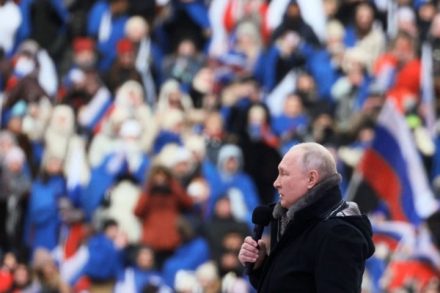
December is usually a busy month for Vladimir Putin, but not this year. In the run-up to Christmas, Russia’s president typically holds his annual press conference. But this time the event has been cancelled. Putin’s annual presidential address to the Russian federal assembly – that was pushed back from the summer – has also been canned. And Putin will also be absent from the traditional New Year’s Eve ice hockey game on Red Square. Putin’s yearly telethon, where ordinary Russians can phone in and have a chat with the president (indefinitely postponed from earlier in the year), too has been axed. Such events in the Kremlin calendar are annual touchstones for Putin to ‘connect’ with the Russian people.

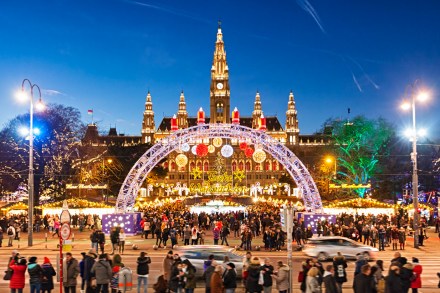
How to make the most of Vienna’s Christmas markets

Oh, Vienna. Home to Mozart, Beethoven, Haydn, Freud, the Danube, waltzing and coffee house culture, to name but a few. Famous for its history and culture, the Austrian capital’s cobbled streets fizz with stories of ages past.  In my opinion, there is no better time to visit than in the winter – and the run-up to Christmas in particular. This city knows how to do Christmas. The streets are lit with a plethora of Christmas lights, some of which have acquired fame in their own right (I am told a friendly rivalry exists between the fans of the chandeliers on Graben – designed to create the impression of a gigantic outdoor ballroom – and the ‘curtain of lights’ around the corner on Kohlmarkt).  But the biggest draw of all are Vienna’s Christmas markets.

The best cookbooks to give this Christmas

I love a good cookbook. In an age where endless variations on any recipe are no more than a few clicks away on the internet, there is still a certain magic to buying, or receiving, a physical, curated collection.  Cookbooks can teach you something in a way that individual online recipes can’t. Whether exploring a new cuisine or trying a new technique, cooking from a cookbook means you can build up a whole repertoire of dishes and hone new skills. I love that you can annotate the pages, and it doesn’t matter if they get mucky (I find you can always tell the best recipes in a book by how dog-eared and food-splattered the pages are).

What can we expect from Hunt’s Autumn Statement?

Later this morning Jeremy Hunt will deliver his first Autumn Statement as Chancellor. With the focus firmly on the dire state of the economy, pressure is on Hunt to deliver on his promise to reduce inflation (which yesterday hit 11.1 per cent) and restore stability. As Kate Andrews writes in this week's magazine, the Chancellor's measures are likely to see a new era of austerity ushered in due to a number of a trailed tax hikes and public spending cuts. In recent days, Hunt has been laying the ground work for what is likely to be a difficult times ahead. So what can we expect from today's statement?

How Russia responded to the Polish missile incident

Yesterday, during the largest wave of missile strikes conducted by Russia since February, a shell flew six kilometres over the Ukrainian border into Poland, killing two people. Before any facts had been established, there was confusion in the Russian media whether to report on the story with outraged protestation or excitement. To begin with, Russian commentators reacted with glee. TV presenter and known Kremlin mouthpiece Margarita Simonyan gloated on social media, referencing recent Ukrainian shelling on the Russian border and taunting ‘Now Poland has its own Belgorod region, what did you expect?’. Nevertheless, several hours after the news broke, a statement came from the Russian Ministry of Defence denying responsibility for the missile.

Russia receives the cold shoulder at Bali’s G20 summit

In the warmth of the Balinese sunshine, Russia has received an unsurprisingly frosty reception at the G20 summit. We are barely a few hours into the summit and the tension is already acute. The source of this tension, of course, is Russia’s invasion of Ukraine.  This is the first G20 held since the beginning of the Ukraine war earlier this year. Ahead of the summit, some member states were already questioning whether Russia should still be allowed to retain its membership of the group. Meanwhile, in light of the war, Ukraine was invited to participate in this year’s summit as a guest. Perhaps in anticipation of this, it was announced last week that Russian president Vladimir Putin would not be attending. Foreign Minister Sergei Lavrov has gone in his place.

How many Russians have fled Putin?

Ever since the war in Ukraine started there have been reports about Russians emigrating, either fleeing conscription or simply dismayed at the conflict and Vladimir Putin’s authoritarian turn. Moscow has previously dismissed reports that as many as 700,000 could have fled. But that figure no longer looks so far-fetched in the light of data just released by the FSB saying 9.7 million trips out of the country were made in the third quarter of this year (July to September), almost double the number made between April and June.  This figure was slipped out over the weekend and has so far gone unreported in the English-language press. It’s significant as it covers 21 September, the day that Putin announced his military enlistment plan.

‘Wrong visit, wrong time’: What Germany makes of Scholz’s Beijing trip

This afternoon, German Chancellor Olaf Scholz goes to China. His one-day visit to Beijing is the first by a democratic leader since the outbreak of the Covid pandemic nearly three years ago. But before he has even touched down on Chinese soil, Scholz’s trip is going down badly back home.  ‘It’s the wrong visit at the wrong time,’ declared the broadsheet newspaper Die Welt. Scholz will be the first Western leader to meet with President Xi since he secured his unprecedented third term in power. For many China-watchers, Xi’s consolidated rule and zombification of the country’s Communist party marks a watershed moment for the country – not one, according to Die Welt, that Germans think Scholz should be lending any support to.

Putin’s house of mirrors

If there is one thing we have learnt since Vladimir Putin invaded Ukraine in February, it is that very little he says bears any relation to the truth. For nearly a year, the Russian President has been constructing his own house of mirrors: his rhetoric gives no indication of what is fact or fiction, bluff or candour, hard truth or hot air. Each speech he gives further distorts the reality he presents. Yesterday, Putin spoke at an event held by the Moscow-based think tank Valdai Discussion Club. The theme of his speech was ‘A post-hegemonic world: Justice and security for everyone’. Whose hegemony does this refer to? That of the West – or ‘our opponents’ as Putin ‘carefully’ called them with a smirk. Who is providing ‘justice and security for everyone’?

A ‘workaholic and nerd’: What Russia makes of Rishi

‘Handsome, rich, lucky, traitor.’ That’s how the Russian broadsheet newspaper Kommersant chose to describe the new Prime Minister Rishi Sunak after he launched his leadership bid. In a biographical article charting his rise to power, the paper covers his childhood attending Winchester College – the ‘most important event of his life’ apparently – moving through his time at university and marriage, and into his entry into politics. The moniker of ‘traitor’ refers to his resignation from Boris Johnson’s cabinet in July this year before his own first leadership bid. Noting how different both prime ministers are, the paper states that ‘the strange thing is not that Sunak turned against Johnson, but that he turned against him so late’.

Can Putin successfully drag Belarus into war with Ukraine?

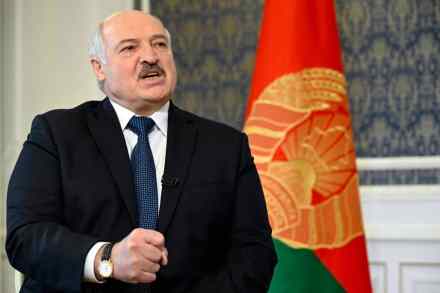
Putin’s war in Ukraine is not going his way. As the screw tightens on him, what options does he have left up his sleeve? There remains, of course, the possibility that Putin could, at some point, choose to deploy nuclear weapons – he himself has threatened this enough times. But there is also Belarus. Controlled by Alexandr Lukashenko, currently in his sixth term as president thanks to an election in 2020 rigged in his favour with Putin's help, the country has sat on the fringes of the war since it began. On Monday, as Putin launched his latest attack on Ukraine, Belarus announced that, together with Russia, it was deploying a joint regional forces group to its borders in response to the ‘worsening situation’ in Ukraine.

Is it time to look again at nuclear power?

Putin’s invasion of Ukraine in February this year marked a watershed moment in the debate on energy security. How we heat our homes, power our businesses, and what needs to be done to protect those energy sources was thrust once again to the top of each European country’s agenda. The fallout from war in Ukraine has also led to a question being asked: is it time to look again at nuclear power? This was the topic of discussion at a Spectator panel at Tory conference. Robert Buckland, Secretary of State for Wales thought so: ‘We cannot afford to lose any time in investment in nuclear.’ This was proved most painfully when rocketing energy prices quickly began to expose how vulnerable Europe’s dependence on gas made it.

Putin fires a warning to the West

‘The West has let their mask slip and revealed their true nature!’ That was Vladimir Putin's message to a hall of vacant-looking officials at the Kremlin this afternoon. The Russian president gathered the great and the good of Russia to reveal the formal annexation of the Ukrainian regions of Donetsk, Luhansk, Zaphorizhzhia and Kherson. But Putin's audience in the hall would be forgiven for quickly losing sight of this. This was a speech aimed at Russia's enemies in the West. Putin justified the expansion of the Russian Federation by insisting that the four now-annexed Ukrainian territories had voted in favour of joining Russia: ‘This is the will of 20 million people’, he said.

Could Russia shut its borders?

In Putin’s Russia, fortunes can change rapidly. A week on from the partial mobilisation of the army, Russians are gripped by the fear that the closure of the country’s borders is next. Those who are not willing to risk death in Ukraine are looking for a way out. In the six days since 21 September, when Putin announced his plan in a pre-recorded television address, protests have sprung up in at least 43 towns across the country; the human rights organisation OVD News has said that more than 2,300 people have been arrested for taking part. According to the official terms of the Kremlin’s partial mobilisation, those with military experience aged between 18 and 35 are being called up first (those holding higher military ranks can be summoned up to the age of 65).

Cornered: what will Putin do now?

41 min listen

In this week’s episode:For the cover of the magazine, Paul Wood asks whether Putin could actually push the nuclear button in order to save himself?He is joined by The Spectator’s assistant online editor Lisa Haseldine, to discuss (01:03).Also this week:Why is there violence on the streets of Leicester?Douglas Murray writes about this in his column this week and we speak to journalist Sunny Hundal and research analyst Dr Rakib Ehsan about what’s caused the disorder (13:44).And finally:Is three – or more – a crowd?Mary Wakefield discusses the poly-problems or polyamory in her column in The Spectator and is joined by comedian Elf Lyons, who has written about her experience of polyamory before (26:46).

‘Staying silent isn’t an option’: meet Putin’s new opposition

Not every critic of Vladimir Putin ends up in jail. It still suits Russia’s President to present his country as a democracy. Elections are occasionally held against opponents whom Putin goes on to defeat, so enemies are often tolerated if they don’t pose a serious threat. Last week, 70 local councillors from across Russia used this remaining freedom to sign a petition calling for his resignation. Their protest started with a letter from councillors in St Petersburg which called for Putin to be indicted on charges of treason and removed from office. A petition followed. I spoke to a few of the signatories and found them surprisingly willing to discuss their reasoning with me. They don’t expect to overpower Putin and they know they risk being jailed.

Over 1,300 arrested as protests spring up across Russia

Putin has met the latest stirrings of dissent against his regime with force. More than 1,300 Russians have been arrested this evening at protests against forced mobilisation. While it’s not known how many exactly have taken to the streets, protests on this scale have not been seen in the country since Putin invaded Ukraine seven months ago. Chanting ‘No to war’ and ‘Putin get in the trenches’, crowds including both men and women, young and old, have gathered in open defiance of the Kremlin’s intention to send a further 300,000 reservists into a warzone. According to OVD News – the Russian human rights organisation keeping tally of arrests – at the time of writing, protests are taking place in at least 38 cities.

How seriously should we take Putin’s nuclear threat?

Vladimir Putin has announced the partial mobilisation of the Russian armed forces. In a pre-recorded address delayed from last night, the Russian president declared that all reservists would be called up for service in Ukraine. Nuclear war, he stressed, was not off the table.  In tones bordering on the hysterical, Putin declared that Nato leaders had been discussing the possibility and acceptability of using nuclear weapons against Russia:  ‘I want to remind those who allow themselves to make such statements about Russia, we too have various means of destruction at our disposal that are more varied and modern than those owned by Nato countries.

Luhansk and Donetsk to hold ‘referendums’ on joining Russia

Authorities in the Russian-occupied Luhansk and Donetsk regions of Ukraine have announced that both would hold referendums on formally joining the Russian Federation this coming weekend. Although the breakaway states of the Luhansk and Donetsk People’s Republic (LPR and DPR respectively) have been controlled by Putin-loyal separatists, they have technically remained semi-autonomous. Similar announcements about a referendum have been made in the recently-invaded regions of Kherson and Zaporizhzhia. Russia, of course, has welcomed the decision – the Chairman of the State Duma Vycheslav Volodin declared its readiness to provide Luhansk and Donetsk with total support. Putin is due to give an address to the nation on the subject this evening.