Lisa Haseldine

Lisa Haseldine

Lisa Haseldine is The Spectator's online commissioning editor - foreign affairs.

The drone attacks on Moscow are only just beginning

From our UK edition

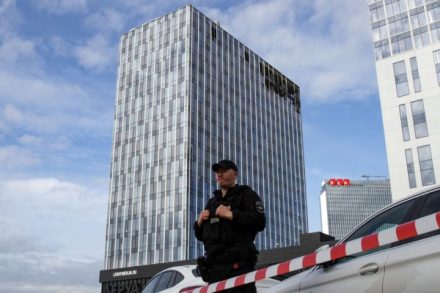
A drone has hit a tower in Moscow’s financial district – just two days after the building was targeted in another attack. In the early hours of this morning, the 21st floor of the IQ-Quarter building in Moscow City was hit by an unmanned drone, marking the second time in just over 48 hours that Russian governmental offices have been successfully targeted.  These attacks are bringing the idea home that Moscow is not the infallible fortress many have long believed it to be The building is home to several Russian government offices, with the 21st floor making up part of the ministry of economic development.

Zelensky’s drone warning to Russians

From our UK edition

Hours after Moscow was once again attacked by unmanned drones in the early hours of Sunday, Volodymyr Zelensky has declared that the war is turning back on Russia. Speaking in his daily video address, the Ukrainian president stated that ‘Russian aggression had failed on the battlefield’. ‘Ukraine is getting stronger,’ he continued. ‘Gradually, the war is returning to the territory of Russia – to its symbolic centres and military bases, and this is an inevitable, natural and absolutely fair process.’ This is the sixth drone attack on the Russian capital in three months and the latest incident appears to mark a significant departure in tactics for Ukraine. Until now, Kyiv has rarely acknowledged any attacks on Russia or Russian-annexed territories.

Drones strike Moscow in fifth attack since May

From our UK edition

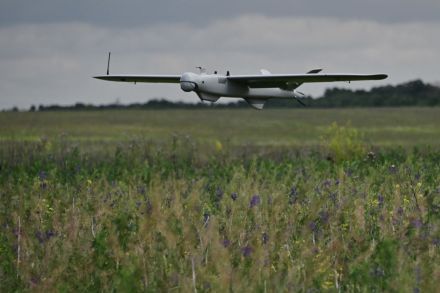
For the fifth time in three months, Moscow has once again been targeted by drones. In what is fast becoming a regular occurrence, the Russian ministry of defence reported that two drones attacked the city in the early hours of this morning. Despite the ministry's claims to have intercepted and jammed the drones, they were still able to inflict damage on two buildings in the south west of the city. According to the government news agency TASS, one of the drones hit a non-residential building on Komsomolsky Prospekt, a mere two miles from the Kremlin and just over the river from Moscow's famous Gorky Park.

Prigozhin reappears for first time since failed Wagner coup

From our UK edition

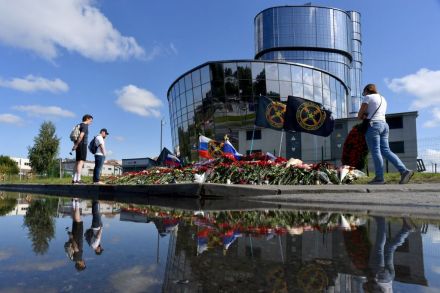
Nearly four weeks on from his failed coup, Evgeniy Prigozhin, leader of the Wagner group, has finally resurfaced in public. A video published on the social media app Telegram shows the mercenary chief apparently greeting newly-arrived fighters at a military camp in Belarus and praising them for their efforts on the front line in Ukraine. Due to the near-darkness in which the footage was taken, only Prigozhin’s silhouette is visible; nevertheless, his distinctive bald head, faintly illuminated by the setting sun, and his voice make him confidently identifiable. It appears the video was taken in recent days at a military camp identified by some as the one at Osipovichy in the eastern Mogilev region.

Crimea’s Kerch bridge targeted in second attack

From our UK edition

https://youtu.be/IlHA60tJx3Y The Kerch bridge, Russia’s only road link to Crimea, has been targeted once again in what seems to have been a drone attack. The damage appears to be extensive may take weeks, if not months, to repair. The Russian-installed head of the Crimean parliament, Vladimir Konstatinov, has blamed the ‘terrorist regime in Kyiv’ for a ‘new crime’ – but in Kyiv, it will be seen as an audacious attack on a legitimate military target. This attack underlines the vulnerability of Russia's most important assets to a new wave of Ukrainian drones.

Have we seen the last of the Wagner Group?

From our UK edition

Three weeks after marching on Moscow, the Wagner Group has seemingly been withdrawn from the battlefield in Ukraine, according to the Pentagon. Pentagon press secretary Patrick Ryder said there was evidence to suggest that the 25,000-strong mercenary group was not ‘participating in any significant capacity in support of combat operations in Ukraine’. The Pentagon’s statement follows weeks of rumours and speculation about how successfully Vladimir Putin is dealing with the fallout of Yevgeny Prigozhin’s rebellion. Many Kremlin-watchers expected the President to crack down hard on the Wagner leader – and were subsequently puzzled when Prigozhin was allowed to nominally retreat into self-imposed exile in Belarus.

Drone strikes Russian military base near Moscow

From our UK edition

Just as Moscow was beginning to recover from the shock of Evgeniy Prigozhin’s march on the capital, the city has, once again, been targeted by drones.  In the early hours of this morning, according to the Russian ministry of defence, five drones were intercepted before they reached the capital. Eyewitnesses reported seeing two of the drones flying in the direction of Moscow at a low altitude of approximately 200 metres. They came within touching distance of the city, getting as far as the New Moscow suburb to the south west. According to Russia, four of the drones were shot down.

Has Putin had Sergei Surovikin locked up?

From our UK edition

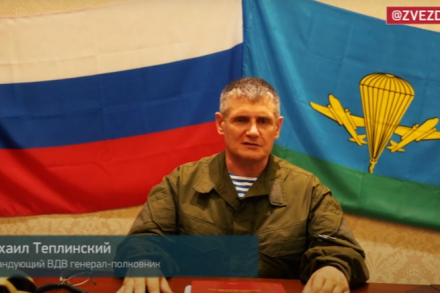
When Evgeniy Prigozhin started his armed insurrection, it was clear that he had allies within the ranks of the Russian military. His Wagner Group walked unopposed into Rostov, the HQ of the Russian military in the south and they were almost entirely unmolested as they came within 120 miles of Moscow. Vladimir Putin granted him amnesty, in return for retreat and exile, but a hunt seems to be on for those who might have backed him.  The Moscow Times is reporting the arrest of Sergei Surovikin, a general who until recently led the assault on Ukraine and had been close to Prigozhin. Citing two sources close to the Russian Ministry of Defence, the report says Surovikin ‘chose (Prigozhin’s side in the rebellion) and now he’s been grabbed by the balls’.

Did Putin’s allies flee Moscow?

From our UK edition

As soon as the Wagner coup started, Ukrainian social media was full of memes of Vladimir Putin saying 'I don’t need ammo, I need a ride' – the inverse of Volodymyr Zelensky’s quip when tanks moved towards Kyiv. But is there any truth in it? Did Putin – or his allies – flee Moscow at news of trenches being dug around the capital, while the Wagner Group were 200km away? The Kremlin says not, but there was plenty of suspicious activity to suggest otherwise. The independent Russian investigative media organisation Important Stories reported some notable movement: Putin’s personal jet plane, an Ilyushin Il96-300-PU, took off in the direction of St Petersburg shortly after 2:15 p.m. local time.

Full text: Putin on Wagner coup

From our UK edition

Vladimir Putin has just released a speech to Russians after the Wagner mercenary group took over Russian military headquarters in the south of the country in what is described by the Kremlin as an attempted coup. Full text below. https://www.youtube.com/watch?v=MgRcDoa_SZw 'We are fighting for the life and security of our people, for our sovereignty and independence, for the right to be and remain Russian: a state with a 1,000-year history. This battle, when the fate of our people is being decided, requires the cohesion of all forces: unity, consolidation and responsibility. We must throw aside everything that weakens us, any strife that our external enemies can and will use to undermine us from within.

What’s behind Germany’s far-right surge?

From our UK edition

Alternative für Deutschland (AfD), Germany’s far-right populist party, is enjoying a surge in support. A poll by broadcaster ARD this month revealed that 18 per cent of voters backed the AfD – its highest rating since the party was founded in 2013. This level of support – which puts the AfD on level pegging with the SPD – is ringing alarm bells in Berlin. Since the end of the second world war, Germany’s post-war identity has been moulded around coming to terms with its history. Germans even have a word for it: ‘Vergangenheitsbewältigung’. The national mantra for eight decades has been ‘never again’. But is something sinister afoot in German politics?

Everything we know about the Nottingham attack so far

From our UK edition

Three people have died and three were injured in an attack in the centre of Nottingham yesterday.  In the early hours of Tuesday morning, two students from the University of Nottingham were found stabbed to death on a street to the west of the city centre. Police were called to the scene just after 4 a.m. Today, the two victims have been named as Barnaby Webber and Grace Kumar, both 19.  In a related incident, some time after 5 a.m, a third man in his 50s, who has not been named, was also found dead in a street five minutes away. He appeared to have been stabbed to death.  Police believe the suspect, a 31-year-old man, stole the victim’s van before heading to a third location around 5.30 a.

Putin’s nuclear reshuffle is designed to antagonise Nato

From our UK edition

Days before Nato leaders descend on Vilnius for the alliance’s annual summit next month, things will be afoot just across the border in Belarus. In a meeting with Belarusian leader Alexander Lukashenko at his summer residence in Sochi on Friday, Putin revealed that Russia will start deploying nuclear weapons to the country on the weekend of 7 and 8 July.  Putin’s decision to move nuclear weapons into Belarus just three days before the Nato summit begins in Lithuania is almost certainly no coincidence. As the alliance he regularly rages about prepares to sit down to discuss defence and deterrence, the Russian president is metaphorically puffing out his chest to remind them that he is worth taking seriously, actually.

Was Boris doomed anyway?

From our UK edition

Boris Johnson has stepped down as the MP for Uxbridge and South Ruislip with immediate effect, but is it a case of jumping before he was pushed? With the threat of a by-election looming over him after the Privileges Committee recommended a ten-day suspension for his conduct over partygate, it appears Johnson was not willing to gamble on the good will of his constituents to see him through. Last year in January as a local reporter I spoke to Johnson’s constituents to see what they thought of him. This was several weeks after the partygate scandal had broken and, with the Omicron variant of Covid still spreading throughout the country, Covid was fresh on peoples’ minds. Strikingly, of those I spoke to, few had good things to say about Johnson.

Moscow is now a target in Putin’s war

From our UK edition

Russian drones attacked Kyiv last night, the 17th such assault this month. But this time there was a difference: just after 4 a.m, Moscow came under what seemed to be a retaliatory attack. Most of the 25 drones were shot down by the city’s air defences, but three managed to get through. As Russia has found in Ukraine, this ratio is not unusual for drone attacks.  Of the drones that did succeed in flying over Moscow, one failed to detonate but the other two hit buildings in the New Moscow area of the city. Footage has surfaced on Russian social media purporting to show drones flying over Moscow suburbs in the direction of the capital, including over the upmarket area of Rublyovka, a suburb popular with many of Putin’s associates and home to a number of enormous mansions.

Record numbers of Russian soldiers are going Awol

From our UK edition

Few Russians go willingly to fight in the ‘meat grinder’ of Ukraine, where Russia has faced as many as 100,000 casualties. With a lack of volunteers, the Wagner Mercenary Group – which has recruited from penal colonies to keep fighting numbers up – has come to Putin’s aid. The Kremlin has also rolled out a partial mobilisation of the Russian army. Officially, 300,000 men were called up, although the true figure is likely to be higher. Many more Russians – up to a million – chose instead to flee. New analysis of cases listed in Russian military courts has revealed that record numbers of soldiers have been going absent without leave (Awol) this year.

What we know about the rioting in Cardiff so far

From our UK edition

A traffic collision in the Ely area of Cardiff, Wales on Monday evening sparked rioting overnight that continued for nine hours until the police managed to disperse it. At least twelve police officers were injured in the incident. The trigger for the unrest appears to have been rumours spread on social media that a police chase was responsible for the crash, reportedly involving two teenage boys riding an off-road bike or scooter. The police deny that a chase occurred, saying that officers only became aware of the collision after being called to the scene. The crash occurred shortly after 6 p.m. yesterday, with unrest continuing in the area until 3 a.m. this morning.

Victory Day threatens Putin’s alternative reality

From our UK edition

As Vladimir Putin rounded off his Victory Day speech with a resounding ‘Hurrah!’ to Russia, the contrast between the celebrations of this year and last could not be starker. Putin was a president in a hurry: he spoke for just nine minutes, the parade was wrapped up in under 25 minutes. ‘A real war has once again broken out against our motherland,’ he began. Perpetuating the lies upon which he has sought to justify the invasion of Ukraine, Putin continued with the trademark bellicose ranting that we have come to expect from his speeches over the past year: ‘We have resisted international terrorism, we will defend the citizens of the Donbas, and we will guarantee our own safety’.

Is Putin scared of a Victory Day attack?

From our UK edition

In the Russian calendar 9 May holds near-religious significance. Celebrating the Soviet victory over Nazi Germany at the end of the Second World War, the occasion is considered Russia’s biggest patriotic celebration of the year.  Last year, following the invasion of Ukraine, the holiday took on a jingoistic significance for the Kremlin as Putin stoked up nationalist fervour to legitimise his war. This year’s celebrations, however, are shaping up to be a muted affair. More than 20 cities across Russia have cancelled their Victory Day parades.

Seven key battlegrounds to watch at the 2023 local elections

From our UK edition

And just like that, the local elections have rolled around once again. On Thursday 4 May, 230 councils will be going to the polls: over 8,000 seats are up for grabs in England, including 3,365 currently held by Tories and 2,131 by Labour councillors. It will be Rishi Sunak’s first big test, with both parties viewing it as a ‘dry run’ ahead of the general election next year. The impact of the new voter ID laws will be scrutinised closely too. The last time these seats were up for election was in 2019, when both parties suffered a bad night. Labour now have a commanding 15-point lead and are predicted to make gains of between 400 to 700 seats while Tory expectations are low, with estimates of losses ranging from 500 to 1,000 councillors.