
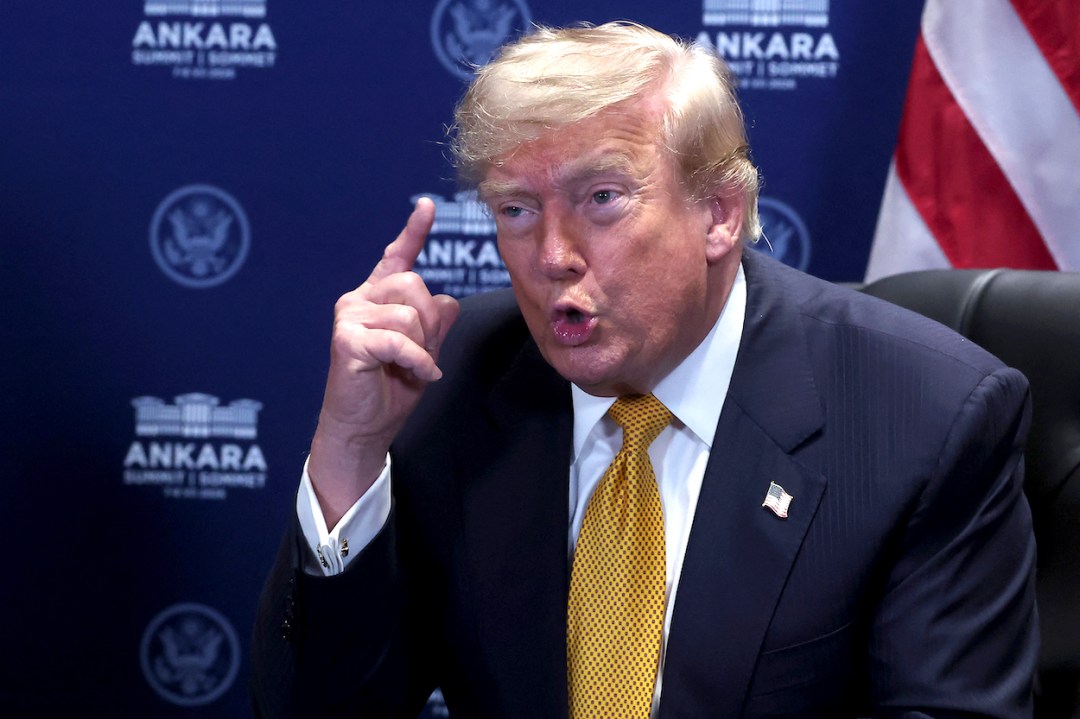
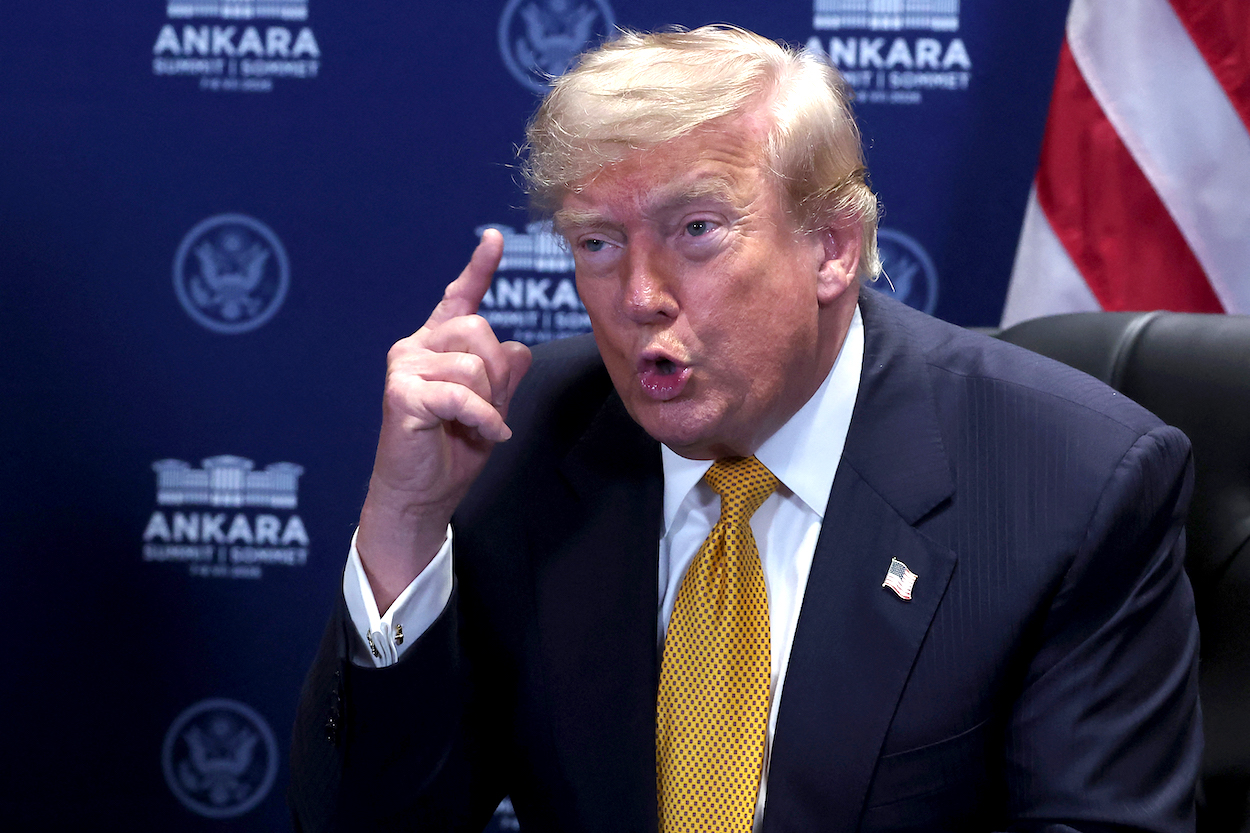
If European leaders had a bingo card of all the fights Donald Trump could pick with them, at this week’s NATO summit in Ankara they would have won a blackout. Starting as he meant to go on, Trump used a joint briefing with NATO chief Mark Rutte this morning to reheat his litany of grievances with fellow members of the alliance.
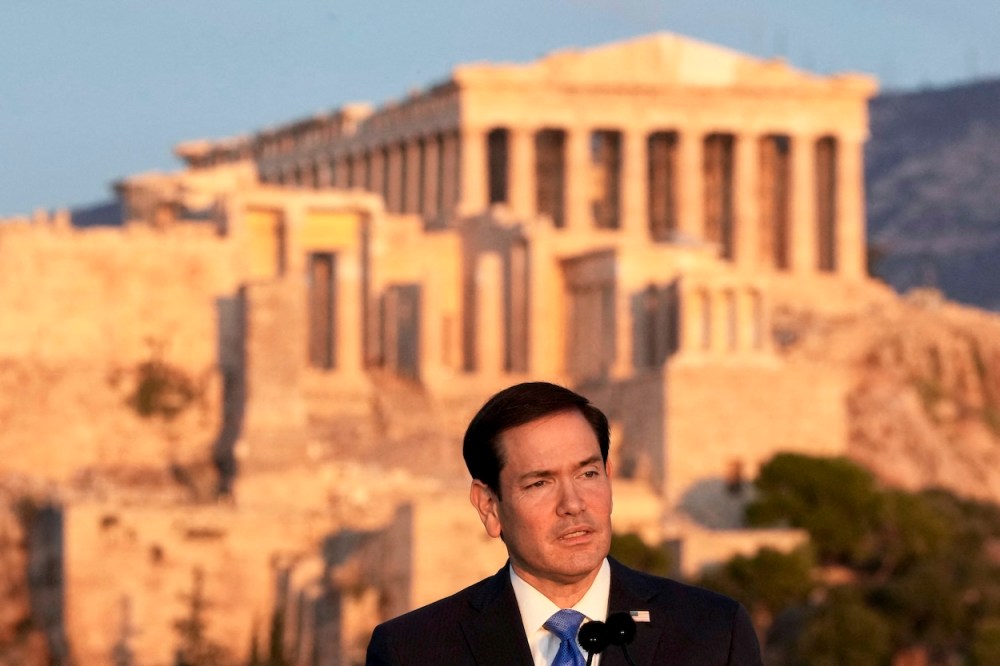
Trump today declared that he was “not happy with NATO because of what they did with Greenland” and their refusal, as he sees it, to help the US with the war in Iran. Greenland, the President said, was a “big problem for us,” going on to claim – falsely – that “it’s not important for Denmark.”
Any hope Denmark’s Mette Frederiksen may have had that Trump, distracted by his war in Iran, may have lost interest in trying to acquire Greenland has been conclusively dashed. She felt compelled ahead of today’s events to affirm that Denmark, of whose kingdom Greenland is a part, would be “ready to defend” the territory and that it was “not for sale.”
Frederiksen’s comments feel particularly pertinent in the wake of a stunning Wall Street Journal article published earlier this week that revealed the degree to which the crisis drummed up by Trump over Greenland across January and February shook the Danish Prime Minister. At a secret meeting called in January for Denmark and its allies to discuss how to handle the situation, German Chancellor Friedrich Merz is reported to have leant across the table to ask Frederiksen if she was “OK.” It later emerged that Denmark, along with several other allies, including Britain, were preparing for a situation where they might be forced to defend Greenland from an armed attack by US troops.
Trump also took the opportunity this morning to lash out at Spain over its failure to increase defense spending in line with new targets set out at last year’s NATO summit. “They don’t participate,” he complained. “They don’t pay. I don’t want anything to do with Spain.” Spain currently spends approximately 2 percent of its GDP on defense, and pointedly refused to agree to commit to the new target of 5 percent last year.
Trump’s petulant order to “cut all trade” with the country doesn’t appear to have rattled officials in Madrid too much, however. Government sources have pointed out that America can’t simply single out members of the European Union to block trade with. Trump’s threats to also cut trade with Germany and other EU members in the wake of the Greenland crisis earlier in the year came to little.
It seems like the root of Trump’s ill temper in Ankara is the distinct sense of grievance he feels over the progress of his war in Iran. Overnight, he declared that the brittle memorandum of understanding which outlined the terms of a ceasefire with Iran was “over.” He also lashed out today at Britain, specifically, over Keir Starmer’s refusal to allow America use of British bases at the beginning of the conflict in March. The US’s NATO allies “have not treated us right,” he lamented.
With this expected to be Starmer’s last face-to-face meeting with Trump before he leaves Downing Street, it’s doubtful that the President’s comments will particularly rile him. But, with the leaders’ meeting getting underway behind closed doors now, this is very likely not the last flak Starmer will catch from Trump today.
Alliance officials have, reportedly, been discussing converting their annual summit into a biannual affair
Leaders are expected to spend the next few hours discussing, among other things, their progress towards raising their countries’ defense spending to 5 percent of GDP by 2035. Late last month, Starmer rushed out the chronically delayed Defense Investment Plan (DIP) – setting out how Britain planned to spend its defense budget in the next few years – precisely so that he could attend this week’s summit in Ankara with something to bring to the table. But with the small print leaving a third of the £15 billion ($20 billion) allocated to the DIP to Starmer’s successor to fund in the upcoming autumn Budget, and no roadmap for when Britain’s defense spending might reach 3 percent, let alone 3.5 percent, many of Britain’s NATO allies – saying little of the US – have been left feeling dismayed by what they see as an increasing unreliability from London on defense and security.
NATO’s European leaders only have a few more hours through which they have to grit their teeth and hope they can avoid further diplomatic escalations with Trump. Alliance officials have, reportedly, been discussing converting their annual summit into a biannual affair from next year, with the specific aim of avoiding giving the President a platform from which to bash other members in the run up to the 2028 presidential election. But even in the space of a day, Trump has once more set the cat among the pigeons. With few credible options available to release the tension in the alliance, expect the panic in Europe over Greenland and defense spending to rumble on into the coming weeks – if not months.






Comments