Laura Freeman

Laura Freeman

Let there be dark

Who’s afraid of the dark? Who now fears shadows and bumps in the night? Where do you even find any dark to be afraid of when your phone is only a pocket away? One swipe and the screen lights up blue-white like the old explorer’s match in a cave. If I wake in the night I don’t bother with the bedside lamp. A bar of light comes under the blinds. Lights from the flats opposite. Fire-escape lights from the hotel next door. The jaundice glow of London light pollution. Even staying with my parents, on the edge of a village, there’s no real darkness. There are lights from the lane, lights from the next farm, lights from the main road on the hill. Intruder lights come on each time a muntjac makes for Mum’s vegetable garden in the small hours. Click. Click. Click.

Woman to woman

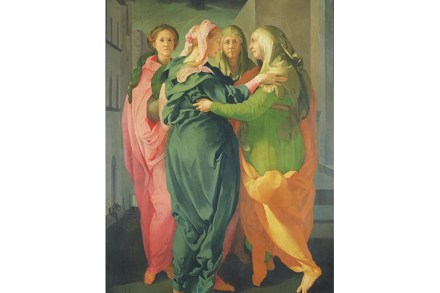
Bump to bump they stand: Mary and her cousin Elizabeth, both pregnant, both apple-cheeked and glowing as expectant mothers should be. It is a moment of shared joy. The whispered intimacy of ‘I’m pregnant!’ ‘Me, too!’ Joseph and Zacharias stand sheepish in the background, as men do on such occasions. Joseph has more reason than most to feel left out. The baby isn’t his in the conventional sense. Zacharias has the look of a man overtaken by events. After so many ‘barren’ years, here is Elizabeth, pregnant and beaming with the future John the Baptist.

Making waves | 25 May 2017

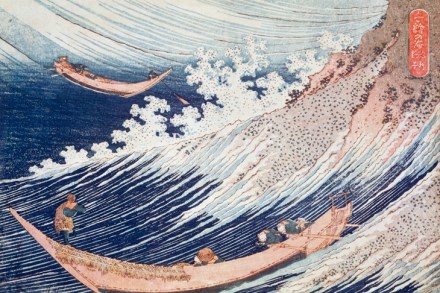
The end, whenever it came, was always going to be too soon for Katsushika Hokusai. There was still so much to see. So much he had not painted. On his deathbed, Hokusai, attended by his doctor, said a prayer. ‘If heaven will extend my life by ten more years…’. He paused and made a private calculation. ‘If heaven will afford me five more years of life, then I’ll manage to become a true artist.’ He may have been 90, but he wasn’t done yet. In life, Hokusai (1760–1849) painted dragons, creatures of long life, by the dozen. He has them disappear in puffs of inky smoke, then reappear across the page. He painted the phoenix, bird of resurrection.

Proud to be a prude

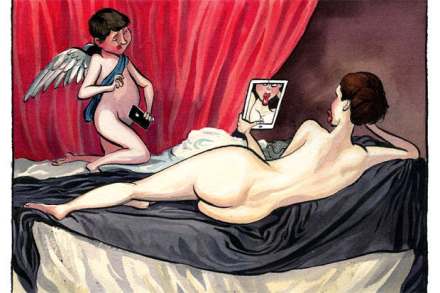
What advice would you give to this modern moral question posed by my friend’s younger sister? A boy at school had asked her to send him a selfie. Nude, naturally. She was dithering. She liked the boy, a sixth-form crush, and was keen to endear herself. But she knew that if she sent a naked picture he’d pass it on to his friends. She had thought of compromises: just her breasts, or her bottom coyly reflected in a mirror. It hadn’t crossed her mind to say ‘get lost’. Then, she explained, he’d tell his friends she was a prude. That, to her, was far worse than the First XI seeing her in the nuddy.

A choice of first novels | 20 April 2017

If you go down to the woods today… That is the starting point for Idaho by Emily Ruskovich, who grew up on Hoodoo mountain in the Idaho panhandle. A family — mother Jenny, father Wade, daughters May and June — leave their little house in the big woods and drive a pick-up truck to a clearing where they chop birch wood, squabble and drink lemonade that attracts the flies. You want them to find something wonderful there. A teddy bears’ picnic. A magic faraway tree. A Piglet. But this is Idaho, not our friendly day-tripping woods. Nature is vast and hostile. In winter the house is cut off for months at a time, the paths too steep for a snowplough. In summer you sweat and sweat and tempers frazzle. Leave the windows open and the beetles get in.

From page to stage

Reading Elena Ferrante’s Neapolitan quartet is a heady experience. You not only see, hear, know her characters — you can almost taste them. The villain of the first of the four books, which follow the friendship of mercurial Lila and striving Lenù from childhood into their sixties, is Don Achille, an ‘ogre’ who sweats the smells of ‘salami, provolone, mortadella, lardo and prosciutto’. Lila herself, always wriggling free of the nets of others, is ‘skinny, like a salted anchovy’. Nino, loved by both Lila and Lenù, is ‘an anomalous, sweet fruit’.

On the make

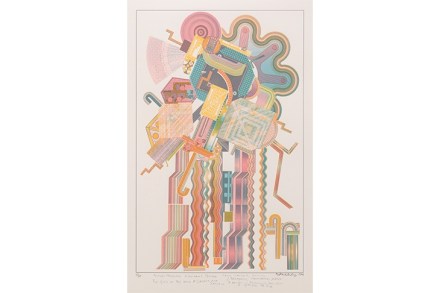
Rudolfo Paolozzi was a great maker. In the summer, he worked almost without stopping in the family’s ice-cream shop, making gallon after gallon of vanilla custard. In the slack winter months, when the shop made its money on cigarettes and sweets, he built radios from odds and sods. It was on one of these homemade radios that he heard Mussolini’s declaration, on 10 June 1940, that Italy, the country he had left for Scotland 20 years before, had entered the war. That night a mob attacked the ice-cream shop at 10 Albert Street, off Leith Walk in Edinburgh. The family lived above the shop and later, Rudolfo’s son Eduardo, then aged 16, would remember how it had been before and what the men had done.

Rodin at 100

The girl who posed for Auguste Rodin’s figure of Eve on the ‘Gates of Hell’ was, the sculptor said, a ‘panther’. She was a young Italian, pregnant, but barely showing. Not a professional artist’s model. He found the girls who modelled for the Academy painters too affected. He liked stretchers, yawners, fidgeters, jitterbug girls who couldn’t sit still. His figures in plaster, bronze and marble have a pretzel suppleness. They do the splits, lie curled and foetal, fold at the waist, and crouch doubled like Atlas. His sibyls hold yoga poses. His prodigal son has a six-pack. A sketch might take only three, four, five charcoal or gouache strokes. Then: new pose, new page.

Sunny delight

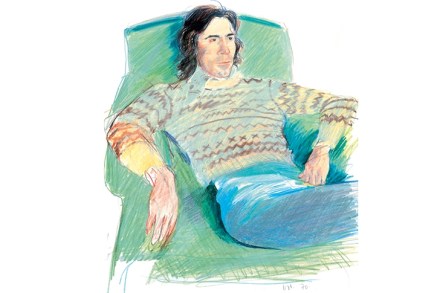
No Californian could have painted Hockney’s pools. No La-La Land artist, raised on sun and orange juice, would have done tiles and diving boards and tan-lined bottoms as the boy from Bradford did. It had to be a Hockney, brought up, the fourth of five children, in a two-up two-down. Hockney, who aged three had sheltered from bombs with his mother Laura, father Kenneth, four siblings and a lady neighbour in the cupboard under the stairs. A Yorkshire child steeped in Typhoo tea and fortified by meat and potatoes from Robert’s Pie Shop. A painter who had bicycled the Wolds in the rain, and lived in the garden shed of an Earl’s Court boarding house when a student at the Royal College of Art in London.

Rides without romance

You know the old designation NSIT — Not Safe in Taxis? Well, we need a new one: TSIU — Too Safe in Ubers. I don’t want to get into the rights and wrongs of Uber, whether the gig economy puts more money in the pocket of the taxi driver from Wembley or benefits only the San Francisco app-ocracy. I don’t have strong feelings about Ubers vs black cabs and whether the former are undercutting the latter, doing them out of their Knowledge and their livelihoods. My objections to Uber are not economic or ethical, they are romantic. Uber has killed off the back-of-the-taxi clinch. It used to be that, after a date, a party, a play, a chap could prove his mettle by striding to the kerb, raising his arm and shouting ‘Taxi!’ in a firm, strong baritone.

Munchkins and mischiefs

Arthur Rackham shouldn’t have lived in anything as conventional as a house. It should have been a gingerbread cottage, like the one he drew for Grimms’ Fairy Tales, with cakes for a roof and boiled sugar for windows. Or a Rapunzel turret, for letting down ropes of long, blonde hair, except he was so very goblin-bald. Or a Sleeping Beauty palace with a spinning-wheel in the topmost tower. As it was, he lived in Chalcot Gardens, north of Primrose Hill and south of Hampstead Heath, with his wife Edyth Starkie, a portrait painter, and their daughter Barbara, at the end of an 1880s row set back from the road.

A fresh start

Most of us lead lives of quiet desperation. So we’re told. Frits van Egters apparently leads a life more desperate than most. He lies in bed too long. He eats green pickled herrings and brown onions. He turns the radio on. He turns it off. Half the day gone already. He squeezes his spots. He tells bad jokes. He takes cod-liver oil. He makes custard from packet powder. He obsesses about going bald. He is annoyed by his parents: his mother darning socks, the warts on the back of his father’s neck. He has nightmares. He wakes the next morning and starts again. In Gerard Reve’s The Evenings: A Winter’s Tale, we spend ten days and nights at the end of 1946 with 23-year-old Frits as he picks up and drops books and newspapers, and walks circuits of Amsterdam.

A good night’s sleep

Have you, on hearing the story of the princess who felt a pea through 40 feather mattresses, ever thought that she was, well, a bit of a wet blanket? One measly dried pea through all that padding and she wakes up black and blue with bruises? ‘I can’t tell you what I’ve suffered!’ she quivers in an 1846 English translation from the Hans Christian Andersen original. Ah, but you don’t know the whole story. Go back to Andersen and you discover it was three peas. Poor princess. Now I understand. Imagine fidgeting in the night, feeling a lump under the mattress, and rolling over to the cool side of the bed and finding another pea — dastardly pea — and curling up miserably at the foot of the bed only to discover a third pea-hummock.

Stuck on stucco

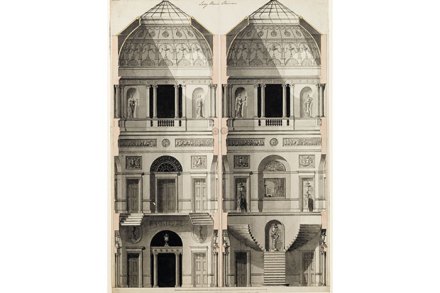
Whenever the words ‘stucco house’ appear in the newspapers, you can be certain the occupiers have been up to no good. The Russian kleptocrat in his stucco palace in Mayfair. The shamefaced prime minister seeking refuge in the stucco mansion of a party-donor chum. The disgraced wife-throttler with a stucco terrace in Eaton Square. In each case, it is miscreant stucco, offshore-trust stucco, stucco hiding corruption and foul play behind whiter-than-white, butter-wouldn’t-melt façades.

Donald Trump’s victory has made social media unbearable

When I woke up on Wednesday morning it was to the news that Donald Trump was the next President of the United States, and, at the top of my Instagram feed, to a photograph of a pair of shiny silver ballet pumps. ‘Wearing sparkly shoes to make today just a teeny bit better,’ was the caption. I scrolled down through other photographs in my usual mindless morning way. A greyhound, already the most doleful looking of dogs, in her basket and the caption: ‘Thank God she neither knows nor understands. I envy her peace’. A toddler, still in his pyjamas, tousled, sleepy, fawn-in-the-headlights eyes: ‘What kind of world will he grow up in?’. A single candle, a mug of tea, a slice of buttered toast: ‘I need the calm in this picture today’.

Shiver me timbers

Brrrrr, this is a chilly book. Each time a character put on his sealskin kamiks, muskrat hat, wolfskin mittens and otter pelt coat I buttoned another cardigan toggle and shivered. It’s a book that gets you down to the marrow. The compass of Ed O’Loughlin’s Minds of Winter points north by northnorth. Up and up it goes, drawn by husky dogs towards the North Pole, chillier and chillier by degrees, frostbitten, snow-blind but determined.

Why I don’t buy the argument that History of Art A-level was axed for being ‘soft’

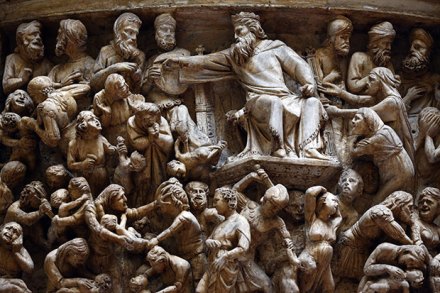
Can I tell you about one of the best weekends of my life? It involved no foreign travel, no booze, no party, no love affair, no sun, sea, shopping or beach. It was the second weekend of my A-level year and I had been set the first History of Art essay of term: on early Florentine sculpture. My teacher had lent a book from his shelves, I’d borrowed another from the library and half-a-dozen more from my mother. I sat all weekend, rapt at the kitchen table with Andrea Pisano, Lorenzo Ghiberti and Filippo Brunelleschi spread around me. I wrote a seven-page essay in my tiny monk’s handwriting and could have gone on for pages more. In a way I have. I went on to study History of Art at university and now write about art – among other things – for a living.

The Victoria and Albert

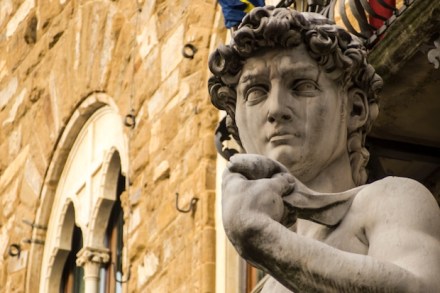
Thomas Hardy, while still married to his first wife Emma, but arranging assignations in London with Florence, his second-wife-to-be, used to ask her to meet him at the Victoria and Albert Museum by the great, towering plaster cast of Trajan’s column. Really, Thomas? Trajan’s column? How obvious can a man be? Knowing what I know about Hardy’s column, and with the added burlesque of the modesty fig leaf that was cast for Michelangelo’s plaster David, I cannot now keep a straight face in the Cast Courts at the V&A and have to take myself off upstairs to look at silver salt-shakers the minute I get the sniggers. What a lot of things the Victorians had.

Hush money

The new consumer obsession of my generation isn’t white goods, trainers or designer labels. It is — whisper it — quiet. We, the under-30s, are almost allergic to noise, so much so that many of us would happily pay extra to sit in a quiet carriage, or in the café seat furthest from the speakers, or drink in an upholstered alcove in a bar. Two of the three things — privacy, space, quiet — that our parents wanted when they bought houses with gardens in leafy streets and town suburbs are lost to us.

Room for inspiration

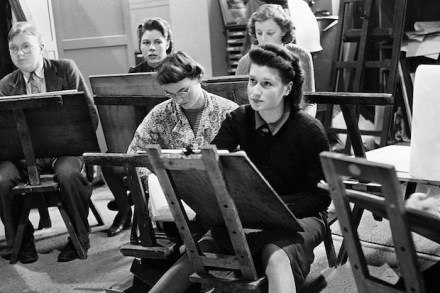
The curious thing about an art room is that you never remember the look of the place. Each summer, a school art room sloughs its skin: life drawings are unpinned from the walls, maquettes carried home for the holidays, canvases taken off easels, portfolios collected by school leavers, the whole place stripped of colour and finery. The room is white and empty again, a canvas primed for September. What stays from year to year and what lingers in the senses of former pupils is the smell. Chalk and charcoal, oils and turpentine, wet clay and slip mix, Swarfega jelly and Pritt Stick, sugar paper (a smell like damp hymn-books) and the heady, headachy vapour of hot glue guns.