Laura Freeman

Laura Freeman

Brits in Paris

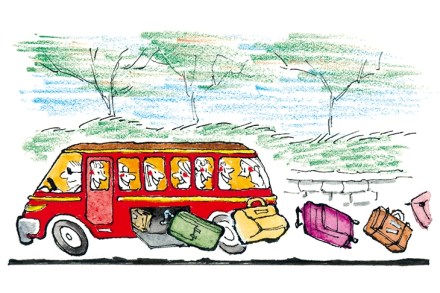
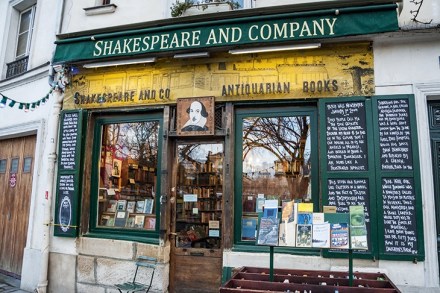
‘Yes, it’s here!’ says the sign above the English épicerie in Paris. ‘Yes, at last,’ thinks the starved expat wandering in a desert of croissants, magret de canard and monts blancs. Now for some real food: Fray Bentos pies, Quaker Oats, Fentimans lemonade, HP Sauce, Marmite, Tetley’s, Twinings, Dorset cereals, Cadbury’s Fruit & Nut, Altoids mints and Macsween  haggis. As a sop to Americans: Pop-Tarts, Lucky Charms, Aunt Jemima’s pancakes and marshmallow fluff in a jar. I know an Englishman who walks the length of the Canal Saint-Martin for proper Yorkshire Tea. There is a Pont cartoon ‘The British Character: Importance of Tea’ which shows four doughty picnickers getting an oil-stove and kettle going in a gale.
Chilling out

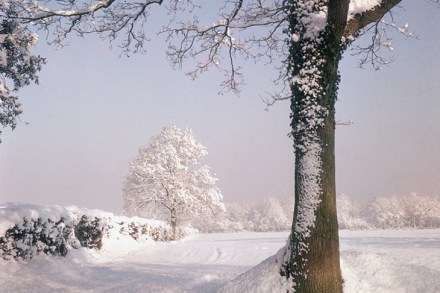
The Royal Ballet’s Les Patineurs is January as you would wish it. No slush, no new-year sales, no streaming chest colds. Winter, as imagined by Frederick Ashton, is an eternal ice rink lit by Chinese lanterns hung from icing-sugar branches. Ashton’s choreography is ingenious. His dancers really do seem to glide, the boards of the stage to freeze. You believe completely that they are on skates, not slippers. The men wear sheepskin jackets, the women bonnets and polka-dot tulle. Sleigh bells ring and fresh flakes fall. The ensemble slip, slide and dance a skating conga. Fumi Kaneko and William Bracewell are a Torvill-and-Dean dream in the pas de deux. Kaneko is light, flowing, sweetly flustered as her partner tips her upside-down.

Winter wonderland | 13 December 2018

Not another Nutcracker, I thought on the way to the Opera House. Haven’t we had our fill of Sugar Plums? I took my seat, the Grinch of Covent Garden, wondering if we couldn’t have The Winter’s Tale for a change. The lights went down, the orchestra assembled and within six bars of Tchaikovsky’s irresistibly sparkling score I was sinking into my seat as into a bath of hot Glühwein and contentedly sighing: bring on the dancing snowflakes… Peter Wright’s production, with sets and costumes by Julia Trevelyan Oman, remains a midwinter night’s dream of Lebkuchen cosiness: snow-capped gables, Biedermeier comfort, goffered mob caps and Fezziwig frock coats, as pretty as an album of découpage. Anna Rose O’Sullivan is Clara.

Being snowed-in

It took three hours for cabin fever to set in. Last Christmas, snowed in at the Oxfordshire homestead, my brother Ed and I, cooped up, cross, snappish, reverted to childhood squabbling. There’s a photo on my phone of Ed’s dog Rags standing at the kitchen door looking mournfully through the glass. We did let her out, but there are few sights so pitiable as a Chihuahua--Pomeranian trying to gambol, shivering, through four inches of snow. The first afternoon, I paced the upstairs corridor wondering how long before I went full Jack Torrance in The Shining. ‘All snow and no walk makes Laura a dull girl…’ By the third day, I was over the hump and well into hygge. Sheepskin socks, cashmere bobble hat, collected works of Somerset Maugham.

Some day their prince will come

The Royal Ballet is a company in search of a prince. It has no lack of dancing princesses. You could search the kingdom and find no lovelier dancers than Marianela Nunez, Lauren Cuthbertson, Francesca Hayward, Natalia Osipova, Akane Takada, Sarah Lamb, Laura Morera and Yasmine Naghdi. But a true prince is as rare as a golden egg. Since Sergei Polunin went so energetically awol in 2012, the Royal Ballet has lacked a male principal with all four virtues of the leading man: classic handsome looks, height, faultless technique and some gift as an actor. Polunin had it all. He was dishy, dashing and dangerous. He had a fifth quality, too: seductive, flaring charisma. The company was less without him, and he lost without them.

Tigers and tutus

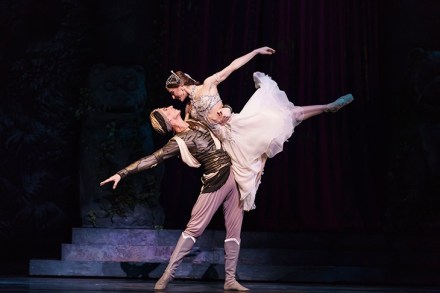
La Bayadère opens with a sacred flame and ends with an earthquake. In between, Marius Petipa’s ballet of 1877 gives us an India of the imagination, an India that never was. It is a place of tigers and tutus, scimitars and slippers. Cultural appropriation, you say? But who could object when it’s all so Pondicherry pretty: a durbar dream of silk harem pants, beaded bracelets, sun-goddess gowns, swags of hibiscus, palanquins, hookah pipes, snakes, divans and dances of the seven tie-dyed veils. The temple backdrops are gorgeous and preposterous. I’m the king of the swingers, oh… Besides you can hardly culturally appropriate when the company of the Royal Ballet is the grandest of grand bazaars.

The Insta pilgrims

On Sunday morning, in Puy-en-Velay, I climbed the 275 volcanic steps to the tiny chapel of Rocher Saint-Michel d’Aiguilhe. There, in the gloaming, among the silent stones that have stood on this site for 11 centuries, it was almost possible to imagine the awe of those very first Christian pilgrims who in the 10th century… CLICK! CLICK! CLICK! Ah yes, the sacred selfie, now as much a part of the modern Camino de Santiago de Compostela as the rosary, the walking stick and the scallop shell. A Catholic grandmother taking photographs of her penitent grandson, devoutly picking his nose. A teenager snapping Insta-incense shots. A honeymooning couple in walking boots taking turns to light candles for the camera.

Wickedness in wax

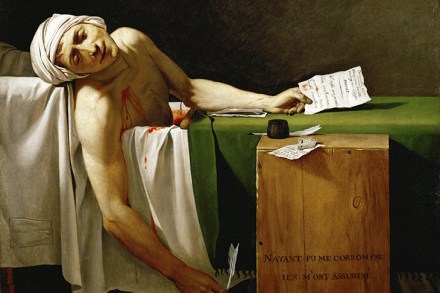
The reader of Edward Carey’s Little must have a tender heart and a strong stomach. You will weep, you will applaud, you will wonder if your nerves can take it, but most of all you will shudder. In this gloriously gruesome imagining of the girlhood of Marie Tussaud, mistress of wax, fleas will bite, rats will run and heads will roll and roll and roll. Guts’n’gore galore: I bloody loved it. Carey, author of the children’s Iremonger Trilogy, tells his tale with gusto. If this is a fairy story then Marie is more Rumpelstiltskin than Rapunzel. Her nose is hooked, her chin pointed, her eyes short-sighted. Even in womanhood she is tiny. They don’t call her Little for nothing. Little Marie with big dreams. Or should that be nightmares?

MacMillan’s #MeToo minefield

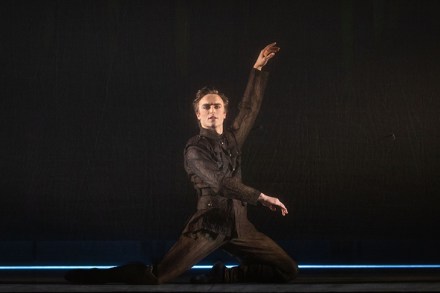
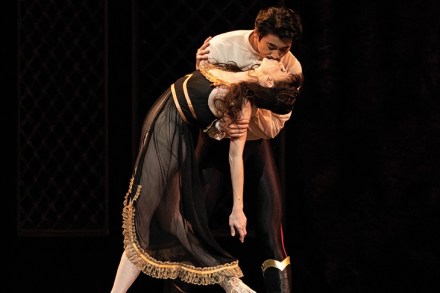
Kenneth MacMillan’s Mayerling is a #MeToo minefield. Crown Prince Rudolf of Austria-Hungary is a serial seducer, a man of many mistresses, a grabber of princesses. Were he alive and kissing today, he’d check himself into an Arizona rehab clinic. In 1889, it was laudanum and a loaded pistol. Rudolf ought to be tormented, driven by ennui and the oppression of the imperial court to darker and darker thrills. Ryoichi Hirano, who opens the Royal Ballet’s 2018/19 season as the Crown Prince, is not dark enough. It is his debut as Rudolf and his performance is studied and contained. Hirano is handsome, tall, Apollonian.

The stirrer and the monk

Sometimes Andrea Mantegna was just showing off. For the Palazzo Ducale in Mantua, he painted a false ceiling above the Camera degli Sposi. Around a great trompe l’oeil oculus, apparently open to the sky, assorted gawpers and cherubs lean nosily over the parapet: ‘What’s going on down there, then?’ Only the Duke and Duchess of Gonzaga entertaining their friends from Ferrara. A terracotta pot is half off the edge, supported only by a thin rod. One nudge from a misbehaving putto and — whoops! — just missed the Duchess. Some of the putti stick their heads through the trellis. Another stands on a ledge, flashing us his bare, plump, crinkly bottom, brilliantly foreshortened by Mantegna. Giovanni Bellini’s figures tend not to show us their bums.

Round the horn

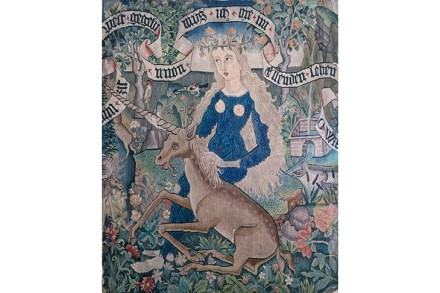
After the England football team beat Tunisia at this summer’s World Cup, they celebrated with a swimming-pool race on inflatable unicorns. Purple hooves, rainbow manes, cutesy eyes, yellow horns like upended Cornetto cones. The millennial unicorn is unrecognisable from the medieval. The proud unicorns of bestiaries and courtly romances have become the twinkling Bambis of Instagram. Search #unicorn (more than nine million posts) and canter into a pastel clearing of long lashes, swishy tails and crystal horns. ‘My favourite colour,’ announces one unicorn, pink, prancing, wide-eyed, ‘is glitter.’ Compare the simpering My Little Unicorn of the emoji palette with the noble creature in the ‘Unicorn Tapestries’ (c.

The Tiger trap

There is a Tiger on the loose. It is stalking our high streets. It is prowling our train stations. It has cubs in every shopping mall. It is the Tiger of Tat. And when it roars, it roars: BUY. Tiger, a home accessories chain which opened its first UK shop in 2005, is an emporium of the ephemeral, a grand bazaar of the banal. Here is everything you never needed: oddments and sodments, party bits and barbecue bobs, plastic flotsam and cardboard jetsam. Come buy, come buy! Whoopee cushions and avocado stress-balls, spangled hula hoops and fingerless yoga mittens, cheerleaders’ pompoms and sequinned bow ties. There are walls of coloured playground ‘slime’, tubs of gunk in lurid colours. Everything is something else. A Sellotape dispenser in the shape of a frog.

The bad boys of Naples

Goodnight, Caecilius. Goodnight, Metella. Farewell, faithful Cerberus the dog. What a fate. Buried under the ash and rock at Pompeii. ‘Eheu,’ as they say in the Cambridge Latin Course. ‘Oh dear, oh no.’ But what’s this? A boat leaving the Bay of Naples… A young man on board… Coughing black dust, but… alive. Yes, it’s Quintus, sailing to safety and Book Two. Here we will learn about Quintus’s further adventures in Roman Britain, trips to the baths at Aquae Sulis and an audience with good King Cogidubnus. What fun we had with Caecilius and Co. What bread, what circuses. What larks with Grumio and Clemens, the two buffoonish slaves.

Colouring in the past

There is something of The Wizard of Oz about Marina Amaral’s photographs. She whisks us from black-and-white Kansas to shimmering Technicolor Oz. When Howard Carter leans over Tutankhamun’s open sarcophagus (1922), he does so in the glare of pharaonic gold. A photograph of fallen American soldiers on the Gettysburg battlefield (1863) shocks the more when we see the colour of the blood soaking through shirts. The Javanese dancers who performed at the Exposition Universelle in Paris (1889) are gorgeous in madder pinks, jades and golds.

Paris notebook | 26 July 2018

‘Problème est masculin; solution est féminine,’ says Brigitte, the adored French teacher at the British embassy in Paris. Good way to remember your ‘les’ and ‘las’. If only it were true. Theresa May has not — yet — solved Brexit. Angela Merkel has not resolved the migrant crisis. Anne Hidalgo, the city’s mayor, has not flushed out its rats. If she fails at re-election, it will be on pest control and tent cities. A sign on the Square du Temple gates asks picnickers to leave no croissant crumbs behind. It attracts the rats. Below, in black marker: ‘Et les Algériens?’ Not nice. But tempers run high in hot summers.  The morning after the World Cup final an email went around the embassy.

Grim and glorious

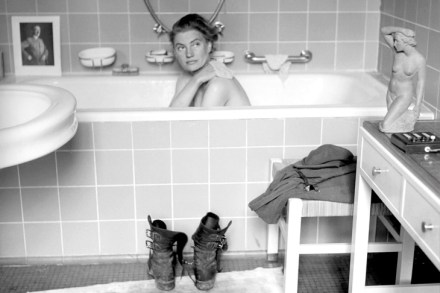
Tick, tock. Tick, tock. Stay too long in the Lee Miller exhibition at the Hepworth Wakefield and the metronome might drive you mad. Considerate curators will only set it swinging in stints to spare the gallery guards. Man Ray, who made the metronome ‘Object of Destruction’ (1923), meant it to infuriate. His assembled sculpture came with instructions. ‘Cut the eye from a photograph of one who has been loved but is seen no more. Attach the eye to the pendulum of a metronome and regulate the weight to suit the tempo desired. Keep going to the limit of endurance. With a hammer well-aimed, try to destroy the whole at a single blow.’ Tick, tock. Tick, tock. Smash. The eye on Man Ray’s metronome was Lee Miller’s, beautiful, blue, bewitching.

Man of war

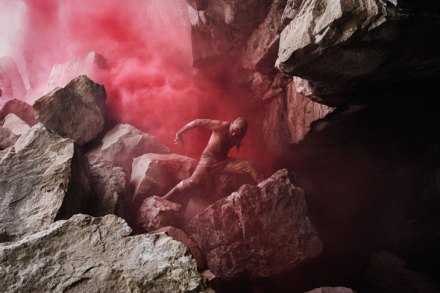
‘Sunil Lanba, Salman Quaraishi, Omar Syed…’ Names play from a crackling gramophone. We hear what they were before the war. Teacher. Engineer. Dancer. And what they endured during it. ‘I put down telephone cables in the mud,’ says one man. ‘Voices in the mud. Half of them already dead, sir.’ Already dead repeats and repeats. A juddering stuck record. Akram Khan’s forgotten soldier — one of 1.5 million Indian men who fought in the trenches in the first world war — is also stuck. In Xenos, Khan’s last performance, though he will continue his career as a choreographer, a shell-shocked Indian sepoy has returned home in body — the Indian scene is set by percussionist B.C.

Out of order

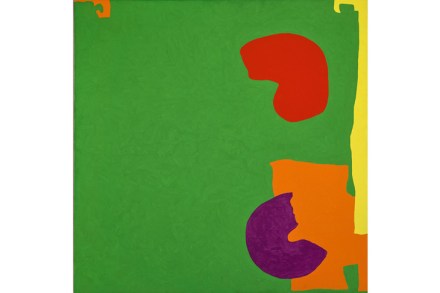
Patrick Heron’s paintings of the 1950s melt like ice creams. You want to run your tongue along the canvas and catch the drips. They capture a sense of summer holiday sea-and-scampi freedom. When Heron (1920–99) was five, his father, a blouse and silk-scarf manufacturer, moved from Leeds to St Ives in Cornwall. Heron played with the children of the potter Bernard Leach, and with Peter Lanyon, a friend from Sunnycroft primary school and a future painter, founded the Golden Harp Club, a society for the preservation of culture in England. After the Slade School of Fine Art in London, Heron returned to St Ives in 1944 on an ‘approved placement’ for conscientious objectors at the Leach Pottery. He met Ben Nicholson, Barbara Hepworth and Naum Gabo.

The south of France

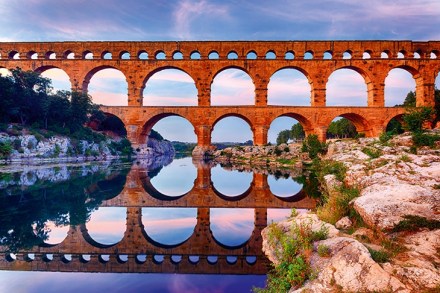
‘Saint-Tropez?’ said the French mother of a friend. ‘C’est un peu… “tacky”.’ She was distressed to think of our taking a house there — really, we were nearer Saint Paul de Vence, where they make artists, than San Trop, where they make tanning lotion — and suggested we stay with her in Provence. She promised lavender fields, cathedrals, boules in shady squares. ‘Vraiment civilisé.’ There are two souths of France. The tacky and the civilisé. Those who go to Aix (for Cézanne), Arles (Van Gogh) and Avignon (popes) think themselves a baskets--and-espadrilles cut above the Odabash girls and Vilebrequin boys of Cannes, Saint-Tropez and Cap d’Antibes hoping to be asked to a yacht.

The emoji con

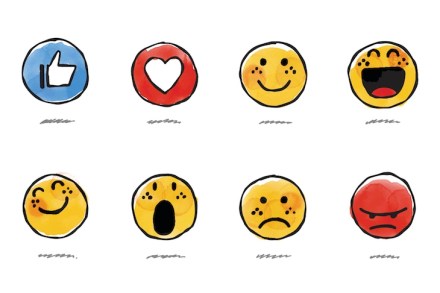
Smiley face. Sad face. Smoochy face. Sick face. Edvard Munch ‘Scream’ face. How are you feeling today? Any of the above? When I worked as a teacher at a Saturday school for children who were struggling with English and maths, my pupils, all of whom were primary school age, had two emotions: they were ‘good’ (breaktime) or they were ‘sad’ (seven times table, spelling test). Sometimes, when teaching one-on-one, working our way through cat, cat, cats and mat, mat, mats, with the boys who were furthest behind, I would ask: ‘How do you feel about school?’ They would say: ‘I feel sad.’ But they didn’t mean that. They meant: I feel frustrated. I feel thwarted. I feel ashamed, persecuted, wronged, neglected.