Laura Freeman

Laura Freeman

Women and children first

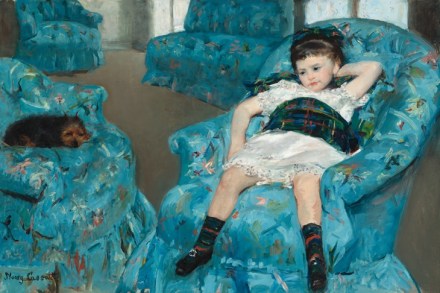
A lady licking an envelope. An intimate thing. It might be only the bill from the coal-man she’s paying, but it has the feel of something else: an assignation, a confession, an apology, a breaking-off. Would this woman in her deep-blue day dress and jacket be so unguarded if the artist had been a man? Mary Cassatt (1844–1926) was a femme sérieuse who painted women of quick wits and tender instincts. No grubby models, no ballet rats, no laundresses, no absinthe. Her sitters, you feel, would write a thank-you note, send flowers, recommend a dressmaker. Mary Cassatt: An American Impressionist in Paris, at the Musée Jacquemart-André, is the first French exhibition to be dedicated to the Pittsburgh-born painter since her death.

What does the French white van man think about Brexit?

I am living in Paris in the unofficial role of Diplomatic Wag. Though since I am neither wife nor girlfriend, but fiancée, or, in best Franglais, la vielle balle et chaîne, I have been searching for a new acronym. Foho (Foreign Office Hanger On)? Andy is a ‘Directeur de SIN’, a demonic job description out of C.S. Lewis’s The Screwtape Letters. SIN is the government’s Science and Innovation Network, promoting collaboration between international scientists. There is goodwill in laboratories on both sides of the Channel to go on working together post-You-Know-What. Brexit is pronounced to rhyme with Brigitte, as in Bardot. Parisians ask if you’re American or English and when you say English they bring up Brexitte.

Acropolis now

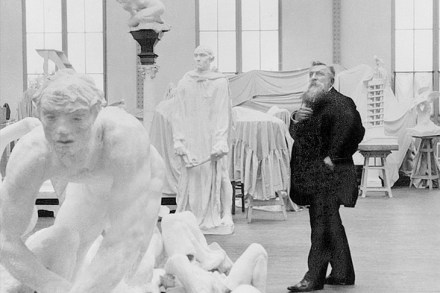
‘My Acropolis,’ Auguste Rodin called his house at Meudon. Here, the sculptor made a Parthenon above Paris. Surrounded by statues of ‘mutilated gods’, he cast himself as the Phidias of the age. His collection was part cabinet of curiosities, part charnel house. He bought Nile crocodiles and Peking ginger jars, painted sarcophagi and chipped red-figure vases. Crowded among his 6,000 Greek, Roman, Egyptian, Assyrian, Chinese and Japanese objects were his own plasters, bronzes and clay models: hands by the hundred, legs vast and trunkless, arms beckoning, fidgeting, reaching. Isadora Duncan set up her ‘Dionysian’ dance school nearby to teach Hellenic rhythms.

Paris Notebook

The French President says he wants to rule as a Jupiter — but he doesn’t look like a Jupiter to me. Not the bearded beefcake painted by Rubens in the Louvre, anyway. Macron’s more a clean-shaven Mercury, messenger god and patron deity of the financial services industry. So far the message has been: ‘En Marche!’ Forwards! But forwards where? ‘Macron est nul,’ says the graffiti at Porte Maillot. Imiss London’s parks. Parisians tell me where not to walk. The Bois de Boulogne? Pick-up joint. The Seine? Rats. I have been taking the Métro to Château de Vincennes to walk in the woods. There’s a migrant camp pitched along one avenue. I never see a soul, only the hummocky hoods of tents under the trees.

Tawdry lustre

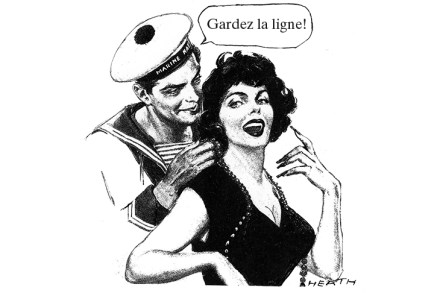
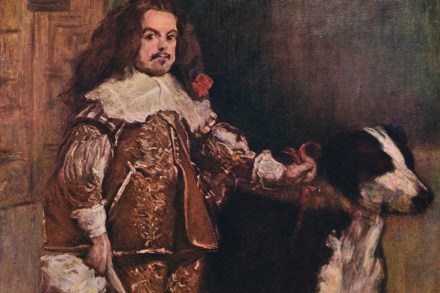
‘Nine hours,’ boasted my friend the curator about his trip to the Prado. Nine! Two hours is my upper limit in a gallery. After that I’m gasping for the tea room and gift shop. Knowing my lack of stamina, my own trip to the Prado was focused: just Velázquez and Goya. Then lunch. And a bit of Rubens, because that large room of lovely bottoms is so ‘Hello, sailor!’ it would be rude not to look. It helps to have a mind’s gallery of Diego Velázquez portraits while reading Amy Sackville’s novel Painter to the King. Not essential, but definitely enriching. If you haven’t a Madrid mini-break booked, have a nose around the Prado collection online.

Monet in London

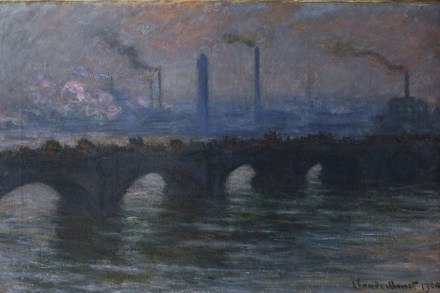
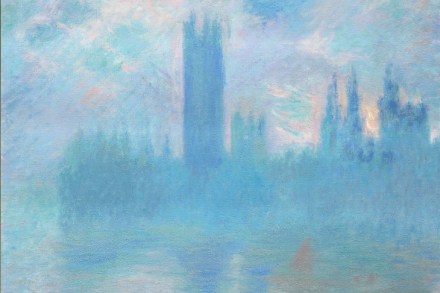
The Savoy was too sumptuous, complained Claude Monet, returning to the hotel in 1904. His rooms — one for sleeping, one for easels, canvases, palettes, with a balcony over the Thames — were too distractingly plush. He had been happier painting with his knees up to his chin in his ‘bateau atelier’ (a rowboat studio) on the Seine at Argenteuil. Or hidden behind a screen in the ladies’ changing room on the first floor of Monsieur Levy’s dress shop opposite Rouen Cathedral. Or in the little room for storing bottles in a nightclub with a view of Leicester Square. The place was a sale boîte — ‘dirty dive’ —according to Monet. But what a wonderful, smudgy, night-on-the-tiles, street-lamps-and-sudden-downpour picture he produced.

Heaven and earth | 28 March 2018

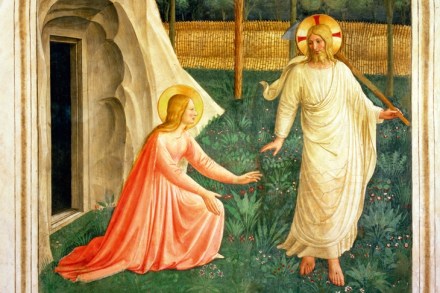
In Nicolas Poussin’s ‘Noli Me Tangere’ (1653) Christ stands with his heel on a spade. He appears, in his rough allotment smock and sandals, to be digging up carrots. In Abraham Janssens oil painting (c.1620), Christ strides among parsnips and pumpkins, cauliflowers and marrows. Mary Magdalene kneels in an artichoke bed. In Fra Angelico’s fresco version — or, rather, vision — for San Marco in Florence (c.1438–50), Christ shoulders a hoe as he hovers above a millefiore carpet of wildflowers. His pristine robes give him away. No gardener would wear white to turn the compost. The Noli Me Tangere scene is the loveliest in the cycle of Christian paintings that tell the story of Easter.

The dying art of owning a decent pen

‘I’m afraid you do not like your pen,’ says Miss Bingley to Mr Darcy in Pride and Prejudice. ‘Let me mend it for you. I mend pens remarkably well.’ You know then — if you didn’t suspect it already — that Mr Darcy could never marry Miss Bingley. Is there anything so maddening as someone interfering with one’s pen? ‘Could I borrow your pen for a moment?’ they ask as they jot down a shopping list or scribble a booking reference. ‘No!’ you want to scream in possessive anguish. ‘It’s mine!’ They are sure to split the nib, chew the end, absentmindedly tug the clip that fixes it to the front of your diary. That’s if you do get it back.

Oh, what a circus

‘There’s a sucker born every minute.’ That was the P.T. Barnum battle cry. It has come to have a ring of contempt, but no one loved a sucker more than Barnum. Entertain them, he said. Thrill them, shock them. Make ’em laugh, make ’em cry. Give ’em the old razzle-dazzle. And if, in the course of the evening, you extract from them a penny, a shilling, a dollar… Well, have you not given them a story to tell their friends tomorrow? His critics called him a scoundrel, a humbug, a con man. To the Times he was ‘the most adventurous and least scrupulous of showmen… an apotheosis of notoriety’. His defence? What he did wasn’t cheating or swindling: it was show business.

Worse for wear

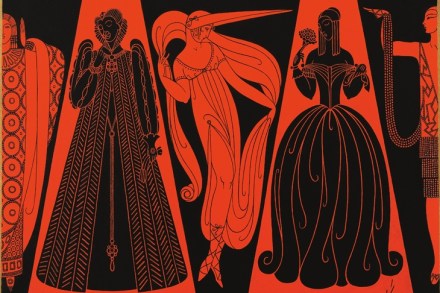
Erté was destined for the imperial navy. Failing that, the army. His father and uncle had been navy men. There were painters and sculptors on his mother’s side, but they were thought very frivolous. Romain de Tirtoff (‘Erté’ came from the French pronunciation of his initials) was born in 1892 at the St Petersburg Naval School where his father Pyotr was inspector. When he was a little boy, his aunt bought him a set of wooden soldiers. Instinctively, he hated war, violence and, above all, uniforms. He burst into tears and threw the box out of the window. What he liked best was to play with his mother’s old perfume bottles, which he dressed in scraps of lace to make ballerinas.

Pulling through

Grief is not being able to eat a small boiled egg. ‘Could you face an egg?’ the widowed Jean asks her daughter Eve in Susie Boyt’s sixth novel, Love & Fame. It is not long after Jean’s husband, Eve’s father, John Swift, a sitcom actor, a national treasure, has died. Eve can’t face an egg; Jean has lost her appetite for anything but eggs. One small boiled egg, morning, noon and night. This is a clever, wise, often sad book about failure, dashed hopes and bereavement. It could be bleak, but Boyt is fiercely funny, skewering fads and self-help trends. A professional de-clutterer in the Marie Kondo mode is called ‘the Prim Reaper’. The novel opens with a stop-start list of modern platitudes and wellness nuggets: You tried Tranquiltea?

Wet weather boots

‘Foot – foot – foot – foot – sloggin’ over Africa — / (Boots – boots – boots – boots – movin’ up and down again!).’ I do like Rudyard Kipling. I know I’m not supposed to. Trigger warning: empire, jungle stereotypes, microaggressions against monkeys, cultural appropriation of other people’s elephants. But what a stomping great marching poem ‘Boots’ is. Learn at least the first verse by heart: it’s the right rhythm for walking when the rain comes on and you’re miles from home. Boots–boots–boots–boots. Imagine the dust stamped up from the veld.

London calling | 26 October 2017

Madame Monet was bored. Wouldn’t you have been? Exiled to London in the bad, cold winter of 1870–71. In rented rooms above Shaftesbury Avenue, with a three-year-old son in tow, a husband who couldn’t speak English, and no money coming in. Every day roast beef and potatoes and fog, fog, fog choking the city. ‘Brouillardopolis’, French writers called it. Camille Monet had offered to give language lessons, but when she hadn’t a pupil — and Claude hadn’t a commission — she let him paint her, listless on a chaise-longue, book unread on her lap. Her malaise was ‘l’exilité’ — the low, homesick spirits of the French in England.

Cabbages and kings

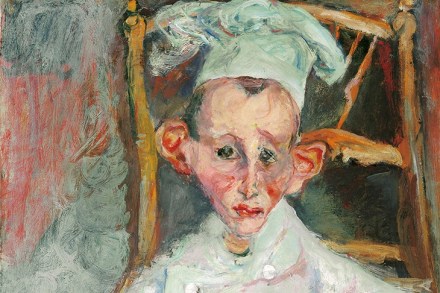
The first pastry cook Chaïm Soutine painted came out like a collapsed soufflé. The sitter for ‘The Pastry Cook’ (c.1919) was Rémy Zocchetto, a 17-year-old apprentice at the Garetta Hotel in Céret in southern France. He is deflated, lopsided, slouch-shouldered, in a chef’s jacket several sizes too big for him. His hat is askew, his body a scramble of egg-white paint. Soutine painted at least six cooks in their kitchen livery. In their chef’s whites they look like meringues that have not set (‘Pastry Cook of Cagnes’, 1922), îles flottantes that do not float (‘Cook of Cagnes’, c.1924), and, in the case of the ‘Little Pastry Cook’ (c.

I spy | 28 September 2017

Where was Degas standing as he sketched his ‘Laundresses’ (c.1882–4)? Did he watch the two women from behind sheets hanging to dry? Or was he hidden by steam from the basins? The laundry women are unselfconscious, unguarded. One reads aloud from a list, calling out shirts, collars, cuffs to be washed and ironed. Another leans over her workbench, staring into the placket of a folded shirt like Narcissus into his pool. Neither is the least bit bothered by the artist making a rapid chalk sketch to be worked up later in pastel. Nor the two men in ‘At the Café de Châteaudun’ (c.1869–71), reading a newspaper with monocle and magnifying glass. Degas might be peering at them over the top of his menu. A coffee, a croissant, a sneaking sketch.

Box of delights | 7 September 2017

No mother, wrote Roald Dahl in his childhood memoir Boy, would send her son off to prep school without, at the very least, the following in his tuck box: a home-made currant cake, a packet of squashed-fly biscuits, a couple of oranges, an apple, a banana, a pot of strawberry jam or Marmite, a bar of chocolate, a bag of Liquorice Allsorts, and a tin of Bassett’s lemonade powder. To these, a boy would add ‘all manner of treasures’, such as magnets, pocket knifes, balls of string, clockwork racing cars, lead soldiers, tiddlywinks, catapults, stink bombs and Mexican jumping beans. One boy in Dahl’s class at St Peter’s in Weston-super-Mare drilled an air hole in his pinewood tuck box and kept a pet frog, which he fed with slugs.

Let’s redo lunch

As a young sub-editor on the Times in 1926, Graham Greene, future author of The Quiet American and Brighton Rock, had his meals in the office canteen. Elevenpence bought two kippers, a pot of tea and a slice of syrup roll. Plenty to keep a man going through a long subbing shift. Is that ‘pot’ of tea not civilised, with its suggestion of several cups, of the ceremony of brewing and pouring? With a hot main and a hot pudding eaten away from one’s typewriter? Today’s office worker eats al desko. Quick dash to Pret, Eat, Itsu, Leon — it’s as if we haven’t time for more than four letters — for the same sandwich, sushi box or wrap as yesterday. Back to wolf down bacon, lettuce and tomato before a one o’clock meeting.

It’s got to be perfect

When I order a cup of tea in Costa, the barista says: ‘Perfect!’ I ask for tap water in a restaurant: ‘Perfect!’ I buy a card in Paperchase and at the till it’s: ‘Perfect!’ And: ‘Perfect!’ again as I put in my PIN. ‘Perfect!’ when I say I don’t need a bag. It used to be ‘Great!’ and even that was too ecstatic a response to a side-order of creamed spinach. Now, there’s been a service industry upgrade. No longer is the customer always right; they are perfect. A little thing, yes, but a symptom of a wider mania for perfection. Everything from breakfast muesli to career, home and family must be perfect. Perfect interiors. The perfect diet. A perfect body.

Something nasty in the woodshed

I’ve diagnosed myself with early onset cottage-itis. It’s not supposed to happen for another decade, but at 29 I dream of just the smallest bolthole in the country: a bothy, a gatehouse, a folly below the ha-ha in someone else’s stately home. A shepherd’s hut in tasteful shades of prime ministerial greige. Liberated from the city I would be a nicer, calmer, more industrious person. I would write my magnum opus and be self-sufficient in rhubarb crumble. Every morning when the drills start on the cycle super-highway that will speed the passage of Deliveroo couriers through west London, I put my head in my hands and will myself into a gingerbread cottage in the country. Be careful what you wish for, is Amanda Craig’s message.

There will be blood | 29 June 2017

Wyndham Lewis was a painter, poet, publisher and picker of fights. No target was too grand or too trivial: sentimental Victorians and the modern man of government; shark art dealers and the ‘atrocious’ Royal Academy; compilers of honours lists and editors of literary reviews; thin flapper girls and the fat ‘Belgian bumpkins’ of Peter Paul Rubens; men who read detective stories and women who liked bowl-of-apple paintings by second-rate Cézannes. People who lived in Putney. The poet Edith Sitwell, who sat for an unfinished portrait by Lewis, was one of his ‘most hoary, tried and reliable enemies…I do not think I should be exaggerating if I described myself as Miss Edith Sitwell’s favourite enemy.’ Sitwell was a fierce opponent.