Laura Freeman

Laura Freeman

Social climbing through the basement

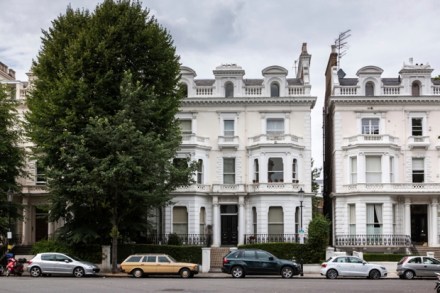
This book has brought out my inner Miliband. A punitive mansion tax on all properties with garden squares in Notting Hill? Hell, yes! Friends, I’d go further: flight taxes on trips to Mustique; VAT at 27.5 per cent on Stella McCartney running shoes, Daylesford groceries, Yogalates classes, Vita Coco coconut water, almond milk and chia seeds. All prep schools which attract paparazzi shooting supermodels dropping off their children to be abolished, and little Fox and Memphis sent to the nearest inner-city comp not yet turned into an academy. As for iceberg basements: a direct payment of £1.5 million to the treasury for one storey, £2.5 million for two, £4.15 million for three. Call it the Tax Titannica.

I second that emoji

On the way home from dinner with girlfriends I composed my usual thank-you text. Smashing company, delicious food, must see you all again. A couple of kisses. Feeling this wasn’t enough, I added a line of coloured pictures: an ice cream in a cone, a slice of cake with a strawberry on top, a bar of chocolate, a cup of steaming coffee — near enough representations of the puddings we had shared. The replies came back: smiley faces, rows of hearts, bowls of spaghetti (it had been an Italian), martini glasses. My friends and I are in our late twenties and early thirties, yet we communicate using emoji: the sort of cute, pastel-coloured symbols that we’d have been embarrassed to have in our primary school sticker albums.

Pursuing the perfect scoop

Paradise City, Elizabeth Day’s third novel, comes with an accompanying essay on The Pool — an online magazine for the Instagram, iPhone woman. Day, a feature writer for the Observer, discusses the novel’s male protagonist (you couldn’t call him hero) Sir Howard Pink, an East End Jewish boy turned rag-trade multimillionaire. Day urges women to stop being so self-effacing, people-pleasing, and permanently apologetic and instead to ‘Be More Howard’. ‘He sprung on to the page as unashamedly male and blessed with a defiant sense of his own entitlement,’ she writes. ‘He saw money, sex and power as his due. He took what he could, where he could get it and the world rewarded him for it.

The age of the Skype Dad

Could you be a useful and loving father to your children if you only ever saw them on a computer screen? Most of us would say no. So much of being a parent is about being physically there. It’s curious then that our courts seem to think the opposite — that a chat via Skype or on an iPad is all a father needs to bond with and care for his child. British judges, like American ones, have to deal with increasingly complicated custody cases every year. We travel more these days, and so we meet our partners abroad. When these marriages break up (as four in ten marriages do), a foreign wife often longs to take the kids and head back home.

Potato prints, paintings and the Soviet Union: the real Miss Jean Brodie

During the second world war, when not only food, but paper and artists’ materials were scarce, Peggy Angus made a virtue of necessity. Potatoes were one of the few foods not rationed, so she began cutting them in half, carving designs into the cut side and printing them onto old newspapers in repeated patterns of oak leaves, smiling suns, waves, chevrons and Welsh dragons. It was with these playful, naïve designs — which she later turned into tiles and wallpapers — that she made her name. Angus, like Eric Ravilious and Edward Bawden, her contemporaries at the Royal College of Art, moved easily between media: potato prints, silkscreens, oil paintings, watercolours, and ‘stained glass’ made from coloured tissue paper.

The Angel of Charleston, by Stewart MacKay – review

Above the range in the kitchen at Charleston House is a painted inscription: ‘Grace Higgens worked here for 50 years & more, she was a good friend to all Charlestonians.’ The words are those of the art historian Quentin Bell, once one of Grace’s young charges. Grace was taken on by the Bloomsbury group painter Vanessa Bell in 1920 to be nursemaid to her three children: Julian, 12, Quentin, nine (by her husband Clive Bell) and one-year-old Angelica (by her friend and lover Duncan Grant). She was the heart and hearth of Charleston, Vanessa’s studio-cum-farmhouse in Sussex. Where Vanessa was austere and Duncan distracted, Grace was warm, smelling always of ‘moist, homemade fruitcake’.