Laura Freeman

Laura Freeman

Sumptuous and saucy: Compton Verney’s Cranach show reviewed

‘Naughty little nudes,’ my history of art teacher used to say of Cranach’s Eves and Venuses. Aren’t they just? Coquettish and compact. Kenneth Clark thought they had ‘chic’. Cranach’s nudes are rarely truly naked. They wear Ascot hats, golden chokers, filmy wisps of gossamer girdle. Take the goddess in the National Gallery’s ‘Cupid Complaining to Venus’ (c.1526–7). Don’t you long for her to take off her ostrich feather hat and tickle you with it? ‘Hallo, Jungs.’ See how she plays footsie with a branch of the tree. How she brushes the back of her hand against its trunk. Note the double necklace. Always accessorise.
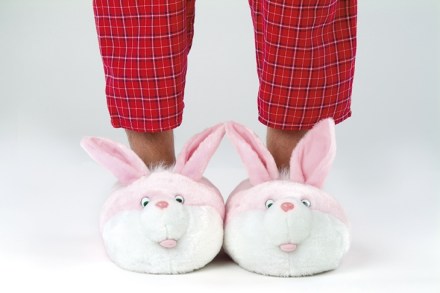
What do your lockdown slippers say about you?

Tartan, monogram, moccasin, clog. What do your slippers say about you? Trick us all you like with your office Manolos, your Loake loafers, your Louboutin mules, it’s the shame-making slippers that will tell us the truth. Fleece-lined slob or kittenish slip-on? Millennial Mahabis or ancestral tapestry? Japanese zori or plaited huarache? In George Bernard Shaw’s Pygmalion, when Henry Higgins returns from the opera and exclaims ‘I wonder where the devil my slippers are!’ the stage directions note: ‘Eliza returns with a pair of large down-at-heel slippers.’ In My Fair Lady they become, under Cecil Beaton’s instruction, a pair of black velvets.

The life of Artemisia Gentileschi is made for Netflix, but it’s the art that really excites

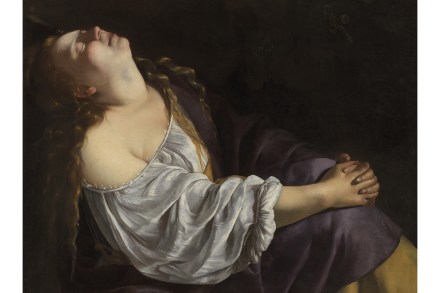
‘It’s true, it’s true, it’s true.’ Over and over she said it. ‘E vero, e vero, e vero.’ It’s true he raped me. It’s true I was a virgin. It’s true all I say. Even under judicial torture, even with cords wrapped around her fingers and pulled tight, she did not waver. ‘E vero.’ These words, spoken by the 17-year-old Artemisia Gentileschi, have come down to us in a trial transcript of 1612. This haunting document, never seen outside the state archives in Rome, will be shown for the first time in the National Gallery’s forthcoming Artemisia exhibition. Artemisia ought to have opened this month. Curator Letizia Treves has been through hell and high water. Italy in lockdown. American flights suspended.

The art of the hermit

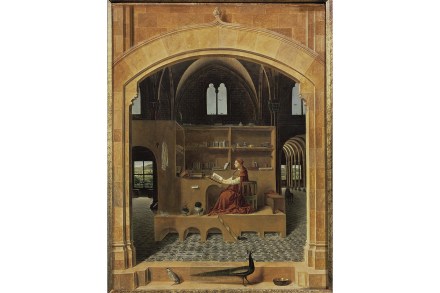
Late in the afternoon on Valentine’s Day, I walked through an almost empty Uffizi. Coronavirus was then a Wuhan phenomenon. Our temperatures had been taken at the airport, but there were no restrictions on travel and those wearing masks looked eccentric. I congratulated myself on finding Florence so quiet. Off-season, I thought smugly. That’s the way to do it. Heaven knows it’s empty now. The painting that caught my eye on that distant-seeming visit was a long, low cassone-shaped painting on the theme of the Thebaid attributed to Fra Angelico (c.1420). The Thebaid is a collection of texts telling of the saints who in the first centuries of Christianity retreated to the barren lands around the Egyptian city of Thebes.

Eco-friendly is not female-friendly

Forgive me, Greta, for I have sinned. It has been five days since my last Waitrose order. I meant to be good and green. To go from Whole Foods to farmers’ market with my canvas bag and eco-conscience. But it was cold and dark and the boys from the supermarket come right to the door. So I filled the bin with plastic wrappers and turtle-trappers and laid waste to my good intentions. I try, I really do. I wash every yoghurt pot, rinse every tin. I carry a KeepCup, a water flask, a folded tote. I trudge to the Edgware Road with empty bottles for shampoo, conditioner and laundry soap and fill them up, one splurting pump at a time. I take off my make-up with washable pads. I reuse envelopes, salvage rags, turn the bed sheets sides-to-middle.

Planet Corona: is this the tipping point for globalisation?

38 min listen

As the coronavirus sweeps across the globe, it's causing businesses, consumers, and governments to rethink their globalised lives. Is this a tipping point for hyper-globalisation (1:00)? Plus, is the government slimming down its Budget plans (13:40)? And last, is it harder to be eco-friendly if you are a woman (26:35)?

The rise and rise of the museum cafe

Saatchi & Saatchi started it. ‘V&A: An ace caff, with quite a nice museum attached,’ said the ad campaign of the late 1980s. Other slogans in the series played on themes of taste and tastiness — ‘Where else do they give you £100,000,000 worth of objets d’art free with every egg salad?’, ‘All right, the mirror’s seen better days but the currant buns are very tasty’ — but it was the ace caff quip that stuck. Egg salad and currant buns seem quaintly retro now. At the V&A last weekend it was seared salmon and caper salsa, cavatelli and butternut squash, beetroot pesto and sriracha wraps. I sat under the olive boughs of the Morris Room and ate my feta and olives to the strains of a baby grand.

You’ll laugh, cry, cringe and covet the hats and bedspreads: Emma reviewed

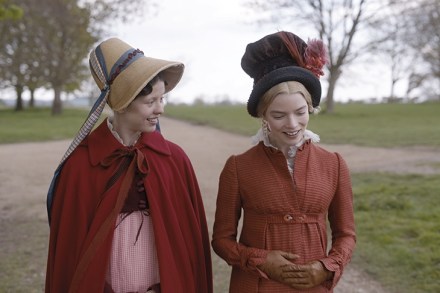
‘Too pretty,’ blithers Miss Bates in the Highbury haberdasher as she plucks at a silken tassel. ‘Too pretty’ goes for all of Autumn de Wilde’s adaptation of Jane Austen’s Emma. If there were an Academy Award for patisserie and passementerie, Emma would win it. The look is Tinkerbell Regency. Emma’s Hartfield is a Barbie Dreamhouse by way of Robert Adam. Her earrings should have their own Instagram account. Any risk of sweetness is salted by exaggeration. This is Emma styled by Gillray, not Gainsborough. The first we see of Mr Knightley is the fly of his breeches, then his boots, then his fine, bare gentleman-farmer’s bottom. Emma lifts up her petticoats to warm the backs of her thighs by the fire.

My step-grandmother would have loved this show: Unbound At Two Temple Place reviewed

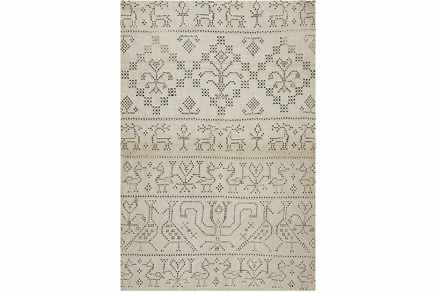
My step-grandmother Connie was an inspired needlewoman. For ten years, as a volunteer for the charity Fine Cell Work, she taught embroidery to inmates at HM Prison Wandsworth. She once told me that she was tired of being a ‘committee woman’: ‘I wanted to be down in the arena with the sawdust.’ She believed in rehabilitation, not punishment. She never asked what her pupils had done; she didn’t want to know. All that mattered was finding calm and purpose in the next stitch. Picture her, silver-haired, elegant, teaching her chaps to embroider pheasants, artichokes and, her favourite, pineapples on to cushions. She was a member of the Royal School of Needlework at Hampton Court and one of the embroideresses who remade the Royal Opera House curtain.

Spiralling tributes to air, flight and lift-off: Naum Gabo at Tate St Ives reviewed

‘Plunderers of the air’, Naum Gabo called the Luftwaffe planes. In Cornwall, during the second world war, Gabo kept cuttings of the attacks over London. One newspaper photo, pasted in his diary, was taken from the Golden Gallery of St Paul’s after a night of incendiary bombs. London looks like Pompeii. Enemy planes were a betrayal. Gabo was entranced by flight. His sculptures are spiralling tributes to air, light and lift-off. After an hour in the Naum Gabo retrospective at Tate St Ives, the first major show of the artist’s work for more than 30 years, you feel a certain springiness about the knees as if you could push off Porthmeor Beach and fly. The Icarus effect. Gabo was entranced by flight.

Chilling: Arthur Pita’s The Little Match Girl at Sadler’s Wells reviewed

Did your feet twitch? That’s the test of The Red Shoes. Did your toes point? Your ankles flex? Your arches ache to dance all night? I defy you to watch Powell and Pressburger’s film of The Red Shoes (1948), inspired by a Hans Christian Andersen story, and not feel the sinister magic right down to your last metatarsal. First staged in 2016, Matthew Bourne’s riff on The Red Shoes is a show about show business. In spirit it is closer to Singin’ in the Rain than the weird Technicolor glamour of Powell and Pressburger. This is a fairy tale about stage flats and spotlights, cigarettes and fur coats, about ballet masters, wardrobe mistresses, sheet music, leotards, bouquets and the barre.

From cartoons to stage design: the genius of Osbert Lancaster

‘Bigger,’ said Sir Osbert Lancaster when asked the difference between his work for the page and for the stage. ‘Definitely bigger.’ For almost 40 years Lancaster was the ‘pocket cartoonist’ for the Daily Express. He had remarked to the features editor that no English newspaper had anything to match the little column-width cartoons of the French papers. ‘Go on,’ said the editor, ‘give us some.’ On 1 January 1939, Lancaster gave them the first of around 10,000 line-drawn cartoons. His subjects were the war, the Blitz, the weather, Stalin, Hitler and Dr Spock, the Swinging Sixties, the Common Market, the test tube baby and the topless swimsuit.

The big burly blokes who make infinitely precise pointe shoes by hand

Pauline, Petrova or Posy? Which Fossil sister are you? Or, rather, which Fossil sister did you hope to be when you first read Noel Streatfeild’s Ballet Shoes? It has to be Posy. The third and last adopted Fossil arrives in a basket with a note — ‘This is the little daughter of a dancer’ — and tiny slippers. For any girl who has ever imagined taking the stage in pointe shoes, the Freed factory in Hackney is a dream of pink satin. Frederick Freed was a shoeman and showman. Ninety years ago, Mr Freed was the star-maker at Gamba, which only made shoes in one width. Then Mr Freed had the idea of adapting the shoe to the dancer, rather than the dancer cramming into the shoe. Mrs Freed was a milliner. Fred did the architecture, Dora the trimmings.

Be more carthorse: why we would all benefit from a little self-loathing

Leaving the auditorium of the Royal Opera House last week after The Sleeping Beauty, I passed a woman taking selfie after selfie in the mirror of the hall. She had snuck out during the curtain call to have the red banquettes to herself. When she should have been applauding Yasmine Naghdi and Francesca Hayward — goddesses, Olympians, immortals — this complete nincompoop was basking in her own glory. All so that someone will post beneath her picture: ‘Hot lady alert.’ If I’d had a bouquet I’d have thrown it at her. We hear a lot about abuse, the coarsening of discourse, the howls of ‘fascist’, ‘nationalist’, ‘snowflake’ and ‘boomer’, the constituents who torment MPs with nightly threats.

Unsettlingly faithful to the spirit of Schiele: Staging Schiele reviewed

‘Come up and see my Schieles.’ Those were the words that ended a friend’s fledgling relationship with an art collector. One evening looking at Egon Schiele’s skinny naked scarecrows was enough. Staging Schiele, a one-act dance piece by choreographer Shobana Jeyasingh, is unsettlingly faithful to the spirit of Schiele’s art. If the skin creeps, if the stalls recoil, then the dancers — one man and three women — have done their job. The opening solo is danced by Dane Hurst stripped to his pants in a powerful display of athletic narcissism. His only partner is a small hand mirror at which he lunges and thrusts. Hurst sprawls and crawls and scratches and writhes and bends his body into double-jointed spider shapes.

A last dose of vitamin D before the clocks go back: Royal Ballet’s triple bill reviewed

Were those gerberas in Francesca Hayward’s bouquet on opening night? Gentlemen admirers take note: no woman, ballerina or otherwise, has ever welcomed a bunch of gerberas. Hayward deserved better for her adorable Dorabella in Enigma Variations. In white flounces and gathered bloomers she lighted the stage with sprightly sweetness in Frederick Ashton’s one-act ballet set to music by Edward Elgar. The moment: Edwardian. The mood: lamentation in the drawing room. The look: tweed, knickerbockers, pipes, monocles, moustaches held on with glue. Julia Trevelyan Oman’s designs set us at a country-house party — William Morris wallpaper, parlour games, cold tea — in a palette of somnolent drabness.

Tat Britain: Museum gift shops are naff – but necessary

Exit through the gift shop. Pick up a postcard, a magnet, a novelty eggcup in the shape of Queen Elizabeth I. Treat yourself to a replica Rosetta Stone, a Babylonian bookend, a build-your-own Leonardo trebuchet. Tuck your little one up at night with a cuddly Anubis the dog. Nicholas Coleridge, chairman of the Victoria & Albert Museum, has put the tat among the pigeons by telling the Cheltenham Literature Festival that the V&A shop is more successful than the BM’s.

Manon can be magnificent, this one was merely meh

Manon: minx or martyr? There are two ways to play Kenneth MacMillan’s courtesan. Is Manon an ingénue, a guileless country girl, pimped by her own brother and corrupted by Monsieur G.M.? Or is she a pleasure hunter, a man-manipulator, a schemer out for all she can get? In the Royal Ballet’s revival of Kenneth MacMillan’s Manon, Sarah Lamb is somewhere in the unsatisfactory middle. Primrose innocence in the first act, half-hearted harlot in the second, shorn urchin in the third. Ryoichi Hirano, as Manon’s brother Lescaut, knows what he’s about. Hirano has a nice line in matadors and caped scoundrels. Every duplicitous turn, every dismissive flick of the wrist, speaks of mercenary betrayal. His Lescaut is superbly disturbing.

You’ll be blubbing over a wooden boulder at David Nash’s show at Towner Art Gallery

Call me soppy, but when the credits rolled on ‘Wooden Boulder’, a film made by earth artist David Nash over 25 years, I was blinking back tears. Funny what the mind will make human. Within a few minutes I started to think of Nash’s boulder, hewn from a storm-struck oak in the Ffestiniog valley in Wales, as ‘the hero of our story’. A hefty hero, weighing half a tonne, but buoyant. In October 1978, Nash launched the boulder into the Bronturnor stream near his studio at Capel Rhiw in the slate-mining village of Blaenau Ffestiniog in Snowdonia. For 25 years, switching from crackling film to high-def digital, Nash filmed the boulder, through snow, rain, heat and gloom of night, as it made its way downstream. Mired, moored, marooned on an inland sea.

The many faces of William ‘Slasher’ Blake

‘Imagination is my world.’ So wrote William Blake. His was a world of ‘historical inventions’. Nelson and Lucifer, Pitt and the Great Red Dragon, chimney sweeps and cherubim, the Surrey Hills and Jerusalem in ruins, the alms houses of Mile End and the vast abyss of Satan’s bosom.  He saw the fires of the Gordon Riots and the serpent in the Garden of Eden. His subjects were Milton and Merlin, Dante and Job, ‘Elegy Written in a Country Churchyard’ and the Book of Revelation. He held infinity in the palm of his hand, yet worked through the night to write and grave all that was on his mind. ‘I have very little of Mr Blake’s company,’ said Catherine Blake with the indulgent sigh of all wives of Great Men.