Isabel Hardman

Isabel Hardman

Isabel Hardman is assistant editor of The Spectator and author of Why We Get the Wrong Politicians. She also presents Radio 4’s Week in Westminster.

Reshuffles can often make matters much worse

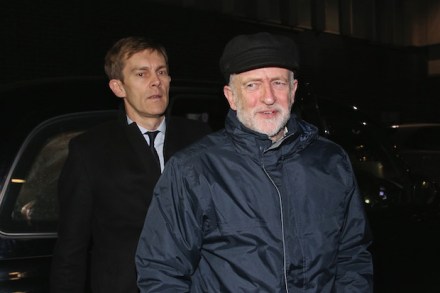
As with most reshuffles, today’s is being viewed largely as a test of the Prime Minister’s strength. Will she move the ministers who aren’t working well in their current posts? Will she underwhelm with what she eventually manages to do? Will she accidentally appoint Chris Grayling to another job for 30 seconds? So far, that test of strength isn’t going so well, with the attention largely focusing on deleted tweets and people getting out of cars. It’s easy on reshuffle day to forget the impact that moving ministers around has on government.

Theresa May’s new year has been more difficult than it should have been

Given everything that happened to her in 2017, Theresa May could be starting this year in a far worse position. But that’s not to say that she hasn’t started in in the best position in the circumstances, either. That the Prime Minister and her team recognise this seemed apparent from her decision to pre-record her Andrew Marr interview, rather than appear live and chance being asked about new awkward stories in the Sunday papers. Perhaps booking a pre-recorded interview is a sign that Number 10 has a bit more of a clue than it did in the months after the snap election, but only really in the sense that it has more of a clue about how to better identify the Prime Minister’s political weaknesses.

Should we blame patients for the NHS crisis?

The whose-fault-is-the-NHS-crisis game has taken some strange twists and turns this week, with the debate bouncing from patients costing the health service £1bn last year to Jeremy Hunt having to apologise to patients for cancelling their non-urgent procedures as a result of the increased pressures on hospitals. Political debate tends to prefer black-and-white and easily identifiable scapegoats, but the health service is too complex for that. Take the missed appointments story. Yes, patients failing to turn up cost the health service a staggering amount. But who are those patients? It turns out that the most likely people to do what the NHS classes as a ‘DNA’ (did not attend) are new mothers with psychiatric appointments, with two DNAs for every five who did turn up.

There’s a much bigger crisis in the NHS than the winter pressures

Whose fault is the current NHS crisis? Today Jeremy Hunt apologised to patients whose operations have been cancelled as a result of serious pressures on hospitals. There are ‘major incidents’ at 16 hospital trusts, and the Royal College of Emergency Medicine is warning that patients who do end up in crowded and chaotic emergency departments ‘are much more likely to have a poorer outcome and even die as a result of their experience’. The Health Secretary said the current situation was ‘absolutely not what I want’, while Theresa May argued that ‘the NHS has been better prepared for this winter than ever before’.

Theresa May shouldn’t overpromise on a reshuffle

Will Theresa May really go for a wide-ranging reshuffle in the next few weeks? Westminster wisdom has long been that it is dangerous to move your top team around, as sacked ministers make troublesome backbenchers. This does ignore the inconvenient truth that most of the trouble that May has faced over the past few months has come from within her Cabinet - albeit with an extra helping of Brexit rebels on the Conservative backbenches too. She is understood to be deliberating over whether to appoint a direct replacement for Damian Green as First Secretary of State, though even if she scraps that role, there is still a hole to fill at the Cabinet Office and on the various powerful committees delivering policy from Brexit to social care.

Breaking: Damian Green resigns from the Government

Damian Green has resigned from the Government following an investigation into his conduct. Below are the letters between the former First Secretary of State and the Prime Minister:   May makes clear in her letter that she asked Green to resign - but it’s worth noting what the resignation was for, as the investigation into his conduct focused on two aspects. The summary of the Cabinet Secretary’s report on these allegations, which was released to the media this evening, says that it was ‘not possible to reach a definitive conclusion on the appropriateness of Mr Green’s behaviour with Kate Maltby in early 2015, though the investigation found Ms Maltby’s account to be plausible’.

Tory MPs keep up pressure on government over refuge funding plans

One of the better questions at today’s PMQs came from Tory MP Chris Green, who asked about the government’s proposed funding model for refuges. Green was among the Conservatives who last week raised concerns about the plan for local authorities to pay grants to refuges rather than individual places being paid for by a woman’s housing benefit, and he did so again today, asking Theresa May the following: ‘Will my right hon. Friend join me in praising the work of Fortalice, which has provided domestic abuse support in Bolton for 40 years? Will she consider under the current reforms the benefits of a new funding structure for domestic abuse refuges separate from the supported housing sector, so that refuges can continue to deliver their specialist support?

Corbyn and May drain the joy from Christmas PMQs

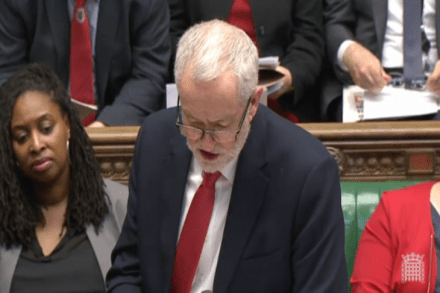
The last PMQs before the Christmas recess often has a rather pantomime atmosphere. Unfortunately, neither Jeremy Corbyn nor Theresa May are anywhere near nimble enough to be able to create anything more than the sort of play that everyone leaves at the interval - and today’s performance wasn’t helped by John Bercow’s decision to extend the previously half an hour session to 53 minutes with no apparent good reason. The Speaker himself contributed to the overrunning PMQs by providing interesting details about MPs’ weddings that he’d been invited to. Jeremy Corbyn had one Christmas pun, which was about there being ‘no room at the A&E’.

Brexit is becoming a ‘just war’, with predictable consequences

Brexit could split the Tory party. So many people wrote articles arguing this before and after David Cameron called the EU referendum, but it was generally assumed that the split would involve disgruntled eurosceptics claiming they had been betrayed after Britain voted to stay in the bloc after all. It was also generally assumed that the split would at least involve something quite serious. But today MPs are locked in a war of words over whether or not they should get a ‘meaningful’ vote on the final Brexit deal. Those in favour defeated the government last night: Theresa May’s first serious Commons defeat since the snap election.

The government should have listened to the rebels, not tried to crush them

The government has just been defeated in the House of Commons on whether the final Brexit deal will get a ‘meaningful vote’ by Parliament. MPs voted 309-305 to pass the amendment to the EU withdrawal bill by Dominic Grieve. There were dramatic scenes in the Commons, as MPs had initially believed that the government had won. This was based on the way one of the tellers for the rebels was standing in the Chamber (the tellers are MPs who announce the result, and they stand according to whether the Ayes or Noes have it). Heidi Alexander only moved to the other side of the floor at the very last minute, revealing that there had in fact been a government defeat.

May survives awkward PMQs on homelessness

Both Jeremy Corbyn and Theresa May turned up in good form to PMQs today. The Labour leader was unusually nimble with his ripostes, deploying statistics on home ownership straight after the Prime Minister’s mockery of the Labour party’s attitude towards home ownership. But as usual, he didn’t manage to make the homeslessness figures that he made his key theme for his questions into a matter of great discomfort for May. The Prime Minister, for her part, managed to recover from each attack pretty well, arguing that the Conservatives were the party who believed in building more homes so that people could have a roof over their heads. She did, though, deploy what might politely be called a sleight of hand in response to one question about homes being fit for human habitation.

Tory MPs express fears about refuge cuts

Tory MPs are now sufficiently worried about the changes to the way that refuges for domestic abuse victims are funded that they have started to speak out publicly. This morning, in a Westminster Hall debate, three Conservative backbenchers told the Communities and Local Government minister Marcus Jones that the government ‘must intervene’ to stop refuges closing as a result of these funding changes. Sutton and Cheam MP Paul Scully, Bolton West MP Chris Green, and Ochil and South Perthshire MP Luke Graham all expressed concerns about the new funding model. Both Scully and Graham described how members of their own families had been victims of domestic violence.

Labour discovers that there is no easyBrexit

Despite the government reaching its long-awaited milestone of ’sufficient progress’ in the Brexit talks last week, certain key figures on both sides of the debate seem intent on muddying the waters as much as possible. Mr Steerpike reports on David Davis’s latest efforts on that front, while Labour MPs are trying to understand the implications of Keir Starmer’s latest utterances on their party’s Brexit position.

Why Number 10 needs to calm some Tory nerves this afternoon

In the midst of the confusion over whether the UK and Ireland have agreed for Northern Ireland to remain in the customs union, Tory MPs have been invited to a party meeting this afternoon at 4. Some backbenchers who are particularly interested in scrutinising Brexit had requested that they be given the same sort of off-the-record briefings on policy and developments as are offered on a regular basis by the Ministry of Defence, so this may well be one of those meetings. But the presence of Gavin Barwell, Theresa May’s chief of staff, suggests that it’s not just an off-the-record update from Brexit minister Steve Baker.

Ministers have created their own mess in the Brexit impact assessments row

Nobody said Brexit was going to be easy, did they? It turns out that even talking about how difficult Brexit is going to be is pretty tricky, and the person feeling that most keenly is David Davis. Today the Brexit Secretary came under fire from all parts of the House of Commons for the heavy editing of some impact assessments on Brexit which it wasn’t entirely clear had ever actually been written in a form long enough for them to be edited down. Last year, Davis told MPs that ‘we’ve carried out or are in the midst of carrying out about 57, I think, sectoral analyses, each of which has implications for individual parts of 85 per cent of the economy, and some of those are still to be concluded.

How not to waste your time as a backbench MP

Being a backbench MP can be pretty dull. In recent times, former members of the government have found the experience of merely being a member of the legislature so upsetting that they’ve downed tools and left Parliament altogether: David Cameron made a big show of saying he’d stay on and serve Witney from the backbenches, before finding himself on those backbenches sooner than he’d thought and scarpering. George Osborne, similarly, ended up as a backbencher, then quickly amassed as many other jobs as he could, before quitting politics ‘for now’. Perhaps these were rational individual choices given the comparatively lower pay and considerably lower prestige of the backbenches compared to government.

Emma Dent Coad’s mistake is to think sneering makes a person seem bigger

Why does Emma Dent Coad continually get into trouble for spiteful comments, tweets and jokes about her political opponents and those with a privileged accident of birth such as members of the royal family? Perhaps the Kensington MP is suffering from a strange cognitive dissonance resulting from having to represent a fair few people whose accidents of birth have enabled them to live in the many prestigious parts of the constituency she won in this year’s election. Or perhaps she thinks she is being clever. The latest row that the Labour backbencher has sparked is over a retweet from a strange Twitter account called ‘Rachael Swindon’, which boasts that it has been ‘blocked by 85 Tory MPs’ and sends a remarkable number of angry tweets on a daily basis.

Can the government stop its industrial strategy from turning into a Brexit row?

Why is a Conservative government publishing an industrial strategy? This afternoon, Business Secretary Greg Clark tried to insist to MPs that the white paper he was presenting wasn’t a return to the mistakes of previous governments in picking winners and constraining businesses, but a means of ensuring that Britain was able to compete with other countries to solve some of the great challenges of our time. ‘This isn’t about protecting the past, it’s about taking control of our future as a nation,’ he argued in his statement, telling the Commons that the government had struck four sector deals in life sciences, construction, artificial intelligence and the automotive industry.

Budget leaves Universal Credit claimants in precarious position over Christmas

If Philip Hammond’s Budget was designed to stave off any particularly pressing problems, rather than really building the Britain that he suggested he was going to build in his introductory remarks, then it’s not yet clear whether he’s managed that with Universal credit. Yesterday the Chancellor told the Commons that ‘I recognise the genuine concerns on both sides of the House about the operational delivery of this benefit’. He announced a series of changes, including the end of the seven day waiting period at the beginning of a claim before someone is deemed to be entitled to Universal Credit, which will lead to a shortening of the six week initial wait to five.

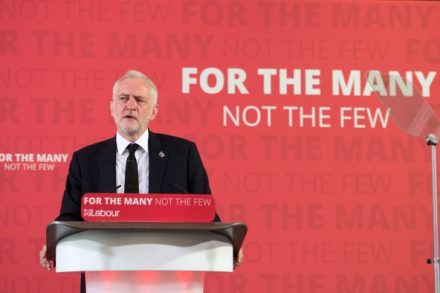
Corbyn’s anger gets the better of him in his Budget response

If we accept the usual caveat that it’s difficult for any Opposition leader, no matter how good, to respond well to a Budget straight after it has been delivered only in its broad-brush form, then we might conclude that Jeremy Corbyn’s response today was pretty good, all things considered. The Labour leader was angry and passionate, drawing a strong contrast with the endless wisecracks from Philip Hammond in his own statement. He decided to focus on how people would still be feeling after this Budget, which is a useful device when you simply have not had time to go through the small print that trips a chancellor up.