Isabel Hardman

Isabel Hardman

Isabel Hardman is assistant editor of The Spectator and author of Why We Get the Wrong Politicians. She also presents Radio 4’s Week in Westminster.

MPs avoid turning bullying Urgent Question into a campaign against Bercow

When she was moved to the Leader of the House position, it appeared as though Andrea Leadsom was being given a low-profile job because she wasn't performing well in the Cabinet. Whether or not that was the case, Leadsom has actually turned out to be exactly the right person for this role. She proved that again today in the House of Commons when answering an urgent question from Caroline Lucas about bullying of House staff. This urgent question was rather odd in itself: it was in response in part to allegations made against Speaker Bercow, who both granted the UQ and then chaired it. Perhaps this was an attempt to show he believes in scrutiny even of himself, or perhaps Bercow hoped that by being present, he might have an effect on the mood in the Chamber.

Domestic abuse is undergoing the same revolution as mental health

Over the past ten years, mental health has gone from being one of those problems that no-one liked to talk about to something politicians tussle over to show they are the most committed. There is still a stigma floating around certain conditions, and people are still struggling to access the basic treatment that they need. But it is clear that society is growing better at understanding these illnesses - and is becoming angrier that there is not better provision for caring for them. That same slow shift is now starting with domestic abuse. Like mental illness, its victims have often been dismissed as either being flawed or in some way bringing the crime upon themselves. There was a narrow understanding of what abuse meant, and what both perpetrators and victims might look like.

How Theresa May had a surprisingly strong PMQs

Theresa May should have had a rather difficult Prime Minister's Questions today. Jeremy Corbyn chose to lead on the visit of Saudi Crown Prince Mohammad bin Salman, and then moved onto rough sleeping. Both matters are vulnerabilities for May, and ones Corbyn has consistently made a great deal of noise about. But there were two flaws in Corbyn's approach which allowed May to have one of her strongest sessions as Prime Minister. The first was that of course she had guessed the Labour leader was most likely to lead on Saudi Arabia, and so she turned up well-prepared to offer a robust defence of Britain's ties with the Kingdom.

Why opponents of the Thatcher statue are wasting their time

Why on earth would we want to put up a statue of Margaret Thatcher in Parliament Square? That's the question that a number of politicians are asking after the possibility arose once again at the weekend. 'Steady on,' said Nicola Sturgeon. Labour's Chris Bryant was (unsurprisingly, perhaps) rather more verbose. 'What Mrs Thatcher did to communities like the Rhondda deserves recognition in the annals of callousness; not another statue.' Down with the Tory fool behind the suggestion who just cannot stop reminiscing about the 1980s. Except the suggestion came not from a Conservative but a Liberal Democrat MP. Jo Swinson wrote a piece in the Mail on Sunday in which she describes witnessing the very policies that Bryant is so angry about: 'I grew up in the West of Scotland during the 1980s.

How Theresa May’s reforming ministers are constrained

When Theresa May gave her big housing speech today, in front of a rather strange fake brick backdrop that made the Prime Minister appear to be emerging from a chimney, she was trying to speak to two audiences. The first was those who believe, as she says she does, that the housing crisis is one of the biggest barriers to social justice in this country. The second was those who may agree with the first sentiment in abstract, but who are very worried about inappropriate development and destruction of our green and pleasant land. It's a tricky game, playing good-cop, bad-cop all by yourself, but that's what the Prime Minister had to do in order to announce anything at all on housing.

May tries to strike an optimistic tone on what Brexit can do for Britain

Despite the rather muted colours for the staging of her Road to Brexit speech, Theresa May tried to make her address as upbeat and cheerful as it was possible to be. She started by talking not about Brexit but about her agenda, restating a great deal of what she said on the steps of Downing Street when she became Prime Minister. Perhaps this was because May is worried that people have forgotten what her domestic mission is, or perhaps it was because she felt it would be best to suggest that Brexit could play a large part in making Britain a better, happier and less divided country. She said that her Downing Street pledge 18 months ago 'is what guides me in our negotiations with the EU', and then offered a very strongly values-based list of what she felt was important in the negotiations.

Labour’s slow running-down of the media

Yesterday, after Jeremy Corbyn's speech on Brexit, he moved on from press questions about the substance of his policy change to seeking non-media questions. It was presumably to show that Labour is more interested in the real questions of real people rather than the biased agenda of the press. That real question ended up being 'please will you hurry up and be our Prime Minister?' Corbynites would argue that even a question as pointless as this is better than the mocking tone that journalists take as they try to claim, on the basis of whispered gossip, that this is a result of some kind of Shadow Cabinet falling out. Why not focus on the real issues, they argue. But the problem is that politicians are the least able to gauge what a legitimate press question is.

Rumour about May’s customs union stance excites Remainers

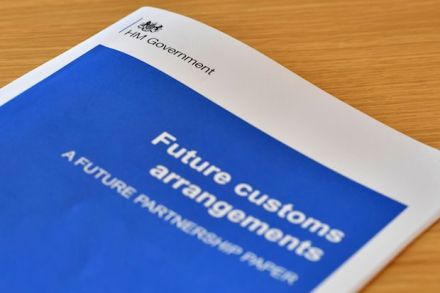
Could the Conservatives crash out of government in the next few months? That's certainly a prospect that Theresa May's allies want to talk up in order to scare would-be supporters of Anna Soubry's amendment on Britain staying in 'a' customs union after Brexit. We discuss whether making the amendment a confidence issue is really the smartest move on our latest Coffee House Shots podcast - and in today's Evening Standard I report that Remainers really do think the whips would be calling their bluff by adopting this strategy. But I've also picked up an interesting theory doing the rounds among would-be rebels, which is that Theresa May will use her Road to Brexit speech on Friday to announce a concession on the matter of Britain having 'a' customs union arrangement of one sort or another.

Iain McNicol steps down as Labour General Secretary

Iain McNicol's departure from the position of Labour General Secretary has been a very long time coming indeed. He wasn't Ed Miliband's first choice for the job, and he certainly wasn't Jeremy Corbyn's favourite person at Labour headquarters, either. After the snap election, Corbynites pushed for a 'purge' that involved ousting McNicol. They failed, then, but today he announced that he was off to 'pursue new projects', which is one of those Westminster formulae for 'booted out'. Corbynite Jennie Formby is being mooted as his successor. In a sense, it's admirable that McNicol managed to stay on for so long, given the constant attempts to get rid of him.

The Tories should run a mile from the Corbyn spy story

It's fair to say that the Conservatives' attempts to use the allegations about Jeremy Corbyn's links with a Czechoslovakian spy have had mixed results. The high point came when Theresa May managed to produce a joke about blank cheques and Czechs at this week's Prime Minister's Questions, and everything else has been competing to be the low point, from Steve Baker's deeply awful interview on the Daily Politics, to Ben Bradley receiving a letter from Corbyn's lawyers. Perhaps there could have been a slightly less ham-fisted way of engaging with the story. Or perhaps it would be better for the Tory party's dignity, if nothing else, if it left these claims well alone.

Vince Cable asks: what’s the point of PMQs?

A common question in Westminster is ‘what is the point of the Liberal Democrats?’ The Lib Dems, it turns out, are asking their own existential questions: about PMQs. Since taking over as leader of the party, Vince Cable has been oddly absent from a number of these Wednesday sessions. His office says he has been to three out of the six PMQs held so far this year, and tends to turn up when he has a question allocated, which is around once a month. Tim Farron would make a great show of bobbing up and down to get Speaker Bercow’s attention at every PMQs, his face growing redder and redder from the frustrated effort.

How Theresa May could demonstrate her commitment to tackling domestic abuse

Could domestic abuse be the latest policy area to fall foul of the government's inability to get anything done? It certainly seemed so yesterday when Theresa May told MPs at PMQs that the planned Domestic Violence Bill would not be published in draft form in the next few weeks, as ministers had previously suggested, but that there would be a consultation first. I say in the Sun today that this means we won't see even the draft legislation until the autumn, and so the full bill will come still later. On one level, announcing a full public consultation on the new legislation before going to a draft bill before legislating for real is a very admirable thing to do.

A chilling warning from Corbyn

What a convenient inconvenience the row about Jeremy Corbyn's links with a Czechoslovakian agent is for the Labour leader. While the allegations that he was an informant during the Cold War may well be the 'nonsense' that he claims they are (they certainly don't seem to correlate with anything released at the end of that period), the way a number of newspapers have covered them has given him an opportunity to launch an attack on the press. In what tabloids might term a 'bizarre video rant', Corbyn said the newspapers had 'gone a bit James Bond' with these 'smears', before warning the 'media barons' that 'change is coming'.

Jeremy Corbyn’s ‘change is coming’ warning to the press is chilling

What a convenient inconvenience the row about Jeremy Corbyn's links with a Czechoslovakian agent is for the Labour leader. While the allegations that he was an informant during the Cold War may well be the 'nonsense' that he claims they are (they certainly don't seem to correlate with anything released at the end of that period), the way a number of newspapers have covered them has given him an opportunity to launch an attack on the press. In what tabloids might term a 'bizarre video rant', Corbyn said the newspapers had 'gone a bit James Bond' with these 'smears', before warning the 'media barons' that 'change is coming'.

Even if councils did ban children from playing in parks, most of them wouldn’t notice

Poor old Wandsworth Council. After being pilloried in the weekend press for banning children from ever having fun outside ever again, its members are complaining of a stitch up, claiming that they were merely updating by-laws which would allow them to prosecute someone who was drunkenly thrashing about in a tree, rather than a child wanting to clamber around its branches. The Council was accused of telling children that they couldn't fly kites, climb trees or play ball games such as cricket in its parks. Campaigners said it would make it even more difficult for children to exercise and enjoy the great outdoors, but councillors have insisted that this is just not the case at all. Deputy leader Cllr Jonathan Cook said: 'It's a classic case of fake news.

Damian Green’s missed opportunity

Why should Damian Green have to apologise? The former First Secretary of State had an extremely awkward interview on the Today programme this morning in which he offered one of those 'I'm sorry if' qualified apologies for his behaviour towards Conservative activist Kate Maltby. 'If she felt uncomfortable... then obviously I'm sorry about that,' he said, before adding: 'But I should emphasise again as I have done throughout that I didn't believe I did anything inappropriate, still don't.' Green reminded listeners that he was sacked from the government for being misleading in a statement about pornography on computers in his parliamentary office, not for asking Maltby for a drink after seeing a photo of her in a corset, or for an incident in which Maltby alleged he touched her knee.

The Tories must beware steering leftwards onto the rocks

That the Tories are having to shift their policymaking far left even of the Milibandesque positions that Theresa May took before the snap election is quite obvious. Today's education speech by the Prime Minister involved an admission that the current system, drawn up by the Conservatives in coalition, isn't working. The problems that the Tories have noticed with that system are largely political, but that's not to say that there aren't flaws in the details, too. But it's not just on tuition fees that the party is having to change its tune from its time in government under David Cameron and George Osborne.

Does Theresa May know what she’s getting herself into?

What does Theresa May want post-18 education to look like? The Prime Minister’s plans for tuition fees are getting the most attention today, but her big education speech has a lot more in it than just the cost of university degrees. Indeed, May is criticising the ‘outdated attitude’ that university is the be all and end all, and promising reform of vocational training, including apprenticeships. A focus on vocational training is something all prime ministers tend to meander into, before realising that higher education is so devilishly complicated that they retreat before achieving said reform. In May’s case, it may not be the complexity of the sector so much as the confusion in her own government that causes the most trouble.

Damian Hinds reveals how constrained May is on domestic policy

Theresa May hasn’t had many opportunities to talk about domestic policy since the snap election. It’s probably fair to say, too, that the Prime Minister hasn’t exactly seized what opportunities there have been, either. This week, though, the Tories are talking about education, offering their response to Labour’s very attractive tuition fee pledge, and letting new Education Secretary Damian Hinds out to talk about his vision for the brief. Hinds has made clear today that he’s the sort of Education Secretary that Theresa May often wished she had over the past year.

The Westminster harassment report could stop a repeat of the ugly side of #MeToo

There is clearly a will in Westminster to change the culture of sexual harassment that was so horribly exposed in the autumn. Previously, there was little will and no clear way for victims to get help, despite widespread anecdotal evidence that there were quite a lot of victims out there. Today a cross-party working group of MPs, peers, staff, and trade unions published their report on how to ensure that victims don't feel ignored any more, and that there is a proper, independent process for dealing with complaints. But will the report really be a success? And how will we really know what a success looks like, when sexual harassment is, in reality, often much more complex than it first seems? One aspect of this complexity is that social mores are changing.