Isabel Hardman

Isabel Hardman

Isabel Hardman is assistant editor of The Spectator and author of Why We Get the Wrong Politicians. She also presents Radio 4’s Week in Westminster.

G8: leaders agree Lough Erne declaration and Syria communique

Remember that last communique signed at a summit of world leaders, the really challenging one that they're all worried they will never meet in reality? You don't? How strange. David Cameron mused at the weekend that these agreements that take days to draft end up in an 'elephant's graveyard', and to try to show that his rolled up sleeves are having an effect on this G8 summit in Lough Erne, he has insisted on a 10-point 'declaration' signed by the leaders. Here it is: Private enterprise drives growth, reduces poverty, and creates jobs and prosperity for people around the world. Governments have a special responsibility to make proper rules and promote good governance. Fair taxes, increased transparency and open trade are vital drivers of this.

Ken Clarke reignites What Would Thatcher Do? to argue for an ‘In’ referendum vote

Those cracking jokes about bears visiting the woods following Ken Clarke's latest warning about the dangers of Britain leaving the EU miss the point. The former Chancellor and Minister without Portfolio is firstly echoing the stance of his boss, rather than briefing against him, and is secondly continuing to plug away at the case for 'In' which has struggled to gain as much momentum and noise as that for leaving. The Europhile faction of the Conservative party has been very poor at organising itself and going on the attack thus far. Clarke uses yesterday's official opening of talks on the EU/US bilateral trade deal to warn in today's Telegraph that Britain would not have the same prospects for global trade were it outside the European Union.

School choice is not a scandal: Gove nails Twigg’s rum brand of localism

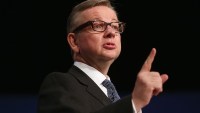
Michael Gove is naturally having some fun with Stephen Twigg's schools speech. The Education Secretary has responded to Twigg's plan for 'parent academies' by saying: 'Labour's policy on free schools is so tortured they should send in the UN to end the suffering. On the one hand Stephen Twigg says he will end the free school programme, but on the other he says he would set up 'parent-led' and 'teacher-led academies' - free schools under a different name. As Andrew Adonis has said this morning, "free schools are academies without a predecessor school". When is a free school not a free school? When Stephen Twigg is trying to appease the teaching unions. 'Stephen Twigg also says it's a 'scandal' to set up new schools in areas where existing schools are failing and parents have no choice.

How central government could slim down – and why it probably won’t

The Treasury is entering its last minute negotiations with recalcitrant departments ahead of next week's spending review announcement. But for all the talk of 'difficult decisions', the settlement doesn't look as though it will take some of the more difficult decisions about the shape of government itself. In a Free Enterprise Group paper published today, Tory MP Dominic Raab argues that ministers should be looking for savings by scrapping departments altogether, not coming to settlements which merely maintain the current messy setup. Raab argues that Britain has many more government departments than other developed countries such as the US, Germany and Sweden.

Labour is after the Tories’ localism crown

Stephen Twigg is, as he probably expected, coming in for a bit of flak on his U-turn on free schools this morning. Labour's Shadow Education Secretary has launched his own plan for 'parent academies', which Toby Young and James Kirkup have had some fun with here. But he is basically doing what Lord Adonis has long hoped the party would do, accepting that free schools are a variant of the last Labour government's academies programme anyway. He just needed to find a new brand that wouldn't send the teaching unions into orbit. But what's interesting is that Twigg also devoted large sections of his speech to trying to steal the localism crown from the Conservatives.

William Hague: There are ‘no palatable options’ in Syria

While the G8 begins today with splits already clear on Syria, David Cameron will be aware, as he sits down for talks with world leaders, that the splits in his own Parliament are becoming increasingly vocal. It's not just Boris Johnson's column in today's Telegraph in which the Mayor of London warns that 'we won't get a ceasefire by pressing weapons into the hands of maniacs'. Tory MPs have started openly discussing the lack of support for arming the rebels. Johnson's intervention could be read by some as yet another attempt to undermine the PM who appears to be considering arming the rebels out of a deep personal conviction, given he commands very little support even within his own party on this. But it also underlines what a quagmire this situation is.

Will Parliament get a vote on Syria? PM says ‘basically yes’

David Cameron is far more optimistic than Nick Clegg about arming the Syrian rebels: that much has been clear for a while. He explained why he's optimistic on Sky's Murnaghan programme this morning, arguing that if the West doesn't work with the 'good' rebels, then the 'bad' rebels will have more of an opportunity to flourish. He said: 'I want to help the Syrian opposition to succeed and my argument is this: yes there are elements of the Syrian opposition that are deeply unsavoury, that are very dangerous, very extremist and I want nothing to do with them. I'd like them driven out of Syria. They're linked to al Qaeda.

Tony Blair is pessimistic about the chances that Europe will change

Tony Blair has plenty to say on the crisis in Syria in his interview in today's Times, as you might expect. But he also makes a few points on other aspects of foreign policy that are worth noting, particularly regarding Europe. The former Prime Minister tells Alice Thompson and Rachel Sylvester that David Cameron was wrong to offer a referendum on Britain's membership of the European Union. He says: 'We should at least pause for thought on this. I can tell you, people around the world now ask about this constantly, with an air of incredulity that Britain should even think of such a thing. Europe will be a lot less effective and probably less effectively run if Britain absents itself. If you pull out, that's a big decision. You're going to relegate your influence.

UK finds ‘credible evidence’ for chemical weapons in Syria. But is there a credible case for arming the rebels?

David Cameron was pressed on Barack Obama's decision to give assistance to the Syrian rebels when he spoke to journalists in the Downing Street garden this afternoon. He gave a long answer, the transcript of which you can read at the bottom of this post, along with the audio. But here are the key points on the Prime Minister's current thinking on Syria. 1. He agrees with the American stance. He told the press conference: 'I think it is right that the Americans have said what they have said and I wanted to back that up with the information and the involvement that we've had in that assessment.' That included Britain seeing 'credible evidence of multiple attacks using chemical weapons in Syria'. But this is as much about America moving towards Britain's position on Syria.

Where the teaching unions have a good point

The teaching unions have spent a lot of this week getting angry about one thing or another, but one of their number, the National Association of Head Teachers, did make a good point yesterday when reacting to Ofsted's report on bright kids. Russell Hobby, general secretary of the National Association of Head Teachers - not the most aggressive of the unions - said: 'However, the government's league table culture deserves a measure of the blame for this situation. For too long, schools have been forced into the middle ground, to get students over thresholds at the expense of both the most and least able. Education has become a numbers game, at the expense of the ethos and breadth that underpin a truly great education.

Why Defence Secretaries go native

When Philip Hammond was sent to the Ministry of Defence, his skills as a bean counter were much lauded. Colleagues hoped that he wouldn't, like other Defence Secretaries, go native. He quite obviously has done that, and quicker than many thought, holding out as the strongest shop steward of the National Union of Ministers in the 2015/16 Spending Review negotiations. His case may well be boosted by General Sir Peter Wall's intervention on Jeff Randall's programme last night - the head of the Army warned that further cuts could damage the force's 'professional competence' - but Hammond's own interview on the same programme is worth watching as well.

Tories toast Labour abstention plan for EU bill

From being all over the shop in the past few months when it came to message discipline, the Tories have gone into overdrive in the last two days after the launch of the Let Britain Decide website on James Wharton's EU referendum bill. It's now difficult to see the wood for the tweets on how the Tories are the only ones who will #letBritaindecide, and that has got a great deal worse now that Guido has published a leak of Labour's whipping arrangements for the vote. He’s too weak and he’s too scared to #LetBritainDecide @ed_miliband orders Labour to abstain from EU referendum vote letbritaindecide.

The Tory plan to beat Miliband

The Tories are chuffed with yesterday's Prime Minister's Questions (the knockabout, that is, not the serious bit), and with Labour's continuing struggle to make any impact in the polls. Earlier this week, Lynton Crosby spoke to the parliamentary party about how they should aim to beat Miliband. He told them that while Miliband is a weak leader, the way to beat him is to highlight his areas of weakness, rather than his personal flaws. This means that the party will be focusing on how Labour is faring on welfare and the economy, rather than mocking Miliband for making his colleagues coffee (which is a line David Cameron really should drop).

David Cameron sings the good jobs news, but can Labour deal with green shoots?

There was plenty for David Cameron to sing about at today's PMQs when it came to the ONS' latest labour market figures, and sing he did. He said: 'First, it is worth announcing to the House what today's unemployment figures show. They show that employment - the number of people in work in this country - is going up, that unemployment is going down, and that - I know the Labour party does not want to hear good news, but I think it is important that we hear it. The claimant count - the number of people claiming unemployment benefit - has fallen for the seventh month in a row. It is interesting that over the past year, while we have lost 100,000 jobs in the public sector, we have gained five times that amount in private sector employment.

Cameron wins PMQs… or does he?

Well, that was an easy Prime Minister's Questions for David Cameron, wasn't it? Sometimes the PM just turns up for work and knocks it out of the park. It helped, of course, that for once he had his own team cheering him along, with backbencher after backbencher leaping up to ask loyal questions. The whips will be toasting a win in their office this afternoon. The Prime Minister had some very good retorts to Ed Miliband indeed. If Labour had a good week on welfare last week, the happy feelings will have evaporated today as Cameron managed to ridicule them not just on the detail of their spending pledges - while hinting that he's not quite as open to movement on pensions spending as she might have hoped - but also on their attitude.

Conservatives to take Labour and Lib Dem MPs with them to EU renegotiation talks

Tories preparing the ground for David Cameron's renegotiation of Britain's relationship with Europe are to take MPs from other parties with them as they visit European cities, Coffee House has learned. The Fresh Start Project, made up of Conservative MPs campaigning for reform of the European Union, has already visited Prague, Warsaw and Berlin to hold preliminary meetings setting out the need for change. Its next round of visits will include members of the All Party Parliamentary Group for European Reform, which is co-chaired by Fresh Start's Andrea Leadsom and Labour's Thomas Docherty. The Conservative MPs organising the visits think including other parties will help them secure more meetings and also advance the case for reform in other Westminster parties as well.

Tories pressure Labour and Lib Dems on EU bill

Credit where credit's due to the Tory spin machine for following up a good idea and putting pressure on Labour and the Lib Dems. This doesn't happen very often, so it's noteworthy. The party has launched a website called Let Britain Decide, which asks the public to back James Wharton's private member's bill for an EU referendum. It asks visitors to sign up to the campaign, lobby their MP, write to their local paper and brandish posters supporting the bill. A clever little paragraph on the site reads: 'Currently, only one of the main three political parties believes the British people deserve a say on Europe: the Conservatives. They are bringing forward a draft bill to legislate for an In-Out referendum before the end of 2017, following a renegotiation.

The backbench hunt for Sir David Nicholson’s scalp continues

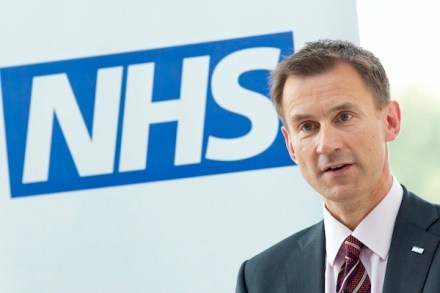
Today's hearing of the Public Accounts Committee is going to be real box office stuff. Sir David Nicholson is giving evidence, supposedly on the NHS IT programme, but he'll find himself confronted by Tory committee member Steve Barclay, who, armed with freedom of information evidence of 52 gagging orders in the NHS, will demand that the health service boss step down immediately. This is what Nicholson told the Health Select Committee when he gave evidence on 5 March (full transcript here): Barbara Keeley: What do you think, as chief executive of the NHS, of a loophole like that existing-where £500,000 of taxpayers’ money could be used to gag somebody who wanted to talk about patient safety?

Forget the spies: councils want the Snooper’s Charter, too

The Tories aren't giving up just yet on the Communications Data Bill, and Keir Starmer's intervention, reported in the Sun this morning, will help their cause. The Director of Public Prosecutions' letter was written before Nick Clegg announced he was blocking the legislation, and argues that 'communications data is so important that any reduction in capability would create a real risk to future prosecutions'. The problem for the Home Office is that it needs to make the case for this legislation not just in the face of cynicism that it is really needed, which has only increased following the revelations about the NSA's Prism programme.