Isabel Hardman

Isabel Hardman

Isabel Hardman is assistant editor of The Spectator and author of Why We Get the Wrong Politicians. She also presents Radio 4’s Week in Westminster.

Tories pressure Labour and Lib Dems on EU bill

Credit where credit's due to the Tory spin machine for following up a good idea and putting pressure on Labour and the Lib Dems. This doesn't happen very often, so it's noteworthy. The party has launched a website called Let Britain Decide, which asks the public to back James Wharton's private member's bill for an EU referendum. It asks visitors to sign up to the campaign, lobby their MP, write to their local paper and brandish posters supporting the bill. A clever little paragraph on the site reads: 'Currently, only one of the main three political parties believes the British people deserve a say on Europe: the Conservatives. They are bringing forward a draft bill to legislate for an In-Out referendum before the end of 2017, following a renegotiation.

The backbench hunt for Sir David Nicholson’s scalp continues

Today's hearing of the Public Accounts Committee is going to be real box office stuff. Sir David Nicholson is giving evidence, supposedly on the NHS IT programme, but he'll find himself confronted by Tory committee member Steve Barclay, who, armed with freedom of information evidence of 52 gagging orders in the NHS, will demand that the health service boss step down immediately. This is what Nicholson told the Health Select Committee when he gave evidence on 5 March (full transcript here): Barbara Keeley: What do you think, as chief executive of the NHS, of a loophole like that existing-where £500,000 of taxpayers’ money could be used to gag somebody who wanted to talk about patient safety?

Forget the spies: councils want the Snooper’s Charter, too

The Tories aren't giving up just yet on the Communications Data Bill, and Keir Starmer's intervention, reported in the Sun this morning, will help their cause. The Director of Public Prosecutions' letter was written before Nick Clegg announced he was blocking the legislation, and argues that 'communications data is so important that any reduction in capability would create a real risk to future prosecutions'. The problem for the Home Office is that it needs to make the case for this legislation not just in the face of cynicism that it is really needed, which has only increased following the revelations about the NSA's Prism programme.

Diane Abbott, darling of the reforming Right

Perhaps the Bilderberg conference has had a lasting effect on Parliament, after all. Today we saw what can only be a conspiracy between the Labour left and Michael Gove's band of reforming right-wingers. As the Education Secretary unveiled his plans to reform GCSEs, he was accosted by Diane Abbott, rarely knowingly in agreement with much of what the Coalition is doing. But the Labour MP didn't want to tell Gove he was wrong. She wanted to say he was right. She asked Gove whether he agreed that 'an emphasis on rigorous qualifications and an emphasis on attaining core academic subjects is not, as is sometimes argued, contrary to the interests of working-class children, and black minority ethnic children?

How should Labour deal with the teaching unions?

While dealing with the teaching unions is a simple stand-off for Michael Gove, spare a thought for poor old Stephen Twigg, Labour's shadow education secretary, who has to work out how on earth to deal with the NUT and NASUWT habit of opposing everything. There is a palpable sense of frustration on the Labour frontbenches about the way the two largest unions in particular behave. Twigg has made clear that he does not support strike action planned over a general raft of discontent over many different issues, and he has opposed the work-to-rule industrial action promoted by these unions too. On performance-related pay, the unions behave as though Voldemort is coming soon to a school near you, while Labour is merely unconvinced that it's the great saviour of educational excellence.

Teaching unions: don’t reform exams, you might upset someone!

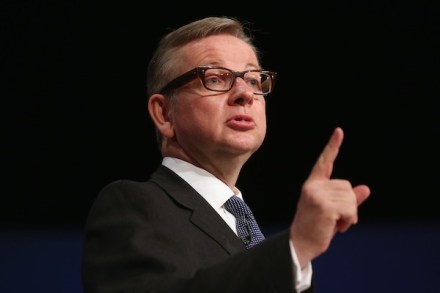
Critics and fans of Michael Gove alike accept that sometimes the Education Secretary can be a little too pugnacious. He often encourages the pantomime boos that accompany him, and will throw himself into any fight with gusto. But then the representatives of the leading teaching unions pop up to criticise his reforms, and it becomes very clear how Gove ended up like this. Christine Blower's interview on the Today programme was one notable example. The NUT general secretary argued that grades hadn't necessarily been devalued, and that the reforms might devalue the achievements of those children who have already passed their exams. She said: 'We think this is slightly rushed and also it tends to demean the achievements of students who have got GCSEs in the past.

Yeo steps aside: how Parliament could improve its reputation with a simple rule change

As Fraser reported earlier, Tim Yeo has stepped aside from the Energy and Climate Change Select Committee chairmanship following the Sunday Times' sting this weekend. What's astonishing is not his decision this evening, but that he even had the opportunity to chair the committee when he had quite so many declared interests in the sector. It is a story that Guido Fawkes has been hammering away at for months. Paul Goodman made the very sensible suggestion on ConHome at the weekend that while there is nothing wrong with run-of-the-mill backbenchers having outside interests, select committee chairmen should be barred from having any interests that might conflict with their role leading the committee. It seemed so sensible that it was rather odd no-one had thought of this before.

Ken Clarke keeps Bilderberg secrets close to his (reptilian) chest

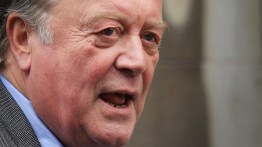
What an afternoon it has been for conspiracy lovers. First the Speaker summoned Ken Clarke to the Commons to answer an urgent question from arch theorist Michael Meacher about the Bilderberg meeting, and then MPs took it in turns to ask William Hague whether the Prism allegations meant they were under surveillance from the state. It was quite difficult to distinguish between the two, given we learnt little from either. First, Bilderberg. MPs arrived hoping that the scales would fall from their eyes as the minister revealed the great secrets of this high-powered conference. 'The people who attend change slightly each year,' explained Clarke, presumably referring to their metamorphosis into lizards upon arrival in Watford. He added: 'All of the people who attend, attend as individuals.

Finally, the Tory whips are cracking down on open dissent

Lurk around the Palace of Westminster today and you might hear a strange creaking noise. It's not the Commons air conditioning, which has broken and is making appropriately eerie noises ahead of an urgent question on the Bilderberg meeting. No, that creaking sound is the Tory Whips' Office finally limbering up to do something about wayward MPs. Sir George Young summoned backbencher Andrew Bridgen for an urgent meeting today after his letter of no confidence was leaked to the Mail on Sunday and he wrote an op-ed for the same paper saying 'there is a credibility problem with the current leader' and that the current situation was 'like being in an aeroplane' which 'the pilot doesn't know how to land'.

Three questions for William Hague on PRISM

William Hague will come to the House of Commons today to offer some answers on the US National Security Agency's PRISM programme. Here are three key questions MPs will want answered: What can he tell the Commons about how such an exchange of information could work? Douglas Alexander told Today he will be asking for information on the legal framework governing the UK access to information from the programme. Hague said yesterday that he could neither confirm nor deny that he was aware of PRISM, but he will still be asked about how interactions between the intelligence agencies are regulated. Are they able to circumvent British law by approaching the US authorities instead?

European Commission does eurosceptics’ dirty work, again.

Defenders of the status quo in the European Union like to argue that 3 million jobs in this country currently depend on Britain's membership. Aside from the rather shaky maths behind that figure, it's striking that today Chris Grayling is making a stand on a Brussels plan that will cost jobs in this country, rather than boost them. The Sunday Telegraph reports the Justice Secretary accusing the European Commission of 'not living in the real world', with new data protection laws threatening to cost british businesses around £360 million a year. Grayling makes it very clear in his interview with the newspaper that he views these proposals as a direct threat not just to Britain's competitiveness, but to Europe's position in the 'global race' (that phrase isn't going away).

Tim Yeo pulls out of media appearances after Sunday Times sting

Tim Yeo was due to appear on Sky News' Murnaghan programme, and on the BBC's Sunday Politics this morning. But he's just pulled out of both interviews, where he would have been asked about the Sunday Times' story alleging that he coached a witness to his own select committee on the right answers. Yeo denies that he behaved improperly and told the newspaper that he had never offered parliamentary advice or advocacy. What will be interesting about the fallout from this latest round of allegations is whether politicians use it to advance their own pet theories about how parliament needs reform, or whether they examine what the particular allegations were.

Mutually assured silence: a cross-party 2015 election strategy

The Institute for Fiscal Studies gave one of its cheering presentations today on quite how miserable things are going to be for a good while longer. Today's event was on the forthcoming spending review, but the IFS and Institute for Government also offered some predictions about the long-term economic picture. In a briefing note, the two organisations warned that we are likely to have not one but two austerity elections. It said: 'If the UK experience proves to be as drawn out as the Canadian one, we should expect not just 2015 but also 2020 to be an austerity election. Spending reductions are set to be a long-term feature of UK public finances, rather than a short and sharp experience.

Labour’s localism epiphany

Just because Labour has been taking a big dose of reality this week doesn't mean the party is now refusing to make the most of any botch job by the Coalition. So we've come to the funny situation where the Opposition party famed for its centralised approach to planning which failed to build enough homes in any year is taking the high ground on housebuilding. The Telegraph reports that Shadow Communities and Local Government secretary Hilary Benn now believes 'local communities should decide where they want new homes and developments to go and then give their consent in the form of planning permission' and that 'we have to make localism work'. Labour would tear up the Coalition's hated National Planning Policy Framework, Benn told the newspaper. This is extraordinary.

How Ed Miliband avoided open warfare on welfare

For months, right-wing politicians and commentators have been licking their lips waiting for the Labour party to face up to reality. We all assumed that the sort of speeches delivered by Ed Balls and Ed Miliband this week, in which the two men abandoned the party's commitment to universalism and promised to cap welfare spending, would send Labour into orbit. There was even a revolt in the Commons which appeared to be a harbinger of doom about Labour and welfare. So where's the open warfare? Sure, Peter Hain spent most of Monday having a grump into various cameras and microphones about the winter fuel payment. But the party has stayed remarkably peaceful. The answer is the amount of groundwork that Ed Miliband and his team did for this speech.

Pay: the next big Tory row

'This has done for our pay rise, hasn't it?' one MP muttered earlier this week after the lobbying scandal broke. I suggested on Monday that yet another row over politicians behaving badly will make it even more difficult for David Cameron to endorse a pay rise for MPs. This is a row that is just waiting in the wings to join the Central School of Conservative Drama, so here's how things are likely to play out. Ipsa is currently compiling its recommendations on MPs' pay. It was expected to report this month, but I hear there is a delay, and publication could be much closer to the start of Parliamentary recess, which begins 19 July.

Childcare row becomes more about Coalition and less about the policy itself

It is not an enormous surprise that Nick Clegg has confirmed that he will block the government's plans to relax ratios for childcare providers. The Tories working on the plans seemed entirely resigned to losing them a month ago. But what is interesting is that this row is becoming the new boundary reforms for the Coalition. It might not have long-reaching political effects like the demise of those changes to constituencies, but this is now an argument about process, who-did-what-when, and who-definitely-didn't-say-that-at-all. The Tories are annoyed, once again, that the Lib Dems are briefing the demise of these proposals before the whole package to reduce the cost of childcare has been finally agreed.

The Syrian quagmire

What will it take before the UK decides to supply the Syrian rebels with arms? Many are cautious about whether this measure would really make the conflict any better, but William Hague has made it clear that he believes there is a strong case for at least threatening to do so. Further evidence of chemical weapons usage by the regime against the Syrian people suggested again this week that the 'red line' for action has definitely been crossed, but today Number 10 tried to spell out the thinking behind an apparent delay in acting. The Prime Minister's official spokesman said that the decision to not renew the EU arms embargo was part of a 'very clear, concerted approach that is designed to send a clear and unambiguous signal to the Assad regime.