Isabel Hardman

Isabel Hardman

Isabel Hardman is assistant editor of The Spectator and author of Why We Get the Wrong Politicians. She also presents Radio 4’s Week in Westminster.

Focusing on borrowing means mutually-assured humiliation for Labour and the Tories

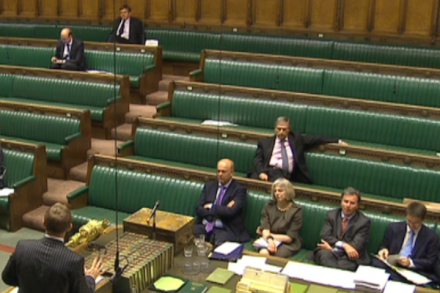
Strangely, both sides at Treasury questions today wanted to talk about something that does their own party no favours at all to mention. The Labour whips had sent their loyal backbenchers out in force to ask about Friday's borrowing figures, while George Osborne and Conservative colleagues were very happy indeed to talk about how much the Opposition would have to borrow, too. Labour wanted to tell off the government for borrowing more. The government wanted to remind Labour that it would borrow even more.

Sir Mervyn King to Mark Carney: You’re Worth It!

Sir Mervyn King held an emotional farewell with the Treasury Select Committee this morning ahead of his move from the Bank of England to the House of Lords. Committee chair Andrew Tyrie was as keen to recruit him as a supporter of banking reforms going through Parliament in the future as he was to grill the outgoing Governor: in fact, all the of the MPs on this often incisive committee were reasonably gentle with the man known as Merv the Swerv. As part of his farewell, he gave some advice to his successor which sounded a little bit like a L'Oréal advert: 'Well, I have no intention of giving public advice, but if you really insist, really insist… it's very simple: he should be himself.

Snooper’s Charter could resurface after 2014 Budget

There's talk this morning of the intelligence budget taking a cut in tomorrow's spending review announcement, but what about the legislation that the spooks say they really need to do their jobs properly? The row about the Communications Data Bill has calmed a little in the past week or so, but that's not to say that those pushing the proposals have given up. I understand that though the bill's Conservative proponents accept that Nick Clegg really will not be moved, they don't think this is the end of the road for the legislation in this Parliament. Instead, figures close to the talks are mulling introducing it after the 2014 Budget. Why then? 'It's the last chance the Lib Dems would have to introduce a mansion tax that would come in for this Parliament,' explains one source.

Doctors pass motion of no confidence in Jeremy Hunt. Good.

The health service that employs you is under more scrutiny than ever before, with shocking cases of bad care, 'never events' and serious lapses crawling out of the woodwork. The regulator that was supposed to keep an eye on all of this is under attack, not just for missing it, but also for apparently deciding not to publish what details it did know, and then deciding to withhold key names implicated in a 'cover-up'. So what, in its eternal wisdom, does the trade union representing you do? The British Medical Association, which has always managed a veneer of respectability over and above many other public sector unions, today passed a motion of 'no confidence' in Jeremy Hunt as Health Secretary.

Leaked letter shows ministers trying to calm tensions on marriage tax breaks

Ministers are clearly mindful of the potential damage that Tim Loughton's amendment to the Finance Bill calling for tax breaks for married couples could cause. This is one of those issues that could become a rebellion if it is poorly-managed by the leadership, or equally could be a bit of a damp squib if enough backbenchers are reassured and feel they should show loyalty to George Osborne. David Gauke has sent out a letter to Tory MPs trying to do just that. This 'dear colleague' message, which I've been passed, tells backbenchers that the Chancellor will announce the details of a transferable tax allowance 'in due course', which is what the Chancellor himself told a recent Cornerstone dinner.

Tories must tread carefully in NHS battle

It is clear now that we have reached a tipping point where it is no longer enough to repeat 'I love the NHS' or swear allegiance to Danny Boyle's Olympic caricature of the health service. So what now? Labour and the Tories are scrapping over who still really, truly loves the health service: the latest round of revelations about the Care Quality Commission have allowed the Conservatives to ask questions about the culture and attitudes of both the health service and of the Labour government that led it. Labour, meanwhile, points out that Andrew Lansley is also alleged to have leaned on a whistleblower, something the former Health Secretary denied yesterday.

All three parties should publish ‘red lines’ for 2015 coalition negotiations

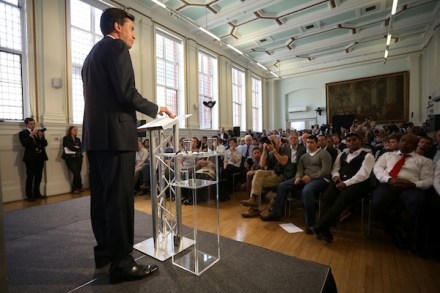
Both Ed Miliband and Nick Clegg delivered speeches to their party faithful today about being realistic about 2015. Miliband's speech, briefed as 'tough', was the latest in his series of attempts to tell voters that they can trust him: he wouldn't borrow more than this government… well, no more 'day-to-day spending', which is his way of saying he would actually borrow more for capital projects. Clegg wanted to tell his councillors that they can't see May 2015 as the month when they all get to breathe a sigh of relief and return to their local authority fiefdoms without any of the inconvenience of their party being in national government too.

Borrowing figures and what really keeps politicians awake at night

There was a moment in the last Budget statement where George Osborne revealed that the deficit was - just - lower in the year to April 2012 than the previous 12 months. He made it by a whisker. Today, the statisticians have revised their opinion and said borrowing for that financial year was  is up slightly - by £300m to £118.8bn. It's a tiny change, well within a rounding error. And, of course, could easily change again. The extra borrowing was £12.7bn in May, down from £15.6bn last May. Factor in the £3.6bn transferred from the Quantitative Easing programme, and the deficit can be knocked down to £8.8bn. It all depends on how you cut the figures.

Marriage tax break revolt size could hinge on newly-knighted Sir Edward Leigh

The 42 'Alternative Queen's Speech' bills laid by Peter Bone and Philip Hollobone are very useful for the Lib Dems, as they can use them to argue that this is what a Tory majority government would look like. A source close to Clegg says they serve as an example 'for any members of the public who want to see what having Liberal Democrats in government will get you': i.e. stopping the Tory right from getting its way on legislation. The party's press office has started a Twitter hashtag called #toryqueensspeech and is retweeting some of the best suggestions.

Backbench row looms on tax break for married couples

The Tory leadership held one of its election strategy meetings yesterday at Chequers. The Prime Minister and his colleagues will have been reassured that their party certainly seems to be turning its face towards 2015, with some of David Cameron's fiercest critics preferring to get behind the campaign for James Wharton's referendum bill. I look at some of the ways Cameron and his colleagues are trying to repair relationships in my Telegraph column today. But Tory anger comes in waves, and there's one racing towards the shore that, according to backbenchers, has a great deal to do with the party's chances with its core vote at the next general election.

Owen Paterson’s thoughtful GM revolution

Bravo to Owen Paterson for making such an extensive and detailed case for the value of genetically-modified crops today. That he gave this speech to Rothamsted Research at all is provocative, but if you read it in full, you will find a thoughtful and far more equivocal argument than the debate surrounding it suggests. The Environment Secretary did not, as some of his critics would have us believe, say that GM crops will solve all the world's troubles and answer all the problems facing intensive farming. Instead, he said: 'I believe that it's time to start a more informed discussion about the potential of genetically modified crops. A discussion that enables GM to be considered in its proper overall context with a balanced understanding of the risks and benefits.

CQC row marks new level in ‘party of the NHS’ battle

That former Care Quality Commission chief executive Cynthia Bower resigned so quickly from her current job after being named as one of the three executives involved in a discussion about covering up the Commission's failings simply underlines what an appalling mess this case has been from start to finish. The names were withheld ostensibly because of data protection, but when they appeared, it was clear that this was about another sort of protection. Perhaps this will be the tipping point against unaccountable NHS managers and inspectors staying safe whatever their failings. Jeremy Hunt certainly seemed to think that it could be, tweeting: 'Pleased to receive CQC letter naming the individuals involved. Clear sign NHS is changing.

The Tories are still flummoxed by social media

The Tory party is currently offering a campaigning masterclass on James Wharton's Private Member's Bill. As Coffee House revealed last night, any member of the public can sign up to co-sponsor the backbench legislation, and the party has spent a great deal of time squaring backbenchers on the wording of the bill to prevent further amendments clogging it up unnecessarily. And MPs continue to tweet about #letbritaindecide, #labourdoesn'ttrustpeople, #onlytorieshavetheanswer or perhaps #itweetthisbecausemywhipaskednicely. But how easy is it to replicate this sort of slick campaign with other policies? When it comes to more conventional legislation and policy rows, the Tories are struggling to work out how to get their message across, particularly when it comes to social media.

George Osborne’s Mansion House minefield

George Osborne is expected to respond to the Parliamentary Commission on Banking Standards's final report in his Mansion House speech this evening. The report is hefty and packed with recommendations, but there are two areas where the Chancellor will find himself treading a particularly tricky path. Both the proposal to defer bonuses and introduce a criminal offence of reckless misconduct in the management of a bank are designed to encourage responsibility and a greater regard of the consequences of bad behaviour. But Osborne will know that they also pose a threat to the success of the city. He will need to consider what effect deferring some remuneration for up to 10 years will have on London's competitiveness as a financial centre.

What the Banking Commission report says about…

...bad bankers The commission wants to encourage greater personal responsibility, through making it clear with whom the buck stops for each key area within a bank, and sanctions including a criminal offence of reckless misconduct in the management of a bank. The report emphasises that it would be rare to secure a conviction under this offence, but that it would apply 'in cases involving only the most serious of failings, such as where a bank failed with substantial costs to the taxpayer, lasting consequences for the financial system or serious harm to customers'. It also recommends that the PRA and FCA be able to put banks into 'special measures', where the organisation will make a commitment to address concerns identified by the regulator.

Exclusive: Tories go public with EU referendum bill

This story broke as an exclusive in tonight's Coffee House Evening Blend, a free round-up and analysis of the day's political stories. Click here to subscribe. The Conservatives will table James Wharton's Private Member's Bill for an EU referendum tonight for publication tomorrow. Coffee House has exclusive details of the changes to this piece of legislation, and a clever new plan by the party to make the most of this backbench bill as possible. The bill has been amended following extensive talks between Wharton and Conservative backbenchers about its wording. It now includes a requirement for the Secretary of State to announce the date of the referendum by the end of 2016.

Syria crisis: debate turns to shoulda, woulda, coulda on tactics

The debate about the Syrian crisis is now as much about shoulda, woulda, coulda, as it is about what can happen now. Douglas Alexander's response to the G8 communique this afternoon said: 'This statement begs the question whether a different diplomatic approach by the Prime Minister, not focusing so much effort on lifting the arms embargo, but instead engaging the Russians at an earlier stage, could have resulted in a different and more positive outcome.' So Labour would not have started from here. Beyond that Alexander isn't clear about when that golden opportunity for engaging the Russians was, and whether he really believes that there was a point at which Putin could have turned anyway.