Isabel Hardman

Isabel Hardman

Isabel Hardman is assistant editor of The Spectator and author of Why We Get the Wrong Politicians. She also presents Radio 4’s Week in Westminster.

Tories and Lib Dems pass on will donation to contain row

So both the Lib Dems and the Tories have yielded to the inevitable, and passed on the Joan LB Edwards donation to the Treasury. Their responses were swifter than even critical friends might have expected. The Lib Dems were first out of the starting blocks in the race to the moral high ground by announcing they'd be writing a cheque to the Treasury. But before Nick Clegg even had time to start recording a new autotune version of 'I'm Sorry' about how 'we took a donation that we couldn't possibly keep (but frankly could have done with given the state of the party coffers)', the Tories decided they had to do the same. So that's that, row contained and moral high ground reached by both parties. Except stories like this never do politics any favours at all.

The Coalition parties can’t hold on to Joan Edwards’ donation

An argument over a will is just the sort of thing this slow-moving summer needs. Today's row isn't between two factions of a family, but the two parties in the Coalition and the Daily Mail, which reports that a donation from a Mrs Joan LB Edwards was split between the two parties when her will suggests she wanted it donated to the government, rather than political parties. The paper's report quotes a section of her will, which it says it has seen: 'I bequeath all my estate both real and personal to… whichever government is in office at the date of my death for the government in their absolute discretion to use as they may think fit.' The parties are arguing that the donation was passed on out of the blue and that they did everything properly their end.

Why the happy Tories can’t relax after Labour’s bad summer

Last December, after one of the most brutal PMQs this Parliament has seen, David Cameron was walking through the corridors of the Palace of Westminster to address a 1922 Committee meeting. Ed Miliband had subjected the Prime Minister to a real savaging, and Labour backbenchers had loyally joined in, raising a constituent's suicide and describing Cameron's government as ‘grandeur for the few, the workhouse for the many'. It had been a bleak session. Heading for Committee Room 14, the Prime Minister bumped into a junior minister, who was keen to reassure him that everything would come out in the wash. He told Cameron that 'they can go for the emotional attack, and we can always come back at them with statistics'.

Party donations highlight risk to Labour of union link reform

The Electoral Commission's latest release on donations to political parties in the second quarter of 2013 are quite handy for the Tories. Firstly, there's the caveat that no party really benefits from discussing funding because everyone ends up looking a little bit grubby, and because the only thing grubbier and more unattractive to voters would be full state funding of political parties, then this will always be a grubby-looking business. So of course there are donations from big business to the Conservative party (although the biggest individual donor to the Tories was in fact a woman who wanted to donate money to the 'government of the day' in her will, which meant her legacy was divided between the two Coalition parties).

Cheery silly season puts Tories on even keel

Even if Help to Buy is contributing to a bubble rather than the sensible restructuring of the economy that politicians promised before they started trying to scale that particular mountain, there are still reasons to be cheerful about the economy for the Tories this morning, on top of the delight offered yesterday by Chris Bryant's antics. The Guardian's ICM poll finds today that the Conservatives' approval rating on economic competence has risen to 40 per cent from 28 per cent in June. Labour has only crept up five points in comparison, from 19 per cent to 24 per cent. There are clearly all sorts of reasons why the party shouldn't be hanging out the bunting for 2015 just yet (Paul Goodman has a good post on this here).

Theresa May’s stop and search review hits target

One of the more significant - but still rather underreported - shifts in Conservative policy in the past few months has been Theresa May's review of stop and search powers. The Home Secretary told parliament at the start of this month that she could understand why some communities felt stop and search was used unfairly. As James wrote at the time, the consultation was a signal from the Conservatives that they do understand the concerns of black and ethnic minority voters. May's announcement seems to have gone down very well indeed: the latest issue of black newspaper The Voice carries a feature examining which party should get the black vote, with a front page splash asking 'Is Labour losing the black vote?

Nick Clegg wants grown-up policymaking. But is his party ready?

If you think the battle in the Tory party over policies can get bloody, spare a thought for the Lib Dems, who have to listen to their members as well as the differing views of their MPs. I write about how Nick Clegg and his colleagues at the top of the party are trying to encourage grown-up decision-making in my Telegraph column today. The problem for the Lib Dems - which they regard as a strength - is that their party structure gives members a great deal of final say over the manifesto content. A manifesto working group, led by David Laws, reports to the Federal Policy Committee, which decides party policy. The party conference will also discuss a 'manifesto themes' document this autumn, and vote on the party's pre-manifesto next year.

Justin Welby pleases both left and right with clever Wonga comments

Justin Welby is a clever man. His comments about payday loan companies in Total Politics have managed to please both the left and right, which is no mean feat on such a controversial issue. How has he managed to do it? Well, the Archbishop has identified a social problem, of people accessing high-cost credit that they can't always afford to repay, and offered an intelligent solution, rather than that offered by politicians suffering from dosomethingitis, which is normally to ban stuff they don't like. Welby clearly doesn't like payday loan companies. They do charge high rates of APR, but only on short-term loans, which makes Wonga's 5,853 per cent APR look a lot worse than it is because the loan isn't taken out for the year.

Good GDP figures heap pressure on Ed Balls as Tories relax

Naturally, today's first estimate of Q2 GDP figures showing that the economy grew 0.6 per cent makes good news for the Conservatives. They can relax on their sun loungers (sorry, in their desk chairs in their constituencies as they work hard for local people) this summer knowing that though things are only getting better slowly, they are at least getting better. For George Osborne, this is personal vindication of his private theory that things would start to turn around this summer. The Chancellor's plan for this year had been to survive the Budget and hope for growth later in the year. He appears to have taken the right strategic course.

Michael Gove: a Labour government would have no choice but to continue my reforms

Will Michael Gove's education reforms really have a lasting impact? It's a question that perturbs his supporters no end, as the Education Secretary is attempting to do a great deal in five years that a Labour government could still unpick. Perhaps the funding for more free schools, a key dividing line, announced in the 2015/16 spending review, will make a difference, but Gove was today pretty optimistic about the chances of Labour embracing, rather than just tolerating, his reforms. In a question-and-answer session, Gove said: 'I think that it's certainly the case that there's a lot of momentum in the department for education at the moment for continued reform.

Len McCluskey: Fine to reform Labour’s union link, but I want more power

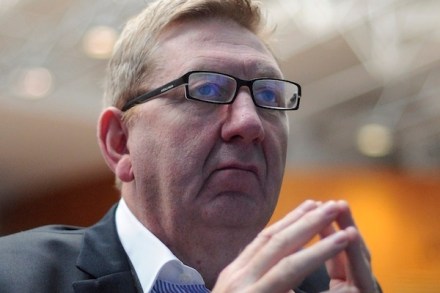
Today's broadcast from Len McCluskey Land was always going to be fun. For those of us who only lived through the tail end of the 1980s, the Unite General Secretary's speech was a useful glimpse of that decade and the one before. It was also peppered with some great characters: a chap who Len called Paul Dackery who, when not editing a national newspaper that made a rather embarrassing editorial judgement 80 years ago, apparently likes to go around licking people's boots. McCluskey addressed Dacre and his colleagues at the Mail, saying 'we know you like to kick the poor while licking the boots of the rich'.

Forget market meddling like Help to Buy: political parties should be hunting private renters

Ministers have been out in force today to trumpet the many virtues of a bit of market meddling also known as Help to Buy, with the details of the second phase of the scheme launched today by George Osborne. Even Mark Prisk, nicknamed by some Tory colleagues as the Invisible Minister, made it onto the World at One to argue that the scheme wouldn't create a house price bubble because the government was doing enough to increase the supply of housing.

Lynton Crosby: I didn’t discuss plain packaging with the PM

After weeks of the Prime Minister and his team dancing on a semantic pinhead over whether they discussed plain cigarette packaging with, or were lobbied by, Lynton Crosby, the man himself has made a rare public intervention. The Press Association reports him denying that he had 'any conversation or discussion with or lobbied the Prime Minister' on plain packaging. Crosby added: 'What the Prime Minister said should be enough for any ordinary person.' But it wasn't really, because David Cameron did rather lose his cool on the Marr Show at the weekend, telling Andrew Marr that his insistence that Crosby had 'not intervened' was 'the only answer you're getting'.

Labour’s problem is that its old leopards don’t want to change their spots

Alan Johnson's interview with Total Politics highlights one of Ed Miliband's two big problems for 2015. One is the influence of trade unions over policy, or at least the perceived influence. The second, which Johnson expounds on, is whether it is too much to ask voters to trust Labour again when its top team contains so many familiar faces from the last government. Johnson tells Sam Macrory: 'Everything is focused on what the chancellor is doing, not what the shadow chancellor is doing, and it's a tough call. He's also got to turn round this defeat, where for a long time the myth was created that it was because we overspent - and he was part of that, so he's got to overcome that as well, so it's a tough job for him.

Ashcroft poll shows potential cost of union reforms for Labour – and the opportunity for the Tories

Ed Miliband was clear yesterday when he announced that he will run a special party conference next spring to vote through his reforms to Labour's relationship with the unions that there would be a 'cost' to the party. Now we have the first indications of how great that cost might be. Lord Ashcroft has released one of his inimitable polls, this time of Unite union members. It finds that only 30 per cent of members would choose to opt in to Unite's political fund, while 53 per cent said they would not and 17 per cent had not decided. There wasn't much support for the current opt-out system, either, with 31 per cent saying they backed it, and 57 per cent saying they preferred an opt-in. When asked whether hey would join the party, 12 per cent said they would.

PM’s porn crackdown replicates Tory EU campaign success

Further evidence of Number 10 finding a hard-headed campaigning zeal reaches this blog, in the form of a campaigning website called Protecting Our Children. It includes a petition 'to support David Cameron's call for ISPs to introduce Family Friendly Filters as soon as possible', and facts about internet safety and what it is that the 'the Prime Minister and ISPs have worked together to ensure'. If you can hear a faint sound of bells ringing as you browse this site, that's because it is a carbon copy of the LetBritainDecide website. Tory MPs, including those who don't always put their hand up to support the Prime Minister, are tweeting away about his 'bold' move and directing followers to the site.

Timeless TMS is keeping all its wits about it

Michael Henderson has written a rather brave piece for this week's Spectator in which he brands Test Match Special 'Radio Halfwit' and argues that it has lost its edge. This is braver even than admitting that you don't #lovethenhs because TMS is an institution even more beloved and revered the world around. Perhaps Danny Boyle missed a trick in the Olympic opening ceremony by not projecting a giant light-up image of 'Boycott Bingo' onto the floor of the stadium. Criticism is hard to take, especially when it is aimed at our most loved institution. I adore TMS, and during tests in different time zones, frequently go to sleep with the radio buzzing gently throughout the night.

David Cameron’s porn announcement shows unusual media aggression

If it was front page warmth and approval he was looking for, the Prime Minister's sudden crackdown on internet firms has been a resounding success. Just the sort of thing to stir up even more good feeling as the Conservative party bounces from one bit of good news to another. He has of course provoked a fierce row between libertarians and conservatives about whether a filter is the right thing, whether it will work, and whether the Prime Minister and his adviser on the sexualisation of childhood Claire Perry have conflated legal porn and illegal child pornography. And the strange thing was that the talks between Maria Miller and the internet firms were largely progressing rather well. So why's he doing it?

Well-organised differentiation could help Cameron avoid Coalition break-up pressure

That senior Tories are urging David Cameron to break up the Coalition early so the Conservatives can fight the election unencumbered by those pesky Lib Dems is hardly going to dent the Prime Minister's chillaxing this summer: his party is in a good shape and the timing of Graham Brady and Bernard Jenkin's intervention in the Sunday Telegraph suggests they are genuinely trying to be helpful rather than cause internal party strife to damage the Prime Minister. All the indications from the top are that both Tories and Lib Dems want to go all the way with this Coalition, and those who might benefit from an early split, such as Vince Cable, don't currently seem to have much purchase in terms of leadership coups.