Isabel Hardman

Isabel Hardman

Isabel Hardman is assistant editor of The Spectator and author of Why We Get the Wrong Politicians. She also presents Radio 4’s Week in Westminster.

Breaking: Parliament will be recalled for a vote on Syria

From our UK edition

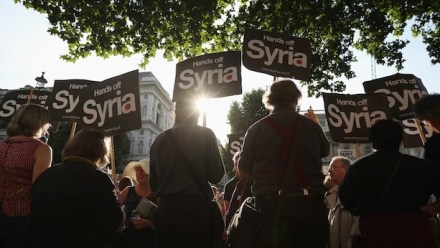
David Cameron has just confirmed that Parliament will be recalled on Thursday for MPs to vote on a government motion regarding the response to the chemical attacks in Syria. In reality, it would have been very difficult for the government to do anything else. But the question now is whether the statement that is offered to MPs is enough firstly to convince wavering coalition MPs of the case for intervention (and the case for the specific intervention chosen) and secondly to convince the Labour party not to whip its MPs against the vote: something Douglas Alexander this morning warned could happen.

How will Cameron consult Parliament on Syria?

From our UK edition

It would be a surprise if, when the Prime Minister and colleagues make their decision on consulting Parliament on intervening in Syria, they don't settle for some form of debate. An early day motion by Graham Allen demanding a recall of Parliament has swiftly accrued signatures from MPs of all parties, including Douglas Carswell, Stewart Jackson, David Davies, Graham Stuart, Philip Davies, Martin Vickers, James Gray, and Adam Holloway. But the question is how Parliament will be consulted. A vote on action would still be dangerous.

William Hague: We can act without UN security council unity

From our UK edition

William Hague is keeping his options open on Syria: not just on what the response will be to last week's chemical weapons attack, but on whether (and how) Parliament will be consulted on any intervention. What is clear is that there will be some form of response, regardless of whether the United Nations Security Council unites over what that response is. Hague said: 'So, is it possible to act on chemical weapons, is it possible to respond to chemical weapons without complete unity on the UN Security Council? I would argue, yes it is. Otherwise, of course, it might be impossible to respond to such outrages, such crimes and I don't think that is an acceptable situation.

Pressure grows for recall of Parliament on Syria

From our UK edition

David Cameron and his colleagues have made fairly carefully-worded pledges on whether or not Parliament should be consulted if the government starts planning for a military intervention in Syria. They could feasibly stick to the precise wording of those pledges this week without recalling MPs for a debate, but this will be a very difficult position to maintain as pressure is growing on all sides for a recall. Labour's Shadow Foreign Secretary Douglas Alexander said this evening: 'If, in reality, the Prime Minister is now considering military options involving UK personnel then of course I would expect him to seek a recall of Parliament and to come to the House of Commons and make his case in advance of a decision being made.' It's not just the opposition pushing for a debate, though.

Cameron and Obama warn Assad of ‘serious response’

From our UK edition

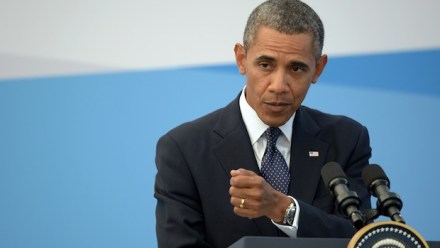
David Cameron spoke to Barack Obama yesterday about the situation in Syria. A Number 10 spokesman gave the following read-out of the call: 'They are both gravely concerned by the attack that took place in Damascus on Wednesday and the increasing signs that this was a significant chemical weapons attack carried out by the Syrian regime against its own people. The UN Security Council has called for immediate access for UN investigators on the ground in Damascus. The fact that President Assad has failed to co-operate with the UN suggests that the regime has something to hide. 'They reiterated that significant use of chemical weapons would merit a serious response from the international community and both have tasked officials to examine all the options.

Ed Balls: ‘There is no blank cheque for HS2’

From our UK edition

Labour could use HS2 as an opportunity to show voters that it is fiscally responsible by announcing that as the project's costs have spiralled out of control, it cannot back it. So runs the argument in favour of Ed Miliband dropping his party's support for the project. The party's transport shadow Maria Eagle has insisted today that high-speed rail remains a manifesto commitment for Labour, but Ed Balls has appeared on BBC News to drop what many are reading as some fairly heavy hints that his own support isn't quite so rock-solid.

Advice for Ed Miliband, part 567

From our UK edition

There is now so much advice coming in for Ed Miliband that it needs classifying. There's the Miliband-must-behave-like-this advice from all and sundry: he should talk more about the economy, talk less about the economy, shout a lot about things, talk more about policy, complain more about this and that and so on. The advice is so diverse that Miliband would end up looking like Francis Henshall in One Man, Two Guvnors if he tried to fulfil it all. But there's a second species of advice, which is on what big policy issue Miliband should back or oppose, partly out of principle and partly to make life very difficult for the Coalition.

The silly season that never stops: the weird demands from constituents to their MPs

From our UK edition

MPs are currently in hiding in their constituencies from the silly season. But that doesn't mean they aren't encountering some rather silly behaviour themselves as they hold surgeries. Constituency surgeries are normally quite doleful affairs, with local people in dire straits turning to their MP for help with an impossible housing situation, a tangled immigration case, or a row with social services. Depending on the sort of MP you are, you either love your constituency casework so much that it's the main reason you're in Parliament, or you secretly think it a bit of a bore and long to return from a lengthy discussion about the bad smell from the local sewer (a favourite topic of angry local tweets from MPs of all leanings) to the safety of Westminster.

How fracking could be sent packing by a poor offer for locals

From our UK edition

After the noisy protests over oil drilling in Balcombe, you might be forgiven for thinking that there are just two groups in the fracking debate: the Caroline Lucases, who oppose the technique outright, and then those who think shale gas is the best thing we ever discovered, better even than sliced bread. But there is a third group, which is quieter than the others, yet yields a great deal of power over how impressive this country's shale gas revolution will really turn out to be. I introduce this group of worried locals, still unconvinced by the incentives currently on offer from the government, in my Telegraph column today.

Labour’s over-fussing problem

From our UK edition

Opposition is underrated. You can spend your whole time pointing at Expensive Things and complaining that the Government Should Do Something about their cost, and grumbling about other things you don't like either, like a mother-in-law wearing a party rosette. What's not to like about being a professional complainer? The problem is that at some point you have to stop just pointing at things and complaining about them, and instead actually give a sense of what you would do instead. And if you've been too fussy to begin with, you end up disappointing people who thought you really were going to do something about everything you complained about to begin with. The Tories know this, and so are having a little bit of fun today with Liam Byrne's welfare speech.

Liam Byrne’s pitch to keep hold of his job

From our UK edition

It can hardly be a coincidence that one of the few Labour figures to bother giving a speech on policy in the middle of Tumbleweed Time is a shadow minister who looks increasingly likely to get the chop. Liam Byrne's speech today was partly his attempt to get a good last-minute appraisal from the media and Labour party itself before Ed Miliband embarks on his autumn reshuffle, and partly an attempt to lift the party itself out of the doldrums by talking about what Labour would really do. While Labour clearly needs to move on from lying in wait for the government to muck up now that green shoots are poking up all over the place, Byrne suspects there is more to be gained from waiting for a few disasters on his patch.

The political divide over David Miranda’s detention

From our UK edition

The political fallout from the detention of David Miranda is as interesting as the rights and wrongs of the case itself, as it exposes a fault line in the Conservative party between civil libertarians who are instinctively wary of state power, and those on the other side who think the state did exactly the right thing in this instance and that the laws applying to Miranda's detention are right too. In the civil liberties corner is Dominic Raab, writing in the Telegraph that 'on terrorism, as with so many of Labour’s laws, well-intentioned but overly broad powers have been stretched to cover wider purposes, exposing ordinary people to arbitrary interference'. Raab argues that 'a power to protect airports from attack has morphed into a shield to save governments from embarrassment'.

Mili no mates

From our UK edition

If David Blunkett fancies being a kindly older mentor for the current Labour shadow cabinet, perhaps he could start by getting them all on television a little more, if only to say how great they think Ed Miliband is as party leader. As the summer has worn on and the Labour leader's troubles have thickened like a sauce, the shadow cabinet seems to have evaporated, according to this analysis of the last time any of them pitched up on the airwaves: · Maria Eagle appeared on BBC News (13 August 2013) · Caroline Flint appeared on Daybreak (9 August 2013). · Owen Smith appeared on the Today Programme (7 August 2013) · Sadiq Khan appeared on The World at One (1 August 2013) and the Andrew Marr Show (28 July 2013).

David Blunkett: Give me a job

From our UK edition

listen to ‘Blunkett on Miliband’ on Audioboo David Blunkett gave an odd interview on the Today programme this morning. It rather mirrored the problem with Labour: he clearly knew what he really thought, but wasn't sure whether he should say all of it, so ended up letting really interesting little snippets out in dribs and drabs in between chunks of praise for the current state of the party. So his position on whether the current Labour leadership should think a break with New Labour is a good thing was a combination of acknowledging that the party does need to move on, and reminding anyone who really does want to move on that New Labour was pretty darn good at winning elections.

Caroline Lucas’ fracking arrest won’t worry ministers, but here’s what will

From our UK edition

Caroline Lucas' arrest this afternoon at the Balcombe fracking protest might be quite useful for the Green MP, but it's hardly going to give ministers a sleepless night. Lucas' presence is actually rather distracting from a real problem that ministers do need to address: ensuring that communities feel they have a stake in the shale gas exploitation taking place on their doorstep. David Cameron rather got their hopes up recently when he, by a slip of the tongue, promised that communities would get a £1 million incentive for accepting drilling on site when the figure was actually £100,000.

Briefing: Advice today for Ed Miliband

From our UK edition

Certain Labour types like to argue that this summer season of discontent for Ed Miliband is just a media mirage, made up mostly of journalists talking to each other. That might have a grain of truth: the corridors of Parliament are dusty and echoey at this time of year, and the only people found wandering them are bewildered lobby hacks and bored policemen. But the problem is that all this talk of the problems facing Ed Miliband has offered an opportunity for those in Labour party who think there is a problem to come out of the woodwork. And that there are more and more big names coming out - rather than the slightly worried backbenchers who started the grumbling - is the real problem. This summer has been an opportunity for nerves about the party's prospects to come to the fore.

What would Frank Field do for Labour?

From our UK edition

The latest tranche of advice for Ed Miliband contains pleas for the Labour leader to think the unthinkable and hire Frank Field as his welfare adviser to how that Labour was 'serious' about reforming the welfare system. This would represent quite a change of direction for the party, and would be what commentators like to call a 'bold move', partly because Field is known to be quite difficult to work with, while also offering an expert understanding of benefits and poverty. I interviewed Field for Coffee House in May, and it's worth revisiting some of his remarks now for an indication of what a Labour welfare policy would look like if he were in charge: 1.

William Hague: Egypt turbulence could last for years

From our UK edition

William Hague's interview on the Today programme this morning included the gloomy warning the the turmoil in Egypt is unlikely to end soon. He said that 'there may be years of turbulence in Egypt and other countries going through this profound debate about the nature of democracy and the role of religion in their society, but we have to do our best to promote democratic institutions, to promote political dialogue and to keep faith with the majority of Egyptians who just want a free and stable and prosperous country'. The turmoil means he has to choose his words carefully on the coup: it is difficult to condemn the actions of the current government, and equally difficult to condemn the actions of another group that may come to power as the churn continues.

The quiet Miliband wants to turn up the volume

From our UK edition

Ed Miliband has already managed to steal a big pile of clothing from the Tories by pinching the One Nation tagline for his own party. But this weekend Chuka Umunna offered the beleaguered Labour leader another Tory tag that he might not be quite so keen on. Trying to defend the party, the Shadow Business Secretary said: 'The Shadow Cabinet and the leader of the Labour party are doing a huge amount already to sell Labour to the electorate which is why we've won back almost 2,000 councillors since Ed Miliband became leader of the party and of course as we move to the general election we will be turning up the volume even louder than it has already been in order to ensure that we form a majority at the next general election.' Oh dear.

Watson interview piles pressure on Labour to publish Falkirk report

From our UK edition

Decca Aitkenhead has a history of producing revelatory August interviews that make tricky reading for the Labour leadership. Her 2008 interview with Alistair Darling involved the journalist following him around during the August recess and unleashed the 'forces of hell' against the then Chancellor when it was published. Her interview with Tom Watson in today's Guardian fits in with that tradition. Watson argues that there is no case for Unite to answer over Falkirk: Watson thinks on all three counts his party got it wrong. "I thought it was silly to report the allegations to the police, bordering on wasting police time." The whole affair, he insists, is "a storm in a teacup", since neither Murphy nor Unite did anything wrong.