Druin Burch

Druin Burch is a consultant physician, a former junior doctor, and the author of books on history and medicine.

The joy of receiving Christmas cards – even from people I loathe

From our UK edition

These days I barely know what my own handwriting looks like; about my friends, the knowledge is all but lost. Seeing their pen strokes has grown rare. But, for a brief period each winter, that odd intimacy returns as Christmas cards – some with messages, most with just a scribbled name – land on my mat. I adore receiving cards. Even ones from people I cordially dislike, or frankly loathe, are welcome There used to be something exciting about the sound of the postman’s footsteps, of letters being pushed through the door, of their thump as they landed within. That was during the days when there was a great deal of post. Even then, unexpected letters from old friends arrived rarely and, strange to say, the endowment begging me to write full time never arrived at all.

Why GPs are reluctant about online booking

From our UK edition

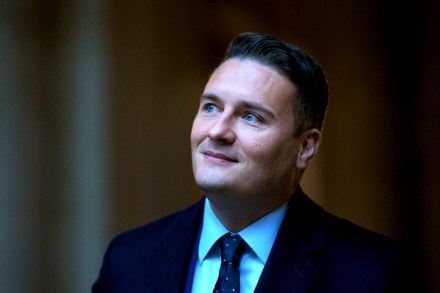
'Moaning Minnies' is how the Health Secretary Wes Streeting has described GPs opposing his rollout of online appointment booking. Originally, that moniker referred to German artillery pieces – and it’s pleasant for a doctor like myself to imagine we still possess that sort of firepower. But Streeting meant that the British Medical Association’s GP committee, which he has accused of undermining the attempt to make primary care more accessible, are a bunch of whining complainers, rather than us ordinary doctors. So, is Streeting right? General practice, as everyone is painfully aware, is in trouble. Except in a shrinking minority of places, the old model that made it so valuable is dead.

Junior doctors are striking for the wrong reason

From our UK edition

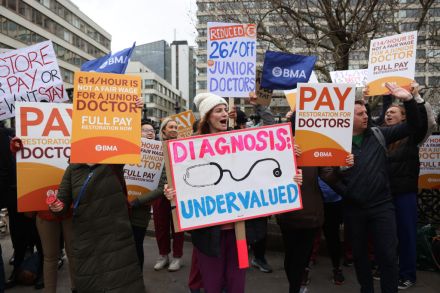
Oh God, another junior doctor strike. That seems to be the feeling of the country and of the junior doctors I've spoken to. Certainly it's the feeling of the consultants, like myself, who will be covering for them. Why the BMA has called another strike is clear. They haven't got what they wanted, and their current mandate expires in early January. What is less clear is whether they should be striking at all. During the last strikes I wrote that the majority of juniors weren't striking chiefly for a pay rise, but because their jobs and prospects of career progression are being allocated to foreign doctors who, data shows, perform worse on average.

Only radical change can cut NHS waiting lists

From our UK edition

A research letter in the Future Healthcare Journal, laying out the scale of performance failings in the NHS, has attracted a lot of attention today. It has shone a spotlight on the fact that, to fulfil its pledge to voters to reduce waiting times and 'fix the NHS', Labour must somehow find a way to cut the health service's treatment backlog in half. The research explains that the NHS has a constitutional requirement that 92 per cent of patients must wait no longer than 18 weeks for treatment after being referred by their GP. That target was last met in November 2015. At that point, the total national waiting list was 3.5 million. By the end of 2024, it was 7.5 million.

Pens have gone extinct

From our UK edition

Gone are the days when I always had a pen in my pocket. Gone are the days when I needed a pen to go to work. The NHS does not now always require a pen, and the NHS is not quick to abandon old technology. Ten years ago I worked in a hospital where a ward computer still had a floppy disk drive. Older readers will understand – and wince – when I say it wasn’t three-and-a-half inches but five-and-a-quarter. I remember writing my university finals with a pen, and I remember it because I recall how it felt. The pressure of time and the pressure of the pen made the ache in my writing hand memorable. I rewrote each sentence several times, and sometimes the whole paragraph, before it reached the paper.

Junior doctors’ strikes are good for my wallet – but totally avoidable

From our UK edition

Until Tuesday, I’m once again working as a junior doctor: trying to remember how to take blood, print labels, and manage being bleeped by three wards at once, two of them by mistake. For my troubles, I'll be earning £200 an hour – a rate far above standard consultant overtime. I'm taking a fat fee from the NHS to fumble through chores a junior could do better. As you spend hours waiting to be seen by an overstretched medic moonlighting as a junior, remember this: the strikes are completely avoidable Yes, junior doctors are on strike again – and the depressing thing is how preventable this walkout is. No money was needed; the NHS could have avoided the costs and harms of the strikes, and even come out ahead. That it didn’t is a fine example of how Britain contrives to fail.

Are we forgetting how to remember the glorious dead?

From our UK edition

The generation that fought in the First World War is gone, and the days are closing for those who served in the Second. Since I started as a doctor, one of the standard questions, to check whether people were oriented, has been to ask them the dates of World War Two. In the past few years, for the first time, I've met people who look outraged or indifferent, saying they couldn't be expected to know. What was once a universal cultural possession has, for them, become trivia. Something has happened to the way we mark Remembrance Day The question used to yield remarkable stories, but it has been years since I met anyone for whom it brought back memories. I stand to meet no others. History moves quickly: the generation that stood for freedom is almost gone.

How to endure November

From our UK edition

Grey rain slants down over the brown heather of the Lochaber hills, falling relentlessly into Loch Linnhe, and drenching the Caledonian Sleeper idling beneath my window on the platform at Fort William. November is technically still autumn, but already the long evenings of British Summer Time seem to belong to a different world. Pleasant as it is to wrap up in a coat, to feel invigorated by stepping out into a chill, or delighted by returning to the warmth within, the dying year is no cause for celebration. Christmas, the adopted pagan festival, is like Halloween – not put there because the days are joyous, but so we can thumb our nose at the downcast season. Defiance is the right attitude.

Films aren’t art

From our UK edition

My late son took film seriously, a taste I was delighted to see him develop, and regret not being able to see him grow out of. When he was little we watched the Pixar films, and they gave us great joy. The first 20 minutes of Up and the last 20 of Toy Story 3 have been called the only perfect bits of cinema, a formulation with a high quotient of truth. After our son’s death, my wife commented that she had never before seen me cry. I had always wondered if she’d spotted my tears at the end of Coco, or those I shed during Guardians of the Galaxy 3, during a Sicilian family holiday, but I don’t cry easily. We watched Coco, which is about remembering the dead, shortly after my mother’s funeral. In Sicily, I wonder if it was a reaction to being uncomplicatedly happy.

The lettuce test of civilisation

From our UK edition

Our economy is stagnating, our borders and our welfare state flung open to those who despise us. We once threw railway lines around the world and now struggle to build one to Birmingham. Free speech is under threat, and it’s almost impossible to get hold of a decent lettuce. I do not mean to be too gloomy. I hate those who think themselves virtuous for always looking on the glum side of life. I accept there is much to celebrate. We live longer and healthier lives. Children rarely die. People can read and books are cheap. In the veg aisle of the little Sainsbury’s Local on the new housing estate you find tarragon and pak choi and sourdough, and tomatoes raised somewhere better than Holland.

How did Birmingham succumb to ethnic strife?

From our UK edition

It is strange to see Maccabi Tel Aviv fans banned from a Villa match because the British state won’t protect them from Islamist mobs. I grew up in Birmingham – my formative under-age drinking took place by Villa Park – and it was a more racially mixed environment than any other I’ve come across outside my NHS work. Although I was Jewish, I never felt threatened. My experience of Birmingham – which might not have been yours, but was nevertheless mine – was of a city with a high degree of racial harmony. I thought the cracks I saw at 16 were superficial, that medieval impulses had no real purchase on my friends' lives. I was wrong This was in the 1980s.

The consolation of the quince

From our UK edition

My quince tree thrives – proof that nature can overcome adversity. I planted it, and I am a bad gardener. Childhood hours spent waiting for my mother to finish watching Gardeners’ World left me with fond memories of Percy Thrower, but in place of horticultural skill I inherited indolent incompetence. Our garden did not seem so big when we moved from a flat a decade ago. But for most of the second half of the 20th century, the former occupant of our house had been a keen gardener. Carefully planted beds, it turns out, need care, which I have failed to provide. Each spring I wage a blood feud with ground elder, to the point where I hallucinate its leaves.

Can the NHS’s anti-Semitism problem be fixed?

From our UK edition

The NHS has an anti-Semitism problem, and Wes Streeting wants to fix it. This week he announced plans to ‘make it easier to kick racists out of the NHS’. Policing hate is already the job of regulators, and systems that depend on judgement and restraint rarely benefit from political tinkering. Streeting’s move comes partly in response to Dr Rahmeh Aladwan, who has said the UK is ‘totally occupied by Jewish supremacy’ and has repeatedly published social media posts which appear to celebrate October 7th. She has said Israelis are ‘worse than Nazis’ and endorsed comments describing public outrage over the Manchester synagogue killings as ‘racism and Jewish supremacism’ – which was ‘Western civilisation’.

The problem with Labour’s plan for ‘NHS Online’

From our UK edition

Party conferences are less about conferring than about speeches and announcements. Today Keir Starmer revealed NHS Online, a virtual hospital of vast scope and wonderful promise. Patients will be able to swiftly connect to clinicians at a time and place to suit them. NHS Online, said Starmer, demonstrates that Labour favours 'renewal', while Reform only pursues the 'politics of grievance'. Grievance is a miserable trade. Presumably it wasn’t grievance that led Starmer to call Reform's policies racist and their supporters – if not racist themselves – too stupid to understand what they were backing. Insulting Reform voters is always likely to land well at the Labour party conference, although it’s not an obvious route to winning those voters back.

Starmer’s ‘racist’ Reform remark is his ‘deplorables’ moment

From our UK edition

Reform’s proposal to scrap indefinite leave to remain for foreigners is racist, according to Keir Starmer. 'I do think it's a racist policy,' the Prime Minister told the BBC yesterday. 'I do think it's immoral – it needs to be called out for what it is.' Removing people who were here legally, he said, was wrong. That’s a reasonable stance for a lawyer, but odd for a PM, whose role isn't compliance with the law but deciding what new laws should say. Starmer is wrong about Britain. We live not only at the least racist point in history, but in one of the least racist countries in the world Supporters of Reform are not themselves racist, Starmer was quick to say – merely 'frustrated' by 14 years of 'Tory failure'. But the Prime Minister could soon regret his remarks.

The problem with Jess’s Rule

From our UK edition

NHS England has today introduced Jess’s Rule, asking doctors to take a ‘three strikes and rethink approach’. The rule is named for Jessica Brady, who died in 2020 aged 27, having had more than 20 appointments with her GP surgery in the six months before her death. Mostly seen virtually – a fact attributed to Covid – she eventually went private. There, her terminal cancer was belatedly diagnosed. She died three weeks later. Discussions about Jess’s Rule began under the Conservatives and have come to fruition under Labour. Both parties have shown an unshakeable commitment to taking a serious problem, highlighted by a tragic death, and turning it into performative bureaucracy which won’t fix the problem it pretends to honour.

The no-choice rural restaurant with just two sittings a week

From our UK edition

Long Compton is in the Cotswolds, but to the east, where there are no boutique hotels or shops selling artisan candles to tourists. Banburyshire and its surrounds are actual countryside. Fields roll away in the manner Germans call Kulturlandschaft, meaning landscape shaped by centuries of human care. This is the sort of country that makes people write poetry about hedgerows and choral music about sheep: lovely to live in but, by long British tradition, a dismal place to dine out. Discovering a truly great restaurant in Long Compton – population 764 – feels like finding in rural Warwickshire one of those bucolic la France profonde dining experiences that seemed nostalgic fantasies even when M.F.K Fisher described them.

How I came to (reluctantly) like Trump

From our UK edition

The Donald is in Britain. As a holidaymaker used to budget flights, I associate Stansted airport, where Trump landed last night, with precisely the amount of glamour it currently offers, but I also know it was where planes in distress are directed to on their return – its long runway giving them the best chance of survival. Stansted is where imperilled dreams go in the hope of rescue. As Trump arrived, I realised its tarmac had not done for me what it once did for others. For them, that blessedly long runway was salvation. For me, it’s where my resistance crashed and burned. As I peered at the pictures of the US President emerging from his 747, his face set in that familiar absence of reflection, I realised something startling: I have come to value Trump.

J.K. Rowling is a phenomenal plotter

From our UK edition

As I write, a copy of The Hallmarked Man sits beside me. Not being on holiday, spending the morning reading a new detective novel would seem as louche as a pre-brunch martini. Not being David Niven, I’m making the book wait until at least after lunch. J.K. Rowling’s new book, under her pen name of Robert Galbraith, comes in at around 900 pages. I expect to rip through it smartly. I am not an ideal reader of detective fiction, nor the thrillers and mysteries that have a whodunit at the core of their tightly planned plots. My ability to figure out the murderer – even my interest in trying – is vestigial.

A farewell to aspirin

From our UK edition

At last weekend’s European Society of Cardiology conference in Madrid, a quiet funeral bell tolled for aspirin. The drug has already been largely dropped as a painkiller, on the basis of having more side effects than paracetamol. Most often now it’s taken to prevent a heart attack. Now, a new study, published in the Lancet and presented in Spain, shows another drug, clopidogrel, does it better. The difference is small, but medicine, like life, is often about finessing small differences. They sum together, and aspirin is part of why living a long, healthy life has become the norm when it used to be unusual good luck.